The four levels between AI as a calculator and AI as an autonomous scientist
Why talk about agentic science
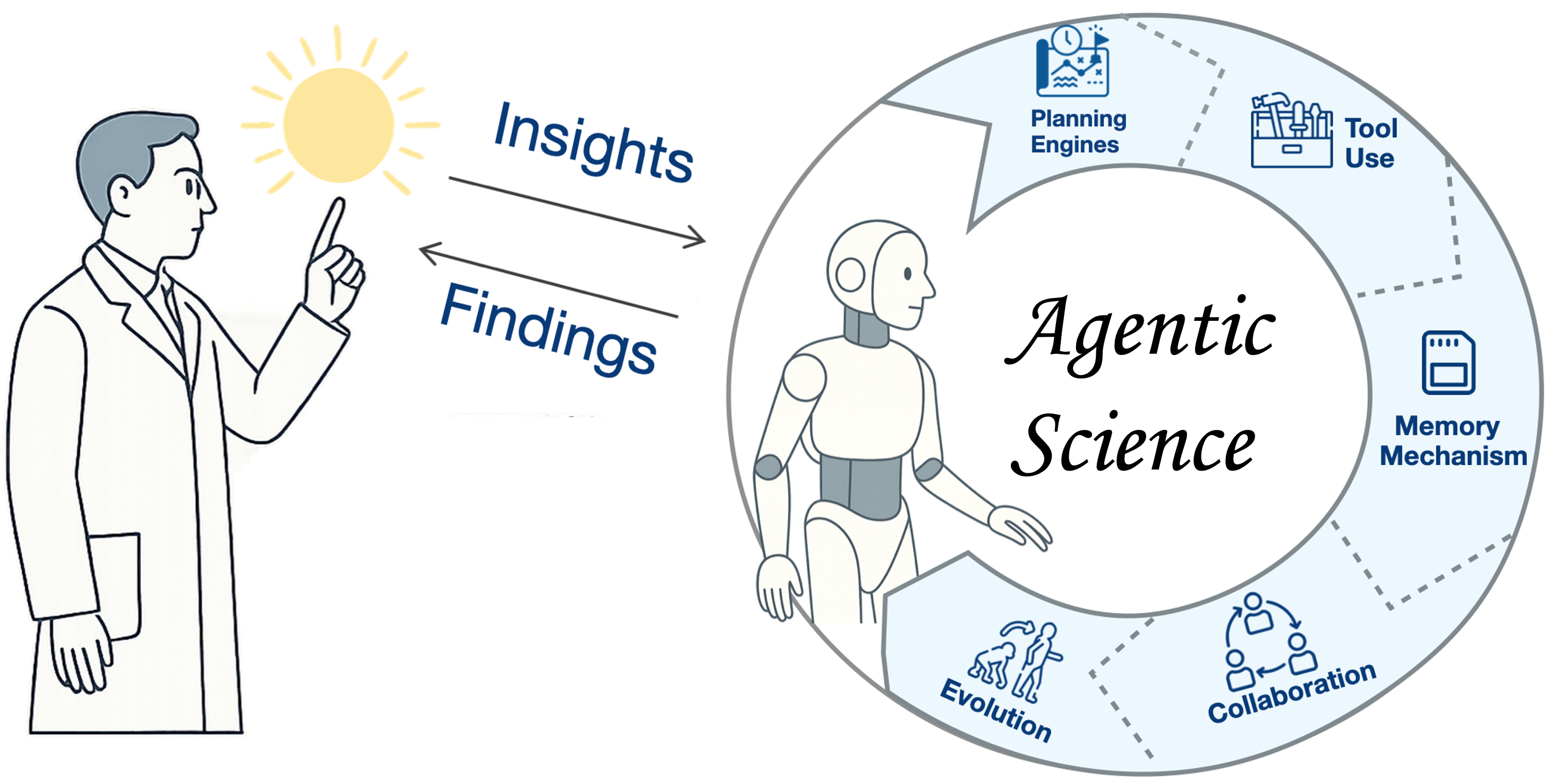
We are used to AI as a clever calculator: it helps with data analysis, but the decisions and the experiments stay with people. The researchers argue for a different view, in which agentic AI moves into the role of an autonomous research partner. It reads the literature, forms hypotheses, plans experiments, runs robots or simulations, analyzes the results and corrects its own mistakes — all inside a closed loop. They call this approach Agentic Science and show how it comes together out of advances in large language models, multimodal systems and research platforms.
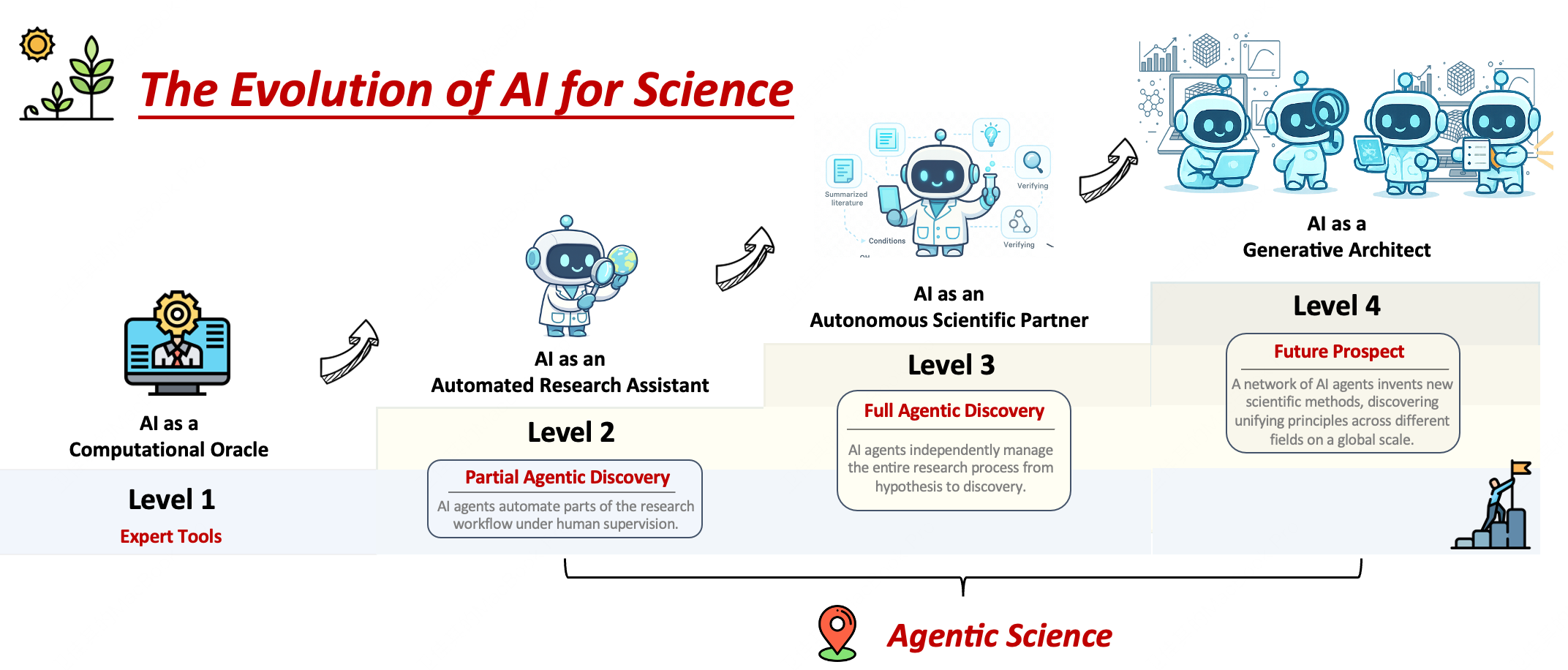
The authors describe the evolution as a ladder of levels:
- Level 1 — the oracle: models solve isolated problems, but the initiative belongs to the human.
- Level 2 — automated assistant: the AI carries out whole stages of a study on its own once it has a goal.
- Level 3 — autonomous partner: the agent runs the full cycle from hypothesis to validation with minimal human support.
- Level 4 — the outlook: AI not only discovers facts but invents new instruments and new scientific approaches.
The scientist's role shifts too: they become a strategist who sets the goals, watches safety, reads the reasoning logs and assembles the results into a scientific story that makes sense.
What a scientific agent is made of
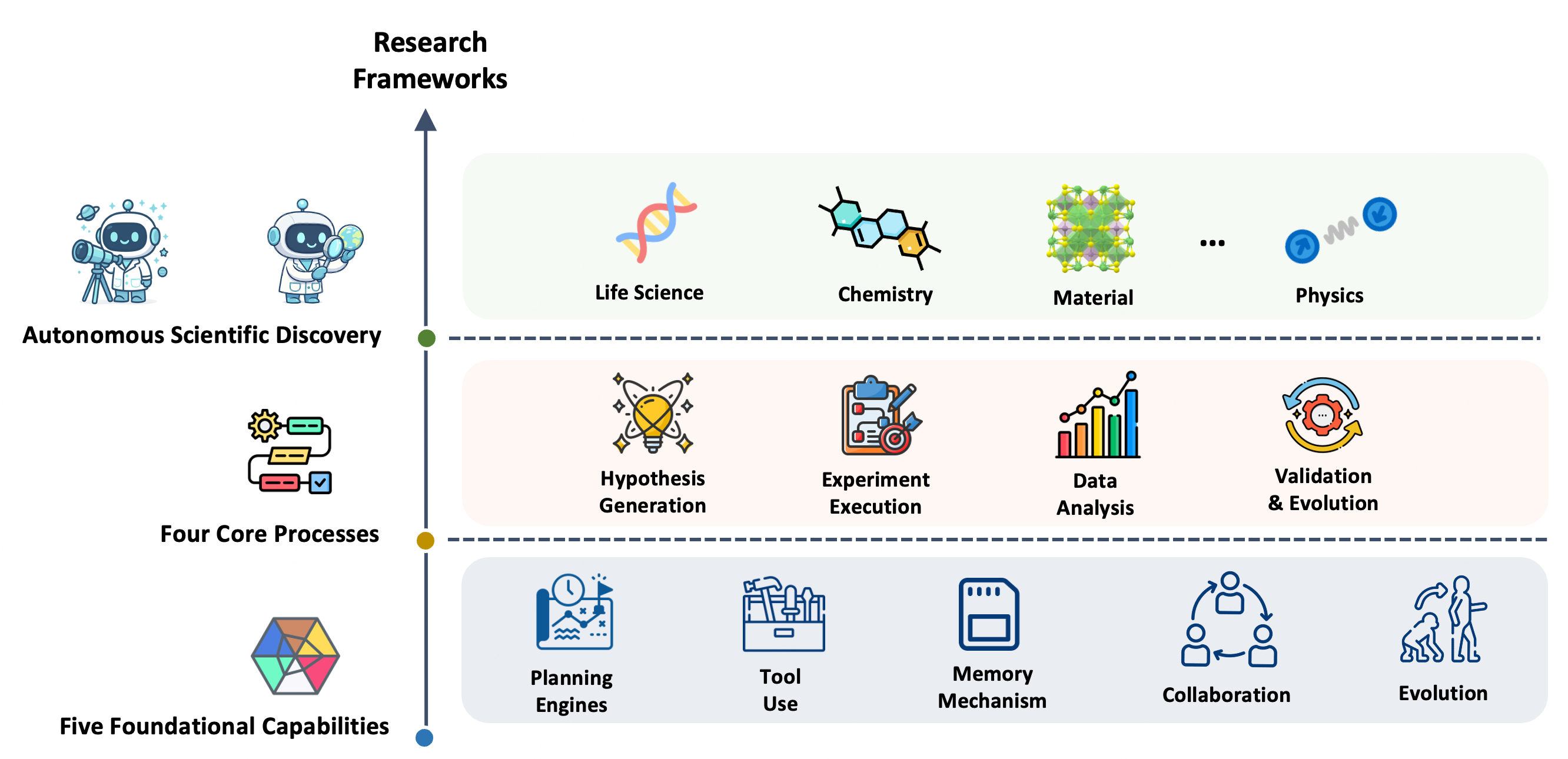
The team lays out a simple anatomy of agentic AI — five core capabilities that together add up to scientific independence:
- Planning and reasoning: turning a goal into steps, testing hypotheses, looking for alternatives.
- Tool integration: access to databases and search, code, simulators, lab robots.
- Memory: long-term knowledge, short-term context, traceability of every computation.
- Multi-agent systems: roles, critique, debate and agreement on decisions inside a team of agents.
- Optimization and self-evolution: self-critique, learning from its own mistakes, improving its model of the world.
How the discovery loop works
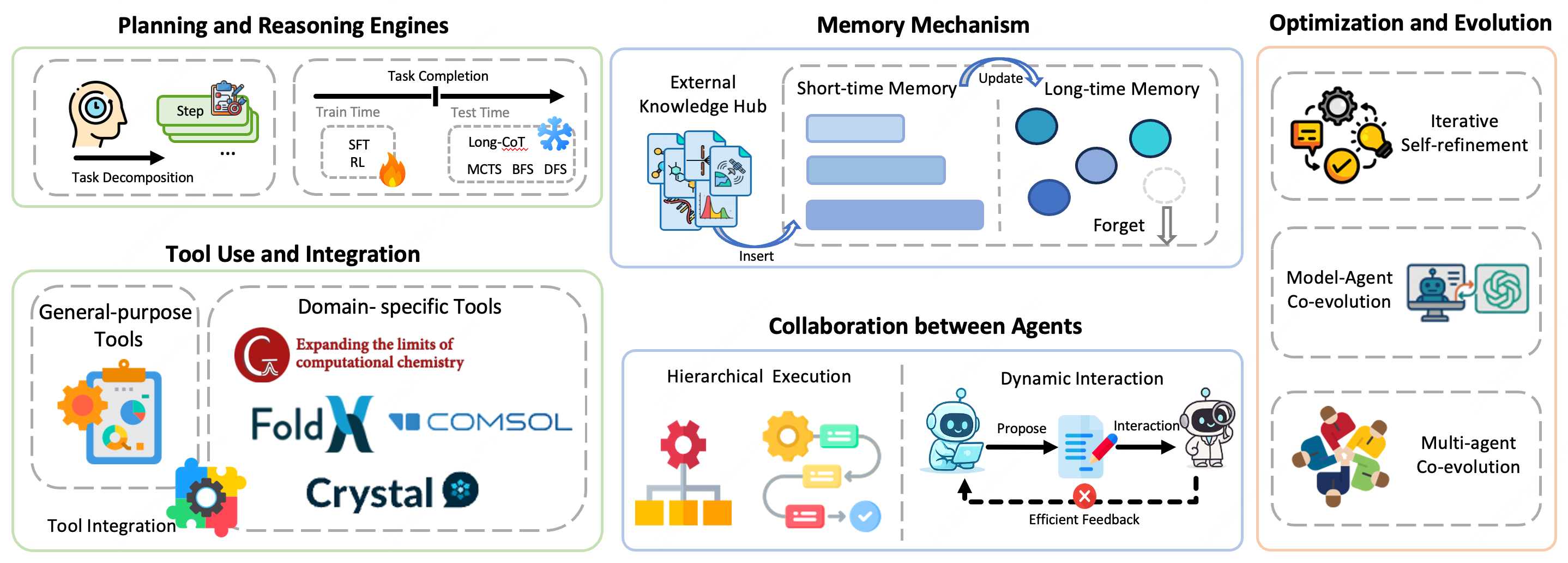
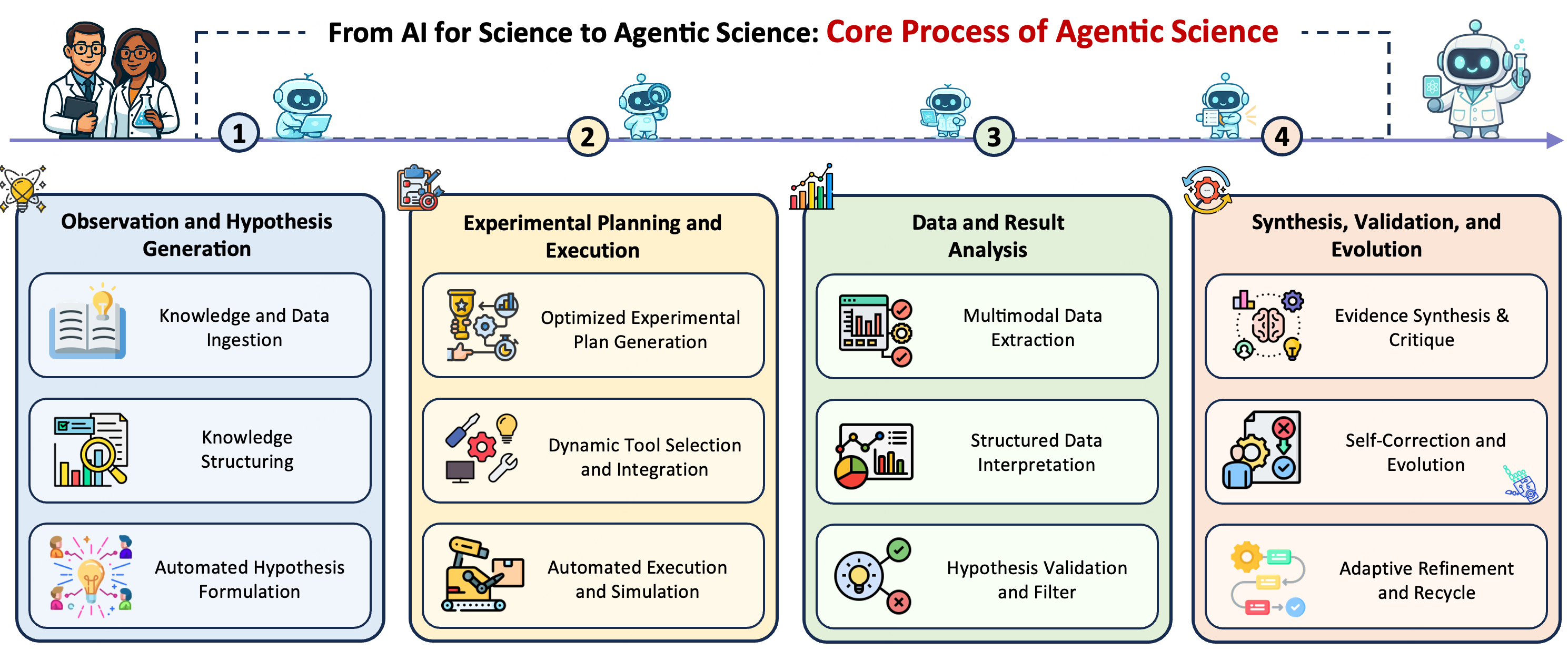
Agentic Science is not a linear pipeline but a flexible loop with four steps:
- Observation and hypotheses: the agent reads the literature, builds a knowledge graph, proposes testable ideas.
- Plan and experiment: it draws up a plan, writes code, runs simulations or drives a robotic rig.
- Data analysis: it parses tables and plots, compares them against what it expected, updates its confidence in the hypotheses.
- Synthesis and evolution: it writes up the conclusions, runs an internal review, repeats the key experiments and updates its own strategies.
The steps can be reordered or skipped — the agent fits the loop to the task and to its limits on time and resources.
Where it already works
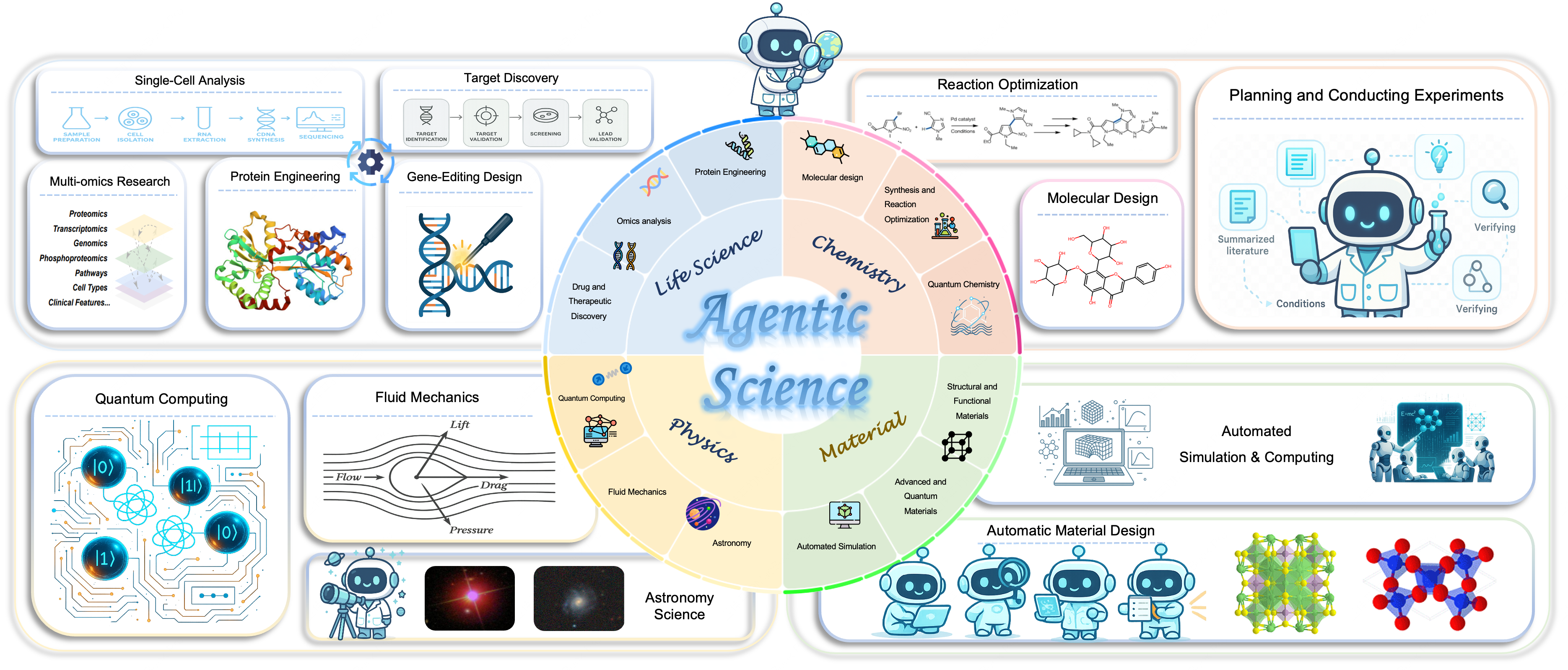
- Chemistry: an AI co-author autonomously designed and ran a reaction on a robotic rig; it connects text, reaction databases and calculations; it helps design porous materials.
- Biotech: an agent proposed new therapeutic targets and improved itself on feedback; designed nanobodies against SARS-CoV-2; proposed repurposing a drug for eye disease.
- Materials and physics: virtual environments speed up the search for compositions and the control of complex simulations.
What still gets in the way
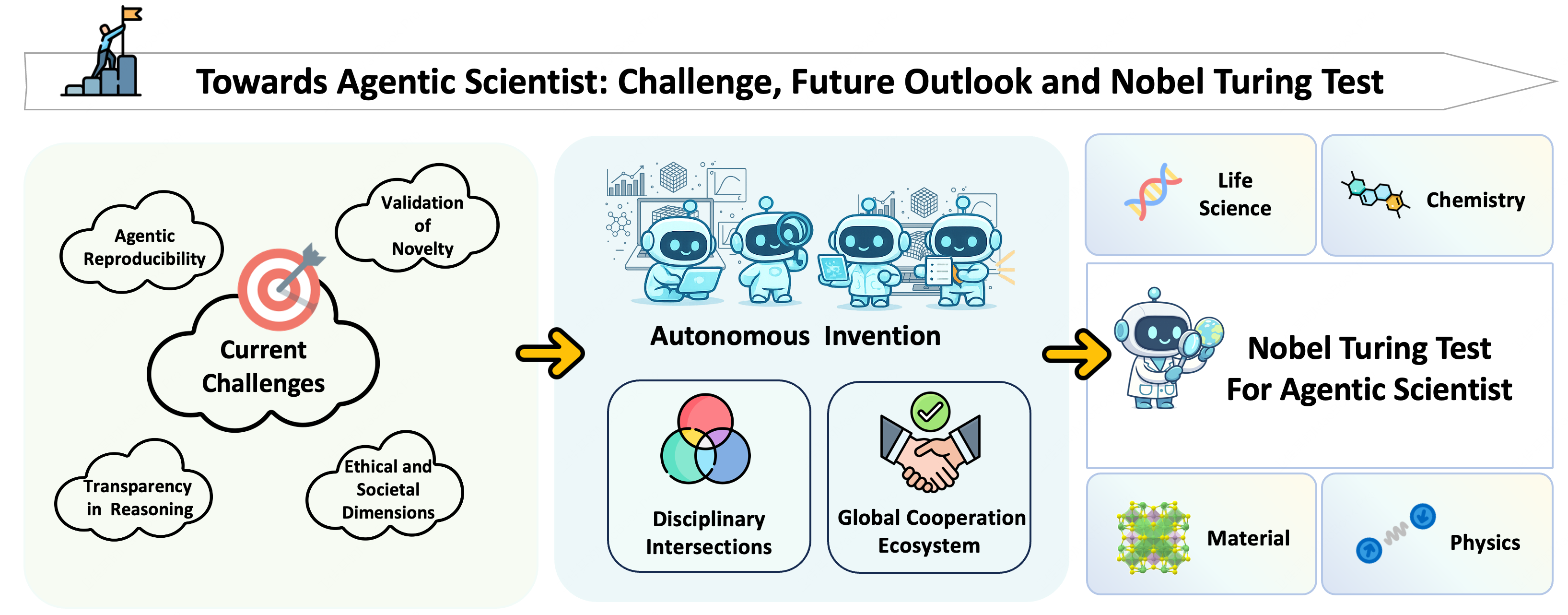
- Reproducibility and traceability: this takes complete logs of prompts, code, instrument parameters and data versions.
- Checking novelty and causality: plausible text is not new knowledge; hypotheses have to be testable.
- Transparency of reasoning: how the agent arrived at its plan, and what drove the choice of experiment.
- Safety and budget: above all in chemistry and biology, where a mistake is expensive.
- Human–agent collaboration: who makes the final call, and how responsibility is divided.
Where this is heading
The authors propose a roadmap: from robust, reproducible agents to systems that do not just discover facts but invent new methods and instruments. The ambitious target they name is a Nobel Turing Test — showing that an agent is capable of Nobel-level discoveries inside a real scientific process.
Why it matters
The main value of the work is a single framework. It ties an agent's capabilities to the stages of the scientific cycle and to specific domains, which helps labs design systems as whole research partners rather than as parts. The shift toward Agentic Science comes with real practice behind it: benchmarks, open platforms and examples of actual discoveries. The next step is quality standards and transparent protocols for how people and agents work together.
AI paper breakdowns
Every day we read the new AI papers and retell what matters in plain language — no hype, no filler. If you want to see where AI agents are heading before everyone else, subscribe.
New breakdowns every day.
On Telegram