The most influential AI in sport today does not look like a robot coach. It hides in the camera above the court, in the chip inside the ball, in the sensor on a wrist, and in the software that works through thousands of plays overnight. It rarely makes the final call — but more and more often it decides what exactly a human will see.
1 · AI without the magic
First, let's agree on what actually counts as AI here
In sport, a single word covers four different levels. The first is ordinary rule-based automation: a timer, a heart-rate threshold, the goal line. The second is statistical analytics: comparing pace, running expected-goals models, spotting an unusual deviation. The third is machine learning and computer vision: recognizing players, poses and situations. The fourth is generative models that explain data, produce text and video, or hold a conversation.
Electronic line calling can be extremely reliable and need no "intelligent" neural net at all. A conversational assistant, meanwhile, can sound convincing and still get a simple medical conclusion wrong.
The level can be any of these, but the path is the same. Raw data goes in, the model cleans it, recognizes what is happening and estimates a probability. Then the decision belongs to a human — a coach, a doctor, an official or the athlete themselves. And the result, along with the error, feeds back into the system.
2 · The map of sport
Eight categories — eight different jobs for the algorithm
Sport is easiest to divide by the structure of the movement. In cyclic sports what matters is repetition. In team sports — space and interaction. In combat sports — the opponent's intent and contact. In technical–artistic disciplines — exact geometry. The same sport can fall into several classes at once: the sprint is both a cyclic and a speed-and-power event; biathlon combines endurance, shooting and tactics.
Cyclic (endurance)
running · swimming · cycling · rowing · skiing- Today
- Pace planning, analysis of technique, load and recovery; recognizing a stroke, a stride or a pedal stroke from a watch and from video.
- Next step
- A personal digital twin that tests the plan in simulation before a hard session.
- Weak spot
- Heart rate and power know nothing about context: wind, illness, stress and sensor quality can easily change the conclusion.
Team and racket sports
football · basketball · hockey · volleyball · tennis- Today
- Optical tracking, clip search, spatial models, scouting, set-piece preparation and officiating support.
- Next step
- Multi-agent simulators that propose several tactical options and show the price of each decision.
- Weak spot
- A recommendation that works on training data can fall apart against a new opponent or a different formation.
Combat sports
boxing · wrestling · fencing · judo · karate- Today
- Counting actions, measuring distance and reaction, annotating sparring, finding comparable opponents and monitoring impact load.
- Next step
- A robot partner that safely changes style and pace to suit a specific athlete.
- Weak spot
- The camera struggles to see grappling and contact; automated scoring must not push athletes toward dangerous intensity.
Speed-and-power sports
sprinting · weightlifting · throws · powerlifting- Today
- Tracking the bar and the implement, movement velocity, joint angles, asymmetry, readiness forecasts and volume selection.
- Next step
- A technique model that tells productive variability from an early sign of overload.
- Weak spot
- A pretty velocity chart is not a diagnosis; false precision is especially dangerous around maximal loads.
Technical–artistic sports
gymnastics · figure skating · diving · acrobatics- Today
- 3D pose, recognition of elements, rotations and landings, judging support and personalized video feedback.
- Next step
- Generating a safe progression toward a new element, taking into account the athlete's body morphology and past errors.
- Weak spot
- The algorithm sees geometry, but not always quality, artistry and intent; the right to appeal is mandatory.
Combined events
triathlon · biathlon · modern pentathlon- Today
- Merging data from different disciplines, nutrition and pacing, equipment logistics, modeling transitions and weather scenarios.
- Next step
- A single assistant that allocates a limited recovery budget across incompatible training loads.
- Weak spot
- An error in one model cascades and distorts the whole plan; systems from different vendors are hard to compare.
Precision and technical sports
shooting · motorsport · motorcycle racing · sailing- Today
- Telemetry, analysis of trajectory, wind and reaction, pit-stop strategy, failure detection and computer vision.
- Next step
- Joint optimization of the athlete, the machine and the environment in real time, under strict regulations on prompts.
- Weak spot
- Here a cyberattack or a faulty sensor affects not only the result, but physical safety.
Extreme sports
mountaineering · climbing · freeride · surfing · skydiving · mountain biking- Today
- Analysis of route and surface, weather and wind; athlete tracking and condition monitoring.
- Next step
- A personal risk model that combines, in real time, the athlete's condition, the difficulty of the route and changes in the environment, and warns of danger before the situation becomes critical.
- Weak spot
- Rare extreme events leave little data to learn from, and a wrong recommendation can create a false sense of safety exactly where the cost of a mistake is highest.
Four areas that fall outside the classification
Para sport
Movement recognition, adaptive prostheses and equipment, navigation and personalized classification — under especially strict fairness controls.
Esports
Analysis of the map, reaction and team communication, anti-cheat, training-scenario selection and automatic replays.
Mind sports
Chess engines, game analysis and personalized puzzles have already become the norm; the main argument is about the line on permitted assistance.
Equestrian
Synchronization of rider and horse, early lameness detection, workload and animal welfare.
3 · From the backyard to the stadium
AI is not confined to a single use case — it covers the entire lifecycle of sport
The most useful thing to look at is not an individual model, but the chain of decisions.
Talent identification
Compares anthropometry, movement and trainability, but it does not predict a person's future.
Training plan
Changes volume, pace and intervals according to actual load, sleep and recovery.
Technique
From 2D video it reconstructs pose, angles and segment velocities, and picks out recurring errors.
Tactics
Looks for the opponent's patterns, space, options for a play and the consequences of a substitution.
Health
Flags a risk and prioritizes examination; it does not diagnose and does not replace a doctor.
Officiating
Measures the line, the touch, the pose or the trajectory, and shows the evidence to a human.
Integrity
Looks for anomalous bets, unusual biomarkers and match-fixing patterns.
Broadcast
Makes highlights, captions, graphics, personalized replays and multilingual explanations.
Venue
Forecasts crowd flow, energy consumption, queues and technical failures.
Commerce
Personalizes content and offers, measures the audience and helps sponsors.
Grassroots sport
Turns watch and phone telemetry into clear advice for the everyday athlete.
Coach education
Turns the archive of drills and coaching-staff decisions into an auditable knowledge base and a case simulator.
AI in sport is not a standalone "smart coach" — it is a whole system.
4 · Already on the field
Fifteen cases where the technology stopped being a slick demo
Boxing: AI counts the punches and tries to read the judges
Jabbr DeepStrike uses computer vision to break a fight down automatically: it counts punches thrown and landed and scores their quality, pressure, aggression and combinations. The model even calculates the probability that a judge will award the round to each boxer. In 2024 AI statistics like these were already on air during the Fury vs Usyk fight on TNT Sports. But the underlying principle is the same: the algorithm adds one more measurable layer — it does not replace the judges or the coach.
Powerlifting: the camera sees how heavy the set really was
In powerlifting what matters is not only the weight on the bar but the speed at which the athlete can move it. The camera system Perch tracks the bar, builds an individual load–velocity profile and can estimate a one-rep max without constant max-out tests. If a familiar weight suddenly moves noticeably slower, that becomes a signal of fatigue and a reason to change the load right there in the session.
Bodybuilding: AI sees not just the rep, but the quality of the movement
In hypertrophy training what matters is not simply getting ten reps done, but holding range of motion and technique as fatigue builds up. Tonal combines resistance data with a camera and machine learning: it tracks tempo, range of motion, body position, balance and symmetry, then gives form cues and adapts the load. Tonal 2 uses the camera together with data from the cables to analyze movement and select resistance automatically.
FIFA: the machine measures the offside, the human confirms the call
At the World Cup FIFA used 12 cameras that tracked 29 points on each player's body 50 times per second, plus an inertial sensor in the ball running at 500 Hz. The system reconstructs the moment of the pass and the offside line, but the VAR reviews what it flags and only then informs the referee. It is a good example of the division of labor: the machine measures faster — the human is responsible for what the play means.
TacticAI: the corner as a graph problem
Google DeepMind, working with Liverpool, modeled players as nodes in a graph and trained the system to predict who would receive the ball and how a corner would end — and then to suggest a formation. In a blind comparison, club experts preferred the system's options to the human-designed ones in 90% of cases.
NBA: from coordinates to player "gravity"
The new platform from the NBA and AWS tracks 29 points on each player 60 times per second. The models are meant to turn movement into defensive statistics, shot-difficulty ratings and "gravity" — the influence of a player who stretches the defense even without the ball. Clip search finds similar plays by movement rather than by a manually entered tag.
Baseball: the robot isn't taking the umpire's job
Starting in 2026, MLB is rolling out a challenge system for ball and strike calls: the call on the field stays with the umpire, and a player can challenge it. The ball's trajectory is measured by 12 Hawk-Eye cameras; a team gets two challenges, a successful one doesn't count against that total, and the review itself takes about 15 seconds.
Tennis: the argument comes down to measurable geometry
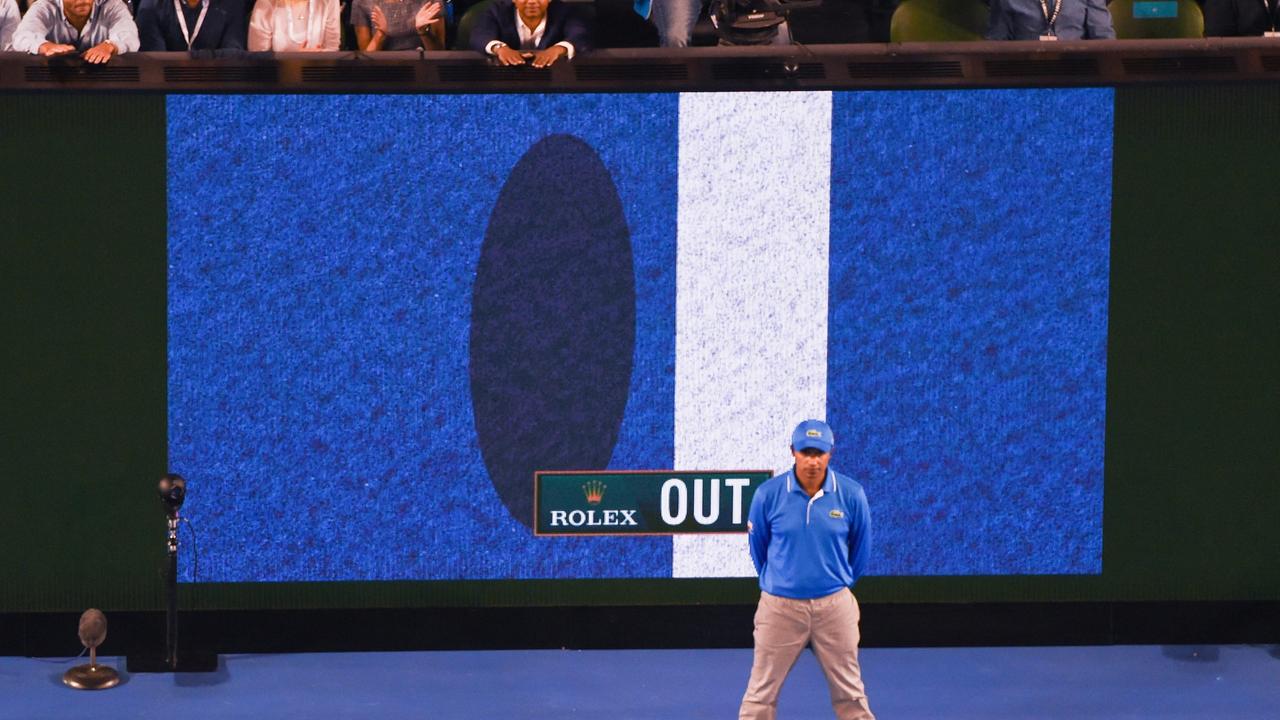
In 2025 the ATP moved all of its tournaments to electronic line calling: line judges gave way to a system that measures the position of the ball relative to the line. The machine's job here is a simple one — the geometry is clear, the answer is binary, and the argument ends with a frame everyone can see.
Gymnastics: the same idea runs up against execution quality
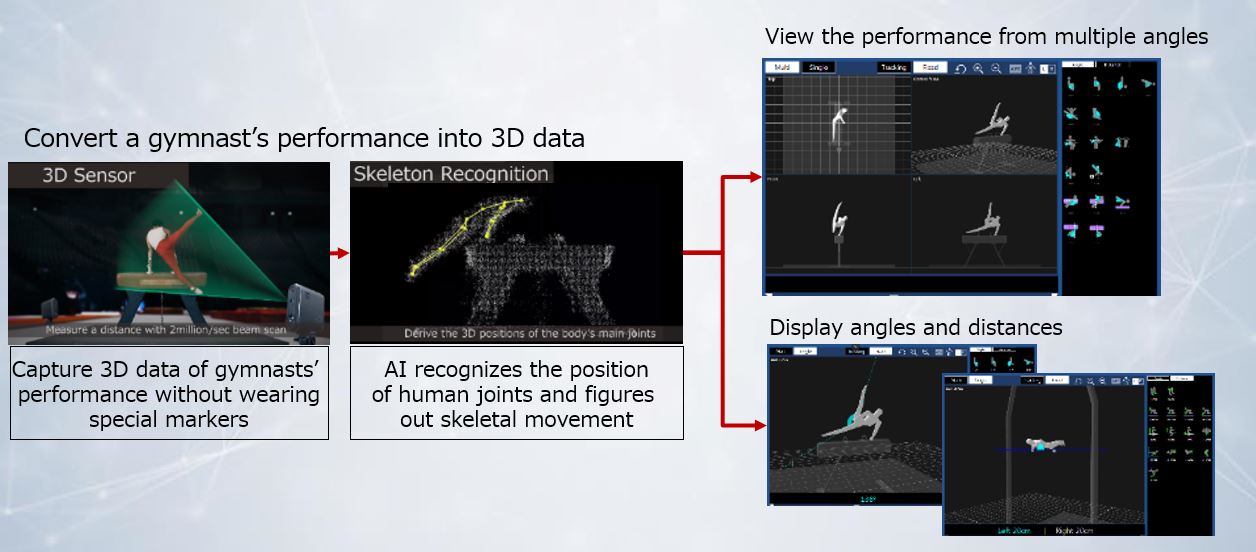
In gymnastics the task is harder: the Fujitsu judging support system builds a three-dimensional model of the body, recognizes elements and gives judges hard numbers on angles and distances. The International Gymnastics Federation stresses the point: the system supports the official, it does not replace them — especially where execution quality matters.
OpenCap: a biomechanics lab that fits into two phones
OpenCap films movement with two calibrated smartphones, reconstructs the pose with computer vision, and then links it to a physics-based musculoskeletal model. The result is joint angles and load estimates without a marker suit and without an expensive lab.
NFL Digital Athlete: a risk model, not a digital doctor
NFL and AWS combine tracking, training load, gear and collision video into a digital representation of the athlete, available to all 32 clubs. The goal is to spot a dangerous combination of exposures and help the staff adjust the workload.
Formula 1: millions of signals become a strategy you can read
A Formula 1 car carries around 300 sensors, which produce more than 1.1 million telemetry points per second. Models help teams simulate strategy, spot anomalies and forecast how a battle will unfold; for the viewer, the same data becomes a head-to-head prediction and other on-air insights. Motorsport shows the dual value: one kind of analytics optimizes the competition, the other explains it to the audience.
Talent identification without a lab
Intel and Olympic partners tested how basic movements can be assessed from an ordinary camera in Senegal: computer vision extracts the parameters of an exercise to push initial screening beyond the major training centers. The value here is not the label "future champion" but a cheap first cut and wider access to sport. The danger is mistaking current technique, which depends heavily on age, training and conditions, for the limit of a person's potential.
Wimbledon: AI narrates the match — it doesn't just keep score
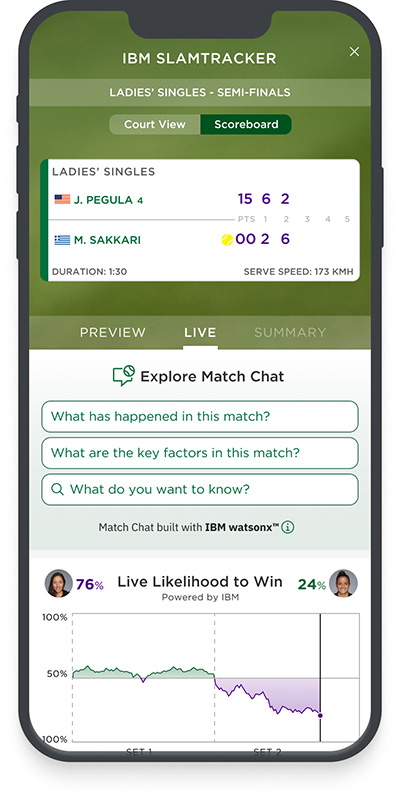
Wimbledon and IBM added a match chat, a win-likelihood forecast and generative explanations written in the tournament's own editorial voice. In 2026 they added key moments and answers that combine text with photos and video. This is an important shift in role: the sport's database becomes a conversational interface rather than a table for an analyst. But editorial review is essential — the model must not invent causality or erase context.
Anti-doping and target testing
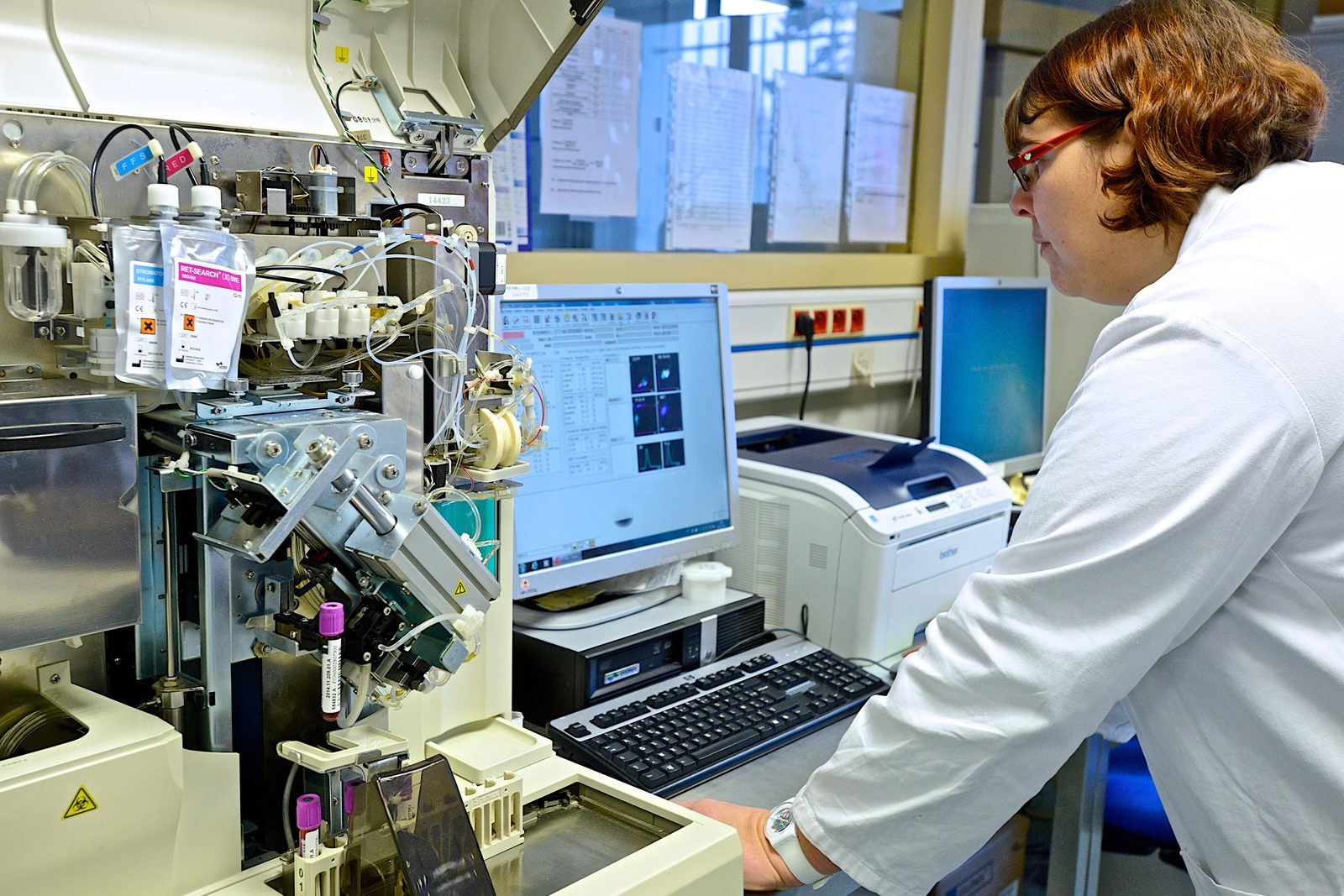
An algorithm can look for atypical biomarker patterns and help prioritize testing, and it can find connections across large volumes of data. The WADA ARIETTA project shows how AI can be used to select athletes for doping tests more precisely. The line of responsibility matters especially here: an algorithm can point to who is worth a closer look, but it cannot prove a violation. The final decision must stay with a human, and the athlete must keep the right to review and appeal.
5 · Beyond the scoreboard
Eight topics that get lost in the conversation about AI and sport
Look only at matches and training sessions, and the picture stays incomplete. Sport begins long before the opening whistle and does not end at the finish line. Decisions about recovery, travel, equipment, data access and permitted assistance often do more to shape a person than one more tactical metric.
Rehabilitation and return to sport
A camera, a force plate and wearables can track movement coordination day by day, and a model can compare recovery against that athlete's own trajectory.
Nutrition, sleep, jet lag and recovery
A model can tie together the schedule, training load, the food available, body weight, sleep and flights to suggest a fueling window or an easy day. That is convenient, but it is especially risky in weight-class sports and in cases of disordered eating.
Psychology — handle with care
A journal, voice, sleep and heart rate variability help spot a lasting change in state, prepare a conversation with a psychologist and personalize a breathing or mental practice. But the system must not diagnose anxiety from a voice, report private conclusions to the club, or turn normal pre-start nerves into an "anomaly". Here privacy matters more than a complete data set.
Women, children and late maturation
Findings from male samples cannot automatically be generalized to everyone. Studies already show how models help track intensity in women’s handball, while daily monitoring of menstrual cycle symptoms gives a more accurate individual picture. But no conclusion follows from a single "cycle phase," and early anthropometry is no reason to close off a child’s path into sport.
Heat, altitude, air and hydration
The same session in different humidity or at a different altitude becomes a different physiological task. A personal model can combine the weather forecast, heat acclimatization, pace, sweat rate and a history of how the athlete has felt, and adjust the start time, fluids and cooling accordingly.
Gear is designed together with the athlete
AI is involved not only in analyzing the human, but also in creating the bike, the shoe, the prosthesis, the wheelchair, the racket or the protective helmet. Generative design explores shapes and materials under constraints of weight, strength and manufacturing; digital fitting takes the individual body into account. A project by Decathlon and Autodesk showed this approach on lightweight bicycle components.
The venue, the broadcast and the economics of the event
Beyond the field, models forecast crowd flow and queues, energy use, pitch irrigation, equipment failures and transport demand. On air they pick the replays, generate captions, localize the commentary and personalize the camera feed. But in ticket sales and sponsorship that same personalization easily turns into price discrimination.
The rules decide when intelligence becomes unfair assistance
The same assistant can be an excellent tool in training and a banned advantage during competition. Federations need separate rules for data collection, real-time prompts, autonomous equipment, prostheses, appeals and model updates. Ethical guidelines for sport propose judging these systems not only against general AI principles, but also against the values of the discipline itself and the rights of everyone affected.
6 · Not just for champions
What AI already gives the everyday athlete
The most widely used system in sport is a phone plus a watch. It sees pace, route, heart rate, sleep and how consistent the training load is, and then turns the numbers into a recommendation in plain language. Garmin Coach adapts the plan to results and recovery; Strava explains a specific activity; WHOOP answers questions about the metrics it has accumulated.
A plan that changes
A missed session, a short night or an unusually high heart rate rebuilds the week instead of turning into guilt.
The camera as a mirror
Video lets you compare a squat, a running stride or a serve over time, and it hands the coach a specific question.
An early signal
Load and wellbeing show a deviation before it becomes obvious. It is a reason to stop, not a diagnosis.
Sport without barriers
Voice prompts, adaptive plans and environment recognition widen participation for people with disabilities.
A journal of how you feel
A journal of sleep, stress and subjective readiness helps patterns surface — as long as this especially sensitive data is protected.
A safe route
Weather, altitude, heat, surface and the user’s own history can change pace, fluids and start time in advance.
AI is good at explaining data and helping with everyday decisions. But injuries, medication, disordered eating and coming back after illness must remain the responsibility of a specialist.
7 · The next wave
Ten opportunities that will emerge where technologies meet
The most valuable products in sport will come from combining video, telemetry, physiology, simulation and language models. Below are ten areas where that combination already looks useful, though the technologies still differ widely in how ready they are.
A personal digital twin
Simulates several load scenarios and shows not a single "ideal" plan but a range of consequences.
A multi-agent tactical sandbox
Generates thousands of plausible opponent responses and looks for robust solutions rather than spectacular ones.
Synthetic rare events
Generates safe versions of falls, crashes and unusual game situations that are scarce in real data.
Adaptive para equipment
Adapts the prosthesis, the racing wheelchair or the interface to fatigue, the surface and the specific movement.
Multilingual coach in your ear
Turns a measurement into a brief prompt that accounts for the athlete's level, the rules and any sensory impairments.
Robotic training partner
Mimics an opponent's style and dials the difficulty up or down — starting with non-contact, controlled drills.
Team memory
Gathers video, medical restrictions, coaching notes and the history of decisions into an auditable knowledge base.
Fairness auditor
Looks for bias by sex, age, skin color, type of disability, venue and camera model.
Environment model
Ties heat, humidity, altitude, wind and individual sweat rate to pace and risk.
Verifiable personal best
Confirms the conditions, the sensors and the provenance of a result, separating a genuine achievement from a glitch or tampered data.
8 · An honest critique
Where AI in sport falls short
Measurement error
An occluded player, dark clothing, sweat, rain, a cheap sensor or bad calibration all turn into a false conclusion.
Data bias
Men are better represented than women, children, masters athletes and para athletes.
Correlation instead of causation
The model sees a link between load and injury, but it does not know every decision the coach made, every past symptom or every hidden factor.
Surveillance instead of care
Sleep, the menstrual cycle, mood, location and biometrics can help — or become leverage at contract talks and at selection.
Unclear accountability
Who answers for harmful advice: the vendor, the club, the doctor, the coach or the person who pressed the button? That has to be settled in advance.
Technological inequality
A rich club buys cameras, sensors and analysts; its opponent is left with an even wider gap, hidden behind the word "innovation".
Skill erosion
If the coaching staff accepts a ready-made ranking without watching the plays, it slowly loses the ability to notice what is not in the data.
Hallucinations and fakes
A generative model can invent a fact, fake a voice or produce convincing video that destroys trust in sport.
Cybersecurity
Telemetry exposes tactics and condition, and an attack on a sensor, a scoreboard or a piece of equipment becomes a physical risk in sport.
No right of appeal
A black box that affects selection, the lineup or a sanction must come with an explanation, a change log and an appeal heard by a human.
The line on permitted assistance
A prompt that is fine in training can become technological doping during competition; the system's mode has to follow the rules of the discipline.
Optimization versus diversity
If every coaching staff learns from the same data and maximizes the same metric, styles become more predictable and a rare creative decision starts to look like a mistake.
The best AI in sport does not take the decision away from the human. It makes the invisible measurable, doubt explicit, and the choice better grounded.