
Discontent reaches the ballot box
The midterms may not have made Donald Trump change course, but they served as a warning to technology executives who supported him at his inauguration two years earlier. One reason Democrats won was the rising cost of living after Trump’s war in Iran. But AI also influenced the vote, directly in some places.
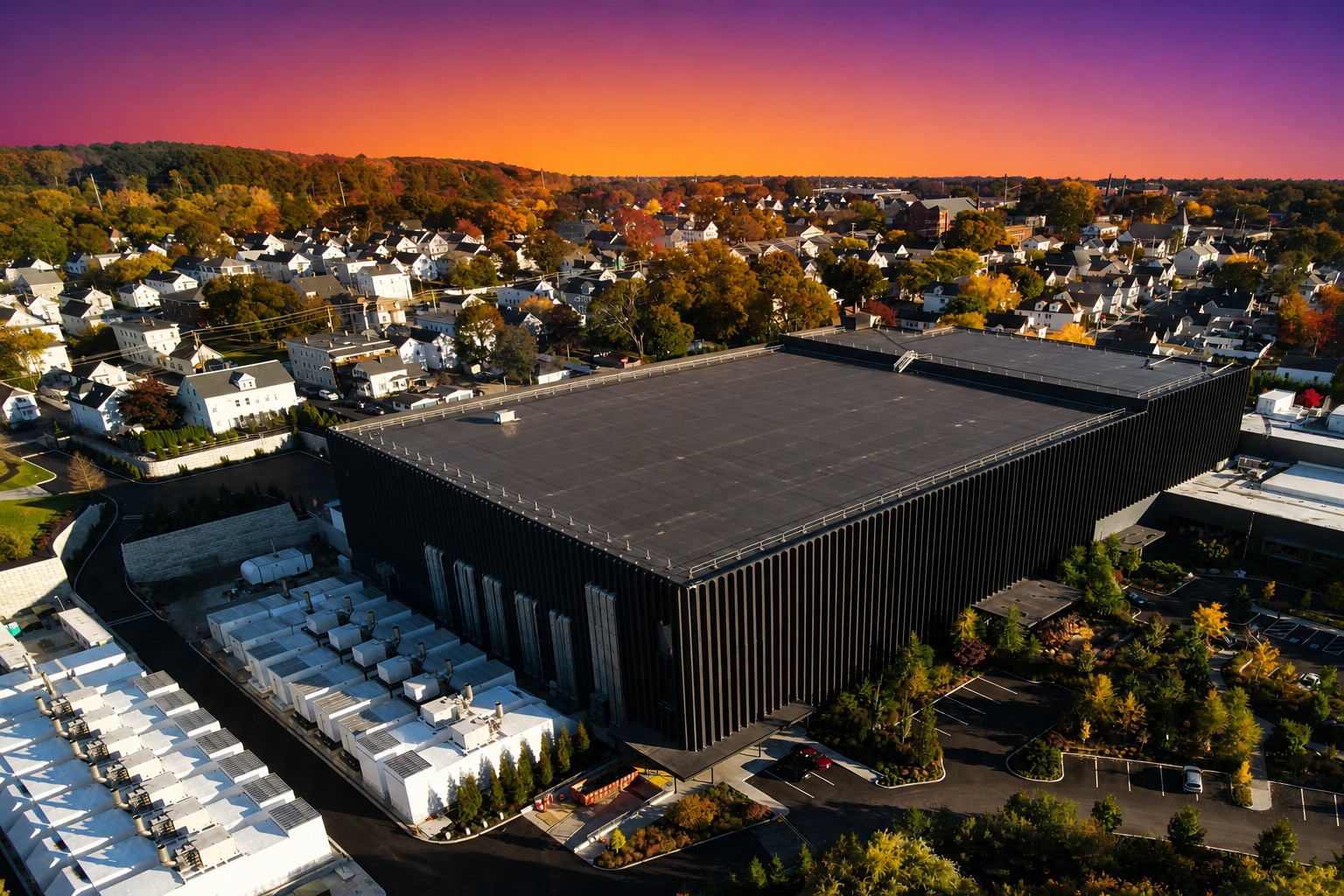
Across the country, dozens of measures were adopted calling for limits on data center construction. Opposition to the expansion of these large, energy-intensive facilities was framed both as a standalone issue and as a unifying campaign slogan.
At one event, James Talarico, a candidate for the Senate from Texas, recounted a conversation with a mother who lives near a data center. She said the light from the facility was so bright that her son woke in the middle of the night thinking it was already daytime.
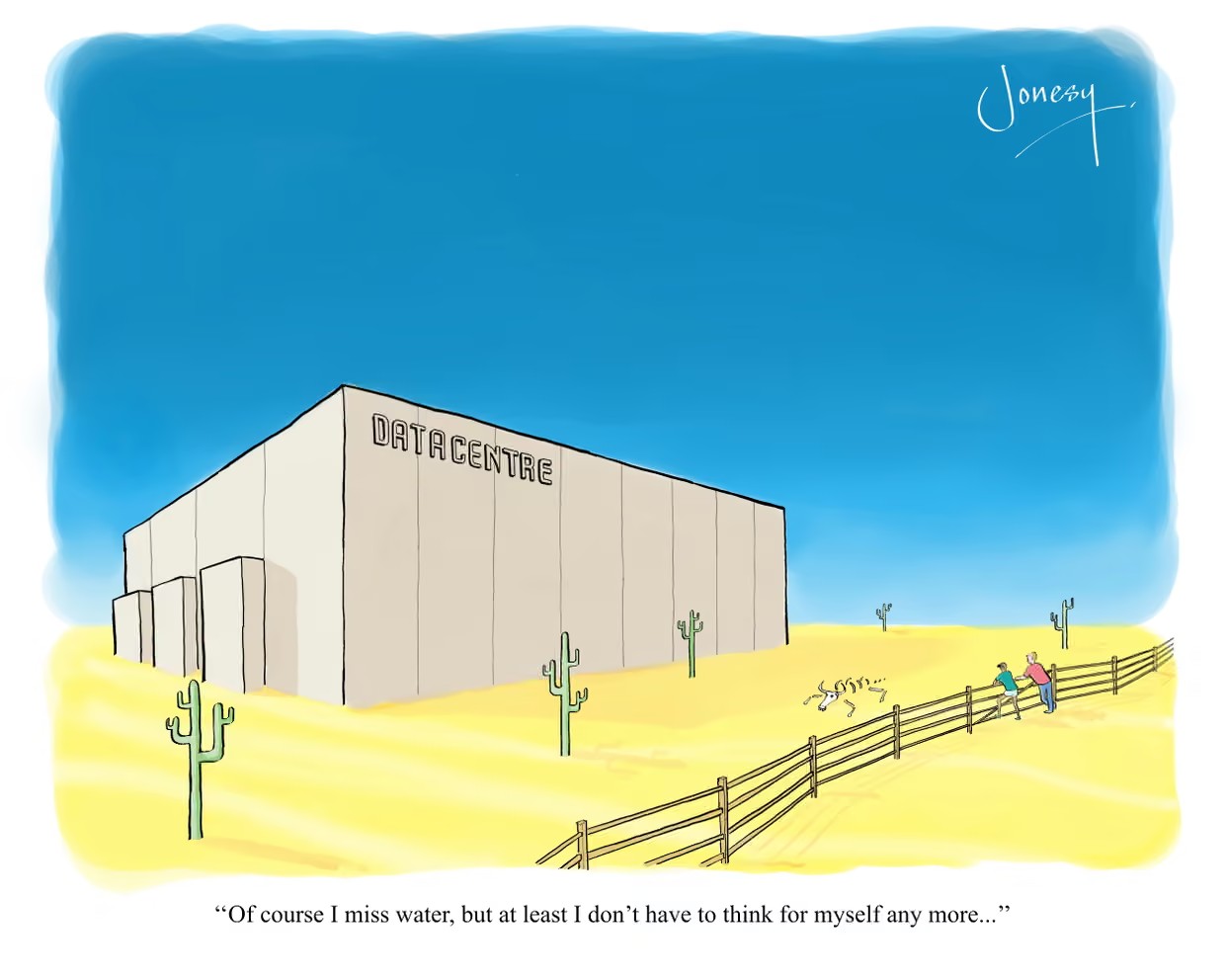
Opinion Saturday cartoon by Steve Jones. Illustration: Steve Jones/The Guardian
Source: theguardian.com
The election results came as the AI market was already being reassessed, and may have undermined one of the narratives that had supported rising stock prices. It is unclear whether the sell-off in technology stocks will continue, but building hundreds of data centers with borrowed money now looks less feasible.
The industry’s plan rested on the assumption that, as demand grew, these facilities would become both essential and economically viable. But it is hard to convince the public that data centers are beneficial when companies are also warning workers that superhuman bots could replace them.
Promised benefits and visible costs
People were expected to accept AI’s drawbacks in exchange for economic gains. Chatbots, which have become the main way most users interact with the technology, can be useful. But those benefits sit alongside obvious downsides: a flood of low-quality content online, glasses designed for covert recording, and persistent efforts by technology companies to build AI into every app, platform and device. Technology journalist Cory Doctorow calls this last trend “enshittification” — the degradation of services to serve companies’ interests.
Voters are also watching executives at major technology companies grow extraordinarily wealthy while ordinary consumers continue to struggle with inflation. Against that backdrop, discontent with the industry was no surprise.
In a democratic society, every business has to operate within limits set by society, even when it has the support of the US president. Technology executives have failed to win broad public support. In Texas, Elon Musk spent billions of dollars trying to buy voters’ favor, but the move became a campaign argument for Democrats.
It remains unclear whether opposition to data centers will lead to a deeper reassessment of attitudes toward technology companies, on a scale comparable to the era of Theodore Roosevelt. At the turn of the 20th century, he entered the White House and set about breaking up oil and railroad monopolies. But protests already seem capable of slowing the rapid expansion of AI’s physical infrastructure.
The market questions the scale of the boom
Changing public sentiment accelerated a market reassessment that had begun before the election. Joe Maher of Capital Economics noted last week that investor interest in AI already looked unsustainable, while the US stock market was showing many signs of being in the late stages of a cycle. In his assessment, the midterms could become a catalyst for a more prolonged decline in AI-related stocks.
At the same time, two things can be true: AI could transform the economy and boost productivity, but the benefits may not be enough to justify current market valuations.
In a recent note, economist Dario Perkins of TS Lombard described a hypothetical future collapse of the AI boom as though it had already happened. In his account, workers in technology and finance did not understand that people outside their circles — ordinary users — were not particularly interested in AI. The technology made web searches easier, though not without caveats, but Silicon Valley’s expectations that people would use it to organize their lives and manage workflows have not been borne out. Perkins wrote that the industry was living in a bubble, both figuratively and literally.
He assessed the industry’s position at the end of 2026 this way: current revenues of $200 billion at two companies — Anthropic and Open AI — support future commitments totaling more than $1 trillion.
Doubts emerged before the vote
A reassessment could have begun even without voters’ intervention. The Nasdaq, which has a large share of technology companies, peaked a month ago, and warnings of a possible overheating have been growing more frequent.
Last month, the International Monetary Fund pointed to mounting evidence that successfully adopting AI may not require the scale of investment being made by hyperscalers. The potential economic impact may also be smaller than expected.
The IMF drew attention to the development of cheaper Chinese models and the spread of circular financing in the AI sector. Other recent reports indicated that some companies are restricting employees’ use of expensive products such as Anthropic’s Claude, or switching to much cheaper models hosted on their own servers.
Protests against data centers have brought renewed attention to these earlier concerns. Whether the stock decline will continue remains unclear. But opponents of infrastructure expansion are now demanding that AI’s supporters prove what benefits the technology will bring to society, including beyond the US, where people are not prepared to accept its obvious costs.
Dataist’s take: The election results showed that public support for AI depends not only on what chatbots can do, but also on who pays for the infrastructure and who benefits from its development. As companies restrict the use of expensive products and protests slow data center construction, promises of future productivity alone do not resolve these questions.
Daily AI news
Every day we pick what actually matters in AI and explain it plainly — no hype, no filler. Subscribe if you want to follow where the industry is going.
Only what matters — every day
Follow on X