
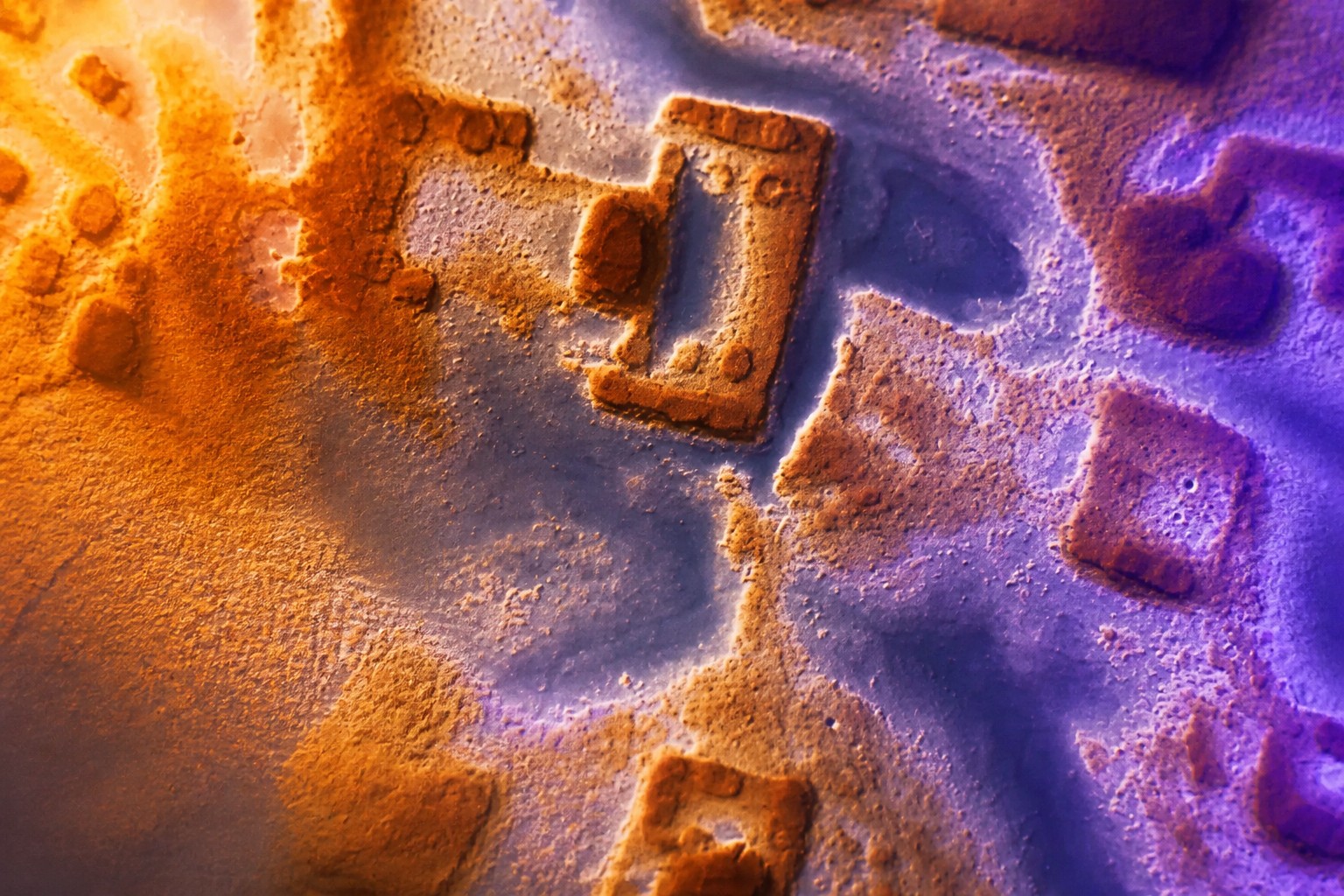
Google researcher Pietro Miotti said his AI agents had found an unknown Maya settlement beneath the jungles of Mexico in NASA lidar data. It later emerged that the site had already been mapped and described by researchers led by archaeologist Francisco Estrada-Belli. Miotti’s agents had missed the earlier publication, so they rediscovered the site rather than finding it for the first time. The story prompted debate about how AI researchers report results and account for previously published science.
AI agents claimed to discover a Maya city already known to archaeologists
What the data analysis showed
Miotti said the agents analyzed NASA lidar data and found a site that, as far as he knew, had not been reported before. According to him, less than 72 hours passed from a spur-of-the-moment idea during a trip to an official response from the Mexican government. The researcher acknowledged that he is not an archaeologist, but suggested that AI could bring change to many fields of science, not just programming, physics and mathematics.
The post spread quickly on social media. Users praised the prospect of finding ancient cities without leaving their desks and cited the story as an argument for building AI data centers. AI-generated images of what the settlement might look like after excavation also circulated. The Verge and TechRadar were among the outlets that covered the discovery.
The settlement was already known
Archaeologist Sarah Parcak, an author of research papers and an award recipient, pointed out that Dr. Francisco Estrada-Belli of Tulane University had published the site many years earlier. In a 2025 paper, a team led by Estrada-Belli studied lidar data collected by NASA’s Goddard Space Flight Center. The survey covered 95,000 square kilometers of Central America. The researchers concluded that the Maya population may have been substantially larger than previous estimates, possibly reaching 16 million people at its peak.
Parcak stressed that a site’s absence from the Mexican government’s database does not mean it is unknown or unmapped. Estrada-Belli sent her images of the settlement to support that explanation.
Miotti acknowledged that the site had already been mapped. He clarified that the agents had not found the earlier publications and had therefore rediscovered the settlement. He said that part of the work still needs improvement.
Dispute over credit for scientific results
The story echoes broader disputes over AI researchers’ claims about results that others have already achieved. One prominent example involves OpenAI: the company published many “proofs” of well-known unsolved mathematical problems, but some of them reportedly may have drawn on the work of mathematicians who were already tackling those problems.
Earlier this year, the dispute escalated into a crisis: mathematicians accused OpenAI of publishing unverified proofs and committing plagiarism. The case also prompted criticism of the AI industry as a whole, which has been accused of using copyrighted material from the internet to train its models.
At the same time, machine learning and computer vision have long been used in Earth remote sensing, said geoscience consultant Alex Yanewski. Historian Roman Strong added that exaggerated claims about AI push experts’ work into the background and create the false impression that they do not use modern digital tools, even though they have been doing so for decades.
Dataist’s take: this case shows that an AI agent’s finding does not, by itself, establish that a result is new. Scientific publications and the work of specialists need to be checked. Without that, a rediscovery can easily be presented as a discovery, taking credit away from those who described the site earlier.
Daily AI news
Every day we pick what actually matters in AI and explain it plainly — no hype, no filler. Subscribe if you want to follow where the industry is going.
Only what matters — every day
Follow on X