
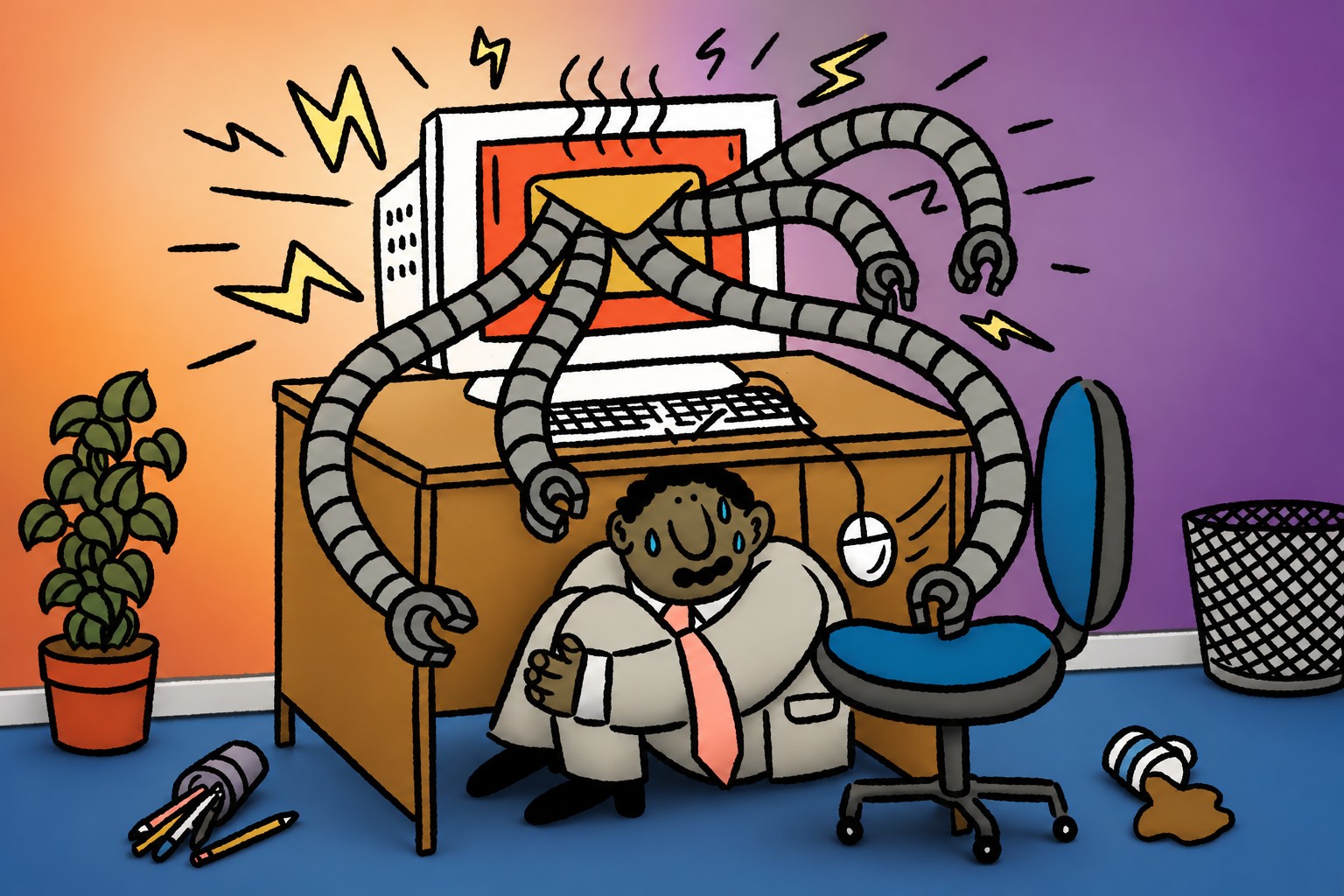
Complaints are getting longer
Holly Wickens, a senior staff member in the office of a Labour MP, says AI-written letters were rare in 2024 but now make up about half of incoming mail. In ten years on the job, she has never seen such a volume of requests and complaints that are difficult to process.
Until recently, filing a complaint, applying for a job or objecting to a local development project took time spent finding information and drafting a letter. The spread of ChatGPT, which turns four later this month, along with Claude, Copilot, Gemini and other generative tools, has made that work easier. Chatbots help people without specialist knowledge draft requests, acting as a free, if sometimes unreliable, legal adviser, administrator or personal assistant.
Developers promised that AI would automate routine tasks and boost productivity. Some signs of that effect can be seen in parts of the economy; AI has also been linked to some of the UK’s higher-than-expected GDP growth this year. But British companies, courts, schools, councils and other public bodies say a flood of letters, complaints and legal claims is putting more pressure on already limited resources. Commentators have called the phenomenon “AI slop.”
Researchers from the Hertie School’s Centre for Digital Governance, the Cooperative AI Foundation and GovAI call the mass submission of AI-generated requests “agentic flooding.” A user may need only a few minutes to prepare such a letter, while staff need much longer to read it and prepare a response.
Deborah Evans, chief executive of Lawyers in Local Government, an organisation representing 5,600 local-government lawyers, says similar problems are appearing across sectors. AI makes it easy to draft a complaint in an official, persuasive tone, but local authorities are receiving more and more complaints on a wide range of issues, from adult social care to missed rubbish collections and objections to development. Evans says councils receive no additional funding as complaints increase.
Local authorities look for signs of AI use in the length of letters, certain turns of phrase and bulleted lists. Alessandro Georgiou, leader of Enfield Council, says residents are increasingly appealing council decisions, including parking fines.
The UK’s Information Commissioner’s Office (ICO) said many public bodies received more requests in 2025. It noted that AI-generated requests can be very long and repetitive, contain irrelevant comments or make incorrect demands. They can also make it harder to understand exactly what information the author is seeking. According to Evans, complaints to local authorities used to average about two pages; most are now roughly ten times longer. The longest she knows of is about 200 pages.
The ICO warns, however, that a public body must still respond to a request that appears to have been written with AI and contains errors.
AI can frame a complaint as a legal claim and cite laws and court rulings that do not apply in the relevant jurisdiction. Evans says a chatbot might find a precedent that looks relevant in Canada, for example, or invent facts.
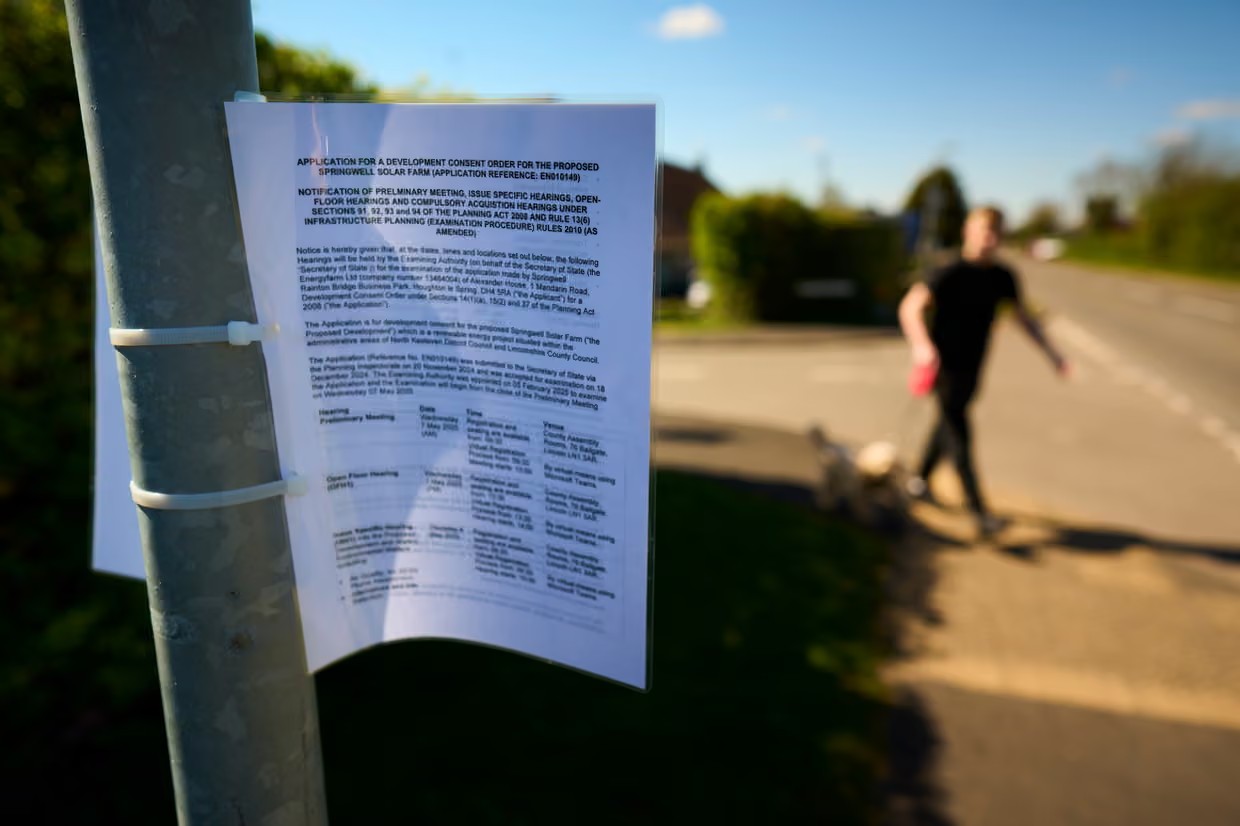
Before AI, objecting to a local planning application would have taken some time and effort. Photograph: Christopher Thomond/The Guardian
Source: theguardian.com
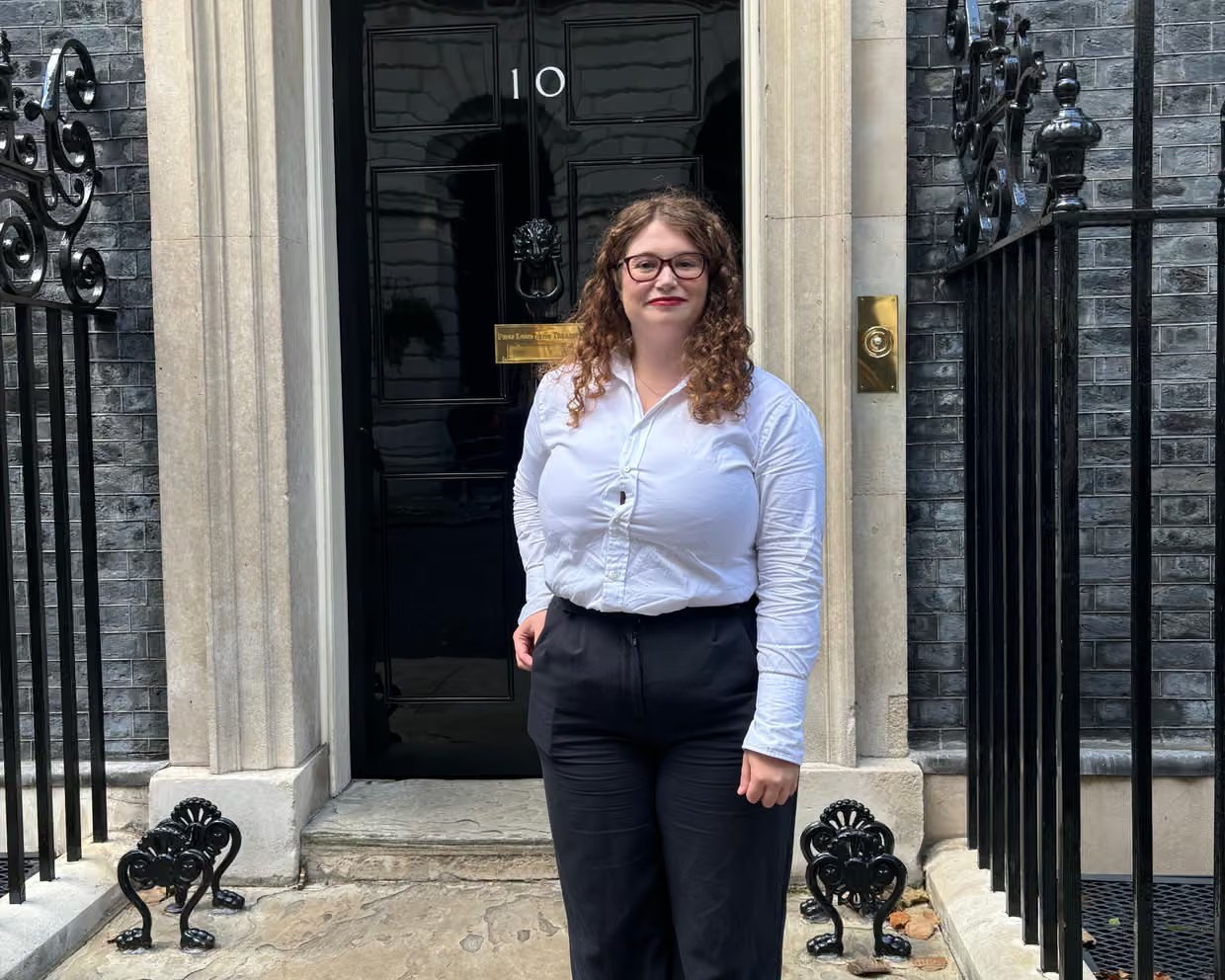
‘Half the emails we receive are some form of AI,’ says Hollie Wickens, a senior caseworker in an MP’s office. Photograph: Handout
Source: theguardian.com
Some business owners worry that AI’s tendency to support users and affirm their position gives people unwarranted confidence about their chances in court. The founder of an unnamed technology startup is dealing with a former employee who was dismissed for poor performance and is challenging the dismissal at an employment tribunal. The founder believes the process was handled properly and says the letter’s style makes AI use apparent. With cases piling up, the founder expects to spend £30,000 on legal services by the time of the hearing.
From April to June, the number of new employment tribunal cases rose 28% from the same period a year earlier. The latest government figures put the total at 14,000 claims from individual applicants. The number of cases concluded during the quarter fell, leaving 70,000 open claims from individual applicants at the end of June.
Jim Moore, an employment relations specialist at Hamilton Nash, says the founder’s experience is not unusual: many of his clients receive letters written entirely or largely with AI. Employers describe the complaints as excessively wordy and full of exaggerated accusations that make minor incidents sound like serious misconduct. Moore says the letters often fail to explain the main point: what outcome the applicant wants. Instead, they can sound threatening without specifying what they are seeking from the employer.

Complaints to local authorities are surging, including over issues such as planning applications, parking tickets and bin collections. Photograph: Fotomaton/Alamy
Source: theguardian.com
Requests are overwhelming the transport agency and MPs’ offices
Deadlines for responding to some requests add to the pressure. TfL, which runs London’s public transport, received 4,769 freedom of information requests in the 2025–2026 financial year, more than ever before. That is 5% above the previous record, set in the 2023–2024 financial year.
Minutes from a meeting of TfL’s Audit and Assurance Committee show that appeals have also increased. The committee noted a rise in requests that appear to be AI-generated and contain technical claims and assumptions that are often inaccurate.

Transport for London (TfL) received a record 4,769 freedom of information requests in 2025-26, with a ‘noted increase’ in appeals believed to be AI-generated. Photograph: Martin Godwin/The Guardian
Source: theguardian.com
MPs’ staff have been affected too. Vonne Sandlan, who runs the office of Graham Downie, a Labour MP for Dunfermline and Dollar, says the rise in AI-generated requests has worn down her team. Staff work beyond their paid hours and, she says, have reached their limit.
Sandlan acknowledges that AI agents can help people who struggle to write letters themselves. Her office recently decided, however, not to respond to automated “write to your MP” campaigns, so it can focus on constituents’ requests.
The GMB union, which represents MPs’ staff, says the increased workload for caseworkers is widespread. Lisa Gilmore, chair of the union’s branch for MPs’ and peers’ staff, says that in offices keeping their own figures, the number of such cases has at least doubled, while staff continue to handle the flood without a break.

‘AI is not lightening the load in MPs’ offices,’ says Lisa Gillmore of the GMB union. ‘Casework has doubled or more.’ Photograph: Vuk Valcic/Sopa Images/Shutterstock
Source: theguardian.com
How organisations are trying to handle the flood
Evans warns that every pound local authorities spend processing complaints is a pound they cannot spend on other tasks. Some ombudsman services are already limiting complaint length or creating online forms that restrict the amount of material people can attach.
Another option is to use AI to screen and summarise AI-generated letters. But this approach costs money and, Evans says, may strip human involvement from the exchange.
Wiltshire Council said it is exploring the use of AI to summarise long letters and draft initial responses. A committee of Stroud District Council in Gloucestershire discussed using Microsoft Copilot to prepare reports and present information.
Researchers have also suggested other ways to limit the flow of requests: making applications harder to submit, charging for requests or blocking bots on government websites.
The UK government has issued guidance for civil servants on using AI. It advises them to check facts supplied by tools, avoid entering personal data and ensure that a person reviews the work and makes the final decisions.
Journalist Jamie Bartlett, who has heard many accounts of “AI slop,” thinks public bodies and companies will probably have to use AI to screen incoming requests or set stricter rules on which letters they accept. Otherwise, he fears, organisations could be overwhelmed.
Dataist’s take: AI has made it cheaper and faster for people to prepare requests, but it has not eliminated the work for those required to process them. As long as organisations must respond to every request and lack additional resources, automation on the sender’s side may simply shift the time cost to public- and private-sector staff.
Daily AI news
Every day we pick what actually matters in AI and explain it plainly — no hype, no filler. Subscribe if you want to follow where the industry is going.
Only what matters — every day
Follow on X