
The product sits below the story
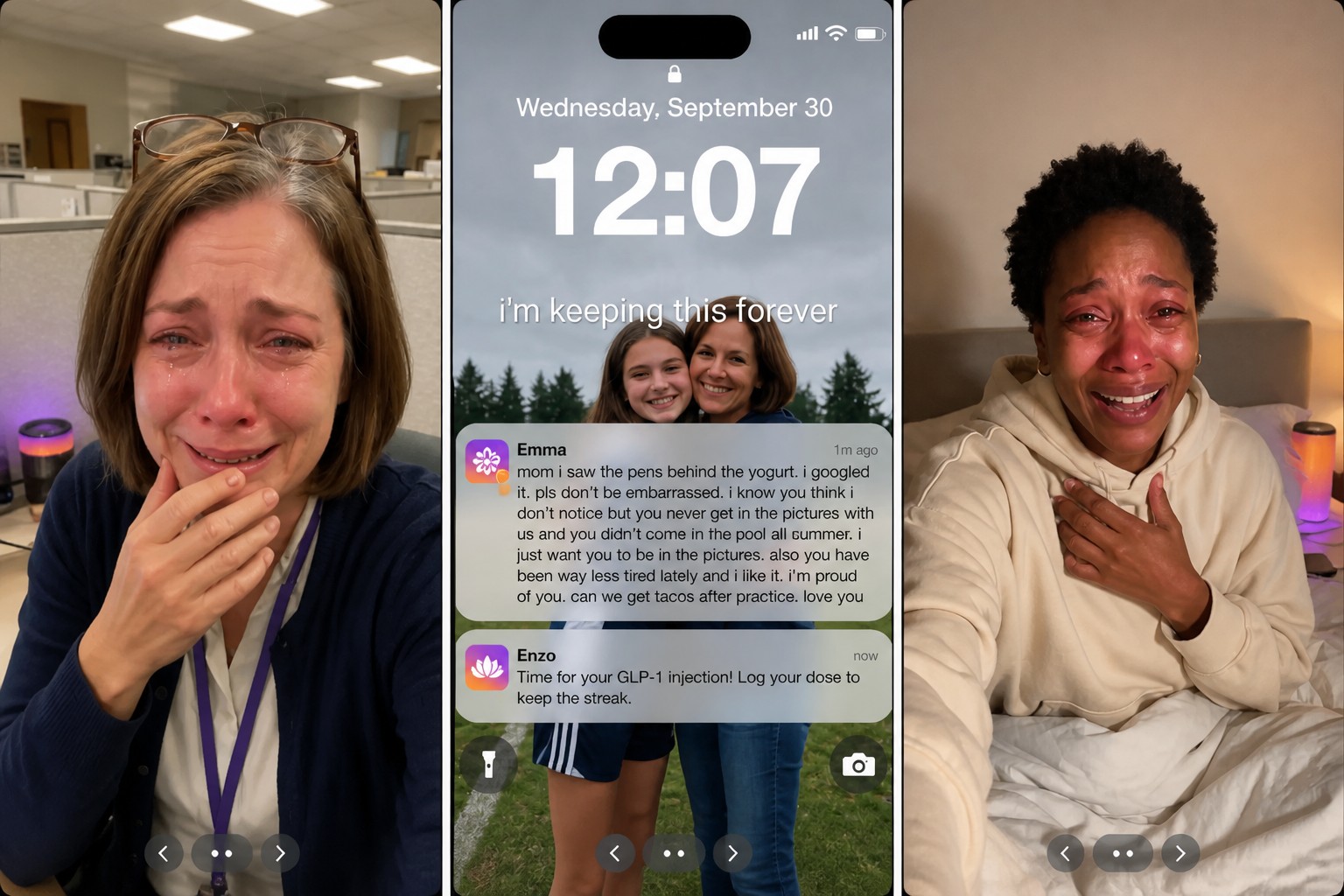
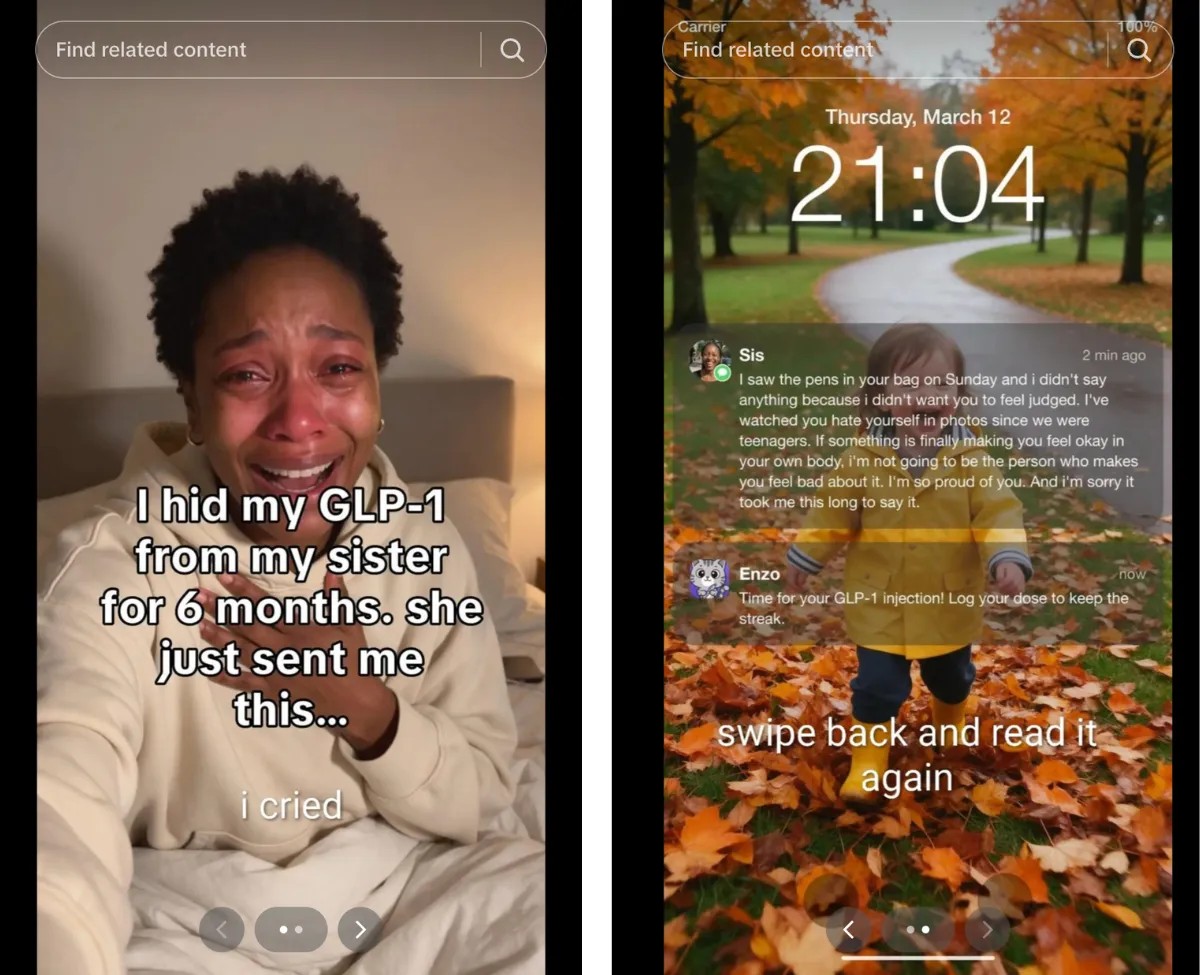
On the WellWithHer account, an AI-generated woman sits crying on a bed. The caption says she hid GLP-1 injection pens in her bag for six months, until her sister discovered them.
The next image shows a supposed message from “Sister.” She says she noticed the pens on Sunday but stayed quiet so her sister would not feel judged. She recalls how her sister had disliked seeing herself in photos since her teens, and says she is glad the medication helps her feel better in her body.
Source: futurism.com
Below the message is an Enzo reminder to log a GLP-1 dose and keep a streak going. The app’s mascot is a cartoon cat.
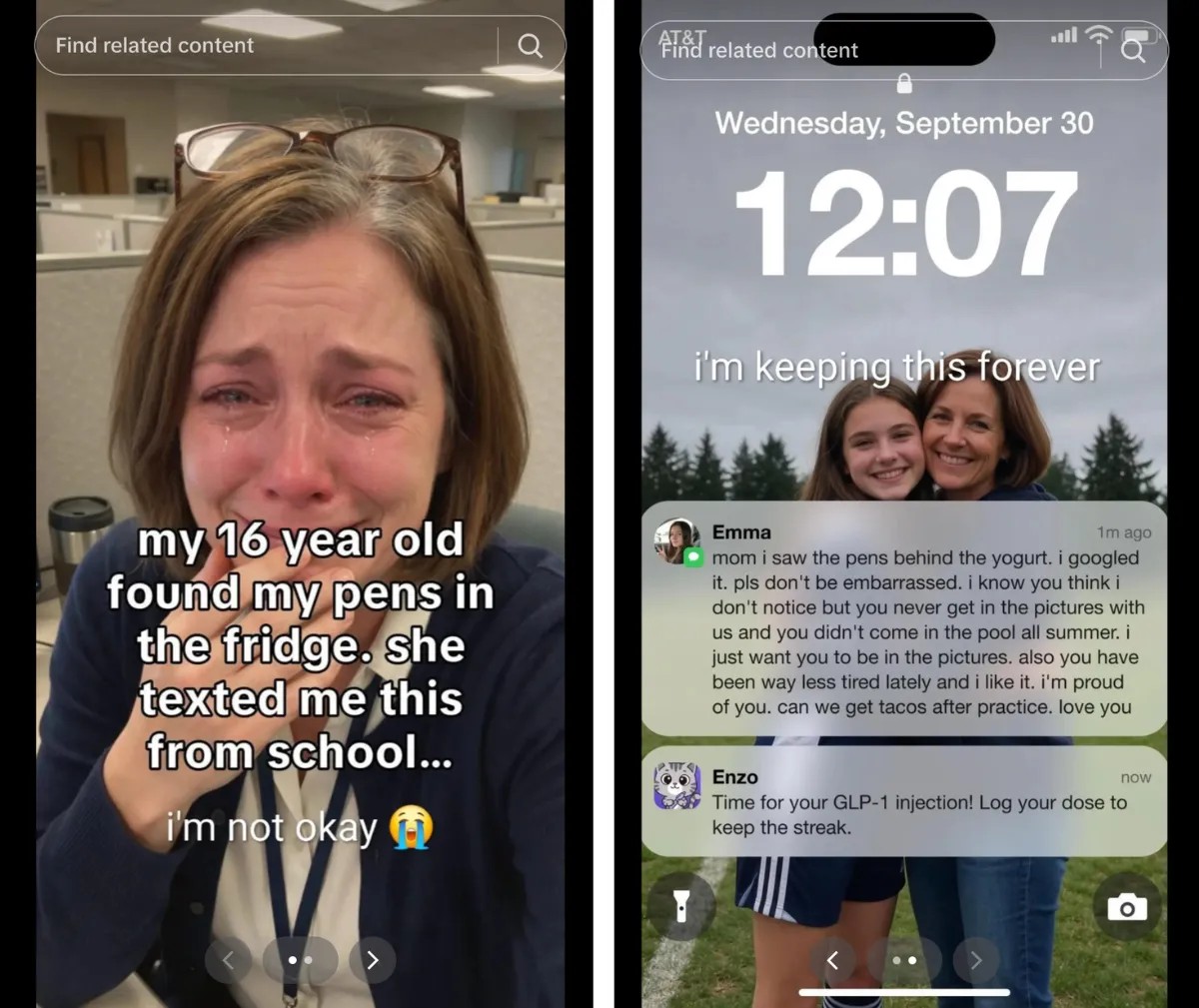
Another WellWithHer post follows the same pattern: a fictional daughter named Emma tells her mother not to feel ashamed after finding her medication in the refrigerator. The message says she has noticed her mother avoiding photos and skipping the pool all summer. It ends with an invitation to get tacos after a workout, followed by another Enzo dose reminder.
Source: futurism.com
The emotional scenes are the ad. Enzo appears at the bottom as the practical solution.
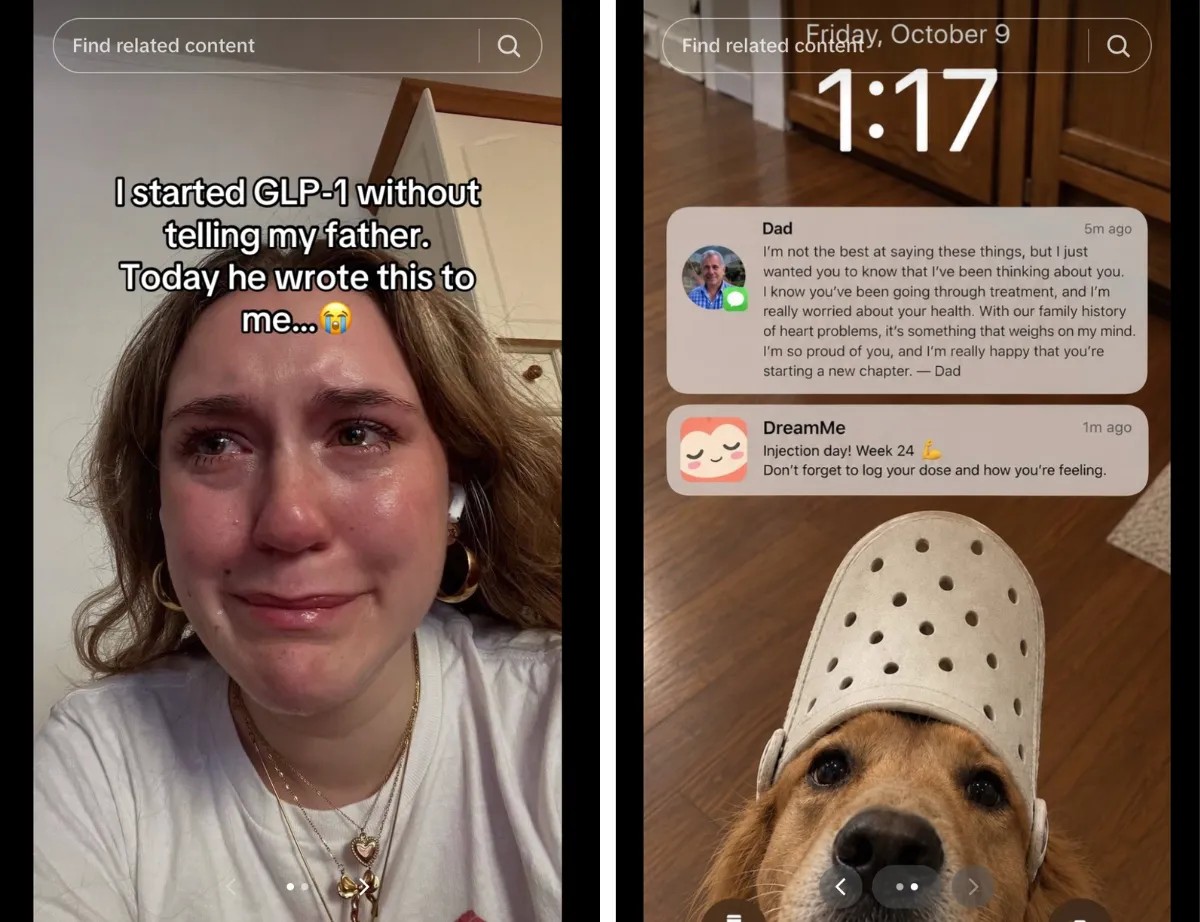
A separate TikTok account promotes DreamMe using a mix of stolen photographs of real influencers and AI-generated images. Its fictional young women often appear in tears, alongside fabricated messages from relatives. One post shows a supposed text from “Dad,” who says he knows about his daughter’s GLP-1 treatment and worries about her health because of a family history of heart disease. He also says he is proud of her.
Source: futurism.com
DreamMe’s website calls its cartoon fish Sushi “a new best friend for GLP-1” and presents several AI-generated women as real customers who lost weight with the app. The site says: “Real stories. Real users. The numbers are theirs, the words are theirs. We just made the fish.”
One format, several apps
The GLP-1 posts belong to a wider pattern of AI-generated women promoting health and self-help apps through invented personal crises.
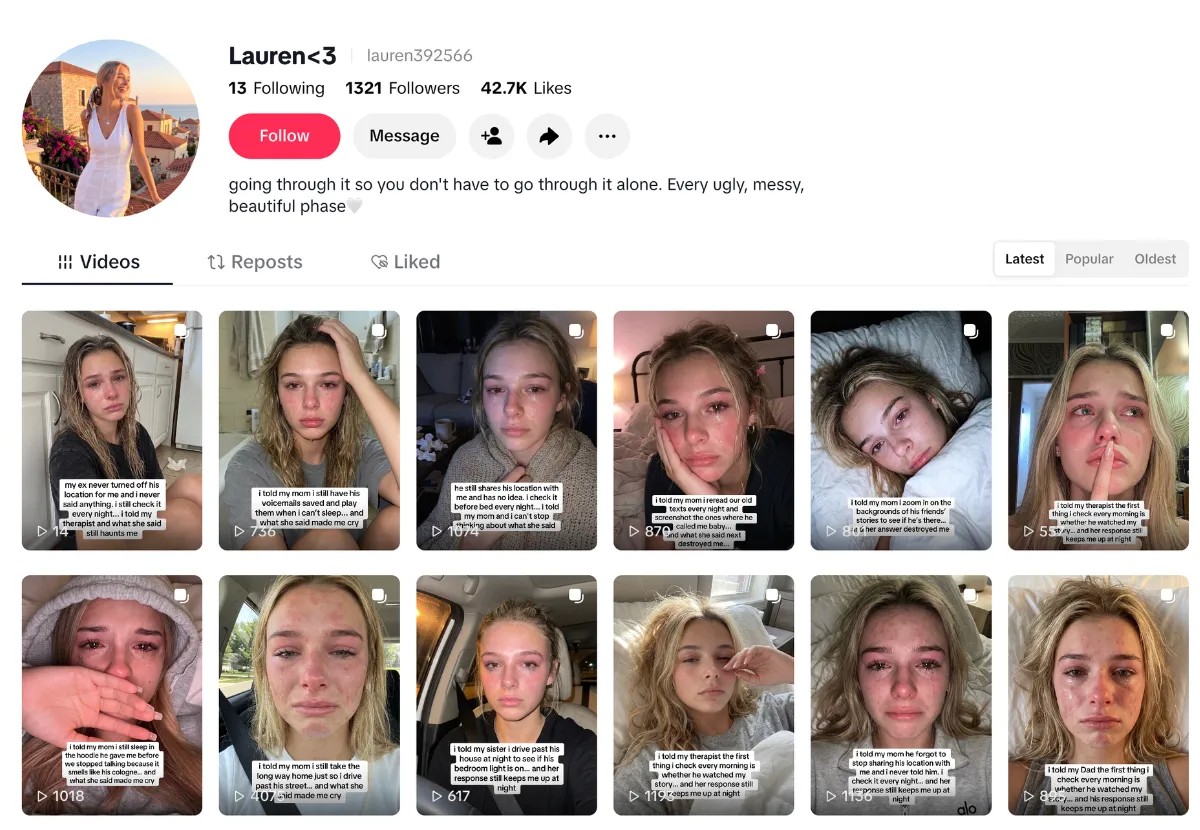
Source: futurism.com
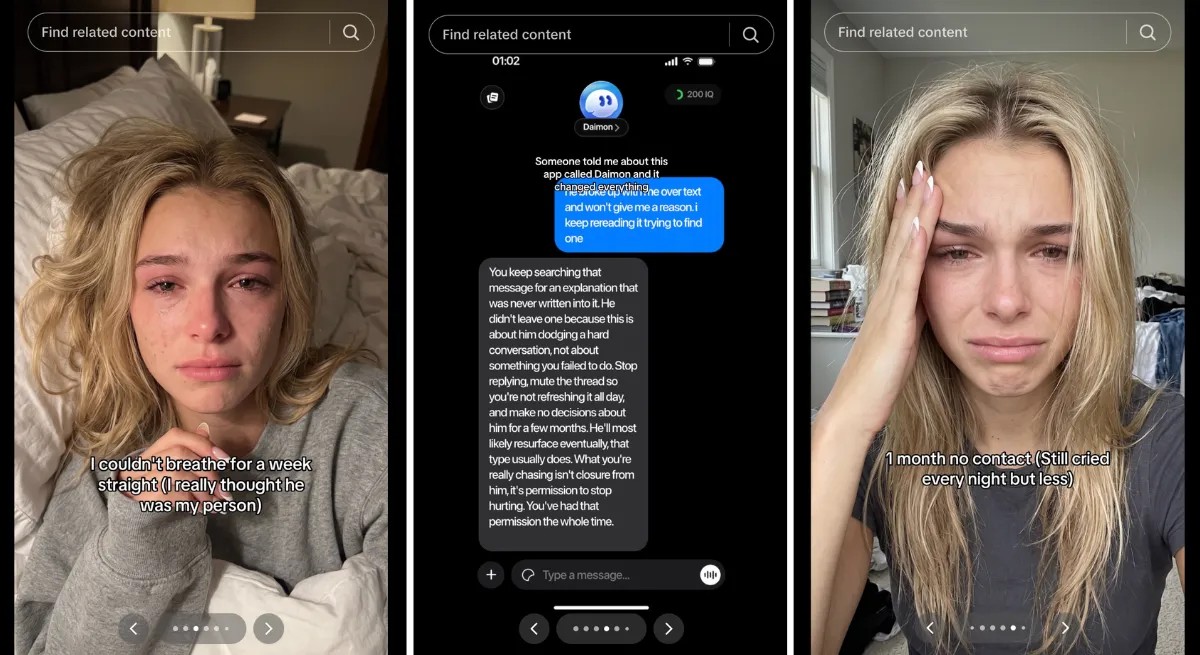
Source: futurism.com
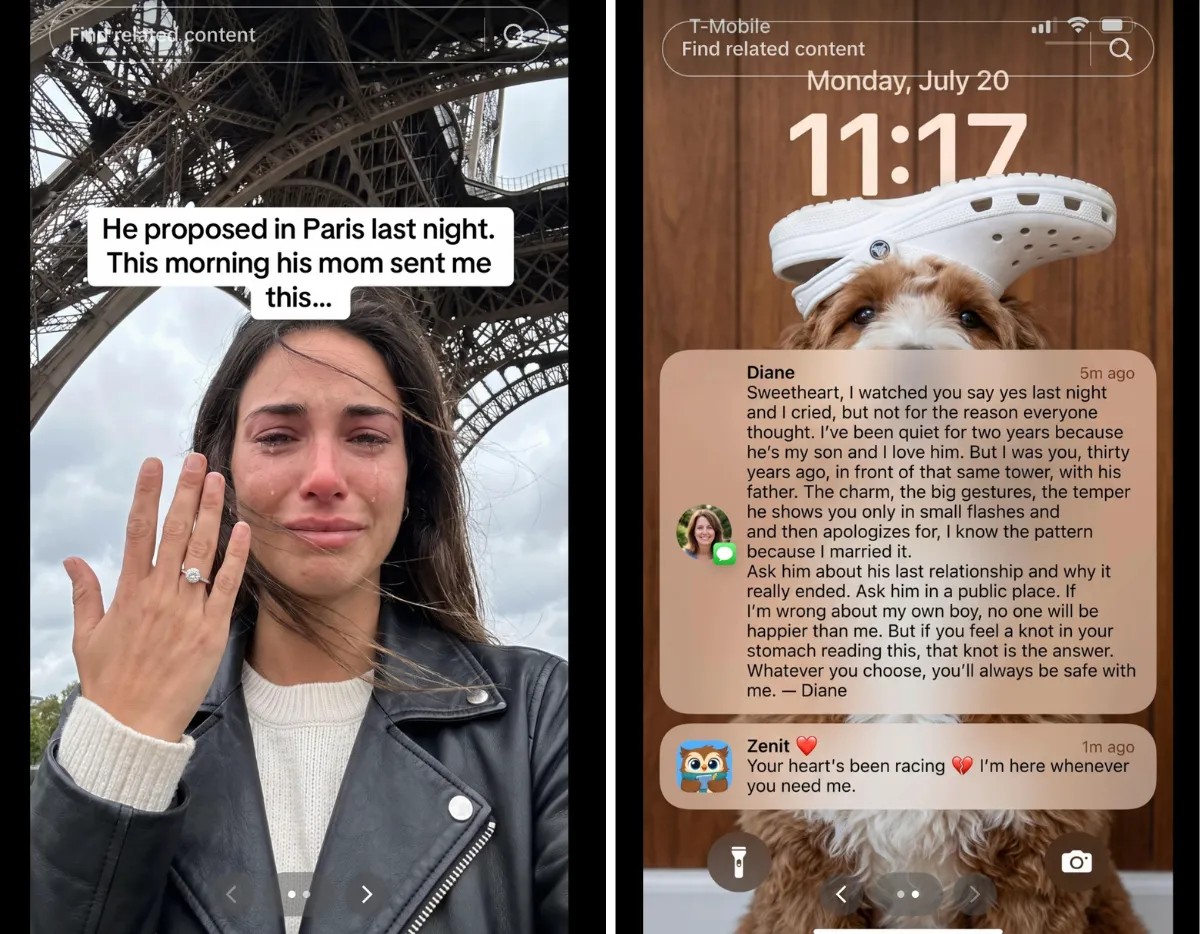
The Paris story was detailed enough to persuade at least some viewers. One commenter told the fictional woman to run, saying the mother was trying to protect her.
The stories are engineered to look like intimate disclosures, but the product placement makes their purpose visible. In the Zenit posts, the app notification appeared each time. On WellWithHer, Enzo’s reminder followed the family messages. Yet neither the GLP-1 posts nor the synthetic material were labeled as advertising or AI-generated content.
What the companies said
After journalists contacted the accounts and app makers, Zenit’s TikTok account was deactivated. Its developer, independent creator Pedro Perez, told Futurism that he ran the account himself and had not hired contractors or marketing agencies.
Perez said the videos showed situations many people experience, so viewers could feel understood and see a tool that might help. He acknowledged that the visuals were AI-generated and the posts promoted the app, and said they should have been labeled. TikTok would not let him add labels to videos already published, so he deleted the account. Perez said transparency mattered especially for a health app.
Source: futurism.com
Daimon’s account removed its posts and changed its name from Lauren<3 to yooo. Its developer, Prospinity, said its internal marketing team had not run the account and had neither created nor approved the posts. The company said it had worked with external affiliate programs, whose partners sometimes posted through accounts Prospinity did not directly control. After investigating, it said it identified those responsible and took steps to stop the activity. Prospinity said the posts violated its rules and did not reflect how it wanted Daimon presented.
DreamMe did not answer questions sent to email addresses on its website. An email to Enzo bounced, and the journalists received no replies from the TikTok accounts associated with those apps.
I think the most revealing detail is how little the format depends on any one product. The tearful image and fabricated family message can sell a medication tracker, a chatbot or a wellness app; the app notification is almost interchangeable. After the inquiries, the account promoting Enzo moved on to an app for tracking peptides, while DreamMe’s account began promoting a phone-blocking app. The marketing machinery can change products without changing its story.
Daily AI news
Every day we pick what actually matters in AI and explain it plainly — no hype, no filler. Subscribe if you want to follow where the industry is going.
Only what matters — every day
Follow on X