
Source: the-decoder.com
A small market with unusually deep pockets
AI use is broad, but daily use is not: a16z says nearly half of Americans use AI and a quarter use it every day. The share with an active personal subscription to ChatGPT, Gemini or Claude was about half as large a year earlier.
Spending is even more concentrated. The top 1% of AI spenders account for nearly a fifth of tracked spending—more than the bottom half of paying users combined. They spend about $900 a month on average, while the typical paying user spends about $25, a figure that has barely moved.
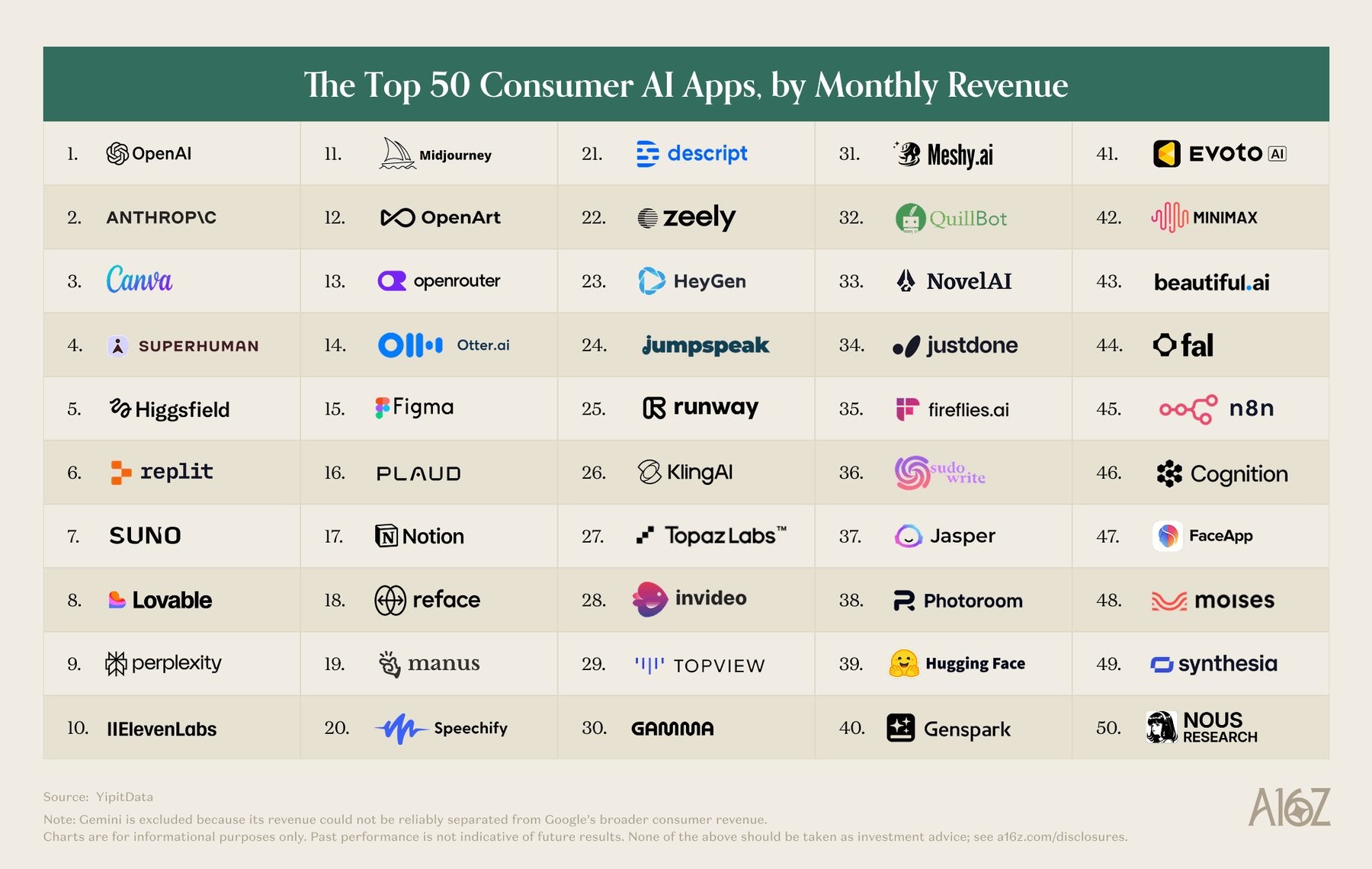
OpenAI and Anthropic lead the new spending ranking based on YipitData panels. Gemini is absent because its revenue can't be separated from Google's other subscriptions. | Image: a16z
Source: the-decoder.com
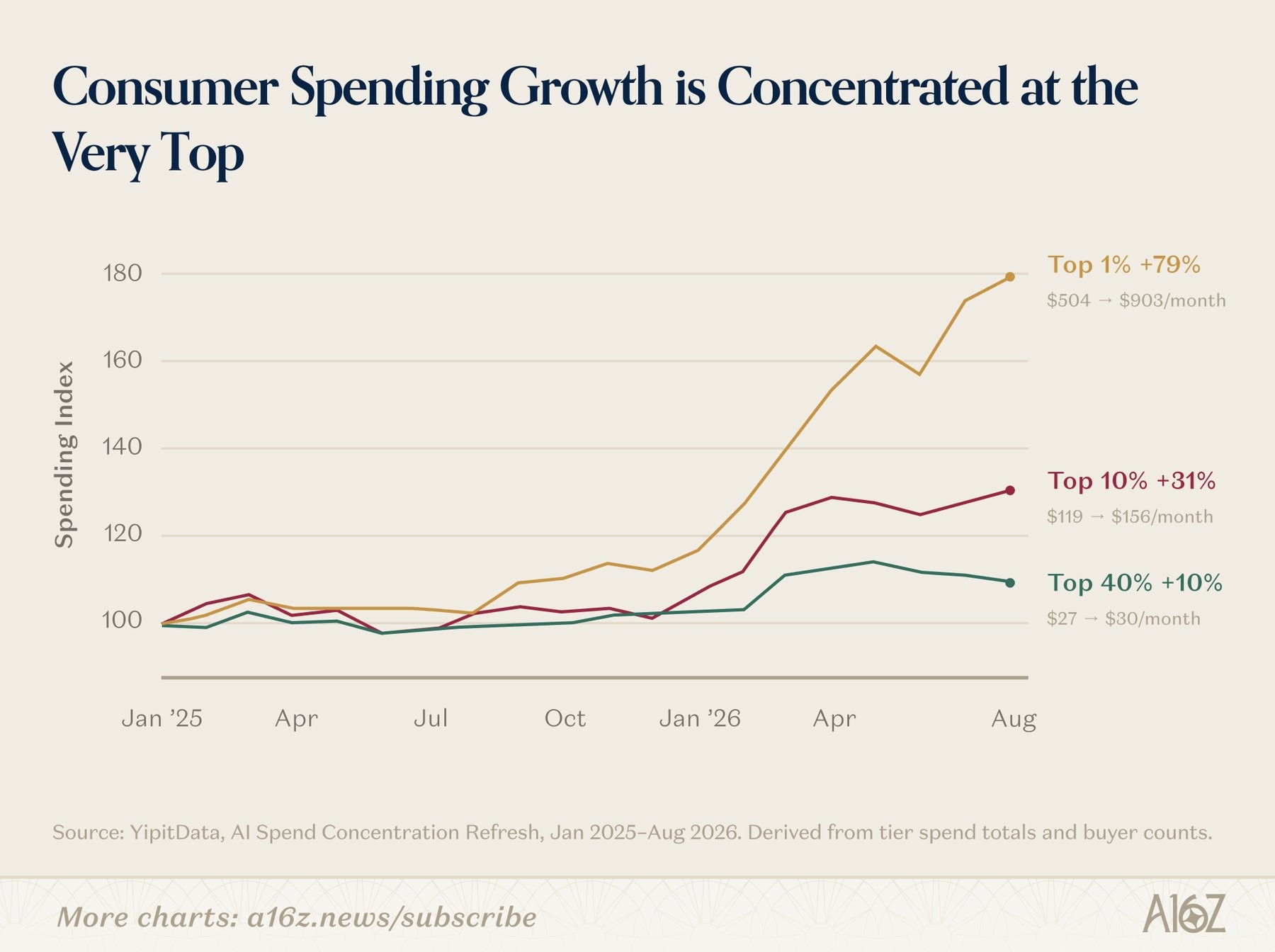
Spending growth is almost entirely concentrated in the top one percent of payers, who now spend 79 percent more than they did in early 2025. | Image: a16z
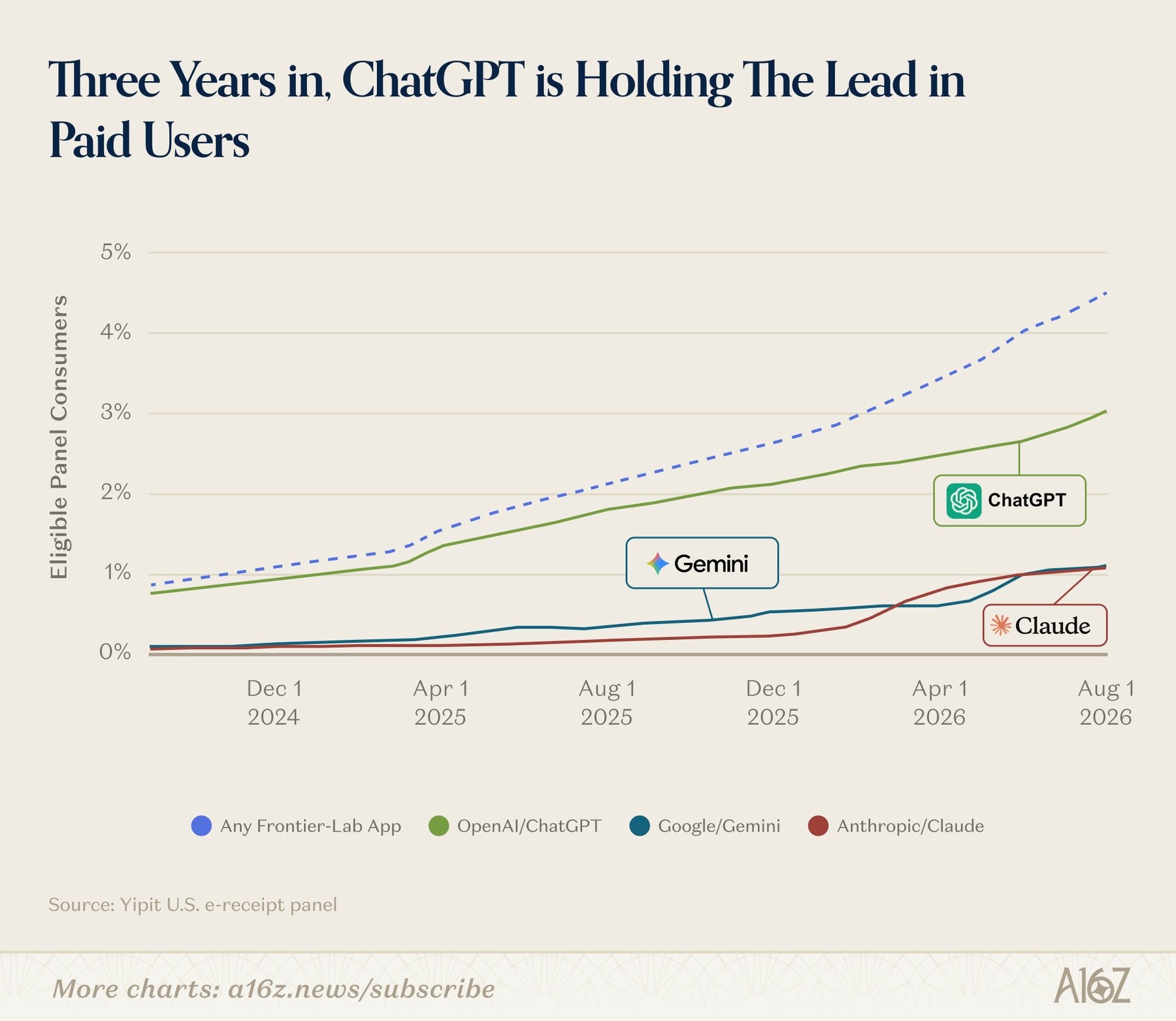
The share of paying AI users in the US roughly doubled over the past year, with ChatGPT making up most of them. | Image: a16
Source: the-decoder.com
Source: the-decoder.com
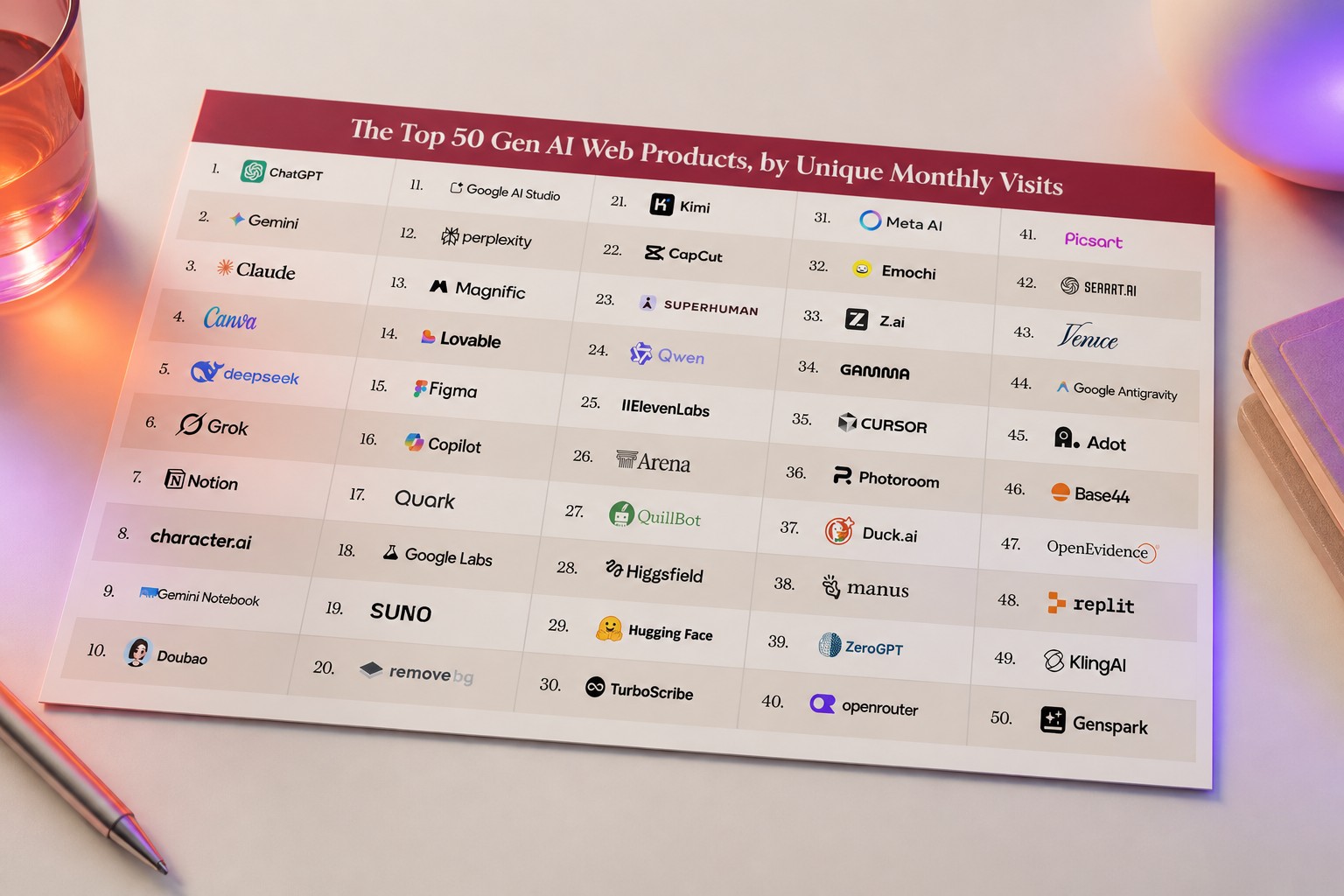
The biggest spenders tend toward tools for building products and automating work, including n8n, Manus and fal, as well as creative software such as Higgsfield, Figma and HeyGen. A16z sees professionals and advanced hobbyists as consumer AI’s first meaningful paying market. Only seven companies appear in the top group across all three rankings, including ChatGPT, Claude, Perplexity and Canva.
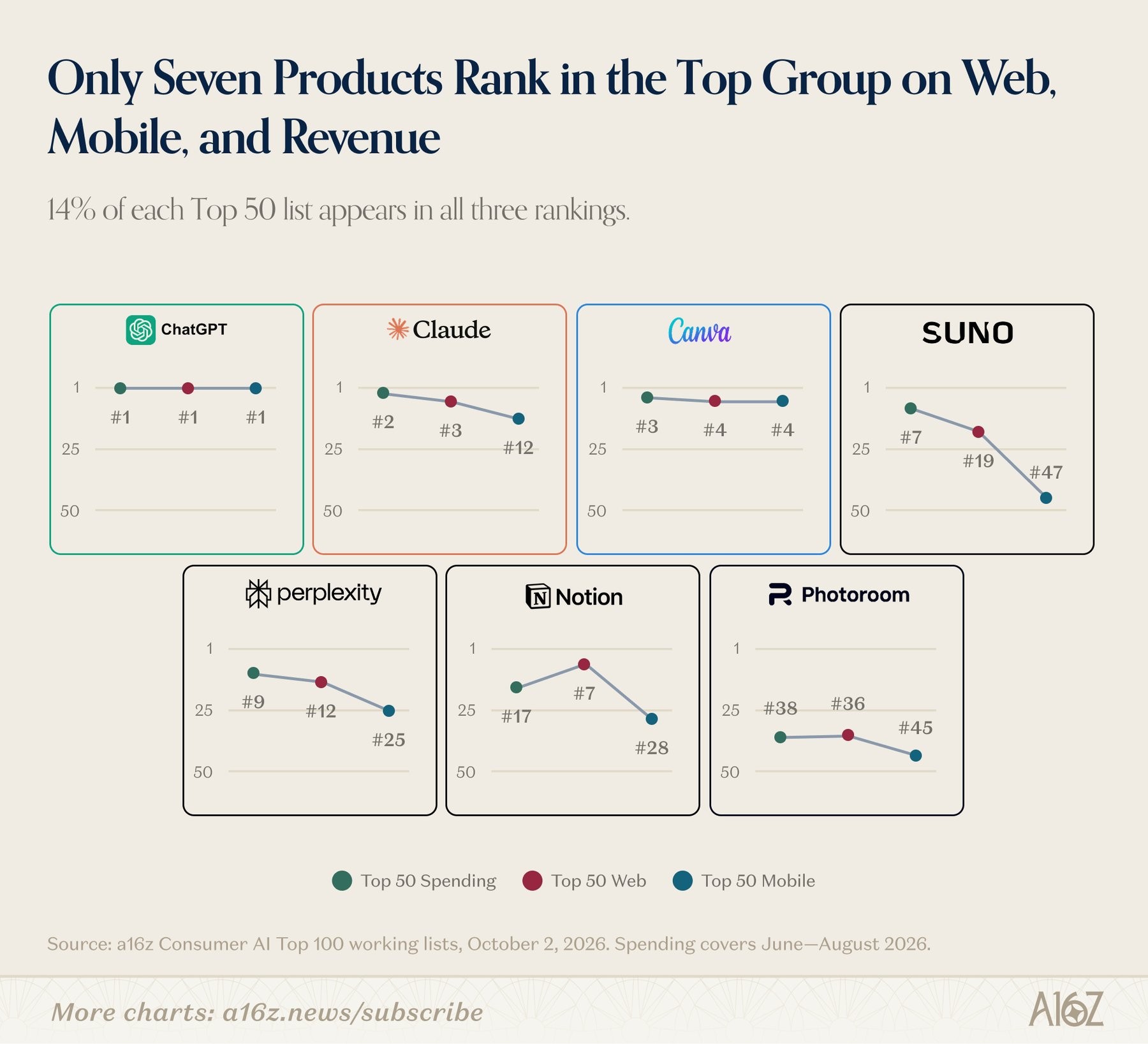
Only seven products appear in all three top 50 lists. ChatGPT ranks first in each one. | Image: a16z
Source: the-decoder.com
That concentration also reflects how much work it takes to use paid products well. Paid accounts open up more features, but the products can be harder to learn; many free users may encounter only a fraction of what AI tools can do. A16z warns that the skills gap could deepen existing inequality, though simpler and cheaper AI could eventually make it less important.
The market leaders still look familiar. ChatGPT leads web traffic, with roughly twice Gemini’s visits and six times Claude’s. Its lead is even larger on mobile. Claude, however, has become a more established third-place contender: absent from the first website ranking in 2023, it has since passed Deepseek and Perplexity in traffic and reached parity with Gemini in US subscribers.
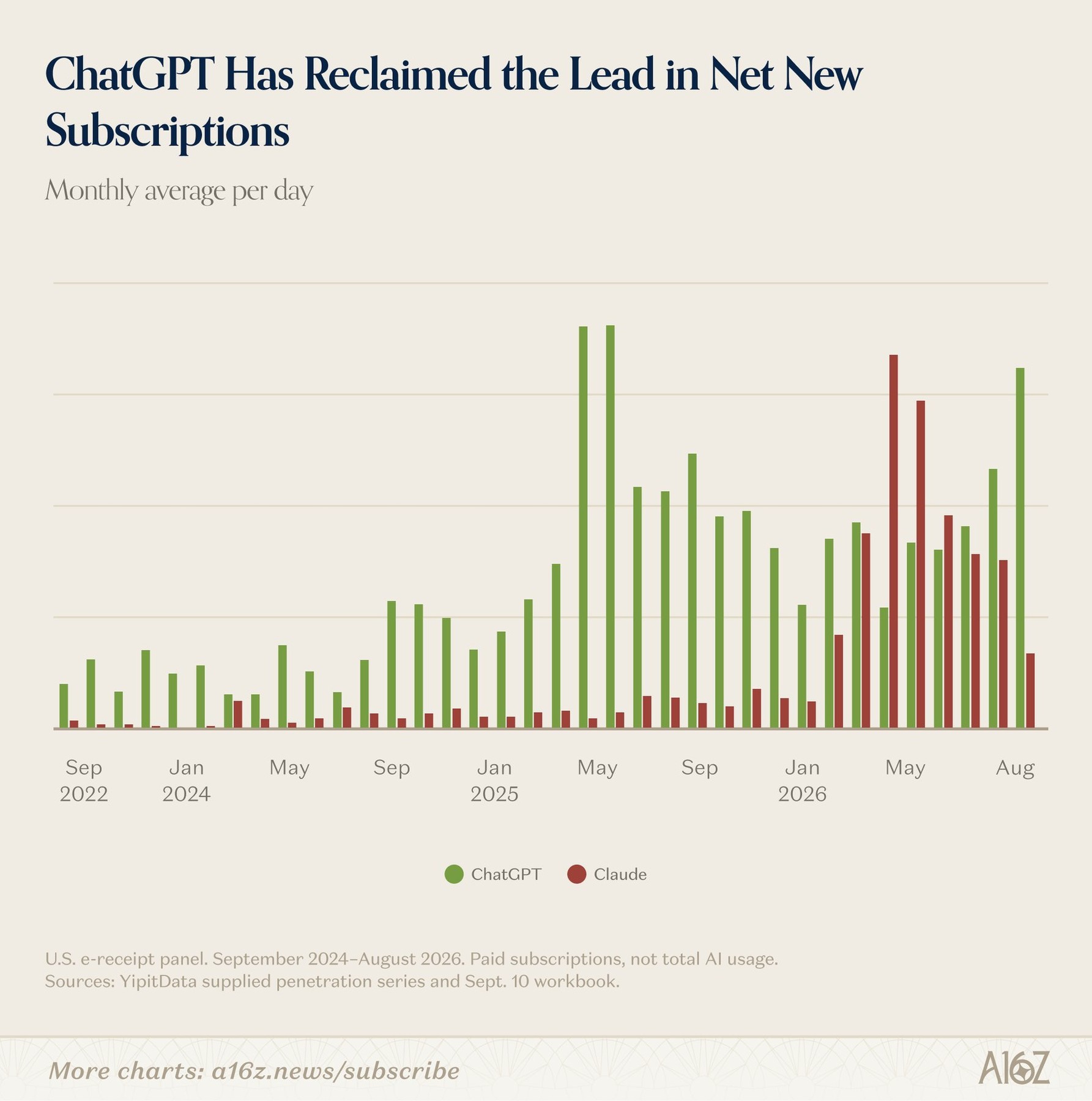
After Claude's peak in the spring, ChatGPT clearly retook the lead in net new subscriptions by August. | Image: a16z
Source: the-decoder.com
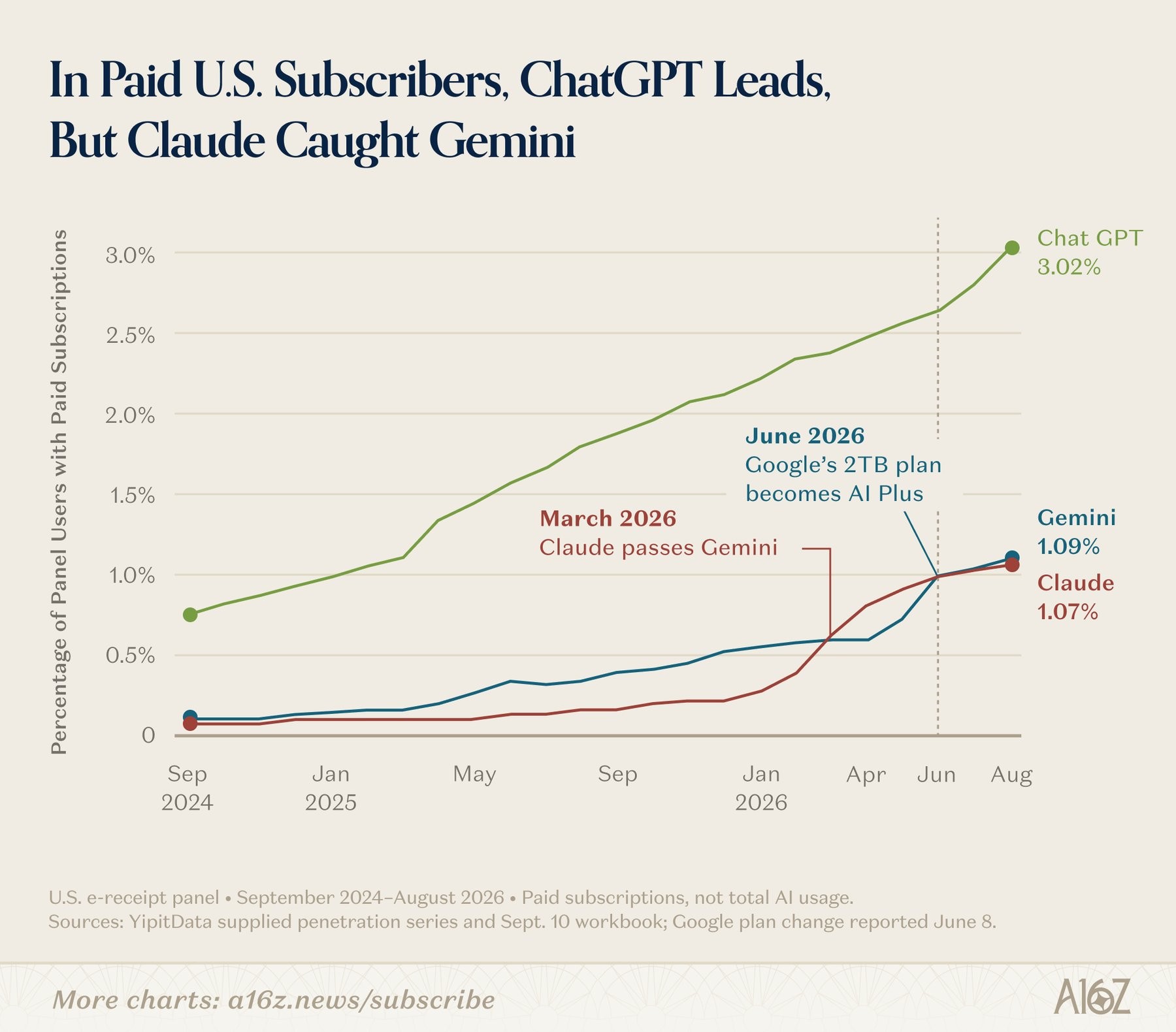
Claude surpassed Gemini in terms of paying U.S. subscribers in March 2026; since Google’s pricing change in June, the two have been neck and neck. | Image: a16z
Source: the-decoder.com
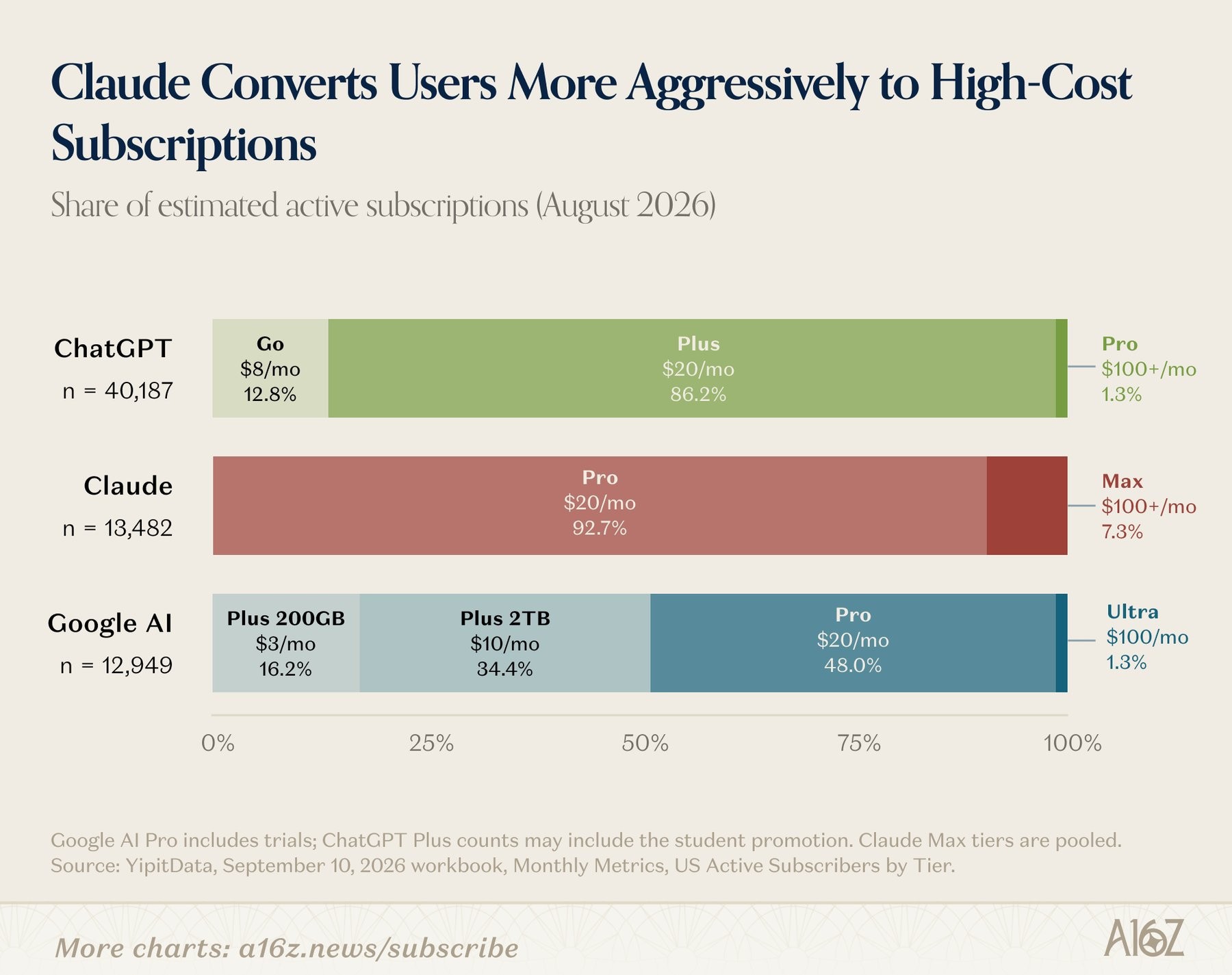
Claude also appears to monetize its most committed users more effectively. A noticeably larger share of Claude users chooses plans costing at least $100 a month than users of comparable OpenAI and Google plans.
Claude passed Gemini in paid US subscribers in March 2026. Since Google restructured its plans in June, the two are running neck and neck. | Image: a16z
Source: the-decoder.com
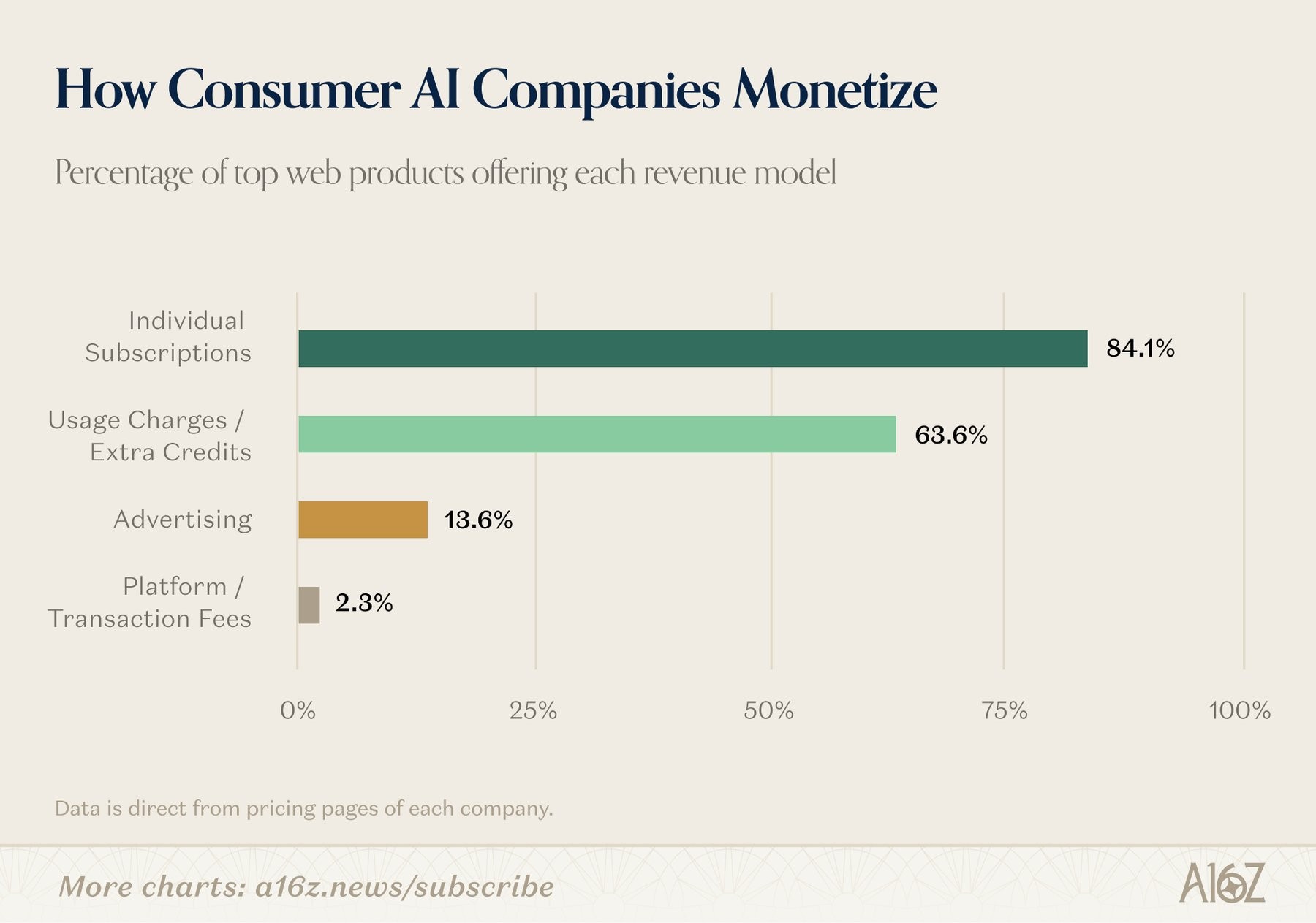
Almost all leading AI products rely on subscriptions and usage fees; advertising and transaction fees play hardly any role. | Image: a16z
Source: the-decoder.com
By July and August, daily Claude sessions had fallen, while ChatGPT regained momentum with new models and ChatGPT Work. A16z’s view is that the contest is no longer simply about who wins, but how each company uses the time it has.
Assistants need to do more than answer
A16z says that six months ago, an agent such as OpenClaw was not ready for most consumers. Now startups including Instinct and Tomo report hundreds of thousands of users, while larger companies are releasing their own products: Meta’s Muse, OpenAI’s Dots and xAI’s Grok Bot.
The business case gets more concrete when agents spend money. Instinct founder Noah Shinn said 40% of users link a bank card within three weeks, then spend thousands of dollars a month through the service, much of it on travel.
Platforms are not uniformly welcoming. Amazon blocked Muse less than two weeks after launch, while Shopify, Instacart, OpenTable and others added official integrations. Muse reached a quarter-million daily users in its first week and more than five million downloads in under a month. Threads, by comparison, passed 15 million downloads in its first three weeks.
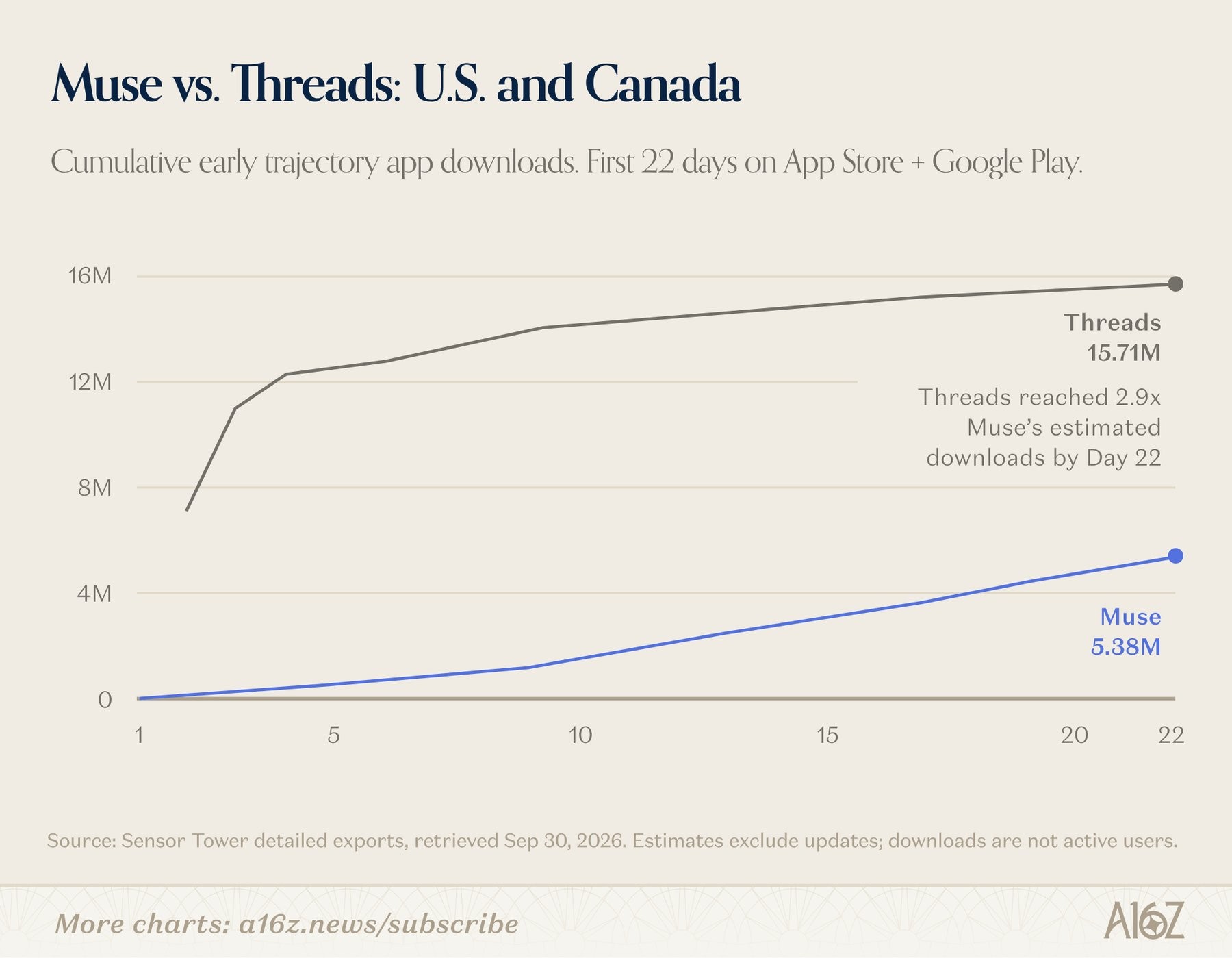
Threads racked up nearly three times as many downloads as Meta's agent Muse in the first 22 days. | Image: a16z
Source: the-decoder.com
The harder question is how to get paid
Established companies may be best positioned to capture the market. Canva and Notion are among the ten most popular AI products on the web, and Google has five products in the ranking. A16z says startups can still compete through a distinctive business model, access to multiple models, a focused audience or interfaces that bypass familiar products.
But most leading products built around AI rely on subscriptions or usage-based fees. Few use advertising or transaction commissions. That is a sharp break from the pre-AI internet, where users were the product and advertising drove much of Meta and Alphabet’s revenue. High model costs make it harder for AI companies to build an audience first and work out monetization later.
There are other routes. In August, OpenAI said ChatGPT’s annualized advertising revenue had reached $1 billion. Personal agents could also generate income through affiliate fees or a share of transactions.
I think the spending data makes the central uncertainty clearer: AI has a paying market, but it is concentrated among people who use these products intensively. The next test is whether agents can turn occasional consumer interest into transactions—and whether platforms will let them.
Daily AI news
Every day we pick what actually matters in AI and explain it plainly — no hype, no filler. Subscribe if you want to follow where the industry is going.
Only what matters — every day
Follow on X