
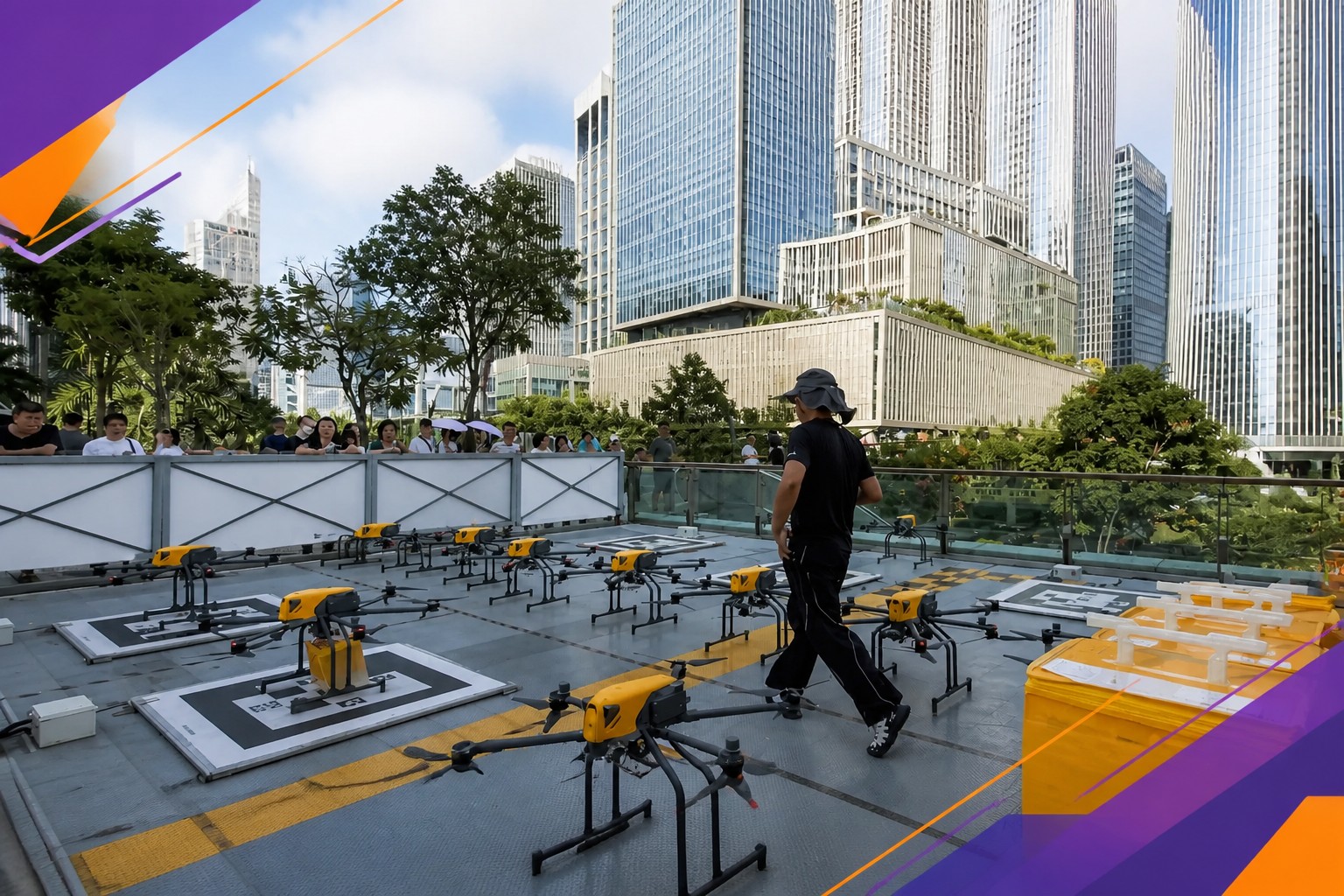
Residents of a Baton Rouge, Louisiana, neighborhood complain about the almost continuous noise from Amazon Prime Air drones. Since MK30 flights began in August from a distribution center 3.2 kilometers (2 miles) from their homes, the drones have been flying more often and, neighbors say, lower. Some residents have stopped spending as much time in their gardens, and one couple has even considered moving. Complaints about noise, safety and onboard cameras have also surfaced in other countries; local campaigns have already led to drone hubs being shut down.
Amazon drones annoy neighbors as flight disputes grow
Noise and neighbors' concerns
Rick and Marcia LeCompte enjoyed watching Cooper’s hawks visit the sweetgum tree in their yard. The birds disappeared in October, and Marcia believes the drones drove them away. The aircraft had been disturbing the couple since early September. The high-pitched sound of the rotors made it hard to spend time in the garden, and the humming was difficult to escape even indoors. Irritated neighbors who felt watched began considering a move.
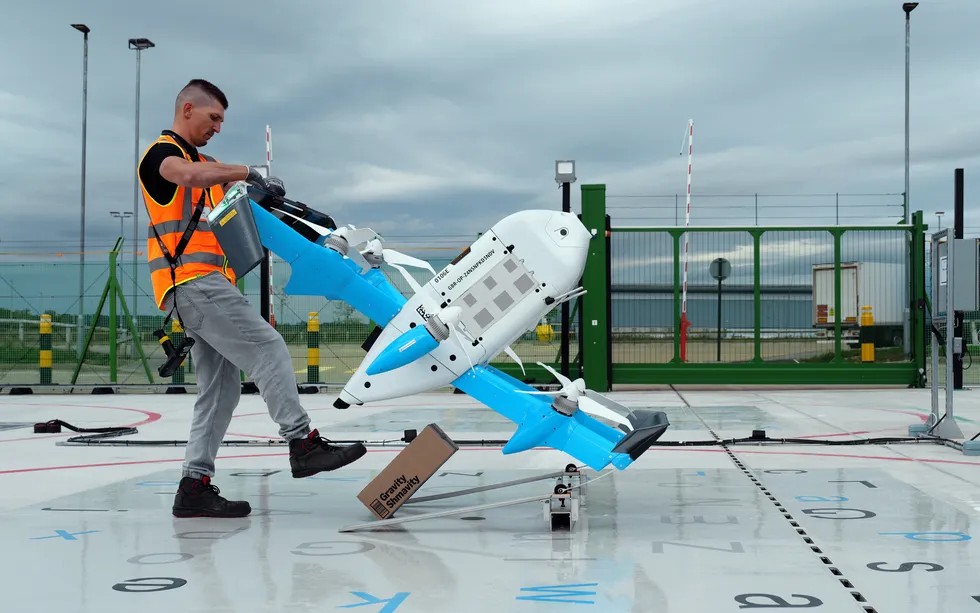
Amazon’s MK30 drones are large and must fly low to make deliveries. Blake Fagler, who lives in the same neighborhood, says their shriek sounds like a garden shredder that a neighbor runs for hours every day. Acoustic studies show that rotor noise irritates people more than cars, planes and other familiar background sounds. Fagler’s partner, Christina Boone, once counted a drone passing over their home every 48 seconds between 9 and 10 a.m. on a Saturday.
Source: spectrum.ieee.org
In August, Amazon Prime Air began launching MK30s from a distribution center 3.2 kilometers (2 miles) from the LeComptes’ home. At first, residents noticed only a few aircraft flying high: U.S. rules allow drones to fly at altitudes of up to 120 meters (400 feet). A couple of weeks later, neighbors felt the drones were everywhere, with many flying much lower.
Residents were concerned about flights over playgrounds, schools and a cemetery, an emergency landing on the median of a busy highway, and the cameras onboard. The FAA’s environmental assessment for the site said flights were planned from 6:00 a.m. to 10:30 p.m. Of 1,000 daily deliveries, 100, or 10%, were expected to take place in the early morning—from 6:00 to 7:00 a.m.—and late evening, from 10:00 to 10:30 p.m.
From local complaints to international expansion
Companies developing drone delivery—including Amazon Prime Air, Alphabet’s Wing Aviation, Zipline, Manna Aero, DoorDash Air, Matternet, Meituan, JD Logistics and others—describe their drones as quiet, safe and unobtrusive. Meanwhile, the industry plans to expand rapidly in the near future.
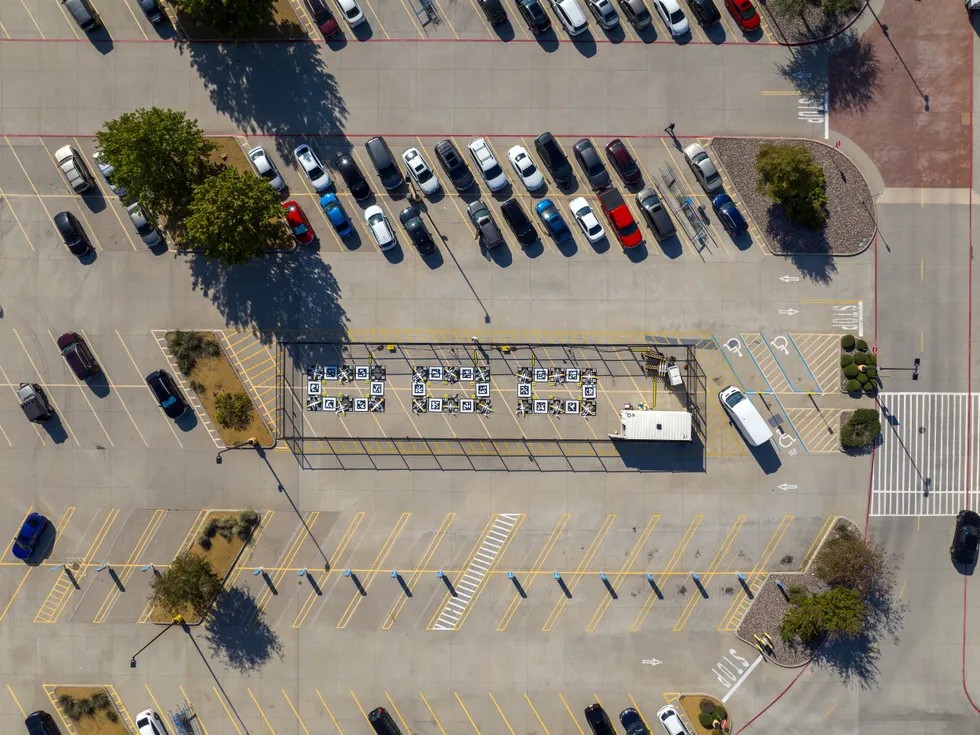
In September, Meituan launched a new low-altitude delivery network in Shanghai, while JD continues to develop its drone service in rural parts of China. In the U.S., Zipline and Uber announced a partnership aimed at reaching one million drone deliveries a day by the end of 2029. Wing plans to open 270 drone hubs in the U.S. by the end of 2027. Amazon Prime Air, which currently operates in about 85 U.S. municipalities, aims to reach 500 by the end of 2026.
Source: spectrum.ieee.org
But companies have paid less attention to community engagement than they should have, says David Ison, a specialist in emerging aviation technologies and land-use compatibility at the Washington State Department of Transportation. Ison helped develop the state’s guidance on siting drone hubs. In his view, companies assumed people would be glad to receive goods by drone in half an hour.
Companies present delivery as a way to provide public benefits. Zipline has delivered blood plasma and vaccines in Africa. Materials Wing used at public meetings in the Dallas–Fort Worth area claimed that local deliveries had avoided more than 1,000 tons of carbon emissions from trucks. For businesses, drone delivery is supposed to speed up service and reduce costs, but its actual cost depends on many interrelated factors.
In Ison’s view, public benefits help companies make the case for their projects: people are more likely to accept blood being delivered to an accident scene than a stress-relief toy. But residents bothered by drones say they feel pressured by a distant corporation. Boone compared the situation to data centers imposing their terms on local communities.
Concerns about new hubs have been raised in China, France, Australia and communities across the U.S.—in Detroit suburbs, Richardson, Texas, Glendale, Arizona, East Cobb, Georgia, Maplewood, Missouri, and Westborough, Massachusetts. In some cases, protests have led to local flights being halted altogether.
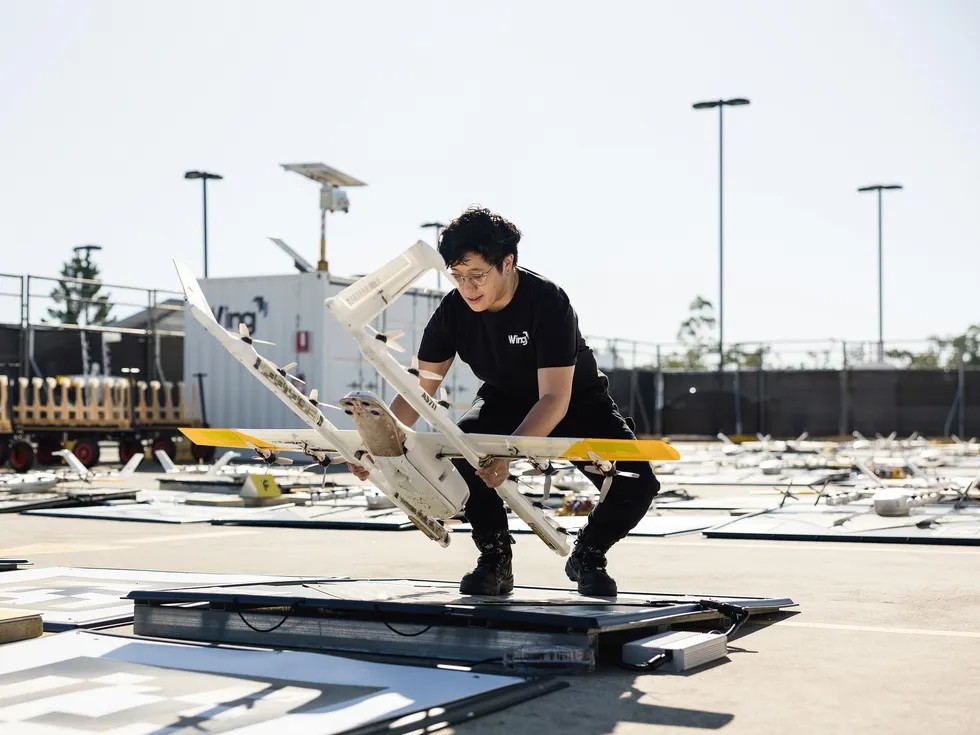
Wing’s tests in a Canberra suburb, which began in 2018, ended a few months later after activists formed an opposition group and won the support of lawmakers. Wing public affairs representative Jessie Poole-Strang said the company then revisited its engineering priorities, flight operations and engagement with local residents. Wing changed its drone design to reduce noise, adjusted its routing algorithms and began introducing people to the aircraft before opening new hubs.
Protests and disputes over rules
Legal and political campaigns against drones continue. On September 28, 15 U.S. states and Harris County, Texas, filed a lawsuit against the FAA seeking to block a loosening of the rules for environmental reviews of drone sites. Those rules matter for local oversight. In April, the Cobb County Commission in Georgia rejected a request to change the zoning for a Wing site.
In response to residents’ complaints, a Wing representative said the company receives positive feedback in the county. Amazon representatives have also said that most customer feedback on drone delivery is “overwhelmingly positive.” Zipline urged at least one local official to describe drone delivery as “a completely ordinary part of life.”
Source: spectrum.ieee.org
At the same time, Ison says, safety, noise and visual pollution remain concerns for all types of drones; different technologies should not be lumped together. The potential consequences of a crash are greater for the Amazon MK30, which weighs nearly 36 kilograms (80 pounds), than for Wing’s largest drone, which weighs less than 11 kilograms (25 pounds) with its cargo. The delivery method also differs. Wing and Zipline lower packages to the ground on a tether, keeping the aircraft higher up. Amazon’s drone has to fly lower to drop off a package without damaging it.
Ison expects disputes over noise to continue: in the U.S., it is not yet clear what rights people have to the airspace directly above their properties. He expects courts to consider claims seeking to ban flights over private property or charge for them.
Things have become quieter in the Baton Rouge neighborhood where the LeComptes, Fagler and Boone live. According to their representative on the city council, Amazon Prime Air rerouted 70% of flights elsewhere after the protests. Since drones cannot fly over highways, this probably means moving routes over other residential neighborhoods. In late October, Marcia LeCompte saw two or three drones over her home in a day, but on the way to a bank several kilometers away, she counted eight in 20 minutes. She thanked Amazon for clearing the sky above their home and expressed sympathy for those now getting the rerouted flights.
Dataist’s take: Plans to expand drone delivery will run up against local restrictions until companies can agree with residents on routes and flight schedules. Rerouting 70% of flights from one neighborhood shows that complaints can change how a hub operates, but they do not necessarily eliminate the disruption—it may simply move somewhere else.
Daily AI news
Every day we pick what actually matters in AI and explain it plainly — no hype, no filler. Subscribe if you want to follow where the industry is going.
Only what matters — every day
Follow on X