
What secrecy does to a negotiation
Shawn O’Kane pointed out that Amazon placed its pledge midway through a post about the benefits of data centers. He sees secrecy as part of a wider technology-industry problem, especially as AI drives a rush to build infrastructure.
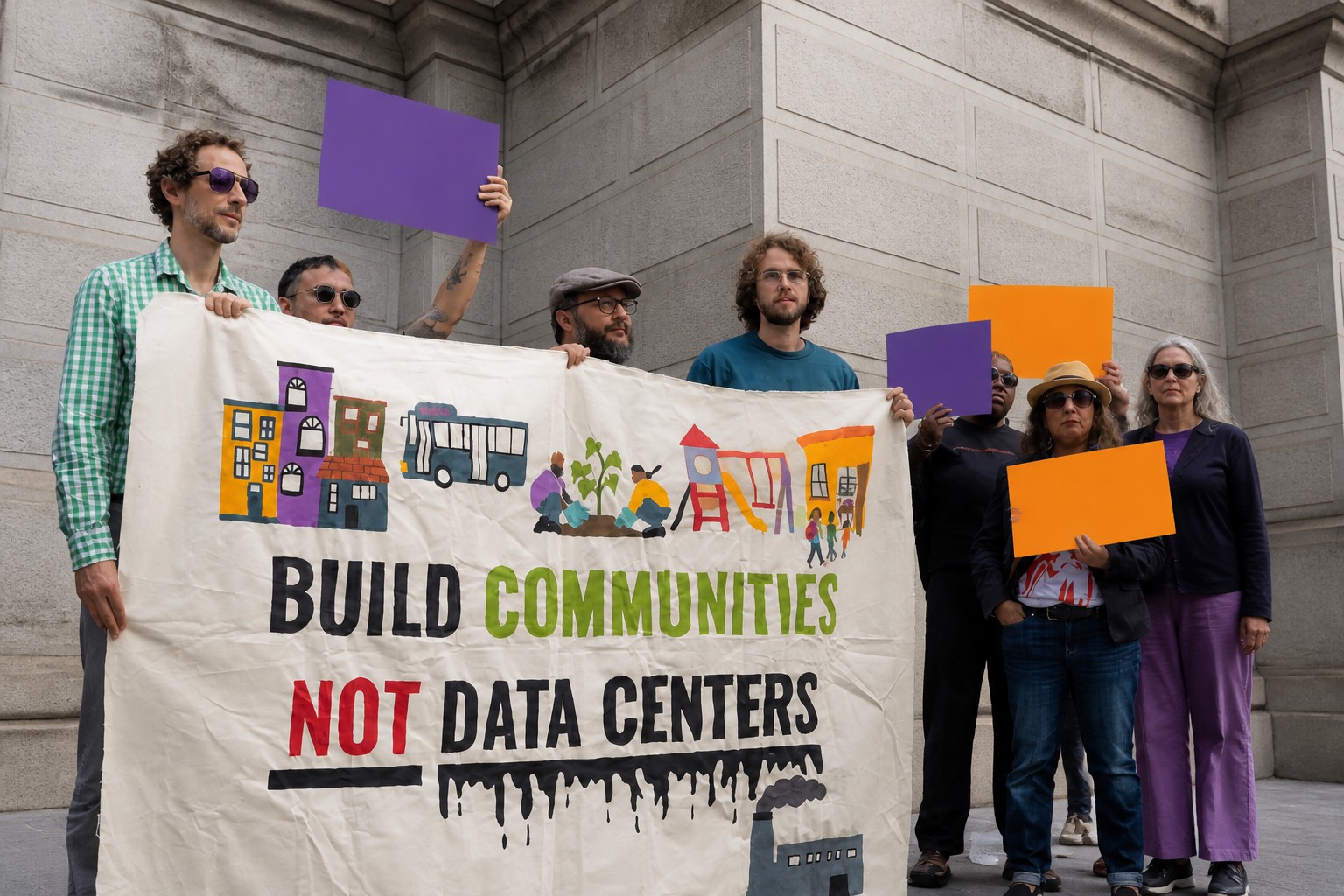
In some cases, residents know a data center is being discussed but not who will use it or own it. That makes it harder to assess concerns about local costs and resource use, and harder to judge what a company is asking a community to accept.
O’Kane recalled Uber’s expansion in the mid-2010s, when he covered the company for The Verge. In one city near Orlando, Uber sought tax subsidies to fund rides connecting passengers with public transit after an Uber trip. The talks happened behind closed doors. O’Kane said secrecy itself fueled resentment and gave Uber room to ask for more concessions.
Amazon’s decision is welcome, he argued, but it is unclear whether it will improve relations with residents who already oppose data center projects.
A pause may not stop a project
Rebecca Bellan questioned whether ending NDAs will help communities delay or block infrastructure companies say they need. Moratoriums in many places last only a year or two; San Francisco recently adopted one, which Bellan called ironic. Data centers, meanwhile, may not begin operating for two to five years, with zoning and financing among the factors that can hold up construction.
New York’s moratorium, Anthony Ha said, lasts a year and applies to permits for large projects while the state completes an environmental review, which is expected to take a year. Such pauses can leave room for officials to later argue that data centers are useful and should proceed.
Ha said developers are clearly concerned, pointing to sharp posts from Donald Trump and David Sacks. But how long local resistance lasts, and how much it affects projects, remains uncertain.
Microsoft said earlier this year that it, too, would stop using NDAs. Ha does not expect the policy change alone to win over opponents. It could, however, let residents learn what companies discussed behind closed doors.
Transparency is not the same as persuasion
The companies’ problem is larger than negotiation procedure. O’Kane described it as a failure to explain what the technology industry does and why it matters, even as companies appeal directly to audiences and argue that the media is no longer needed. Some promised capabilities have yet to arrive; others, he said, are simply explained badly.
Last week, O’Kane wrote that Tesla had spent nearly a year saying little about its vision of a future it first called “sustainable abundance” and later “amazing abundance.” When Tesla announced that vision, it published a multi-page PDF, but O’Kane said the company still had not clearly defined its mission. Even some of Tesla’s most loyal fans criticized Elon Musk and the company for vague language that read like nonsense generated by a large language model.
Ha’s point was not just that Tesla failed to define abundance, but that it made such a sweeping promise in the first place. For some supporters, he said, the appeal is not only about how many cars Tesla sells, but a vision of remaking society.
I think Amazon’s pledge is a useful test of whether openness can make that kind of promise more accountable. But publishing the terms of a negotiation does not make the case for a project. If companies want communities to accept the infrastructure behind an AI future, they will have to explain what those communities stand to gain, not just reveal what was previously kept private.
Daily AI news
Every day we pick what actually matters in AI and explain it plainly — no hype, no filler. Subscribe if you want to follow where the industry is going.
Only what matters — every day
Follow on X