
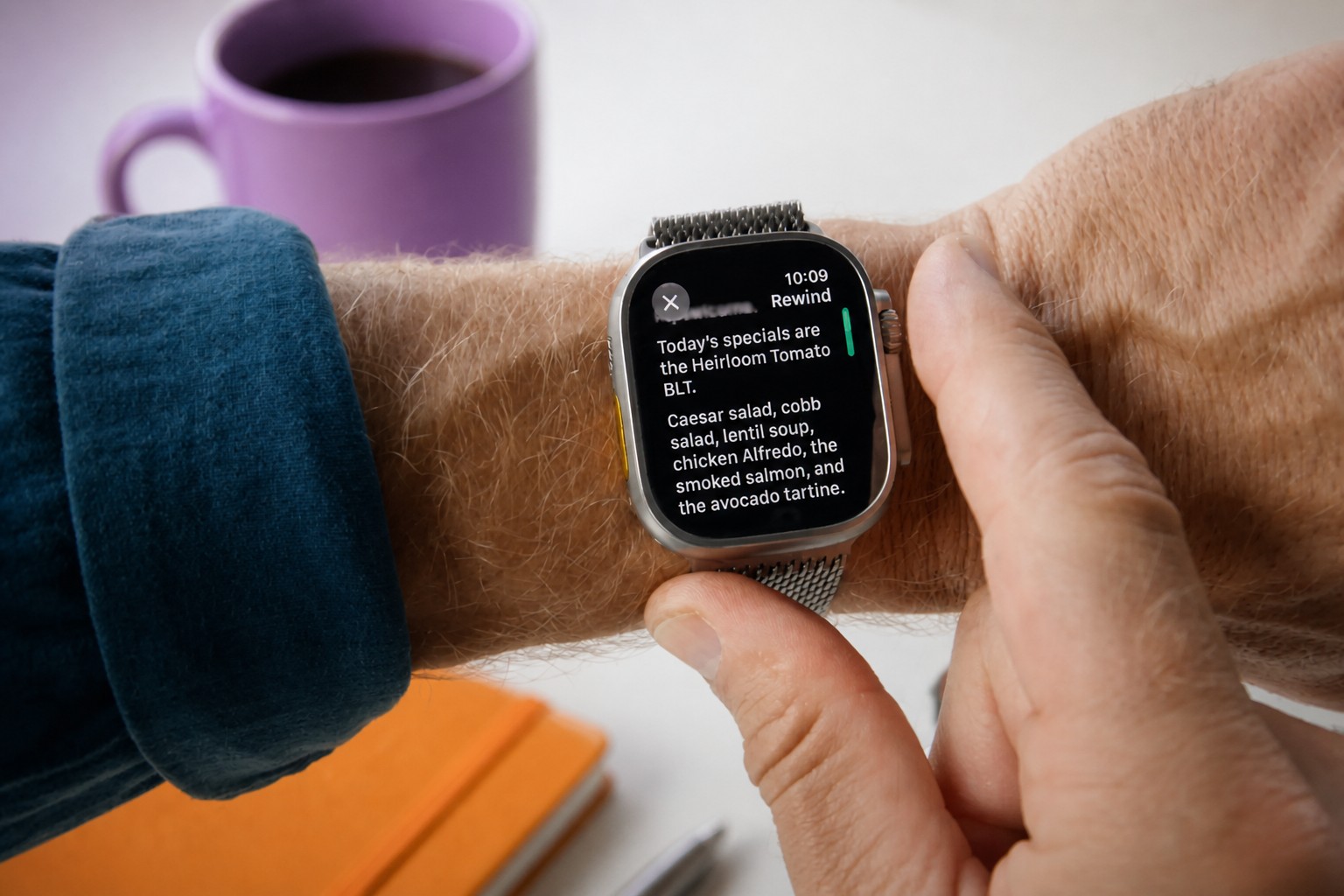
At its "Surprise and Shine" iPhone event, Apple gave the Apple Watch three features that process ambient sound in real time: Audio Intelligence, which alerts the wearer to sirens, alarms, doorbells and a crying baby; Live Rewind, which transcribes the last 15 seconds of speech after a double-press of the digital crown; and Siri Recap, which listens in the background and writes short notes summarizing conversations. The foldable iPhone was not the most consequential thing on that stage. A company that has spent years selling caution about personal data just put speech-to-text on a wrist device that is always in the room.
Being near an Apple Watch does not mean being recorded continuously. Siri Recap has to be switched on, Live Rewind needs a deliberate press. But the capability alone is enough to change what people assume about a room, and it is worth asking whether consumers wanted this at all. One reading of the timing: Apple moved because it expects a rival AI device — OpenAI's, for instance — to arrive soon, and would rather define the category than answer it.
Transcription is already the clearest consumer use case a lot of AI startups have found, mostly for meetings, lectures and interviews. Some have gone further. The Friend pendant and Amazon's Bee sell always-available AI companions that passively take notes and help reconstruct the day. Apple's three features sit at a different point on that line, between assistive technology and quiet intrusion.
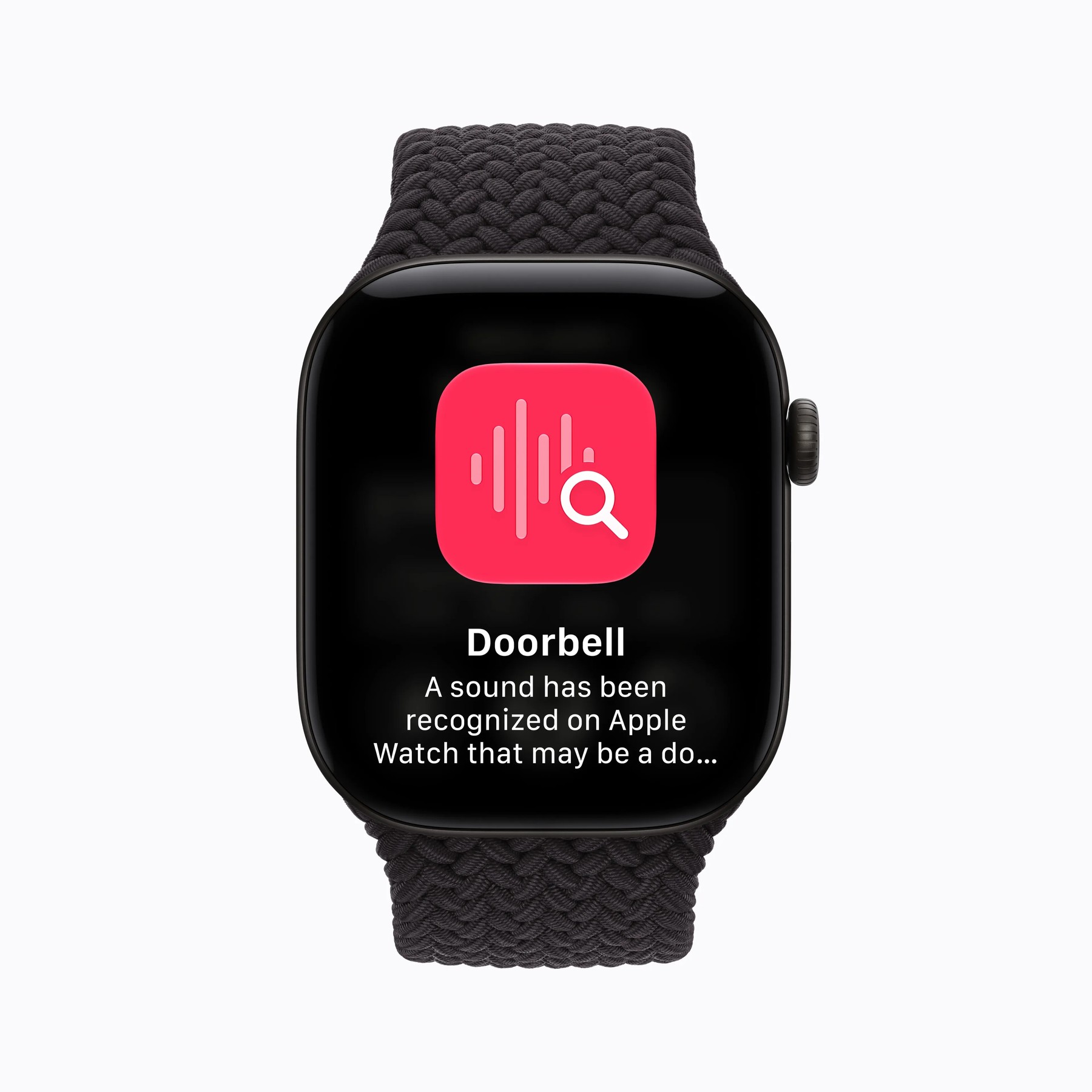
Audio Intelligence is the easy one to defend. The on-device model can tell an Apple Watch owner about a siren, an alarm, a doorbell or a crying child, and it works without a connected iPhone. For deaf and hard of hearing users, a watch that notices a smoke detector or a carbon monoxide alarm is an accessibility feature with a life-safety case behind it. This is the one that will draw the fewest complaints.
Source: techcrunch.com
Live Rewind and Siri Recap are somewhere else entirely. Live Rewind lets you go 15 seconds back and transcribe what was just said; the text lands in Apple's new standalone Siri app and can be returned to later. Apple's examples are benign — a book recommendation, a colleague's good idea, a phrase you did not catch the first time. The same two taps also capture the words of someone who had no expectation of being written down, and file them as a note.
That is a consent question before it is a legal one, and the hardware industry already knows it. Plaud, which makes AI recording devices, advises customers to obtain consent in advance where the law requires it. Amazon's Bee puts the burden in its terms of use: the user, not Amazon, is responsible for complying with children's data privacy law. Apple does not store the audio, which leaves open how courts will treat transcripts that exist only as text. Such notes might be offered as evidence, but with no underlying recording they are harder to verify and authenticate, and the rules on admitting them will likely vary state by state.
Source: techcrunch.com
Beyond the legal questions, a watch that can record what is happening has cultural consequences. Research shows recording devices already change how people behave in person, as do social media and a broader culture of data observation. When someone knows they can be recorded at any moment, it holds back both conversation and self-expression.
Taking a photo or video still requires a visible act: raise the phone, point it. Turning a fragment of conversation into text requires a press on the crown. Apple notes that the watch plays a sound and shows a full-screen microphone animation, but the gesture itself is far less legible to everyone else present than an arm held up.
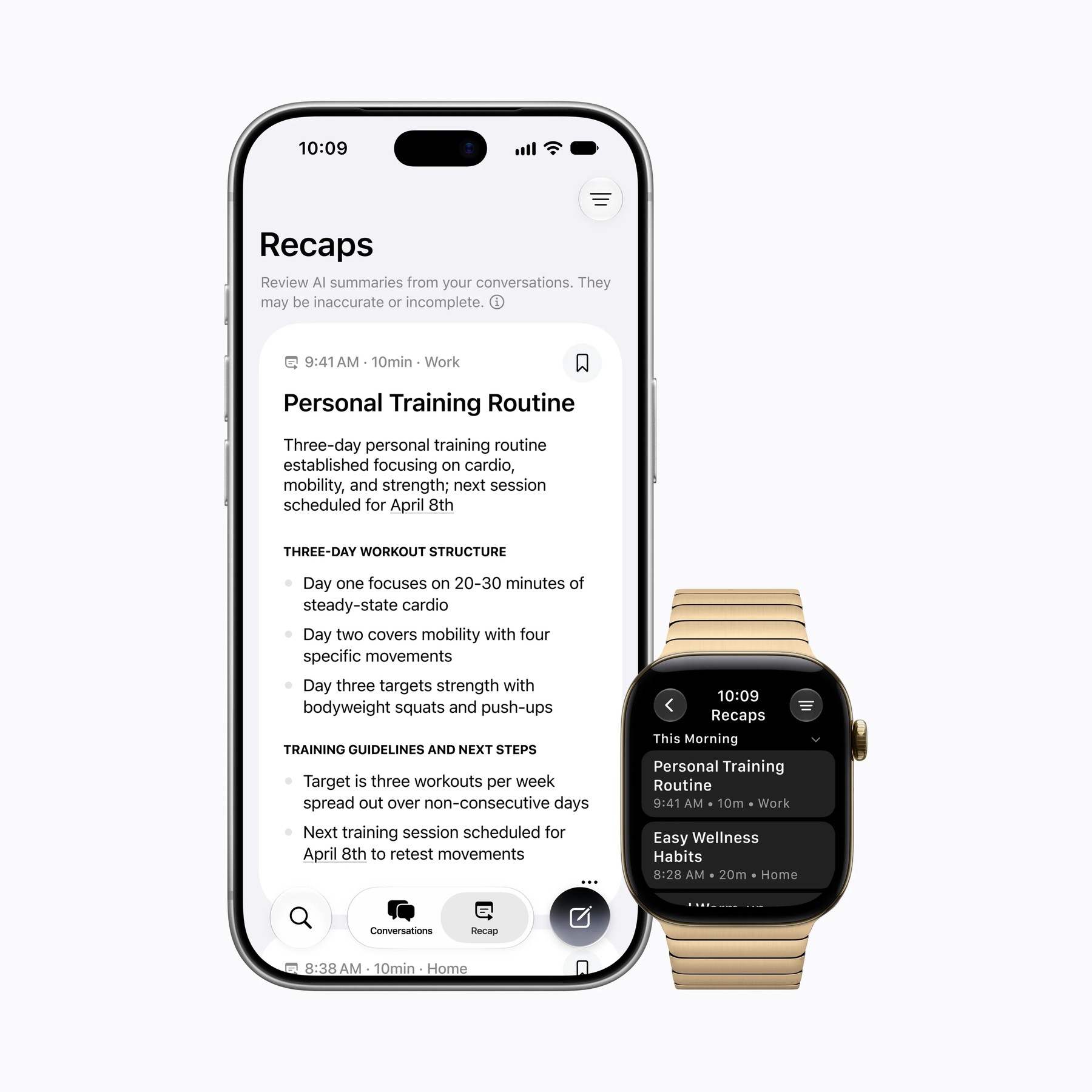
Siri Recap uses background listening to produce those short notes, reviewable in the Siri app for iOS. The AI generates a title, a summary and key points from what it captured and condensed; these will not be exact transcripts. Apple's examples are the outcome of a meeting, or the important information from a parent-teacher evening. It does not run constantly by default the way some other AI wearables do — the user decides when to turn it on, perhaps only at work or only during the day, and can toggle it from Control Center at any time.
Apple lists four constraints on top of that: no audio recordings are created or stored; the original sound is unavailable even to Apple; the system does not identify speakers or tie words to particular people; and the transcripts and summaries are end-to-end encrypted.
Read that list again and notice who it protects. Every one of those four guarantees describes careful handling of the capture after it has happened, and every one of them protects the person wearing the watch. None of them concerns the other person in the conversation, who is not asked, does not choose, and cannot see the setting in anyone's Control Center. Apple has built strong data handling around an act of collection it has not tried to justify to the people being collected. That is the gap these features will be judged on, and it is not one that stronger encryption closes.
The timing is its own argument against Apple. This lands while consumers are already pushing back on Flock cameras, on AI data centers, and on AI apps generally. A company whose entire differentiation is that it is the careful one has chosen this moment to normalize listening hardware, and the defense it offers is a set of engineering promises rather than a social one.
Apple either found the right balance between usefulness and privacy or it will run into consumer anger. Either way the assumption that moves is not the wearer's. It belongs to everyone standing next to one.