

A queue growing faster than moderation
In September 2016, arXiv received 9,869 papers. By September 2024, that figure had reached 20,569; in September 2026, it was 40,363. Staff and moderators received nearly 9,000 support requests. In cs.AI alone, submissions increased more than sixfold over two years.
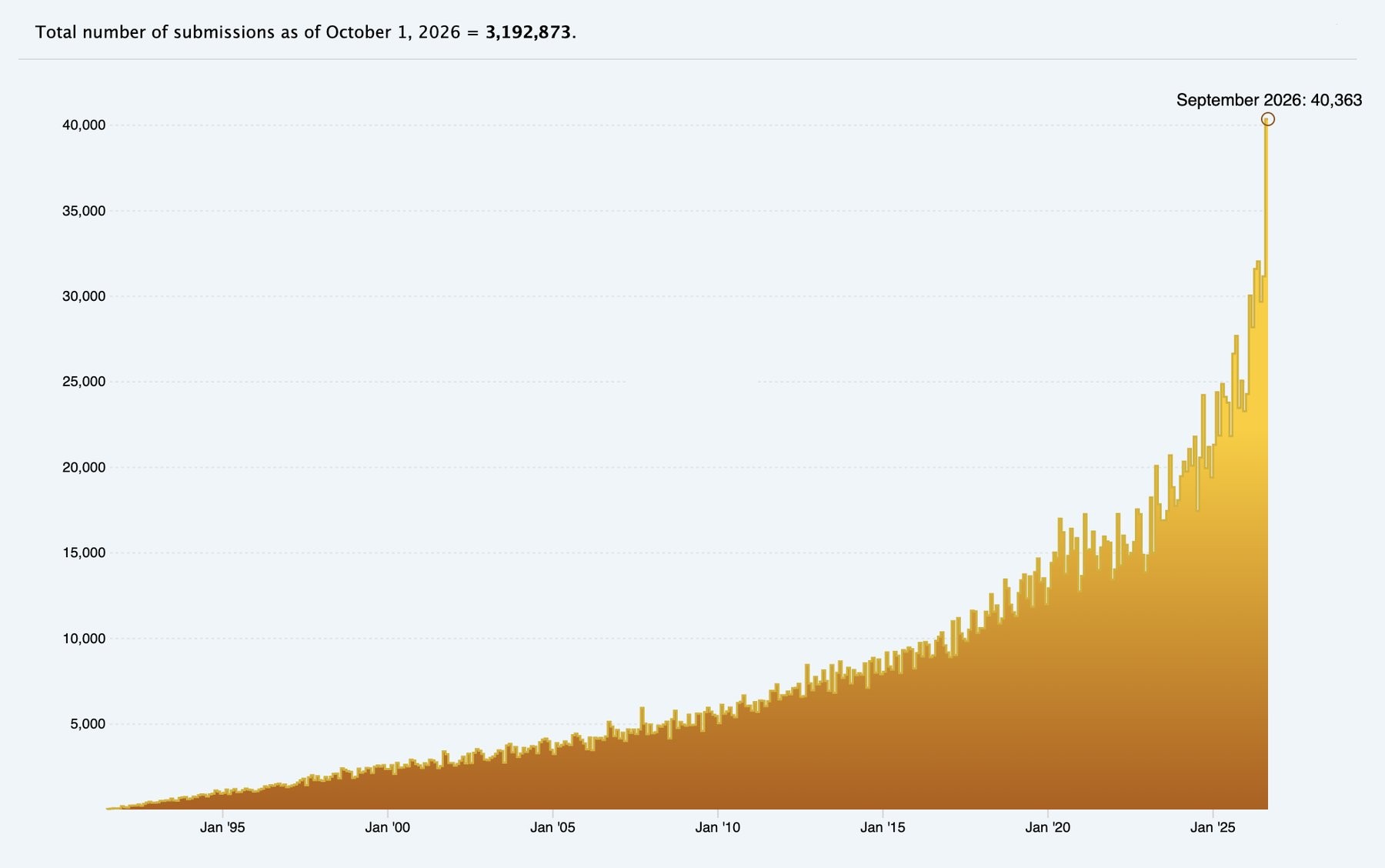
Arxiv recorded more submissions in September 2026 than in any other single month in its history. | Image: Arxiv
Source: the-decoder.com
Volunteer moderators report more narrowly scoped papers with small results, research split into many small publications, and dense text written with AI assistance. Thomas G. Dietterich, chair of arXiv’s editorial advisory board, calls volunteer moderators the foundation of its quality control.
Dietterich says a relatively small group of authors submits many low-quality papers, taking a disproportionate share of moderator time. That can leave stronger work waiting days or weeks for review. On Bluesky, he added that some authors submit dozens of papers.
The new cap is meant in part to reduce papers built around “micro-results,” such as one additional ablation study or a minor architecture change. arXiv describes the limit as temporary, pending improvements to its own moderation tools. Dietterich hopes the cap can eventually be raised or removed.
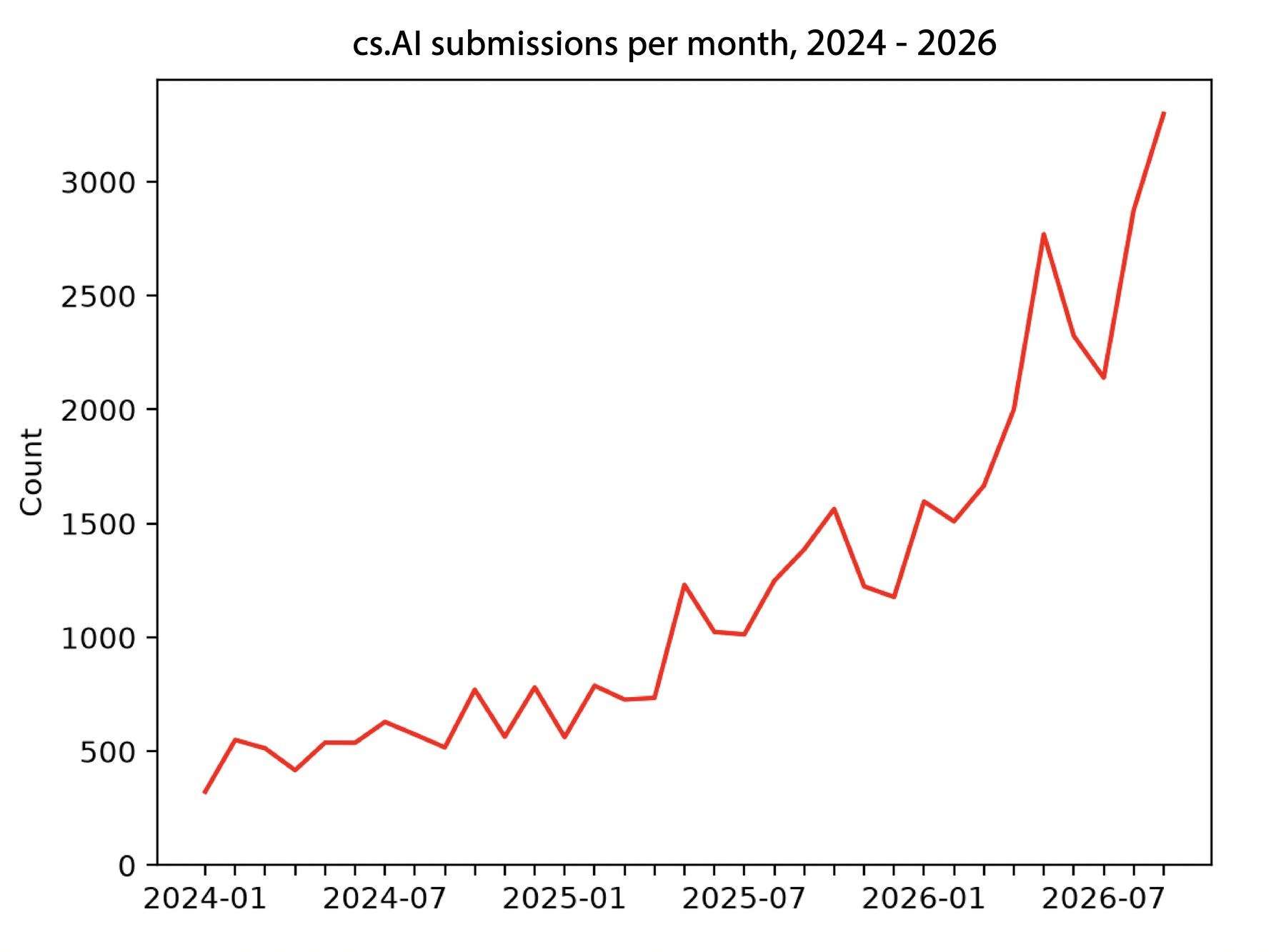
Submissions to the cs.AI category have grown more than sixfold since early 2024. | Image: Arxiv
Source: the-decoder.com
A wider response to AI-generated submissions
arXiv has tightened its rules before. In November 2025, it introduced stricter requirements for computer science papers: review articles and position papers now need peer review. In May 2026, Dietterich announced a one-year ban for authors whose submissions clearly contain unchecked answers from large language models, such as fabricated sources.
AI conferences face similar pressures. Before its submission deadline, ICLR 2027 received about 50,000 abstracts, compared with roughly 19,500 properly formatted submissions for ICLR 2026. Among the approximately 5,000 papers accepted by NeurIPS 2025, GPTZero found at least 100 fabricated citations, despite every paper having been reviewed by at least three reviewers.
I think the two-paper limit is less a solution to AI-written papers than a way to ration scarce human attention. Counting rejected work makes that explicit: the cost arXiv is trying to manage is not just what gets published, but everything moderators have to inspect along the way.
Funding and a bigger research-AI bet
After 25 years at Cornell University, arXiv became independent on July 1, 2026, under a nonprofit organization. In late September, Simons Foundation International, XTX Markets and Siegel Family Endowment pledged a total of $17.2 million over three to five years. arXiv plans to use some of the funding for technical upgrades, including work on AI-generated content.
At the same time, major AI labs are presenting their models as research tools:
A study involving Princeton and the UK AI Security Institute tested a different kind of research capability. Claude Opus 4.8 worked for six days on research questions from two unpublished NeurIPS papers; the papers’ authors acted as reviewers and rejected both sets of results.
The gap between ambitious research agents and the papers moderators are already struggling to process is the tension arXiv’s new cap cannot settle. My guess is that funding and better tools may expand capacity, but the immediate policy still treats author volume—not the quality of any individual submission—as the lever available now.
Daily AI news
Every day we pick what actually matters in AI and explain it plainly — no hype, no filler. Subscribe if you want to follow where the industry is going.
Only what matters — every day
Follow on X