
The argument over imported alarm
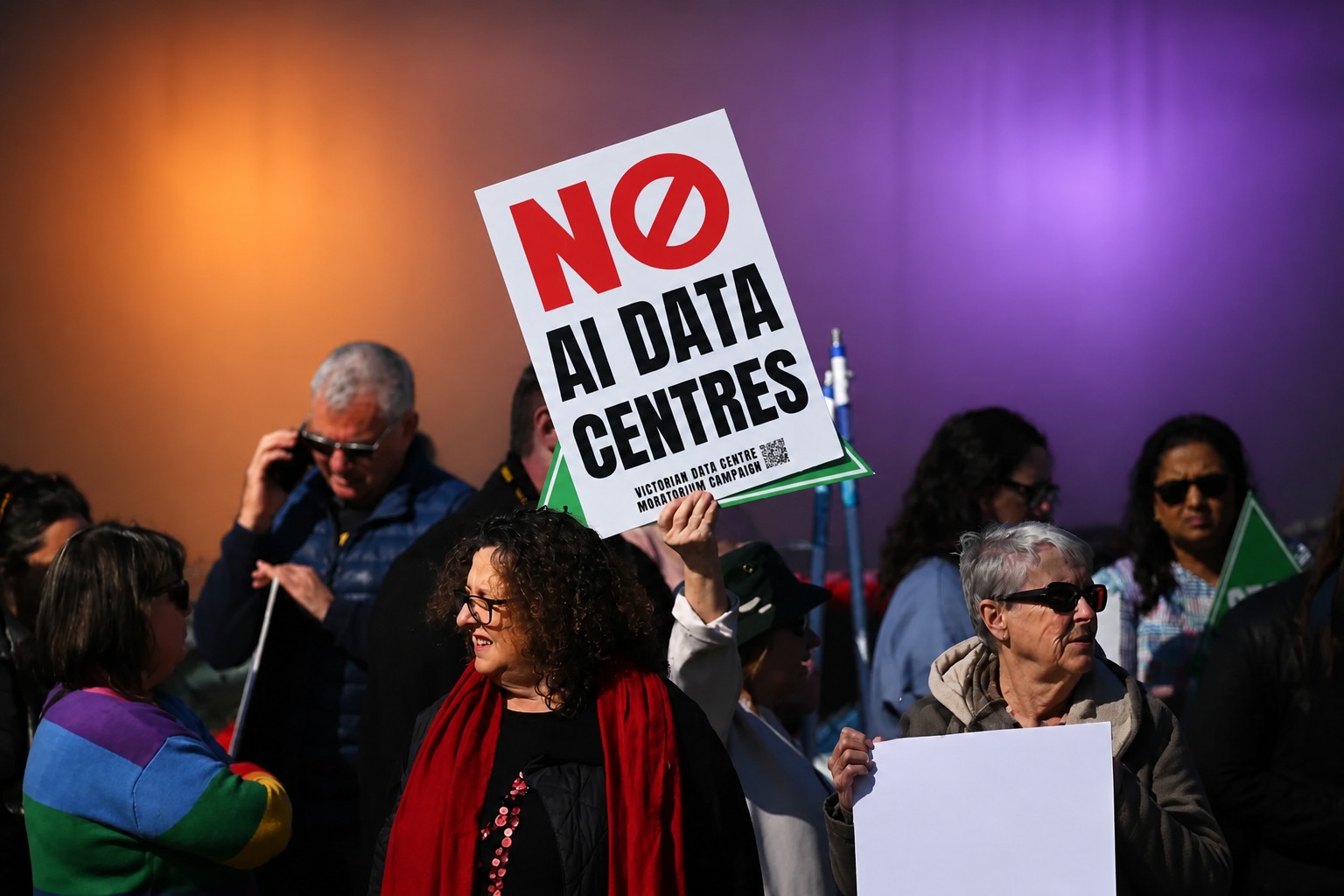
In 2026, opposition to data centers has become a national dispute in Australia. Calls for a moratorium, protests, three government inquiries and state efforts to develop regulatory frameworks have arrived as the federal government prepares rules on construction, energy and water use.
State governments generally welcome investment for the economic growth it promises. In some cases, they have bypassed local council approval processes because of the scale of proposed projects.
In July, Steve Dimopoulos, then Victoria’s minister for economic growth, said the state had the country’s second-largest number of data centers, behind New South Wales, but was building new ones faster. He attributed growing opposition to the influence of American social media.
“Some states in the US are trying to ban the construction of new large data centers. These campaigns and large projects in America shape public opinion in Australia,” he said. “When you see it on your phone, it feels like it’s happening nearby or will happen here soon.”
Dimopoulos said Australia was not the United States, pointing to more tightly controlled planning, energy and water systems. Industry leaders have made a similar case. In March, Belinda Dennett, head of the lobby group Data Centres Australia, said local debate relied on American figures and cast data centers as “energy and water guzzlers” and “job killers.”
Dennett compared the two countries: the United States has 5,400 data centers with a combined capacity of 53.7 gigawatts, while Australia has 252 with 1.4 gigawatts. She said estimates of the US total vary.
But those totals leave out a useful comparison. Australia, with a population of 28 million, has just under one data center per 100,000 people. The United States, with 342.7 million people, has 1.5 per 100,000.
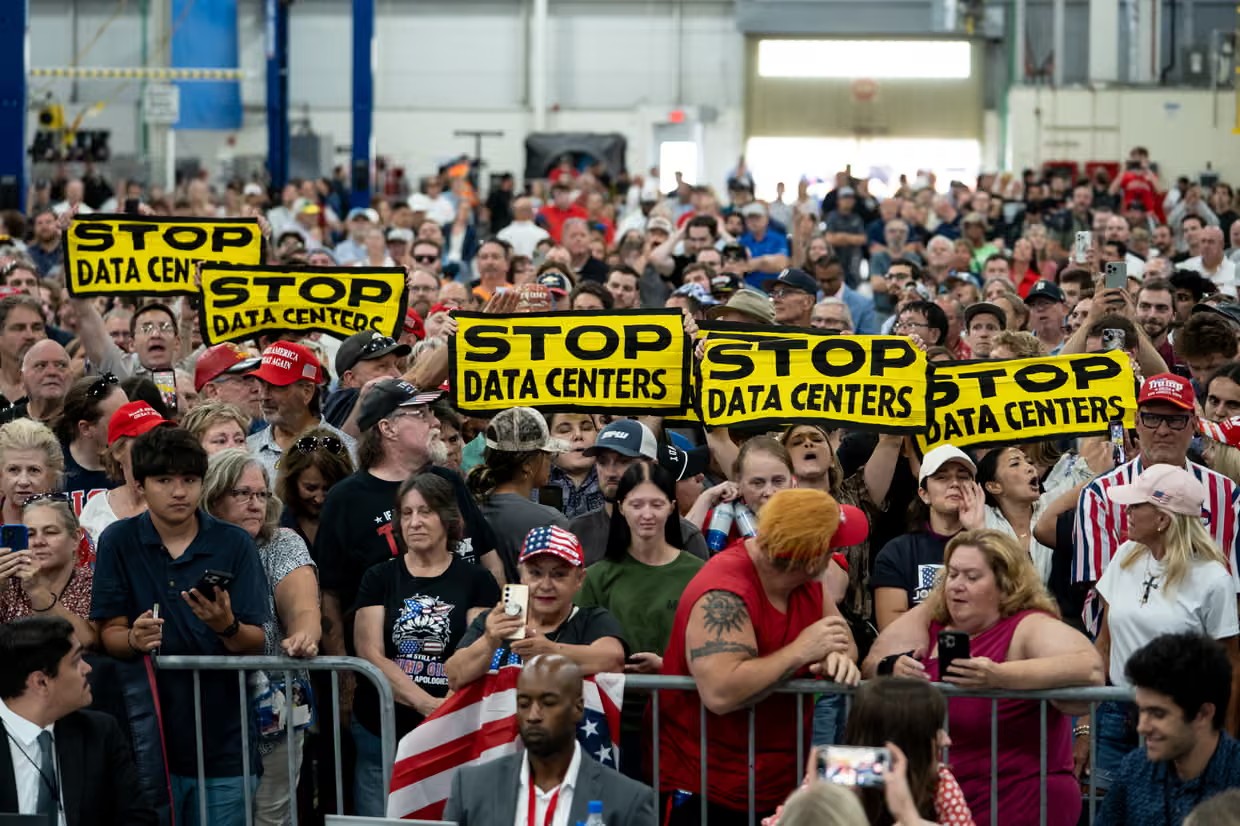
Protest signs as Donald Trump speaks at the General Motors proving ground testing facility in Milford, Michigan, on 27 July. Photograph: Bloomberg/Getty Images
Source: theguardian.com
The projects are getting larger
Several Australian data centers with planned capacity of at least 1 gigawatt are in the works. Videos circulating on TikTok and Instagram have focused on a 2.4-gigawatt project on Melbourne’s outskirts and a 2-gigawatt gas-powered data center in the Northern Territory.
That much power is equivalent to the annual electricity use of 2 million households, said Rob Nicholls, a professor and senior research fellow in digital policy at the University of Sydney. The Northern Territory has just over 265,000 residents.
The federal government is preparing to limit the states’ authority and bar gas-fired power for data centers. The proposed rules would require operators to add new renewable energy to the grid equal to what their data centers would consume.
Nicholls said criticism on American social media may be loud, but it reflects a straightforward concern: data centers could raise electricity and water costs without giving local residents a share of the benefits. He said the federal government would need to explain how Australia’s problems differ from those in the United States.
Rules are unlikely to arrive before next year. In the meantime, some are calling for a pause on new construction, following New York’s example. Two state-level inquiries and one federal inquiry are underway, even as new project applications continue to draw protests.
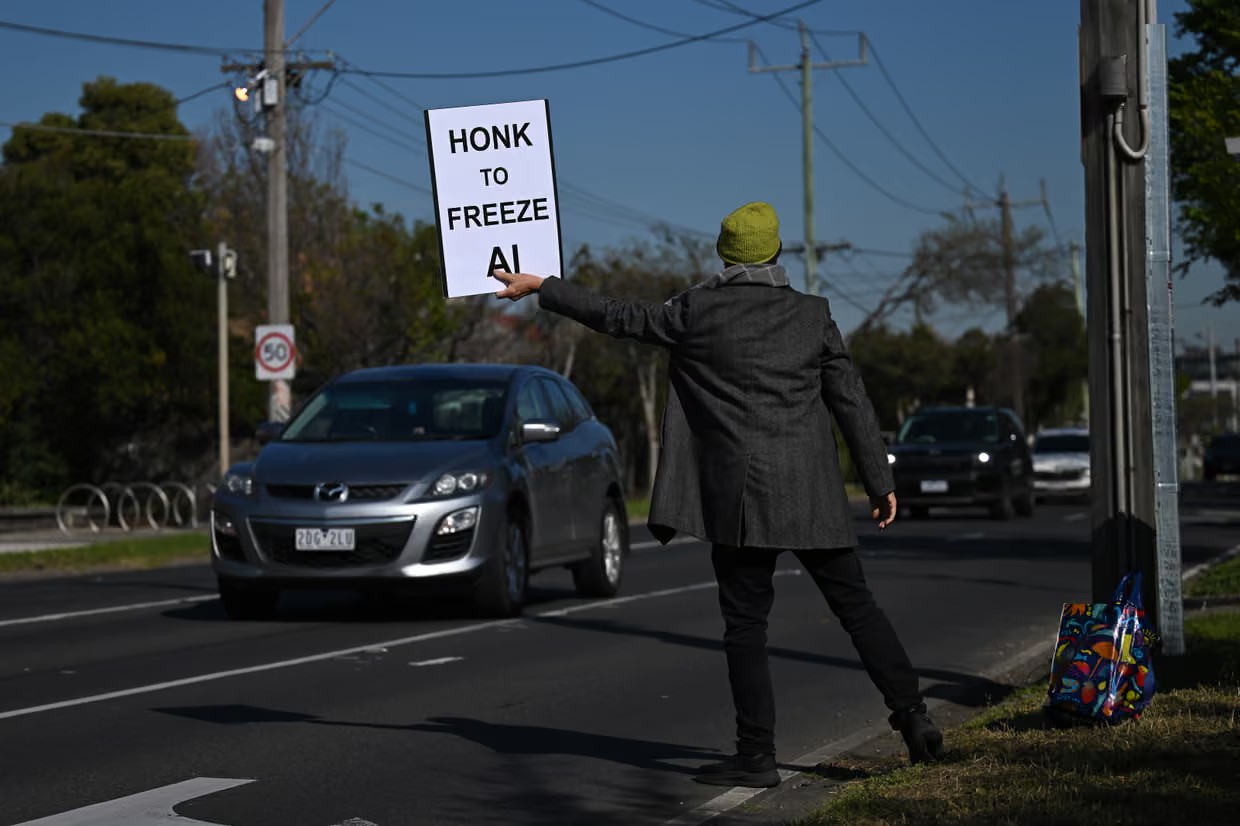
Protesters outside the Senate inquiry into datacentre regulatory frameworks in Melbourne, Australia, on 23 September. Photograph: James Ross/AAP
Source: theguardian.com
Who captures the value?
Many Australian data centers are owned by US companies. Microsoft and Amazon already operate several, while OpenAI and Anthropic are considering projects of their own. Andrew Charlton, an assistant federal minister for technology, said residents may be skeptical when operators are often foreign.
Building data centers in Australia will not, by itself, ensure that the country gains economically from AI, Charlton said in a speech this week. Australia can provide land and electricity and host the equipment, while much of the value and economic rent could still flow overseas.
He urged operators seeking to build in Australia to offer local startups, researchers and nonprofits favorable access to computing capacity. He also said Australia could develop its own AI capabilities using open models—and warned that the country risked becoming dependent on imported AI.
I think that is the harder question behind the argument over imported protest narratives. Australia may have different rules and a smaller industry, but those differences do not settle who bears the resource costs or who gets the returns. If the country supplies the power and land while the value leaves, reassuring residents that Australia is not the United States will not answer what they are being asked to accept.
Daily AI news
Every day we pick what actually matters in AI and explain it plainly — no hype, no filler. Subscribe if you want to follow where the industry is going.
Only what matters — every day
Follow on X