
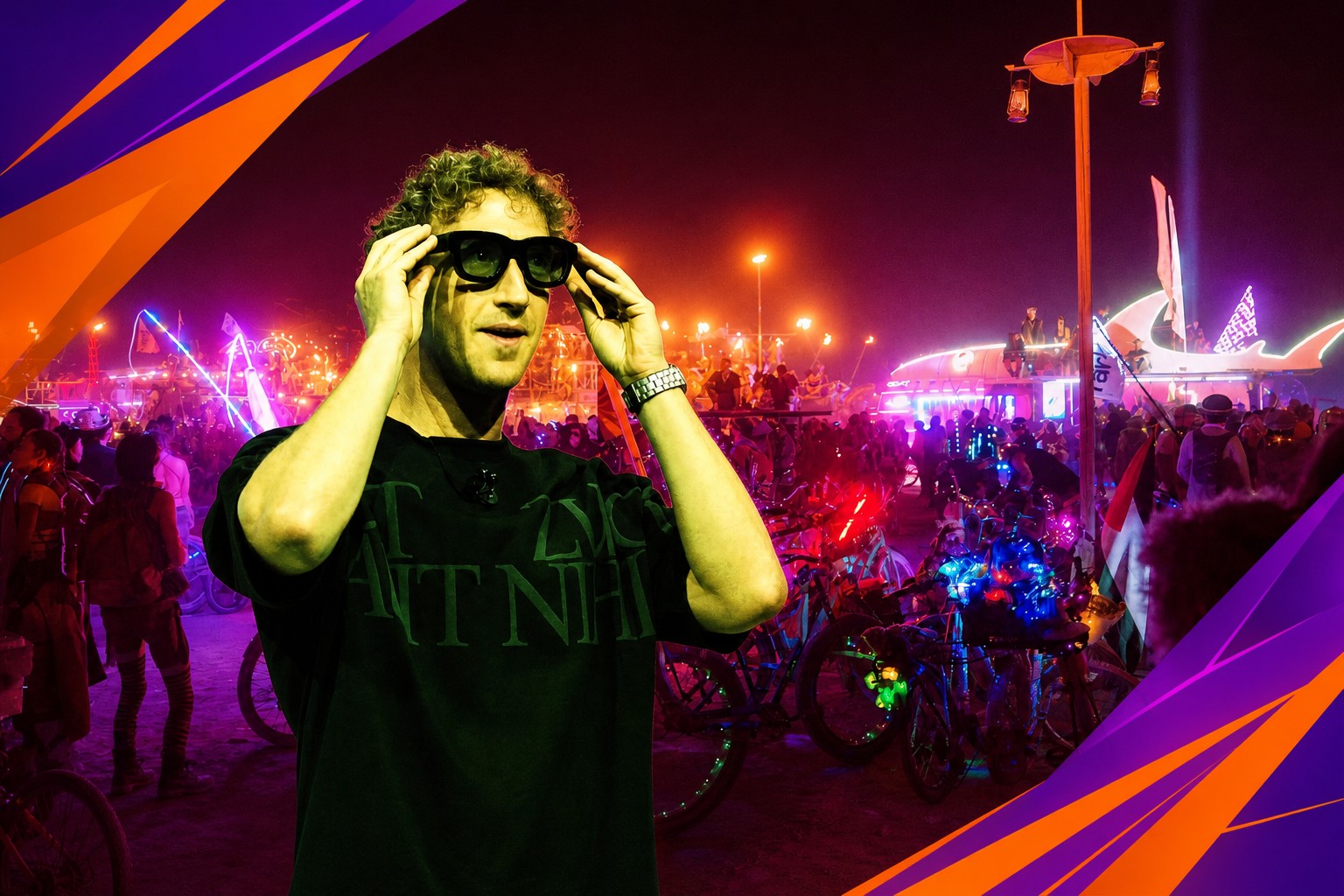
Burning Man's rules require you to ask permission from everyone who will appear in frame before using any device — a phone, a camera or smart glasses — and that includes the people in the background, not only the subject. Meta's glasses have run straight into that rule, and the sharpest response is not coming from the organisers, who have so far stopped short of a ban, but from the attendees. A recent thread on r/BurningMan asking how to get Meta's glasses barred from the festival drew hundreds of comments calling the devices spyware and "pervert glasses" and their owners "glassholes."
The remedies proposed in that thread were social rather than procedural. Some participants suggested publicly shaming wearers, arguing that at Burning Man it would be easy to turn an entire bar or art car against someone in a pair. Others kept it simpler: the devices look creepy, and a person who puts them on at the festival is behaving creepily.
A second group in the discussion doubts the festival can ban them at all. Burning Man is bound up with Silicon Valley's tech culture, and some participants argue that the arrival of ubiquitous phone filming already changed the event for the worse, with Meta's glasses merely continuing a process already under way. One user recalled a time when more people at the festival were naked.
That nostalgia is the actual grievance, and it explains why the argument is this heated over a consumer accessory. The festival's rule assumes a device you have to raise — the gesture of recording is itself the notice that recording is happening, which is what makes "ask everyone in frame" enforceable at all. Glasses remove the gesture. The product's entire appeal is capture without the ceremony of capture, so the consent rule does not so much get violated as become unobservable. Once you cannot tell who is recording, shaming is the only enforcement left, and shaming requires knowing whom to shame.
Underneath that sits a conflict the festival's own principles make hard to resolve. Burning Man takes pride in radical inclusion. Over the past decades it has also acquired a reputation as a playground for celebrities and the wealthy elite: SpaceX founder Elon Musk and Meta chief Mark Zuckerberg have both attended, and Silicon Valley employees and technology enthusiasts turn up every year — precisely the people to whom smart glasses appeal. They share the desert with a more radical and working-class part of the community: people running naked on the beach who do not want to end up on video, artists who reject AI and the technology companies outright, and participants who come to be free of social and digital surveillance.
The organisers' silence looks less like deliberation than arithmetic. A ban would fall almost entirely on the part of the audience that has money, and it would have to be written by an institution whose founding principle is not excluding people. Radical inclusion was never meant to adjudicate hardware.
Notably absent from the whole argument is Meta. The company built the device, made the design choices that determine how visibly it signals recording, and has no part in the fight over whether a temporary city in the desert can live with it. Nor is anyone in the thread asking the question that actually matters, which is not who is wearing glasses but where the footage goes afterwards. A ban at the gate, if it ever came, would address the first and nothing about the second.
Burning Man built its norms around an idea that people can be trusted to signal what they are doing. Meta built a product that pays for itself by removing the signal. The festival now has to decide which of the two it is really organised around — and the part of its audience most likely to force the answer is the part it can least afford to turn away.