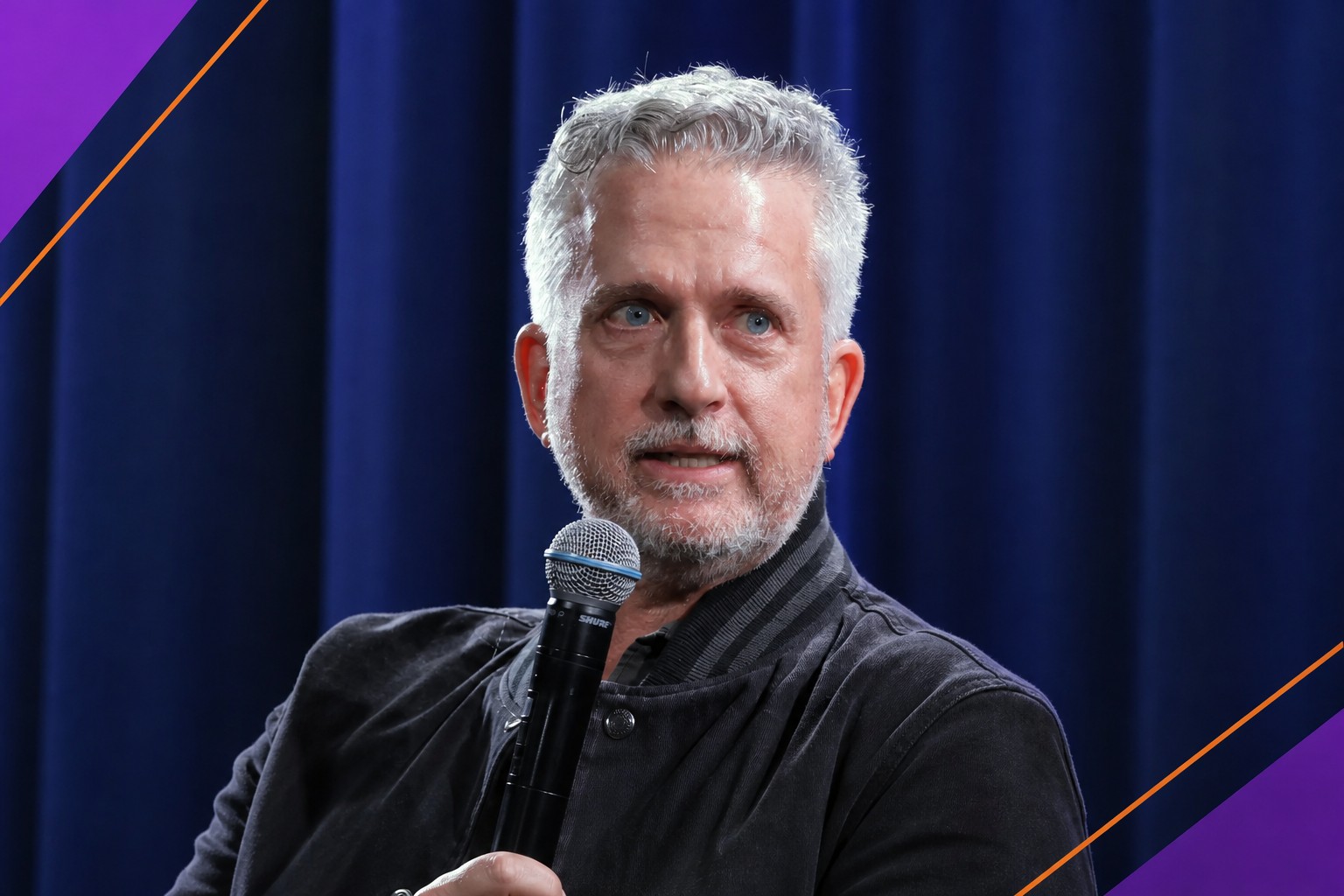
ChatGPT is now a sponsor of the Bill Simmons Podcast, and Simmons delivered the read himself. He told listeners ChatGPT is the "AI sponsor of the Bill Simmons Podcast," said he had asked it to name Russell Westbrook's defining game, called the answer pretty good, and recommended the audience go use it. Simmons built Grantland inside ESPN and then The Ringer on the proposition that distinctive writers are worth paying for. Large language models have cut traffic to sites across the internet and accelerated the decline of media and creative industries that were already fragile. He is selling airtime to the category doing it.
The episode that carried the ad was about Westbrook's retirement, and Simmons spent much of it quoting himself. He opened on an old column about an NBA Finals and was still reading his own decade-old work eleven minutes in, while his guest, The Ringer's Kirk Goldsberry, listened patiently. Simmons largely stopped writing regularly years ago — he has said his fingers do not work — and the pride in the back catalogue is undimmed. Then came the ad for a machine that produces text without any of that.
The ad itself is not unusual. The Joe Rogan Experience and This American Life have both promoted ChatGPT, and a Wondery podcast, The Lead: Starting Five, went further and installed an AI host. What makes this one land differently is whose voice is reading it, and what that voice was built on.
Grantland became a destination for young writers almost immediately after Simmons founded it inside ESPN. He and his editors recruited journalists with different specialisms and different styles, then let them be as ambitious as the idea and ESPN's budget allowed. At its best the site treated creative work as untouchable: a writer trusted with a story could take tens of thousands of words to finish it. That is the most expensive possible way to make text, and the opposite of what a language model is for.
Simmons's own voice was the argument for the model. Informal, irreverent, deep in basketball history one minute and detouring into strange pornography references the next — even people who disliked it conceded it was recognisable and influential. His own subreddit, r/billsimmons, reacted to the first ChatGPT-sponsored episode sharply enough that Awful Announcing wrote a piece about the reaction.
The company he runs now looks different from the one that reputation was earned at. The Ringer, owned by Spotify, is primarily a podcast business. It publishes one to three articles a day, a small number against the 25 staff writers on its masthead, and its best-known employees register publicly as hosts and personalities rather than editors or managers — Mallory Rubin, the site's content director, is better known for a podcast, and recently threw out a first pitch at a Baltimore Orioles game. The writers who do land the big stories do not necessarily stay. Claire McNear wrote the piece on Jeopardy! host candidate Mike Richards after which he did not get the job, and was recently let go. Miles Surrey, who wrote more than any other staff writer, was also cut. The range narrowed too: Grantland covered everything from baseball to boxing, while The Ringer's written output consistently reaches only the NBA and the NFL.
Money is not the constraint. Spotify bought The Ringer for around $200 million, and at the time Simmons posted that details would follow but that @ringer would remain @ringer in every respect — that the buyer valued the team's work and wanted it to go on being itself. Winding down the written side inside one of the richest streaming companies in the world is a choice, not a necessity.
Staff have said what they think, carefully. On an episode of The Rewatchables, Simmons announced that Roger Ebert was dead, and his co-hosts immediately understood where it was heading: he read out ChatGPT's version of how Ebert might have rated The Nice Guys. Chris Ryan and Rob Mahoney were audibly unimpressed. Podcasts make it hard to tell a bit from a position, particularly when the boss is in the room, so the clearer signal came elsewhere. On Talk Easy, host Sam Fragoso asked two senior Ringer staffers, Sean Fennessey and Amanda Dobbins, about Simmons's use of AI. Both were quick to establish that it was Simmons imitating Ebert, not them. Fennessey said he would not do it, and that he and Ryan had already explained to Simmons why they disliked that segment. Dobbins said she had not known about the ChatGPT sponsorship and had never used AI.
That last detail is the one I would put at the top. A senior employee found out about a sponsorship deal the way listeners did. It fits a pattern rather than breaking one: staff have said they knew almost nothing about the Spotify sale before it happened, there have been accusations that Simmons tried to weaken The Ringer's union, and complaints about low pay at a publication with real revenue. Read that way, the ChatGPT read is not a founder abandoning his principles in a single moment. It is a company that already decided writing was not the business, now monetising the audience that decision left behind. Anyone below Fennessey and Dobbins who feels the same way about the ad has good reasons to keep quiet.
The more interesting question is what OpenAI is buying. It does not need awareness among American sports podcast listeners; it has that. What it is acquiring is an endorsement from someone with standing in exactly the culture it stands accused of hollowing out, read in his own voice, on his own show. That is a different product from an ad impression, and it is worth more.
When Grantland launched, Simmons wrote an introductory piece about the site's future that looked back on his years writing for Jimmy Kimmel's show. Two ideas from it have aged in opposite directions. He wrote that he was born to write columns. He also wrote that writing is fundamentally lonely — a person, an empty Microsoft Word document, and a process capable of driving you insane. The second has held up. The first is now being read past, on the way to an ad for the thing that fills the empty document for you.