
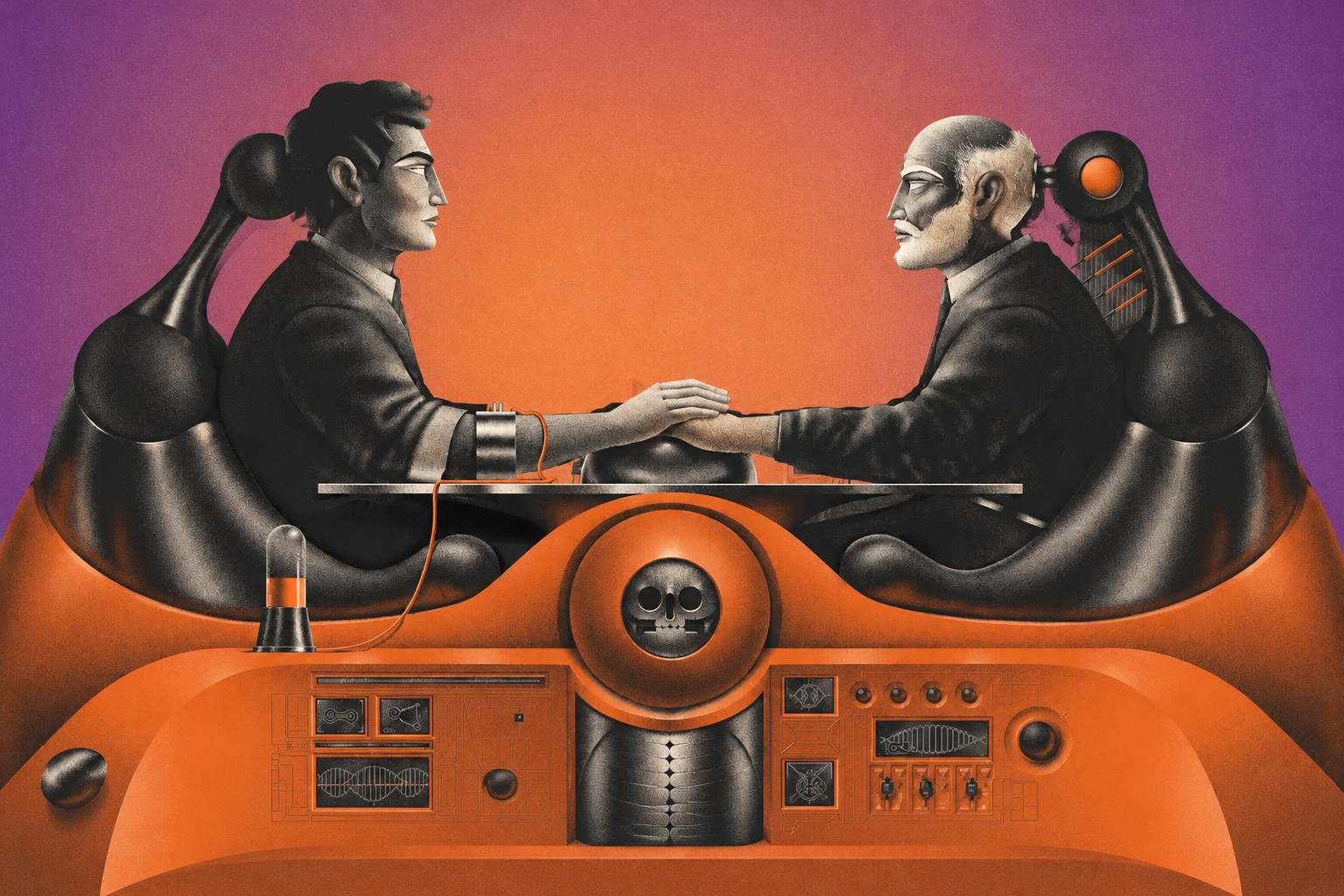
The number came before the blood test
Death Clock launched in 2024 to track health habits and help users try to live longer. In February, the company added blood biomarker tests. A $69 subscription includes a basic panel measuring cholesterol, blood sugar, inflammation, vitamin D, and blood and organ markers. Nine additional tests cover areas from hormones and micronutrients to thyroid function. Together, the tests cost $780.
I ordered the standard panel and added a $29 stress test. The app says its AI was trained on 1,200 longevity studies, insurance actuarial data, and life-expectancy tables. It uses the results to build a prevention plan.
Before my blood was drawn, though, Death Clock had already given me a date. After an intake questionnaire, it predicted I would most likely die from cardiovascular disease, a sleep disorder, or cancer, without specifying which. My estimated age at death was 74. When I later entered a family history of mild diabetes, the estimate dropped to 73.
I knew that prediction was not a diagnosis. Still, I wondered whether a personalized program could add 10 or even 15 years to my life. I booked an appointment at Quest Diagnostics, one of the two labs Death Clock works with, and gave the app the blood it wanted.
A forecast with a long list of caveats
The results arrived a week later. They largely confirmed what my doctor had warned me about earlier that year: my cholesterol was borderline high, and my blood sugar was “approaching prediabetic levels.” My liver markers looked optimal, and my cortisol was normal. I had suspected high cortisol after a run of sleepless nights, partly because of wellness influencers’ videos. The algorithm, at least on that point, did not confirm my hunch.
The app turned the results into more tasks: increase vitamin D3, get a bone-density scan, and discuss a prostate-specific antigen test with a specialist. Death Clock CEO Brent Franson has said he would like the product eventually to replace primary-care doctors. Yet the app repeatedly told me to discuss its recommendations with a doctor.
That gap matters. Death Clock presents a quantified path to longer life, but its own advice still sends users back to human clinicians. And a prediction of when someone will die is not the same thing as knowing how to prevent that outcome.
Mike Ludkovski, a professor of statistics and applied probability at the University of California, Santa Barbara, who studies longevity analysis, says apps like Death Clock can create the impression that an individual lifespan is a linear process that can be calculated and changed. A 2024 study in the journal Aging Cell also suggested that “aging clocks” should not be treated as measures of a person’s overall biological age. The immediate causes of an individual’s death, Ludkovski says, are ultimately random and will never be fully predictable.
The wider market is selling the same hope in different forms. The longevity market is projected to reach $8 trillion by 2030. Doctronic offers an AI personal doctor and prescription renewals without a visit to a conventional doctor. Superpower and Lifeforce sell subscriptions to health data and recommendations reviewed by doctors. Twin Health says it creates an AI twin of a person’s metabolism. These products promise more personalized care, but it remains unclear how much longer they help people live—or at what cost.
What the countdown did to me
I asked Franson whether people are getting healthier or simply more anxious about getting sick. He said both were true, and called the drive to track and control everything an unhealthy obsession. I kept thinking about whether Death Clock was also encouraging it.
Gretchen Terry-Leonard, author of The Second Peak: Aging Sucks or Are We Just Doing It Wrong?, argues that people often assume that if something can be measured, it can be controlled. But death does not work that way, she says; measurement can end up serving a different need: the wish to feel less afraid.
Terry-Leonard, who also co-founded the Center for Deeply Human Leadership, an independent research institute studying AI’s effects on brain health, doubts that consumer apps alone can change behavior. “Facts don’t change minds,” she says. People may know that some actions harm their health and keep doing them anyway.
Research on thoughts of death and health choices suggests people are more likely to adopt healthier behavior when they believe they can act and have the resources to do so. Not everyone has that capacity. Without it, Terry-Leonard says, anxiety is more likely to make people defend their sense of self than to care for their health.
While working on her book, she found that older people with more positive attitudes toward aging lived, on average, seven and a half years longer than those with negative attitudes. A countdown app may quietly reinforce the idea that aging means loss—and work against the longevity it claims to support.
Over a month with Death Clock, I found myself monitoring my body and recording habits with the focus of an accountant recalculating every figure before a tax deadline. In one day, the app added 5.8 years to my estimated lifespan after I logged at least 30 minutes of strength training, no alcohol, brushing and flossing, good sleep, a sauna, and more than eight glasses of water. But the countdown kept going in one direction: tick, tick, tick. Time had become a problem I was supposed to optimize.
I think the question the app leaves unanswered is whether this kind of measurement gives people more control or just more ways to worry. The estimate changed with my habits, but the certainty it implied was never there. Once I thought more clearly about the life I wanted to build, and the unexpected turns that could make it beautiful, the important thing was not how it would all happen, but who would be there. I turned off Death Clock’s notifications and texted a friend: “Let’s meet at seven.”
Daily AI news
Every day we pick what actually matters in AI and explain it plainly — no hype, no filler. Subscribe if you want to follow where the industry is going.
Only what matters — every day
Follow on X