
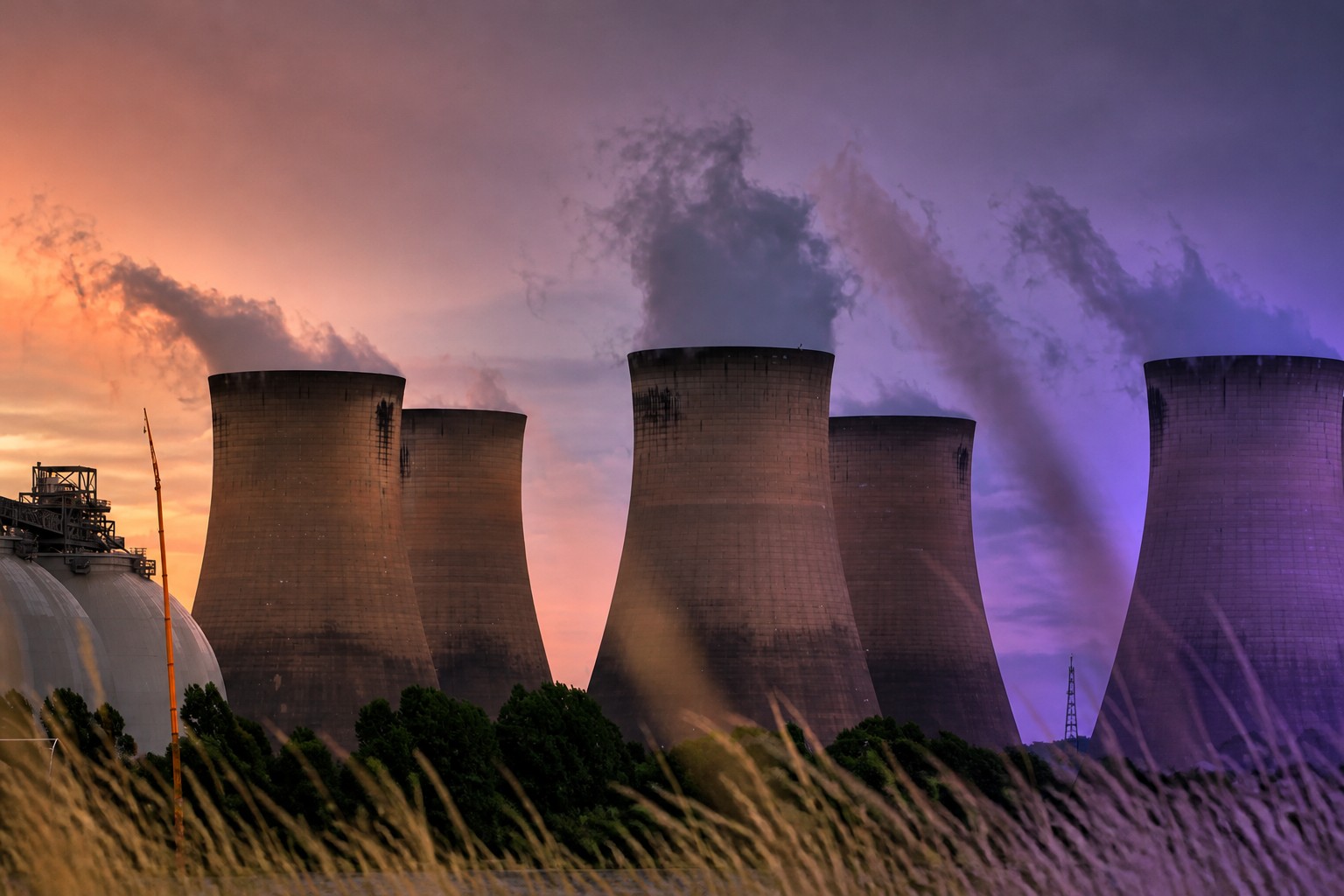
A new role for Drax
At first, Drax will provide land and access to the national grid through connections already on the power-station site. Direct electricity supply is expected in the early 2030s, if the company secures the necessary permits by 2031.
Drax chief executive Will Gardiner said the project could give the site a long-term future, preserve hundreds of jobs, support industrial revival in the north of England and strengthen the UK’s AI capabilities.
The investment estimate is striking, but the nearer-term project is smaller: up to 100 MW of computing capacity from 2028. The £20 billion figure is a potential investment attracted by the project, not a stated construction budget for the first phase.
Drax’s power station generates almost 5% of the UK’s electricity by burning biomass wood pellets. Analysts describe it as the country’s largest source of carbon emissions. The government does not count those emissions, following Drax’s argument that trees absorb an equivalent amount of carbon to the wood waste used to make the pellets.
That accounting is under growing scrutiny. The government has said Drax will have a “much more limited role” in future. From 2027 to 2031, the company will be eligible for only half its current subsidies: £2 million a day.
The announcement lifted Drax shares almost 9% on the London Stock Exchange, taking the company’s market value to nearly £3 billion. That reaction reflects investors’ interest in a potential new revenue stream as the power business faces a more constrained future.
The grid is part of the bet
The deal came a week after the government published a draft national policy statement on data centres, calling them “as important to our economy as the railways and electricity networks we have long relied on.”
The government also said the UK needs to control the development of data centres itself and ensure that both the country and host communities benefit.
But the grid is already under pressure, while the country remains bound by climate targets. That makes the route to more data-centre capacity a question of power supply as much as planning: how quickly can the UK build without relying heavily on expensive, polluting gas generation outside the grid?
I think Drax’s proposal is appealing partly because it puts a data centre beside existing grid connections, while promising a future direct supply from the station. What the announcement leaves unclear is how much of that future power will come from biomass, and how the project’s emissions will be counted. The site’s new role may depend less on the scale of the investment than on whether its electricity can meet the government’s climate and reliability tests.
Daily AI news
Every day we pick what actually matters in AI and explain it plainly — no hype, no filler. Subscribe if you want to follow where the industry is going.
Only what matters — every day
Follow on X