
The machine is simple; the reaction is not
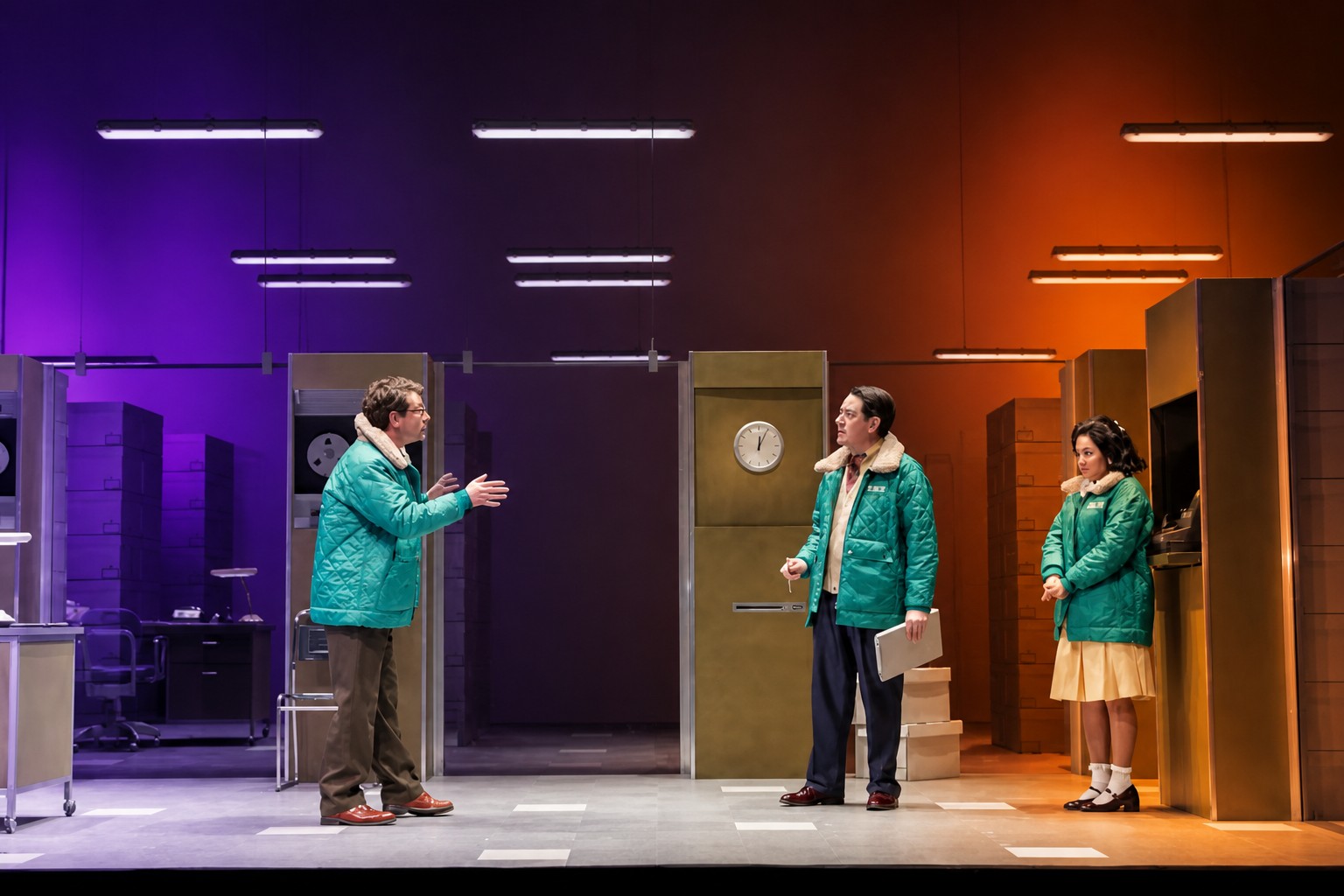
Weizenbaum, played by Dan Spielman, works at MIT with his colleague Ron (Hamish Michael) and secretary Becky (Manali Datar). He creates a programming language that the play presents as a starting point for AI’s history, though Weizenbaum himself would have disputed that description.
The program built on it borrows the vocabulary and tone of a therapist. It repeats phrases and asks open-ended questions such as “How do you feel about that?” Weizenbaum intends it as a rebuttal to Alan Turing’s theory that machines might one day think.
Instead, his colleagues and superiors become fascinated by the idea that the program understands them. Named ELIZA after the heroine of George Bernard Shaw’s Pygmalion, it is especially compelling to Becky. Perhaps, the play suggests, that is simply because it listens to her—a rare experience in the male-dominated world of 1960s computer science.
The play initially recalls Anna Ziegler’s Photograph 51, a thoughtful account of Rosalind Franklin and the discovery of DNA. But Holloway soon breaks from realism. Weizenbaum hides a clock in his jacket, then later spits out bird feathers; the ordinary workplace becomes something stranger and more threatening.
Source: theguardian.com
A theatre of unease
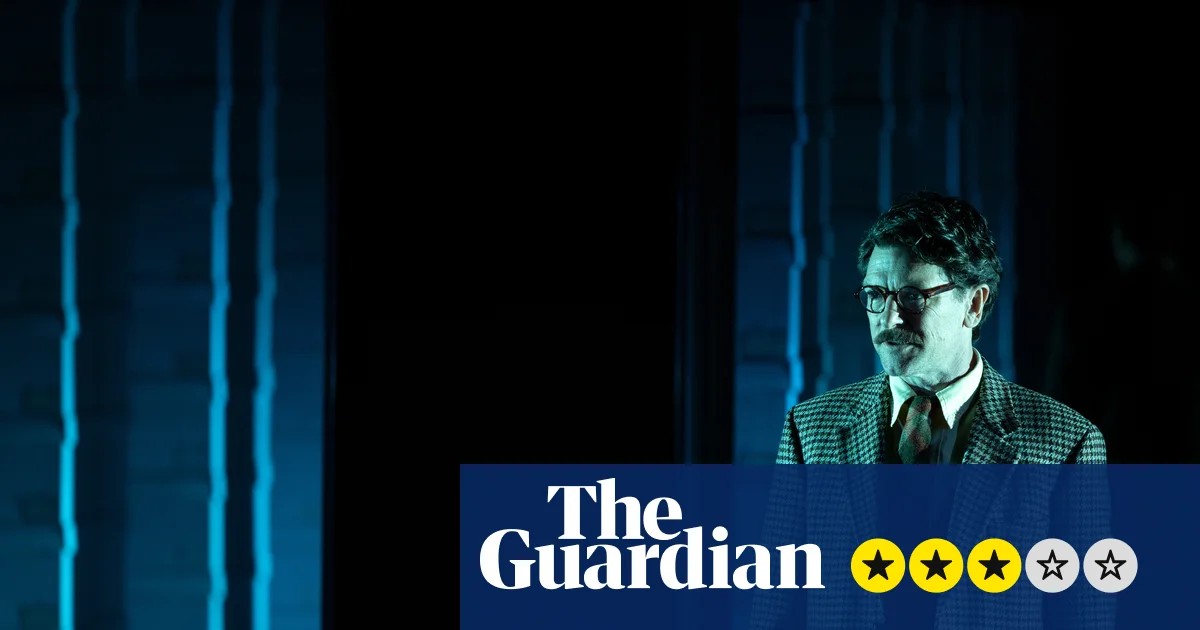
The production’s visual language points toward Orson Welles’s film of Kafka’s The Trial. The two protagonists share a name, and Dale Ferguson’s set—endless rows of white archive boxes and revolving mechanisms—makes Weizenbaum’s workplace feel like a prison. Paul Jackson’s sterile, unsettling lighting also recalls the film.
That surrealism has a purpose: it denies the audience the comfort of assuming it understands events better than the characters do. The danger is that the characters themselves can start to feel like diagrams. As the plot takes on the familiar shape of psychological horror, the people onstage become less compelling.
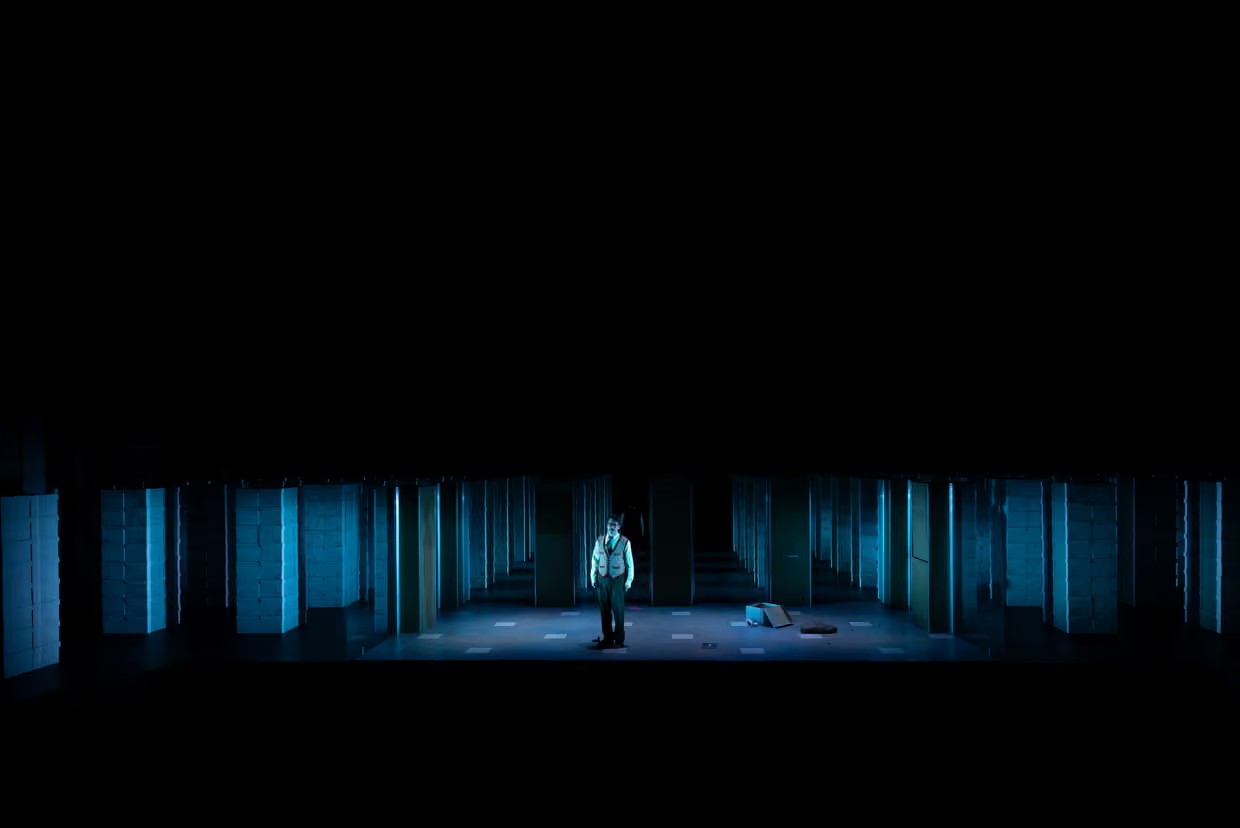
‘The set, with its seemingly endless rows of white file boxes and spinning wheels of machinery, evokes the maddening prison of Josef K’s work environment.’ Photograph: Pia Johnson
Source: theguardian.com
Paige Rattray directs with energy and precision, embracing theatrical exaggeration and abrupt shifts in tone. The pace is brisk, and the comedy often lands, but the emotional space is limited. The three performers make the most of what the play gives them:
The warning—and the cost of making it
Holloway is an intuitive, ambitious playwright, and the play wears its influences openly: Anna Ziegler, Harold Pinter and Caryl Churchill. Its central warning is clear. The risk is not that machines will think like people; it is that people will believe they already do. That belief, the play argues, could be enough to destroy us.
I think the production’s most revealing tension is between that sharp idea and its theatrical method. Its humming, data-centre-like space gives AI a sleek, imposing surface, while the surrealism makes the audience feel the threat of a reality that can be faked. But those choices also keep the characters at a distance. The play reaches back to AI’s origins and the moral consequences of Promethean ambition, yet it is less persuasive when it needs us to feel for the people caught up in it.
Daily AI news
Every day we pick what actually matters in AI and explain it plainly — no hype, no filler. Subscribe if you want to follow where the industry is going.
Only what matters — every day
Follow on X