

From a browser extension to sales infrastructure
Floqer began as Super Chat, a Chrome extension that let users sign in with ChatGPT to explore information and take notes. Its founders, Shivam Mahajan and Zaahida Islam, saw large companies using it to clean up customer relationship management data.
Those conversations exposed a gap: CRM cleanup was mostly manual, with few established processes for keeping customer records current. The founders changed direction and built Floqer around that work.
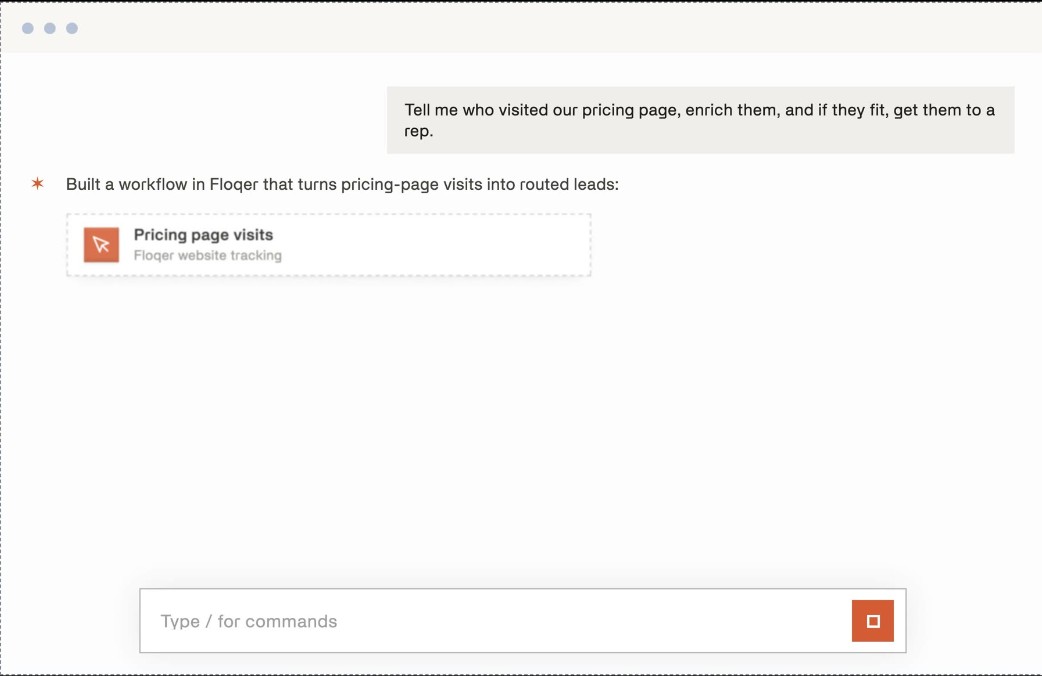
The current platform asks users to describe the prospects they want. AI agents then research sources across the web and assemble lists of matching companies and contacts. Floqer can enrich target-company records from more than 100 third-party data sources, checking providers in sequence when it needs to verify an email address or phone number.
It also tracks changes online, including a prospect changing jobs or getting promoted, and a company raising a new funding round. Those updates can flow into customers’ records. Floqer says customers have reported cutting prospecting time by up to 70%.
Open source as a capacity decision
The customer knowledge base is currently available to a limited group because Floqer says it cannot meet all the demand. Mahajan argues that an open-source release could help, while also giving customers more control over where data lives and how the technology is adapted.
The release is planned for early 2027, conditional on security reviews. That condition matters: the database may contain sensitive customer information, and large companies already use the service.
Floqer was founded in 2024 and raised $2 million in seed funding from F7 Fund, which is associated with Perplexity, N49P, Tidal Venture Partners and Perplexity co-founder Denis Yarats. The company has eight employees and more than 1,000 customers, including Perplexity, Wise and AngelList.
The open question
I think the interesting test is not whether open source attracts more users, but whether Floqer can make customer data portable without making a sensitive knowledge base harder to secure. The announcement gives a target date and a reason for the move, but not the release’s scope or how much of the current product will be included. For a company whose pitch is continuous research across people, companies and customer interactions, those details will define what “open” actually buys customers.
Source: techcrunch.com
Daily AI news
Every day we pick what actually matters in AI and explain it plainly — no hype, no filler. Subscribe if you want to follow where the industry is going.
Only what matters — every day
Follow on X