
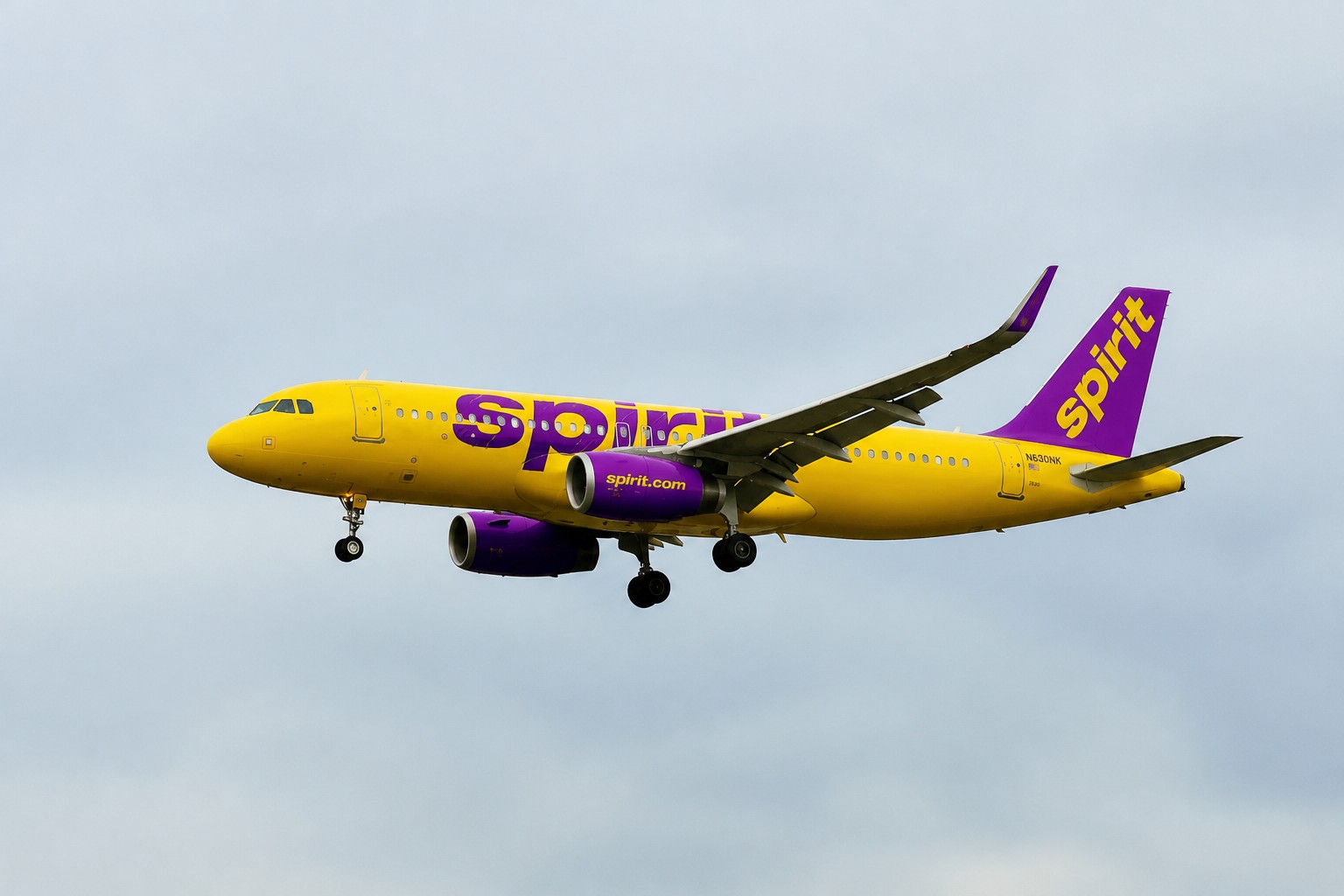
Google reached an agreement with the Spirit Airlines flight attendants’ union on how to handle the airline’s archive before its sale: Tonic AI will remove information that could link the data to specific people. The deal covers decades of work files, including 1.99 billion emails and 664 million Microsoft Teams messages. The agreement also excludes several types of sensitive documents and allows Google to walk away if the cleanup reduces the archive by more than 8%. A judge still needs to approve the agreement.
Google to buy Spirit Airlines archive for $10 million with worker data protections
What the deal includes
The archive sale is part of Spirit Airlines’ liquidation, after the airline unexpectedly ceased operations earlier this year. In August, representatives of the low-cost carrier said in a court filing that they would sell Google several decades’ worth of data for $10 million. Google said it would not receive personal information.
But the Association for Flight Attendants, a union representing 55,000 workers, objected, arguing that Google’s proposed safeguards would not protect flight attendants from serious privacy violations. The archive contains data dating back to 1986, including:
The revised agreement requires Spirit to hire the third-party company Tonic AI to de-identify the data. Tonic AI must remove information that could be linked to individual passengers or employees and verify that the records cannot be matched back to specific people after processing. Google has agreed to store the archive only in de-identified form.
Employee medical records, documents about internal investigations and employment relations, and materials on aviation safety management systems will be excluded from the sale. In early November, the airline union said that including such information could discourage workers from reporting safety concerns through voluntary programs. These programs are widely considered an important part of the United States’ strong aviation safety record.
Exit terms and the union’s response
The agreement includes a right to walk away: Google can withdraw if the assets shrink by more than 8% after the cleanup. Google did not respond to WIRED’s request for comment. The agreement is still awaiting a judge’s approval.
Association for Flight Attendants president Sara Nelson told WIRED she had not expected flight attendants to find themselves at the center of debates about workers’ rights in the AI era. Such discussions often focus on employees who train systems that could eventually replace them. Nelson said replacing a flight attendant would be difficult: it would take a highly advanced robot, whose arrival, in her assessment, is still a long way off. But she said the Spirit case shows that data collection affects workers even in jobs that seem protected from automation—and that it concerns everyone.
The union plans to immediately seek the inclusion of worker data protections in collective bargaining agreements with other airlines. Nelson said she would publicly criticize employers who refuse to meet those requirements. The union has also begun meeting with state-level lawmakers to prepare worker data protection bills.
Ari Ezra Waldman, a law and technology professor at UC Irvine School of Law, called the draft agreement a good outcome for Spirit employees. In an email to WIRED, he noted that unions could take privacy protections into account in future sales of large data sets. Waldman also pointed to a more direct option: banning the sale of data altogether. He said privacy protections are more necessary now than ever.
The debate over AI’s benefits for workers
Technology company executives argue that employees understand their data will be used to train AI models that will ultimately make life easier and better. One executive told WIRED this month that the benefits AI development could bring should also be considered.
Nelson countered that American workers do not believe promises of those benefits. She said they are among the voters growing increasingly wary of technology. She called the idea that AI will bring universal abundance a fantasy of people in hoodies and beanbag chairs in office boardrooms.
Dataist’s take: The agreement shows that worker data protection could become a subject of union negotiations, even when employees do not directly train AI systems. But the mechanism depends on the quality of the de-identification and allows Google to walk away if the cleanup reduces the archive by more than 8%.
Daily AI news
Every day we pick what actually matters in AI and explain it plainly — no hype, no filler. Subscribe if you want to follow where the industry is going.
Only what matters — every day
Follow on X