The agent gets a place in the organization
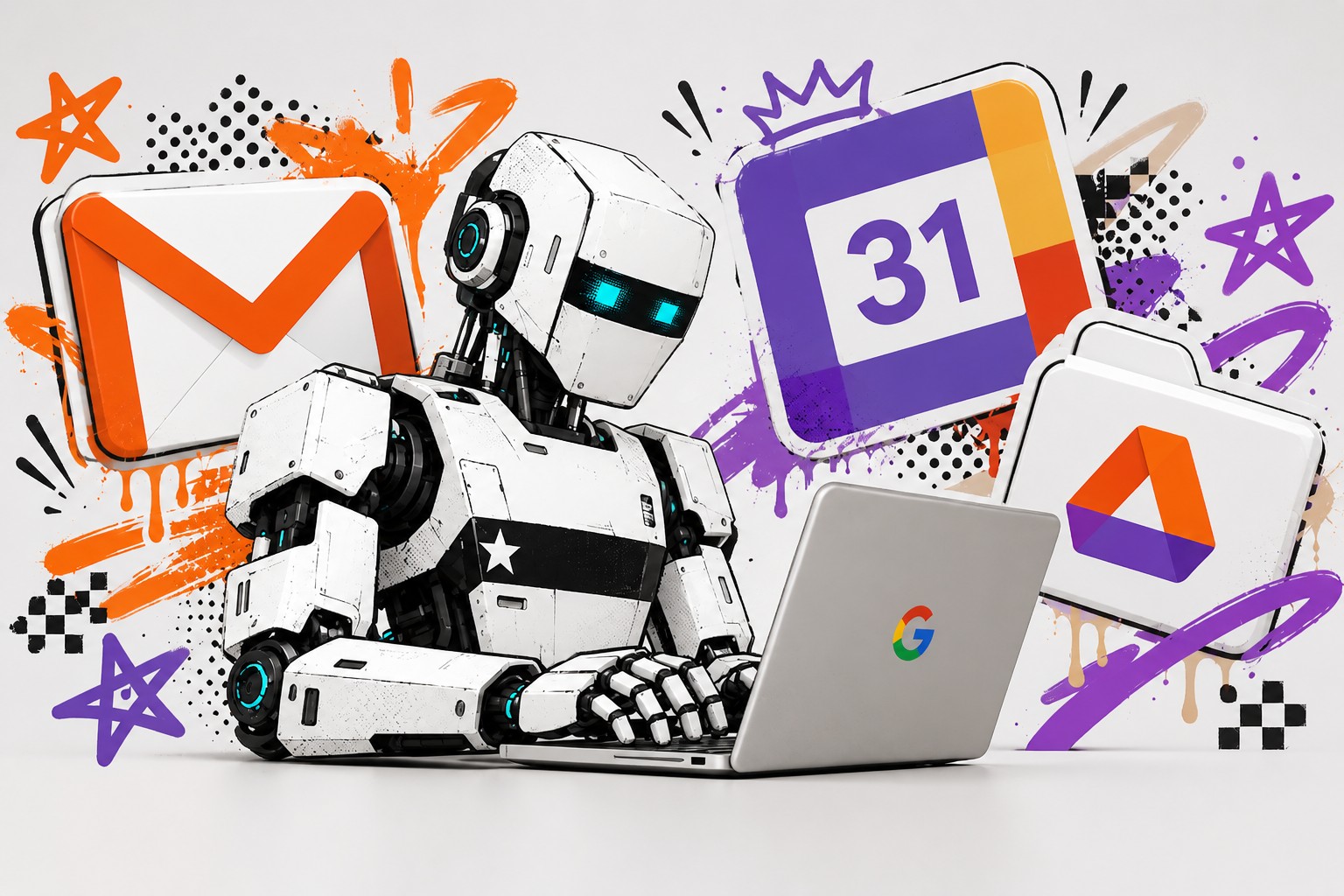
Google Cloud CEO Thomas Kurian says the agent will be available through one interface and API, across the web, iOS and Android devices, Windows and Mac computers, the command line, Google Workspace, Microsoft 365 and Slack.
A manager could create a “Meeting Planner” agent with a Workspace account and corporate directory profile. Employees could then mention it in Google Chat or ask it to edit a document. Google says tasks run in the cloud, so work started on one device can continue on another without rebuilding context. For complex assignments, the agent can assemble temporary groups of specialized subagents and divide up the work.
A dedicated Workspace account is one possible configuration, not a requirement for every Gemini agent. That distinction matters: a one-off assistant and a persistent digital colleague may need different identity, security and administrative controls.
Google says agents receive cryptographically verified identities, and that enterprise security systems control their access. Their actions are recorded in audit logs, including the creation of isolated environments for running code. Agent Gateway applies organization-wide rules to data exchanged between agents and external systems, while sandboxing restricts code execution.
Digital colleagues can access only information that team members explicitly share with them. They do not inherit all of an individual employee’s permissions—a useful boundary for agents that might encounter financial reports, customer records, legal documents or internal correspondence.
A crowded race, with an open question
Google’s announcement follows a run of competing workplace-agent products. Microsoft introduced an updated Copilot on September 25; OpenAI showed its always-on Dots agents four days later. Anthropic announced Claude integrations with Google Docs, Sheets and Slides on October 6, two days before Google’s event. SpaceXAI introduced Grok Bot in August and added shared Team Bots in September.
The products differ in how they connect to workplace software and how much work they can do independently:
Google emphasizes integrations, reusable skills, agent identity and built-in enterprise controls. Grok Bot, by contrast, emphasizes operating software through a separate computer environment, including applications without suitable APIs.
The ability to use Claude is notable: companies could retain an agent platform, shared work context and reusable skills while choosing different models for different tasks. Microsoft also supports multiple models and automatic model selection. Model choice is becoming part of the platform contest, not a Google-specific feature.
The announcement is also quiet about the practical terms of adoption. Google has not given a separate price for the general-purpose Gemini agent, said whether all its features will be included in existing Gemini Enterprise subscriptions, or announced a general-availability date and rollout schedule. Gemini Enterprise is available on web and mobile, but customers still do not know when they can create persistent colleagues or use the agent across systems.
I think the bigger gap is evidence. Google describes agents that can coordinate work over several days, but presented no independent comparative benchmarks showing how reliably the system handles long-running tasks across different applications. An architecture for doing the work is not proof that it can do so dependably.
Budgets, specialist tools and scale
Google says Smart Routing will select a model for each task based on performance and price, potentially reserving more expensive models for harder work. It also highlighted project-level spending limits that can pause agents when a budget is exhausted, and the ability to assign costs to individual departments. The spending limits are not new: Google announced hard project-level caps in August, along with per-minute billing and savings plans offering discounts of 10% or 20% for one- or three-year commitments, respectively.
The company is also preparing specialized tools for data engineering, business analytics, finance and legal work. Financial Services, currently in preview, includes more than 50 foundational skills and connections to financial data providers including FactSet and LSEG. Legal accounts for document permissions and confidentiality requirements and supports platforms including NetDocuments and iManage.
Google says nearly 90% of Fortune 100 companies use Gemini Enterprise. It cites BNP Paribas, which is deploying the platform to more than 65,000 employees, and Japanese insurer SOMPO, which has created more than 10,000 custom agents. Those deployments do not necessarily mean either company is already using the new general-purpose agent.
What I’d want to know is how these systems behave when they have persistent identities, access to sensitive data and responsibility for work across several applications—and what that costs at scale. Until Google supplies dates, pricing and evidence of reliability, companies can evaluate the design but not the operational commitment. The competition is shifting toward control of the work platform, even when the models inside it come from a rival.
Daily AI news
Every day we pick what actually matters in AI and explain it plainly — no hype, no filler. Subscribe if you want to follow where the industry is going.
Only what matters — every day
Follow on X