
Source: techcrunch.com
From test to work sample
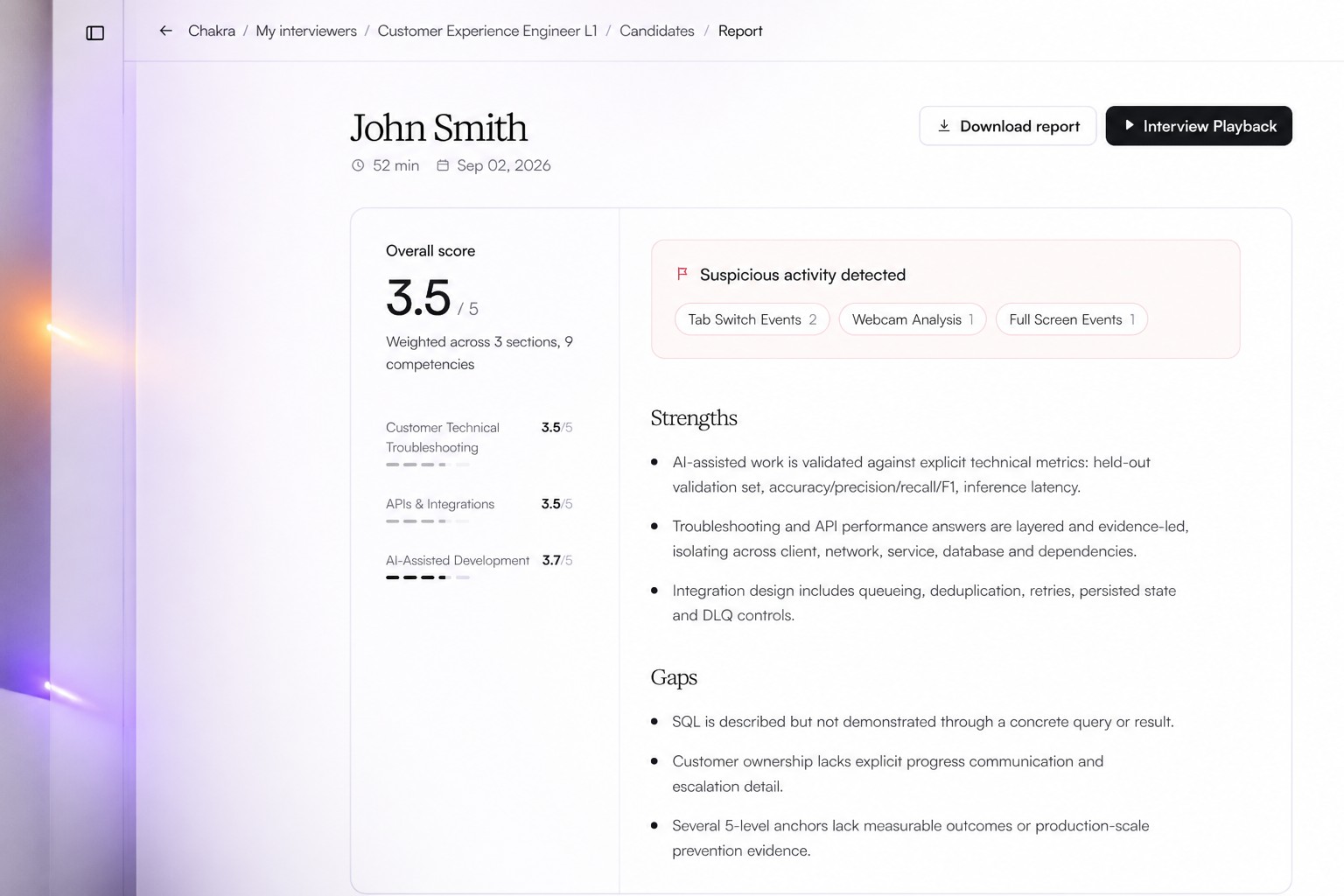
Chakra gives candidates a task based on a real code repository and a workspace with an AI assistant. As they work, the system tracks the context and asks why they chose one approach over another, or how their solution would change under a new constraint.
That makes the interview less like a conventional coding test and more like a condensed work assignment. HackerRank co-founder and CEO Vivek Ravisankar told TechCrunch that employers used to judge the finished work. Now, he said, AI can help almost anyone produce it; the reasoning and decisions behind the result matter more.
The company calls the ability to set a task for AI, evaluate its response and steer it toward a solution “AI literacy.” Chakra is designed to assess that alongside critical thinking and decision-making.
It also combines steps that might previously have been separate: an initial recruiter conversation, a take-home assignment and a later interview with an engineer. Ravisankar says one Chakra interview can bring those together.
A product shift, and a claim to test
HackerRank built its business around coding challenges and technical assessments. Founded at TechCrunch Disrupt in 2012, the Y Combinator-backed company now has more than 3,000 enterprise customers, including Amazon, Nvidia, Clay and Replit, and a community of more than 30 million developers worldwide.
Ravisankar argues that traditional coding tests have become less useful as AI spreads. Inside the company, he compared Chakra’s role to Apple’s move from the iPod to the iPhone: the old product still has a place, but the new one points toward where the market is going. He called Chakra the main product HackerRank intends to build around.
One early claim is counterintuitive. HackerRank says Chakra flagged suspicious activity 70–80% less often than comparable traditional HackerRank tests. Ravisankar attributed the drop partly to candidates having access to AI, which reduces the incentive to secretly use outside tools for answers. The rate varied by region and job level.
I think that figure is more a clue about the test format than proof of better assessment. If candidates can use an assistant openly, monitoring may catch fewer attempts to hide tool use; that does not by itself show that the interview predicts job performance more accurately.
The decision still belongs to people
Chakra scores candidates, but Ravisankar says it does not make the final hiring decision. His case for automation is narrower: AI can apply an employer’s criteria consistently to structured parts of an interview, leaving human interviewers more time to judge whether they want to work with someone and to answer the candidate’s questions about the company, team and role.
Ravisankar also argues that a properly configured system can be less biased than human interviewers because it can use the same scoring scale for everyone, regardless of background or education. But consistent criteria do not guarantee an unbiased result. Automated hiring tools can reproduce or amplify biases in their data, models and scoring rules.
That risk is already drawing regulatory attention. In New York, employers using some automated tools for hiring decisions must conduct an independent bias audit and notify candidates in advance. Ravisankar said HackerRank had to account for employment law requirements while building Chakra.
What I’d want to know is how HackerRank validates the scores against later job performance, and how employers can inspect the criteria behind them. A system can make interviews more consistent without making its judgments more trustworthy. The human decision-maker remains in place, but the quality of that decision will depend on what the tool measures—and what it leaves out.
Daily AI news
Every day we pick what actually matters in AI and explain it plainly — no hype, no filler. Subscribe if you want to follow where the industry is going.
Only what matters — every day
Follow on X