An agent you can watch
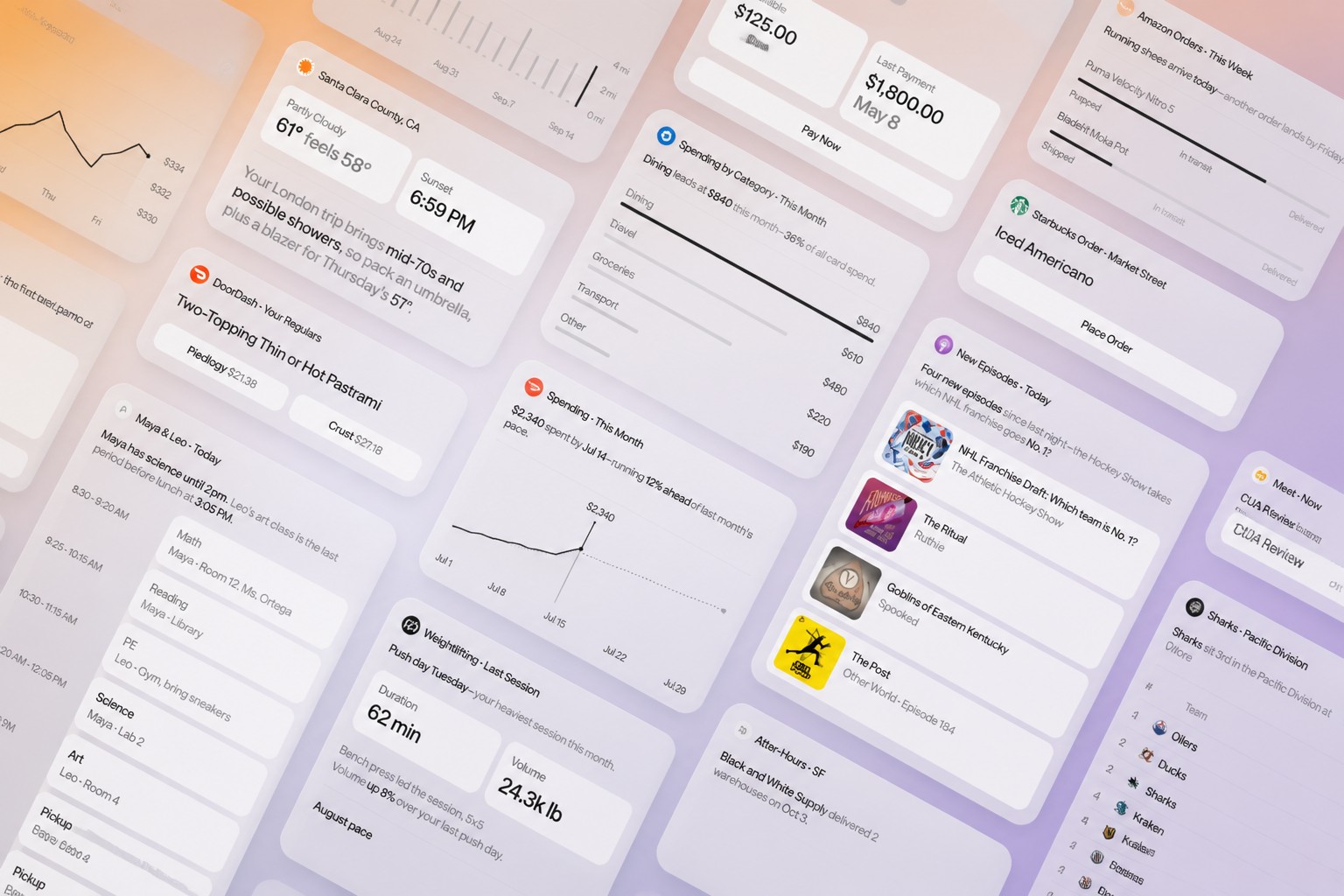
Hark Pro fills the screen with a central chat, suggested tasks and small information panels on topics a user cares about. Its background changes with local weather and time of day. Users can connect email, calendars, hard drives, bank cards and other digital sources; the assistant can then act on the computer as well as answer questions in chat.
Abidur Chowdhury, Hark’s head of design and a former Apple employee, demonstrated the product by showing it surface expenses to approve, emails to answer and an upcoming meeting with a journalist. It also noticed that he needed to book a flight and offered to do so. Chowdhury smiled and acknowledged that the flight-booking feature had already been shown too many times.
That example points to a familiar weakness in assistants: people may not know what to ask them to do, or whether they can finish the job. Chowdhury said Hark had recently spotted that a colleague needed to renew a car registration with the California Department of Motor Vehicles, then completed the process on the agency’s website.
A small window shows the agent moving through websites as it works. Chowdhury said making those actions visible should help users trust that the assistant is doing the right thing. It also makes the product’s central promise unusually testable: the user can watch the agent work rather than simply receive a finished answer.
Trust is part of the product
Chowdhury said Hark does not plan to show ads or take users’ data, distinguishing the company from Meta and OpenAI. The concern is not just cybersecurity. A capable assistant would need access to much of a person’s digital life, raising questions about whether users want companies such as Meta building detailed profiles of their friends and relatives.
Chowdhury said Hark studies a user’s needs to help with tasks, not to build profiles. He also argued that Hark Pro aims to replace the user’s computer more fully than competing products. His claim that it simply works better is harder to assess: he urged people to compare it with rivals, saying Hark might be slower than Muse but could produce a better result and complete a task without handing control back midway.
The larger bet
Hark trained its model specifically for computer use, which the company says makes those tasks faster and less expensive. What remains unclear is what that specialization costs in general knowledge and capability compared with a leading large language model. For a personal assistant, speed and task completion matter; so does being able to handle requests outside a narrow set of computer actions.
The software is only part of the plan. Hark says it will release a device designed for its software in 2027, but has not disclosed what it will look like. Chowdhury is concerned about the “creep factor” of wearable cameras, while claiming Hark’s first device will be a completely new product that has not existed before.
I think the missing detail is not just the device’s design, but what it lets the assistant do that a computer-based app cannot. Hark is asking users to trust an agent with broad access while promising a new interface and, eventually, new hardware. Until those pieces connect, its operating-system ambition is more a direction than a demonstrated advantage.
Chowdhury finds it amusing that people already use AI and chatbots but still type prompts on keyboards. Fifty years from now, he said, computers may still look like terminals. Hark’s bet is that the next interface will be an agent acting on the user’s behalf; whether that feels helpful rather than intrusive may matter as much as whether it works.
Daily AI news
Every day we pick what actually matters in AI and explain it plainly — no hype, no filler. Subscribe if you want to follow where the industry is going.
Only what matters — every day
Follow on X