
The work that starts after launch
Hostinger CEO Giedrius Zakaitis remembers when getting a website online meant uploading files, configuring databases and connecting domains. He joined the Lithuanian company almost 15 years ago in customer support, where a mistake could take a site offline.
Hostinger gradually automated that technical work, from managed WordPress hosting to website builders and, later, tools that create sites and apps from natural-language prompts. But making a site was only part of the problem. Some customers launched one, showed it to relatives and then found that nobody else visited.
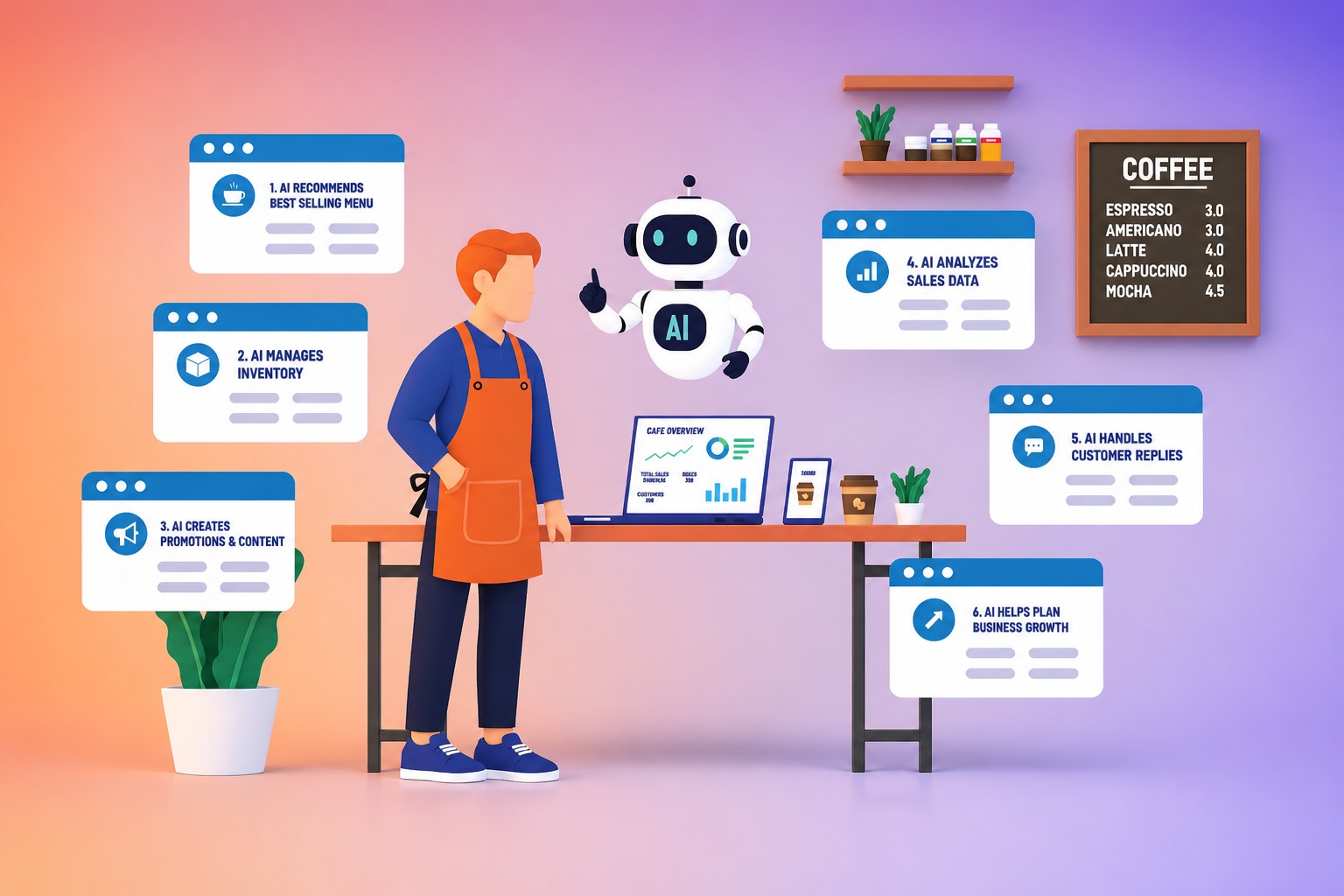
On September 2, Hostinger introduced an expanded version of its Agent platform, combining technical support with AI tools for business planning, research, analysis and automation. The company says its agents can draw on information from customers’ services, so owners do not have to explain their business from scratch each time.
Zakaitis’s ambition goes beyond answering questions. He wants an assistant that knows enough about a business to spot problems and suggest actions before its owner asks. That is a different proposition from an AI site builder: the product would need to understand what the business should do next, not just what its owner tells it to do.
Website platforms are moving up the stack
Hostinger is not alone in making that bet.
Wix’s central agent, Maestro, connects business owners with the other agents. Its daily summary reports what has been done, flags opportunities and surfaces decisions that need the owner’s attention. Wix says Symphony can work independently of its traditional website platform, a bid to remain useful wherever a business’s online presence lives.
These products vary in scope. Some are AI features inside existing platforms; others reach toward a broader assistant that handles work after a site or store is live. The business case is clear enough: a site builder may be used during setup and redesign, while an assistant involved in marketing, customer communication and daily operations could become part of the owner’s routine.
From help to delegation
A June 2026 study by the U.S. Chamber of Commerce Foundation found that half of small-business employees use AI at work. But most are not handing over operations. Among employees who use AI, 64% said their main use was personal productivity, such as drafting, summarizing and brainstorming. Another 26% use it to help with repetitive tasks. Only 6% said they automate workflows with minimal human involvement.
That gap matters. Asking AI to write a marketing email is not the same as letting it access a customer database, send the email and change future campaigns. The latter requires trust—and a way to connect the agent’s work to outcomes owners care about.
A report or a batch of generated images is not much use if it does not improve profit. Market research matters when it leads to customers at an acceptable cost. Producing content is not the same as coordinating the decisions and operations needed to make a business work.
Hostinger shared two examples of customers using AI in their businesses. Ninaad Burde, founder of astrology platform Aeon Astral, used AI to create an online store where his YouTube audience can buy astrology reports. Hostinger says the store has opened a new revenue stream that is already producing results with almost no additional promotion.
Ansh Bhavnani, founder of cybersecurity training company Bitten Tech, uses AI-based workflows to communicate with online communities and has built an AI cybersecurity mentor. Hostinger says the mentor is already helping attract new users and conversions.
The examples show AI being used first to create a business opportunity and then to take on work that once required the owner’s direct attention. They do not show an AI running a company on its own.
I think the gap between assistance and delegation is the real test for these platforms. Their value will be measured less by how much they can generate than by whether they save owners time and money, bring in paying customers and help a business survive.
An agent that remembers
Zakaitis argues that persistent knowledge about a business could make agents more useful. A generic chatbot can suggest marketing ideas for a new specialty-food store, but only after the owner explains its products, audience and budget. An agent connected to the store might already have that context.
He described a possible Hostinger scenario: after a customer publishes a site, the system notices, researches similar businesses overnight and suggests ways to attract visitors. It might find that local search ads are relatively inexpensive or that competitors are overlooking a social channel. The owner would not need to know how to operate a specialized research tool; the system would infer that a new site needs customers.
Wix is pursuing a related idea through Symphony’s daily summaries and coordinated agents. Both approaches point toward a single AI interface that connects services for orders, advertising and customer communication, instead of requiring owners to open each tool separately.
What I’d want to know is what happens to the software providers behind that interface. If the owner’s main relationship is with an agent, the specific marketing platform, analytics service or website builder may matter less—provided the agent gets the desired result at a reasonable price. The platforms are no longer competing only over who builds the better page. They are competing to become the AI a business owner turns to first.
Daily AI news
Every day we pick what actually matters in AI and explain it plainly — no hype, no filler. Subscribe if you want to follow where the industry is going.
Only what matters — every day
Follow on X