
Storyboards as part of the script
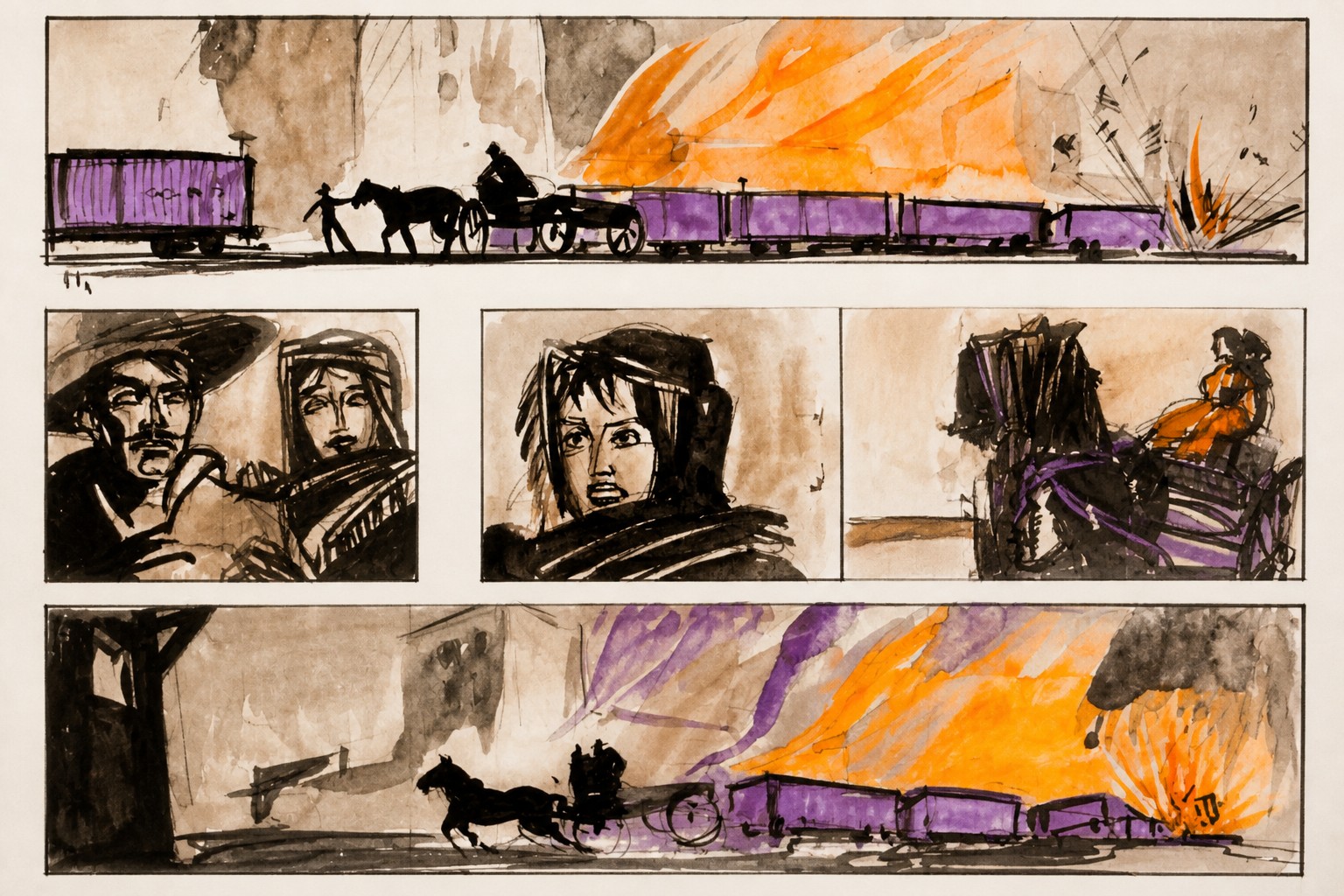
Storyboards are usually created jointly by the director, the artist and other specialists responsible for a film’s visual side: cinematographers, editors, production designers and stunt coordinators. British storyboard artist Alex Clark, who worked on Bong Joon Ho’s science-fiction comedy Mickey 17, the adventure romance The Gorge and Louis Leterrier’s thriller The Last House, sees the collaboration itself as important. The participants discuss ideas, act out scenes, make sound effects and read lines, gradually building creative relationships.
Clark says storyboards are more than just attractive drawings. The artist has to understand how the director thinks and find the right way to tell the scene. Dune director Denis Villeneuve has called his longtime collaborator, artist Sam Hudecki, an extension of his own brain. For Villeneuve, storyboarding is another way of writing: the script supplies the words, while the drawings help create a cinematic language and offer the first glimpse of how the film will come to life on screen.
As they draw a scene, storyboard artists must convey its essence while also thinking through how the shots will work during filming. Composition, tone, the characters’ positions and other details help define how the scene is constructed. Clark sometimes deliberately makes his drawings less detailed, leaving room for decisions about acting, set design, lighting and camera movement—and for unexpected discoveries.
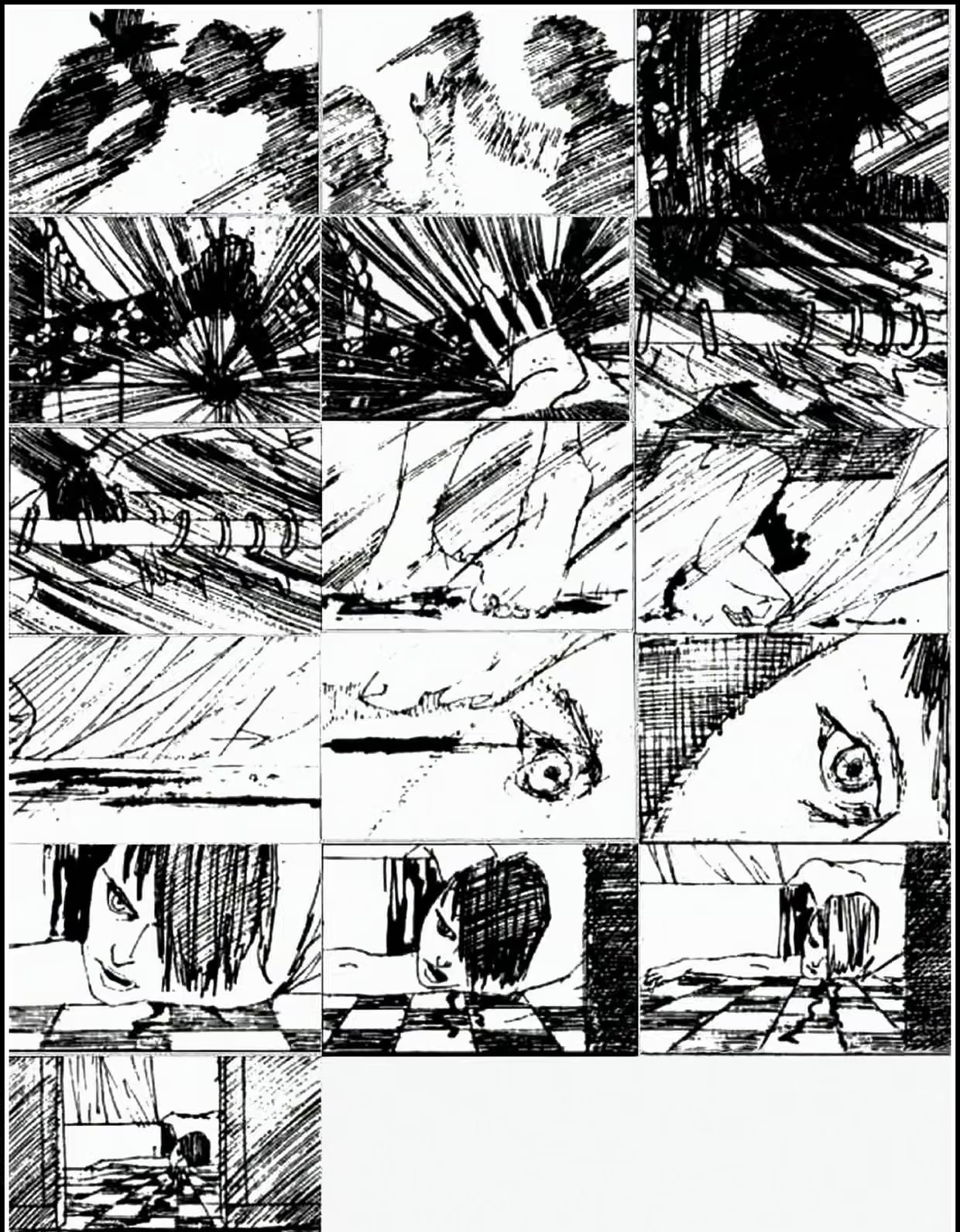
Meticulous … Saul Bass’ storyboard for the shower scene in Alfred Hitchcock’s Psycho Photograph: TCD/Prod.DB/Alamy
Source: theguardian.com
Drawings change along with the film
Storyboards show how a creative vision evolves. Ferdinando Cocco, a film lecturer at the University of Abertay in Dundee, points to Disney’s 1991 animated film Beauty and the Beast. Early work on the film, in the late 1980s, drew on the Rococo aesthetic associated with the period when the fairy tale originated. Gaston was depicted as an 18th-century French aristocrat in a powdered wig, rather than as a broad-shouldered hunter with a strong jaw, embodying more modern ideas of masculinity.
Disney began using storyboards regularly in the 1930s, and they became an important part of the studio’s production process. This can be seen in exhibitions of concept art and storyboards, as well as in videos published by Disney that show the materials side by side. Last year, the company announced a $1 billion investment in OpenAI’s Sora video generator.
Live-action films have used storyboards since at least Gone with the Wind (1939). Alfred Hitchcock created meticulously detailed sequences of drawings. Among the best-known are the sketches for the shower scene in Psycho, made by his longtime collaborator, graphic designer Saul Bass, who was also known for classic film posters. Earlier, Hitchcock had worked with Salvador Dalí on surreal sketches for the dream sequence in Spellbound (1945).
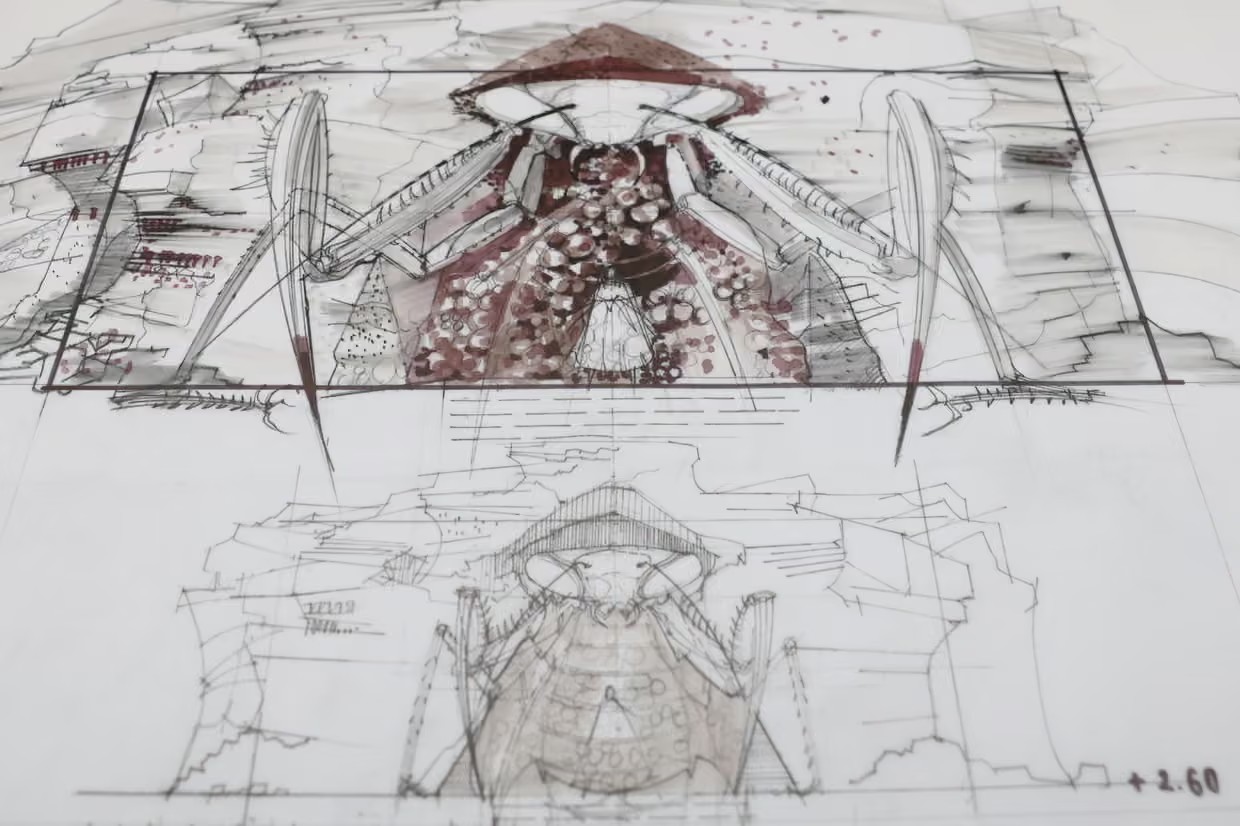
Storyboard illustration by Max Douy for Alejandro Jodorowsky’s unproduced adaptation of Dune Photograph: Zhe Ji/Getty Images
Source: theguardian.com
Some directors draw their own storyboards. Akira Kurosawa and Ridley Scott did so; Scott’s drawings are known as “Ridleygrams.” Some of Bong Joon Ho’s sketches are now on display at the Academy Museum of Motion Pictures in Los Angeles, and his storyboards for Parasite have been published as a graphic novel. In the book’s introduction, the director compares filming without storyboards to waiting at Grand Central Terminal in nothing but one’s underwear. At the same time, he suggests seeing the differences between the drawings and the finished film as thrilling moments of fear and spontaneity.
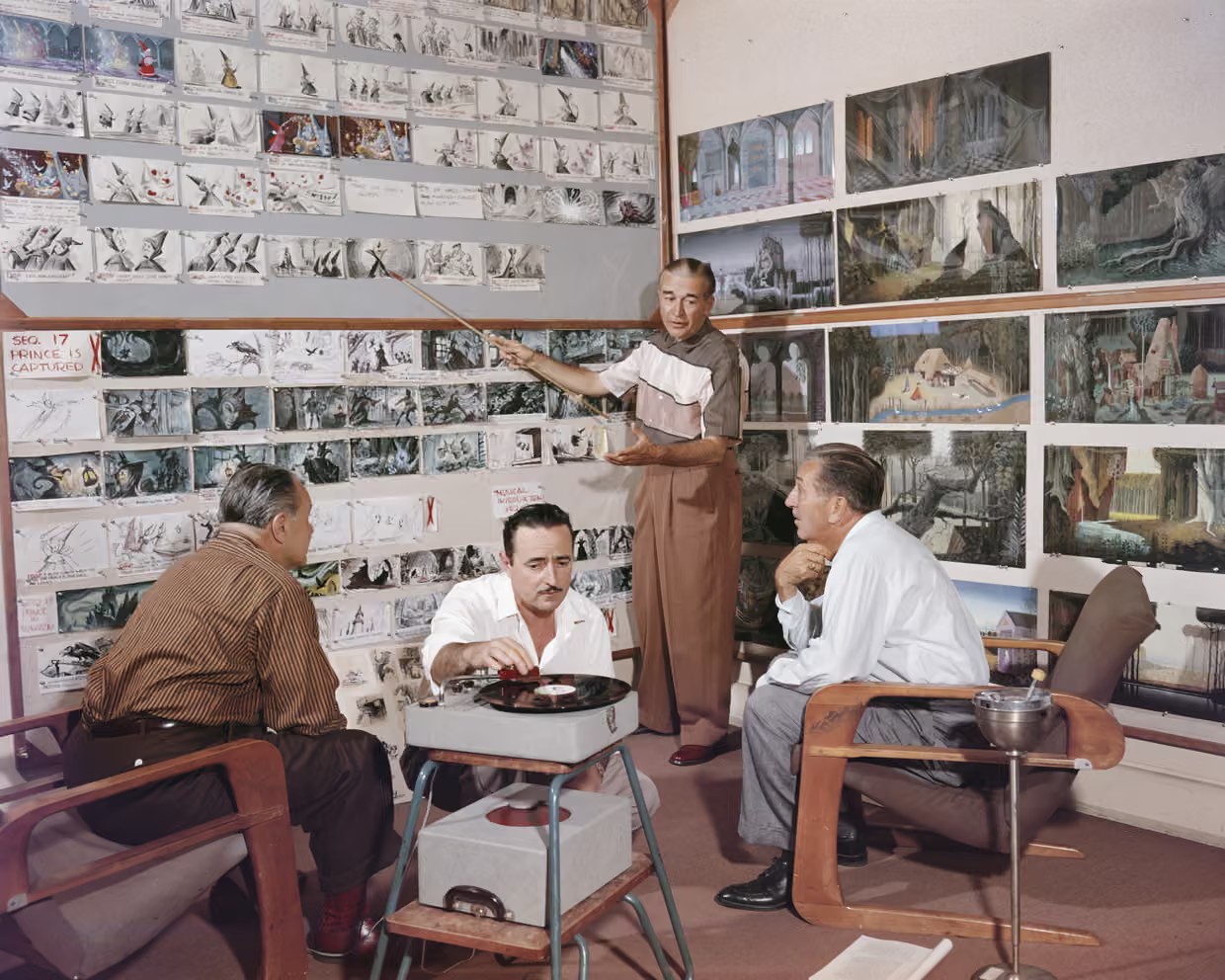
Walt Disney (right) listens to an unidentified animator talk through the storyboards for the film Sleeping Beauty (released in 1959). Photograph: Gene Lester/Getty Images
Source: theguardian.com
Interest in material about how films are made has created a market for books of storyboards. Last year, an exhibition devoted to the art was held in Milan. It featured drawings for films by auteurs including Ingmar Bergman and Federico Fellini, artists Isaac Julien and Carrie Mae Weems, and prominent Hollywood directors, among them Scorsese.
Storyboards are also used on set: they are often put up so the crew can see which scenes are scheduled for that day. Clark says he wants to create drawings that draw everyone involved into the work. In his view, paying close attention to the craft at this stage helps set the tone for filming.
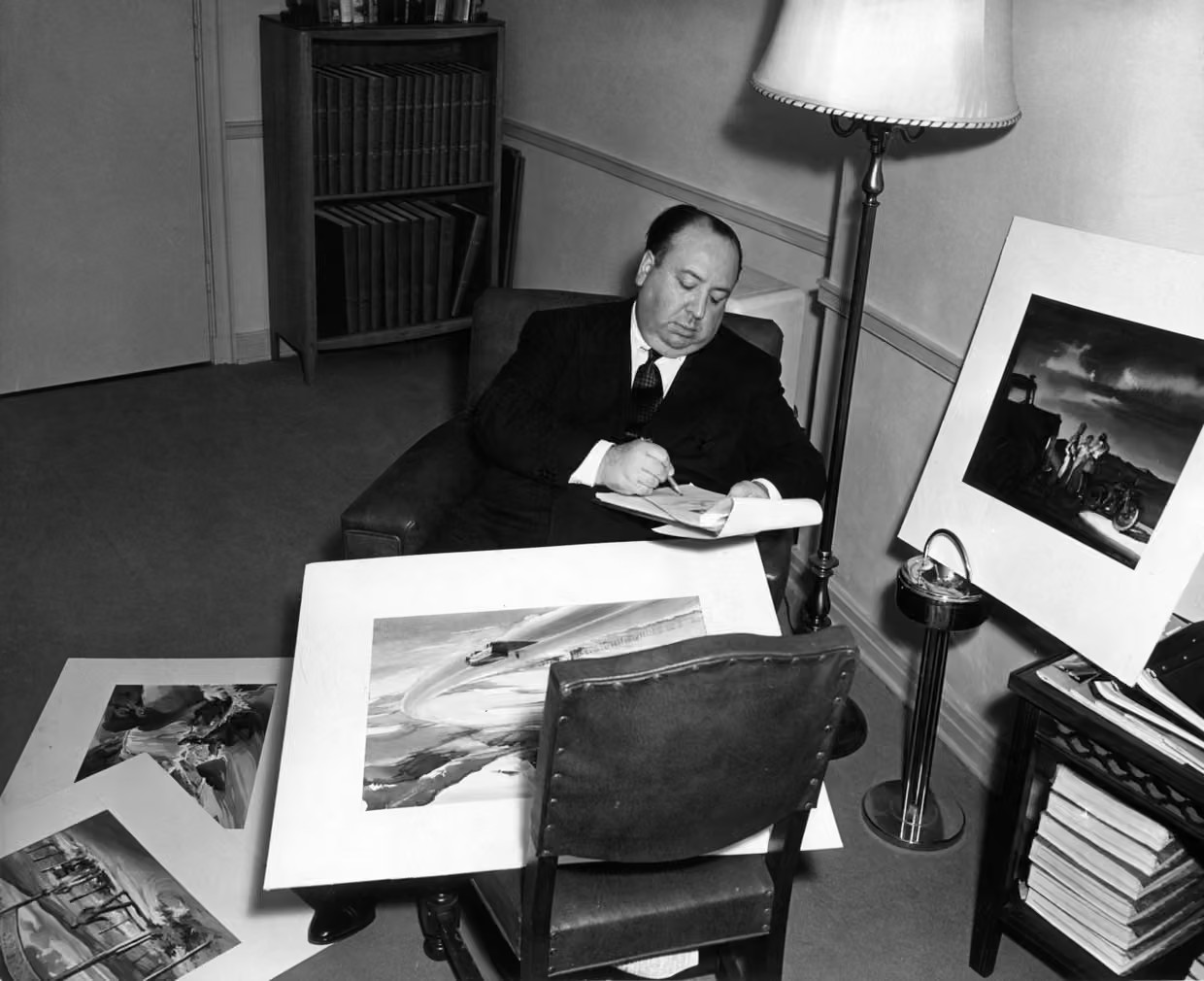
Setting the tone … Alfred Hitchcock drawing storyboard sketches for Saboteur surrounded by concept artwork in his office at Universal Studios in 1942. Photograph: Masheter Movie Archive/Alamy
Source: theguardian.com
What remains beyond the drawings
Cocco notes a return to analog practices and suggests that AI could be used to support the creative process rather than impoverish it. The need to discuss ideas with other people can broaden the artistic vision—an effect that generative AI can remove. Clark also expects audiences to value films made with human involvement more as AI spreads: in his view, a hand-drawn image immediately conveys a sense of human authenticity.
Dataist's take: the debate is not only about who creates the images. Working together on storyboards helps directors, artists and film crews develop a creative vision. The source describes AI as a potential replacement for drawings, but also shows that the finished image is only part of a storyboard artist’s work.
Daily AI news
Every day we pick what actually matters in AI and explain it plainly — no hype, no filler. Subscribe if you want to follow where the industry is going.
Only what matters — every day
Follow on X