

A shortcut through California’s approval process
In late 2024, 66-year-old attorney Rucci found a site in Imperial County that seemed to solve two problems facing data-center developers in California: strict environmental rules and the need for enormous amounts of electricity.
The land was zoned for industrial use, allowing Rucci to seek an exemption from the California Environmental Quality Act, or CEQA, and bypass the usual environmental review. Working with a local utility, he secured 330 megawatts of power — roughly the consumption of a city the size of Tallahassee.

A portrait of Sebastian Rucci at the location of his proposed AI data center, Imperial, California, on 1 July 2026. Photograph: John Francis Peters
Source: theguardian.com
The proposed campus would cover nearly 1 million square feet, about the size of 16 football fields. Rucci says he has invested around $5 million and expects to make “many times more” if the project is approved and handed to a construction company.
Imperial Valley Computer Manufacturing, the company managing the project, has promised more than 1,600 construction jobs and nearly $30 million in annual tax revenue. Plans filed with the county also include a substation, battery storage and more than 130 methane generators.
Rucci presented the project as a potential fit for Google. In a July letter to county planners, he wrote that the data center would let the company train its Gemini AI system. In an August letter to the county air pollution control district, he said Google was interested.
Google says it is not involved. Rucci acknowledged that he has no formal agreement with the company.
The project’s 330 megawatts are a major draw in a state where large data centers can take years to build. Michael Thomas, founder of Cleanview, which tracks data-center construction, says major California projects average seven years, compared with about three in Texas. Developers able to move faster may attract premiums from companies such as Google, Microsoft or Meta, he says.
The costs land close to home
The proposed site is in the Sonoran Desert, north of the Mexican border, where summer temperatures regularly exceed 100°F (37.8°C). Imperial County gets water from the depleted Colorado River, and the project would need about 750,000 gallons a day for cooling, Rucci says.
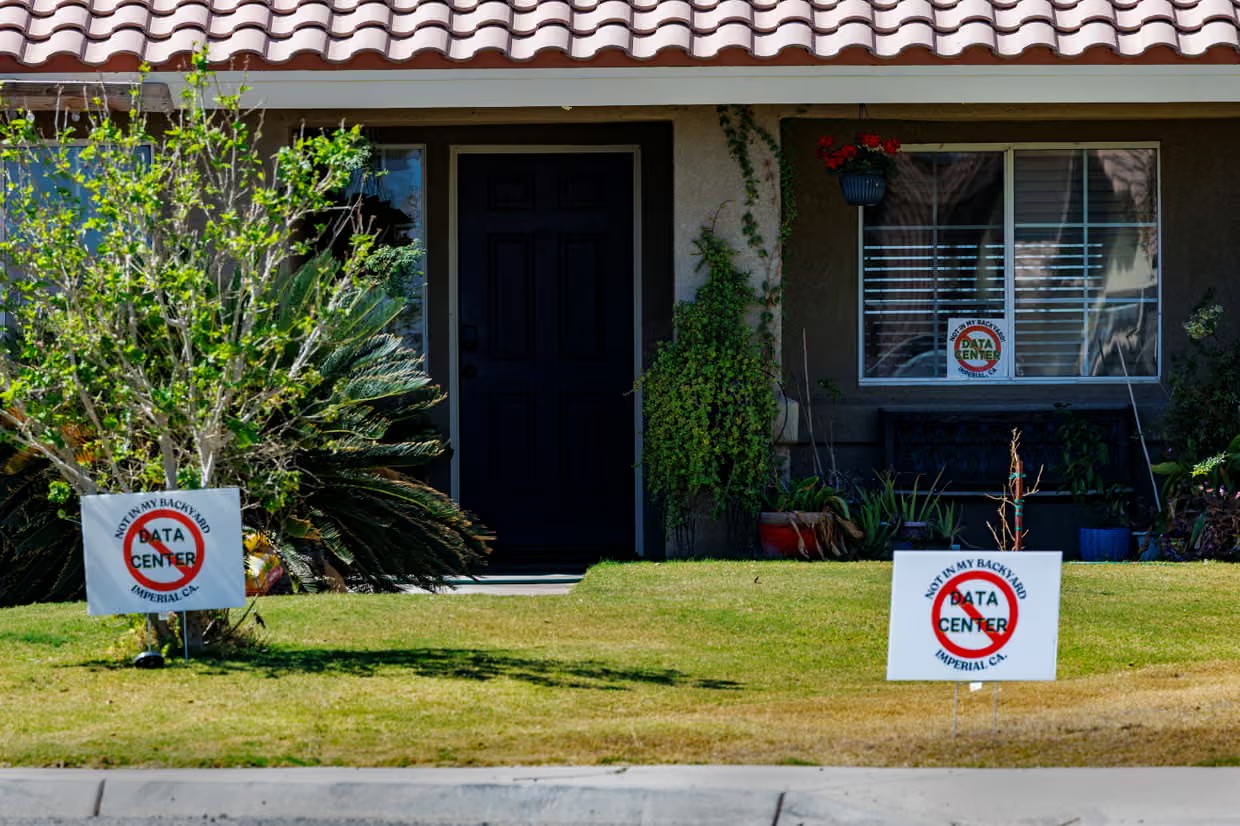
No Data Center signs are posted in the front yard of a home which is right behind the proposed site for a 950,000 sq ft data center on 12 March in Imperial. Photograph: Gina Ferazzi/Los Angeles Times/Getty Images
Source: theguardian.com
The Imperial Irrigation District rejected an application to supply that water. Rucci, on behalf of IVCM, sued the district. He argues that the data center would use as much water as a 160-acre farm, but district directors have raised concerns about rates, system reliability and the community’s well-being.
Residents’ objections extend beyond water. They worry about emissions, pressure on the electrical grid, noise and harm to rare desert wildlife. One endangered species, the desert pupfish, lives in agricultural drainage canals, including one crossing the project site.
The campaign against the data center began after resident Francisco Leal found a flyer on his door shortly before Thanksgiving. His home sits across a back fence from the proposed site. He began contacting neighbors; within months, nearly 3,500 people had signed a petition opposing the project.
The area already faces pollution and economic hardship: one in five adults is unemployed, and poverty is nearly 20%, the highest rate in California. Carla Walker, the World Resources Institute’s US director of environmental justice and equity, says residents want to know who will benefit from the project and who will bear its costs.
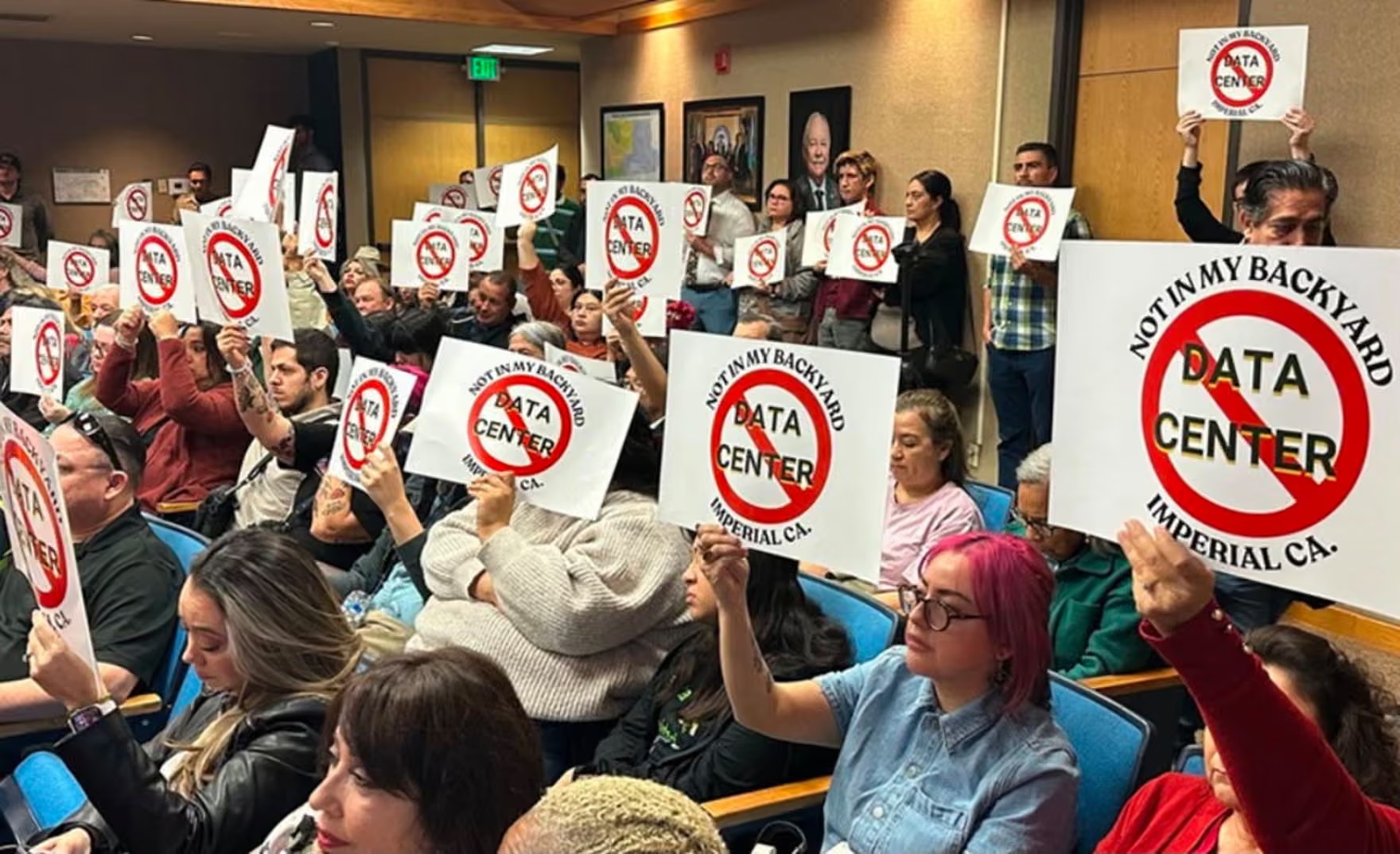
Residents protest against the plans for a new datacenter. Photograph: Courtesy of Valle Imperial Resiste
Source: theguardian.com
The dispute has moved through both courts and local politics. The city of Imperial sued the county, alleging it had approved the project without public hearings or environmental review. The Sierra Club later joined the case. Rucci’s company filed a federal suit accusing the city of administrative obstruction and targeted retaliation.
Rucci also sued activist Jake Tyson, Comité Cívico del Valle and its executive director Luis Olmedo, and local public radio station KPBS and reporter Corey Suzuki for defamation. All three cases were dismissed. Rucci appealed the decisions in the KPBS and Comité Cívico del Valle cases and is seeking to overturn the ruling in the Tyson case.
In April, the county approved the project. But a judge later ruled that the approval process must start over and that construction cannot proceed until a full environmental review assesses effects on the power grid, water supplies and emissions. The city’s attorney, Aline Taber, said the review could take a year or more and must consider alternative sites.

Tensions grew heated between Rucci and community members during a meeting in March.
Source: theguardian.com
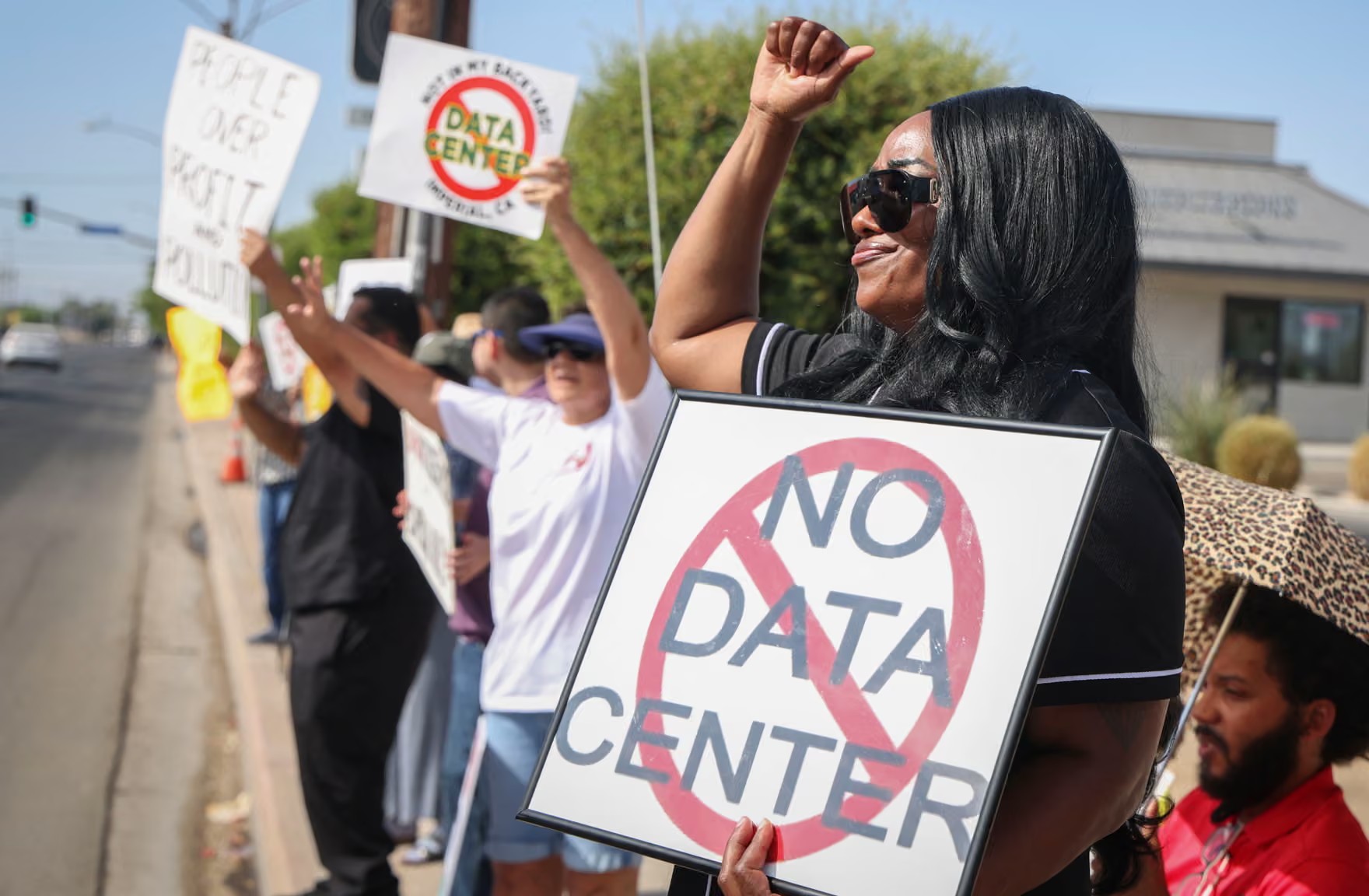
Demonstrators wave signs during a nationwide protest against AI datacenter expansion in Imperial. Photograph: Sandy Huffaker/AFP/Getty Images
Source: theguardian.com
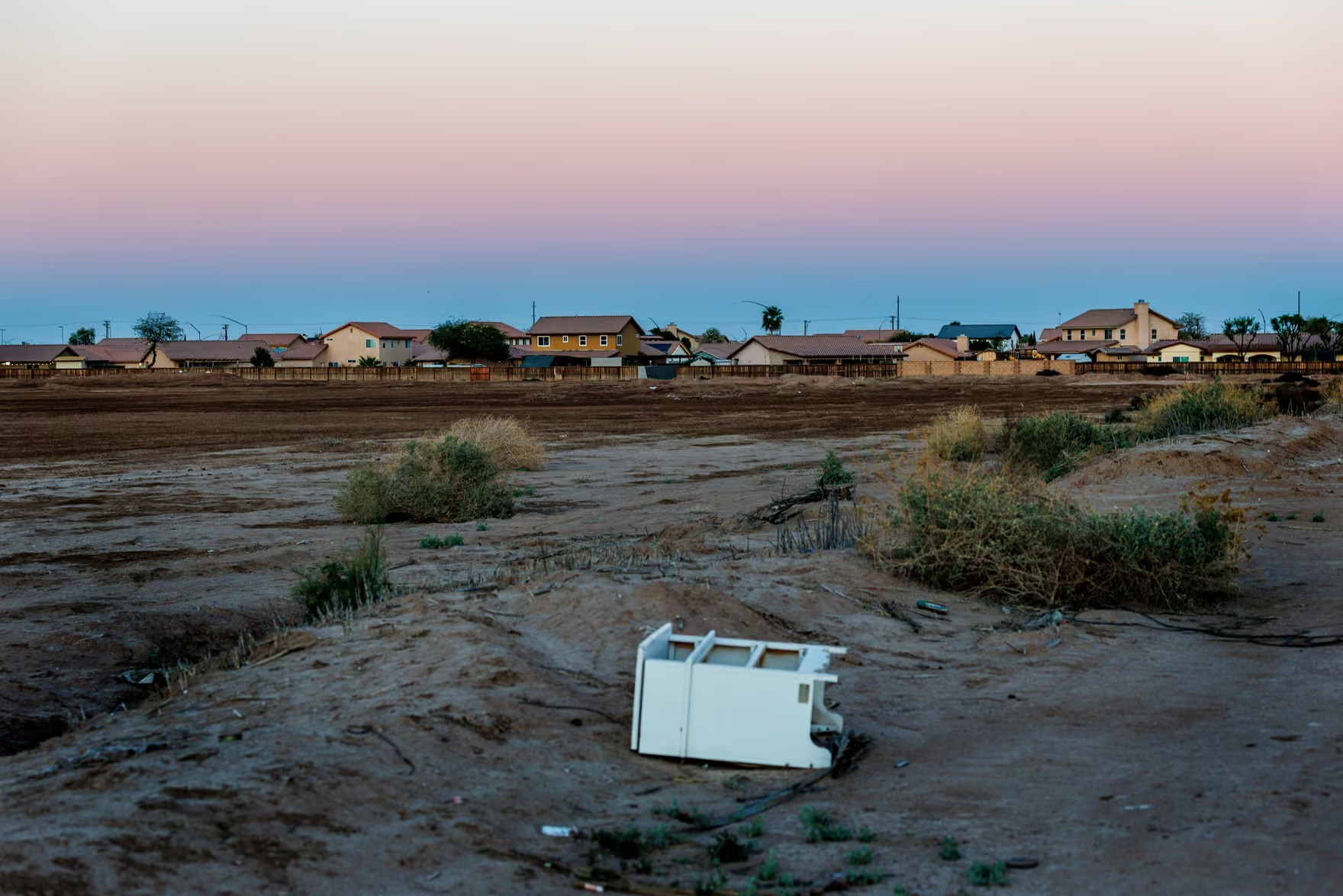
The proposed site of the 950,00 sq ft datacenter is on a dusty parcel next to the Victoria Ranch housing community. Photograph: Gina Ferazzi/Los Angeles Times/Getty Images
Source: theguardian.com
The bet on speed
The case against the project has become a test of whether an early advantage in land, permits and power can survive local opposition. Rucci found a way to move quickly through California’s rules, but the judge’s ruling means speed no longer belongs to him alone: the project now faces a public review that could examine whether it belongs there at all.
I think the more revealing gap is between the project’s promised benefits and the certainty of its costs. Jobs and tax revenue are forecasts; the water request, the generators and the site are in the plans. Google, meanwhile, says it is not involved. That leaves residents being asked to weigh a large industrial project without a confirmed customer.
Rucci says he will challenge the judge’s decision and will not walk away. The project’s next phase is therefore not just a fight over approval, but over whether a developer can keep a high-stakes infrastructure bet alive when the surrounding community is asking to start the process again.
Daily AI news
Every day we pick what actually matters in AI and explain it plainly — no hype, no filler. Subscribe if you want to follow where the industry is going.
Only what matters — every day
Follow on X