
The work behind the data
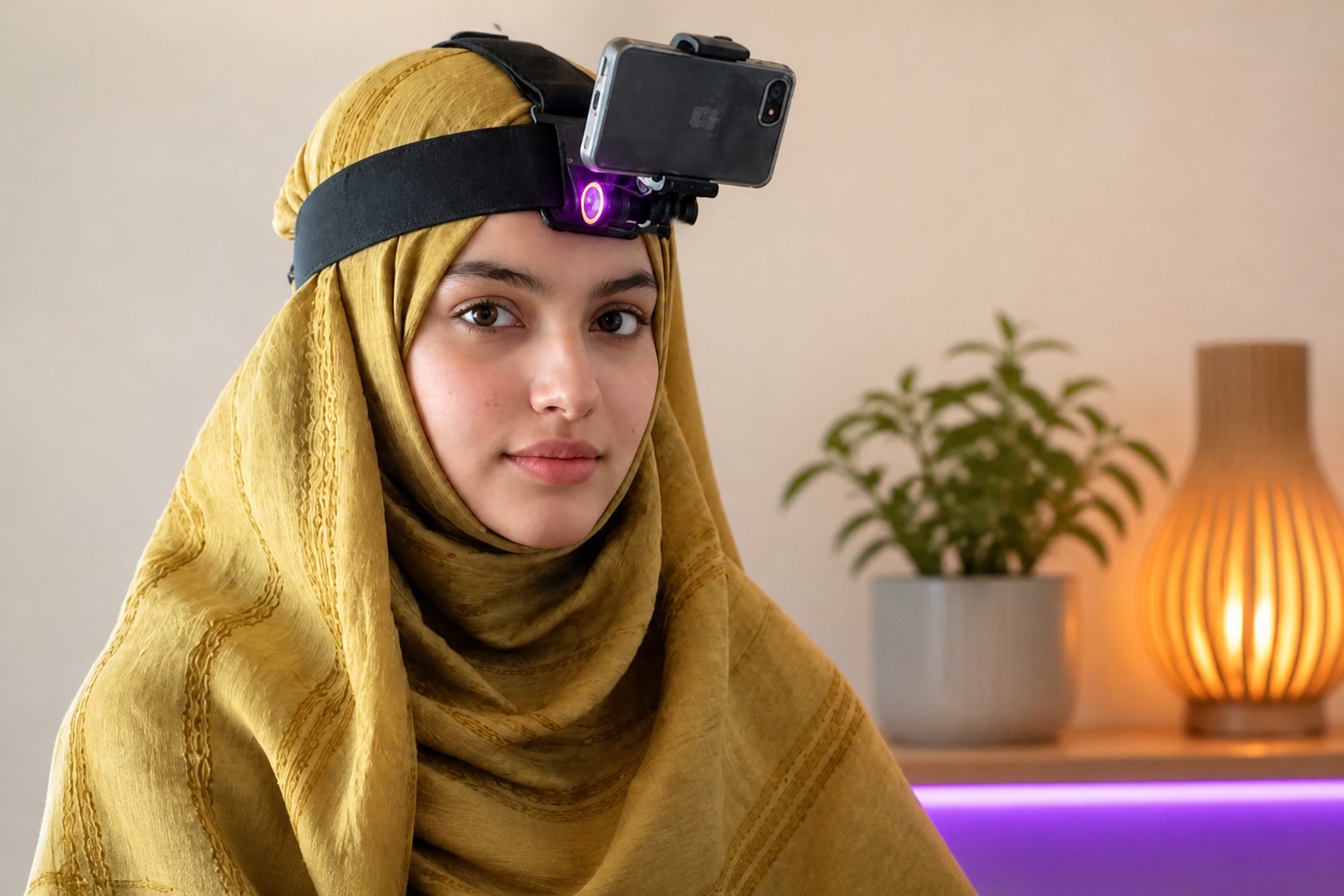
Mohammed Ashim, 22, has worked as a barber in Bengaluru for four years. He recently began wearing a head-mounted camera while cutting hair and trimming beards. The footage shows his hands and fingers; clients’ faces are blurred.
Ashim records for five to six hours a day. He says the pay is good, but what interests him most is the feeling of taking part in something futuristic. He had not imagined that his skill with a razor might be useful to a global technology company.
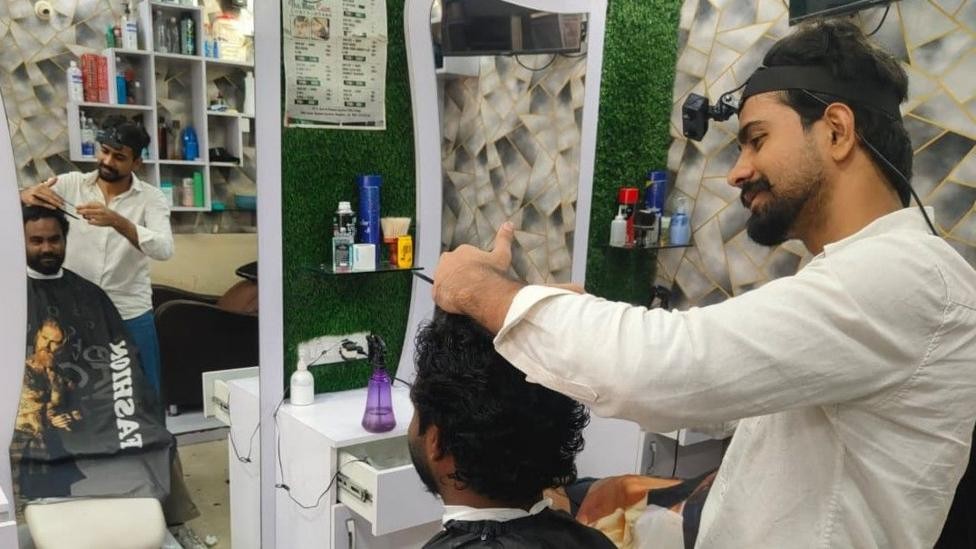
Ashim is one of hundreds of thousands of workers worldwide paid to record their activities. Local companies collect the footage and sell it to technology companies and research organizations training AI, including systems designed to control robots in the real world.
Rashdan Technologies collects and processes human-generated data. Its co-founder and CEO, Shahil Baig, says robotics companies and advanced-model labs need recordings of work in many settings:
Rashdan pays $5 to $10 for eight to 10 hours of recording. Baig says that is a meaningful sum for many workers.
The recording setup is changing as clients ask for more of the scene. Some now want four to six cameras positioned around a worker’s head, rather than a single camera focused mainly on the hands. Baig says agreeing to wear one small camera is different from wearing what is effectively a five-camera headset. The more demanding setup pays more.
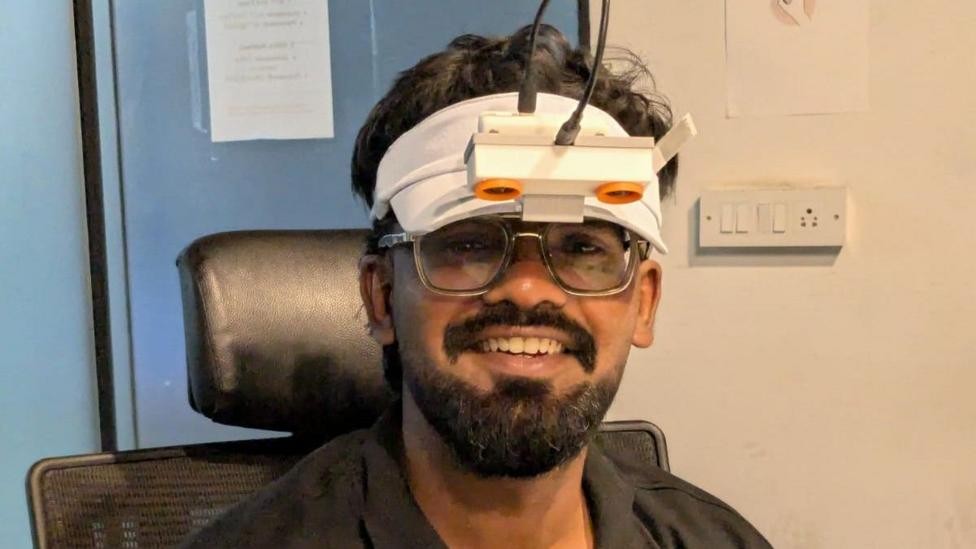
Image caption, Shahil Baig expects dozens more firms to start collecting video of workers
Source: bbc.co.uk
What robots need to learn
Manish Agarwal, founder of Humyn Labs, which collects and processes human-generated data, argues that robots cannot learn to navigate the physical world from computer simulations alone. Video is the main source material, but some collectors also wear devices on their hands and fingers to capture physical contact.
For physical tasks, the data needs to capture movement across the limbs and the force applied. A robot must grip a plastic bottle firmly enough to hold it without crushing it, or lift a steel tumbler without dropping it.
Agarwal says there was no online archive of embodied human activity to draw on: recordings of someone cleaning a kitchen or assembling a car while applying the right amount of force. That material has to be recorded from scratch, in real places and varied conditions.
Humyn Labs has 96,000 data collectors across Latin America and Southeast Asia. It selects useful material from thousands of hours of submitted video, labels what appears in the recordings and packages the data for clients. Its offices are in Bengaluru and San Francisco.
The setting matters as much as the task. Agarwal says data needs to come from different factories, regions and kinds of work. A company planning to deploy robots in American factories or homes needs training material that reflects those environments; Indian homes, for example, may not suit robots intended for the US market.
That makes this more than a volume problem. The data has to match the places where robots are expected to operate.
Who benefits from the pipeline?
The obvious concern is that people are recording work for machines that might eventually replace them. Bino Paul, a senior professor at the Tata Institute of Social Sciences’ School of Management and Labour Studies in Mumbai, says it is too early to know how that will play out. AI could help some workers, while robots may automate other professions. If machines begin displacing workers, Paul warns, those workers may have little power to shape what happens—and may understand their role only when it is too late.
My read is that the immediate bargain is clear, but the longer-term one is not. Workers get paid for familiar tasks; companies get data they say they cannot find elsewhere. The announcement says much less about what happens to those workers if the data makes their skills easier to automate.
The workers’ reasons for taking part vary. Mohammed Arman has spent 10 years sewing and cutting clothes in Bengaluru. He says the work has become so familiar that his hands know what to do without him thinking about it. He now records himself doing the same work. With his family in Bihar depending on money sent home, he calls the extra pay a matter of survival.
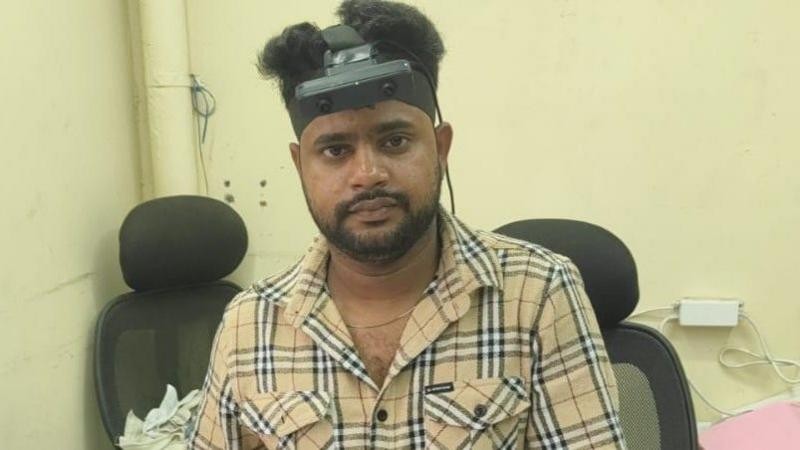
Jolly Arifur, a science teacher and mother of a young son, wanted work she could do at home alongside childcare. For the past seven months, she has worn a camera while cleaning surfaces, cooking, sweeping tiled floors and folding laundry. She lives in Guntakal, Anantapur district, and fits the recordings around teaching. She earns $2 to $3 an hour, and says filming for three to five hours a day adds useful income to her teaching salary.

India is attracting more businesses into the work: Agarwal estimates that dozens more competitors will appear there this year. He says the value of simply collecting raw footage will fall as companies compete for contracts. His argument is that India needs to own more of the pipeline—cleaning, structuring and checking recordings, and setting quality standards—rather than supplying only the original video.
I think that is the sharper tension in this story. Today, workers provide the embodied experience robots lack; the businesses that turn that experience into dependable training data may capture more of the value. If India remains at the recording stage, the pay may be temporary even as the data keeps working.
Daily AI news
Every day we pick what actually matters in AI and explain it plainly — no hype, no filler. Subscribe if you want to follow where the industry is going.
Only what matters — every day
Follow on X