
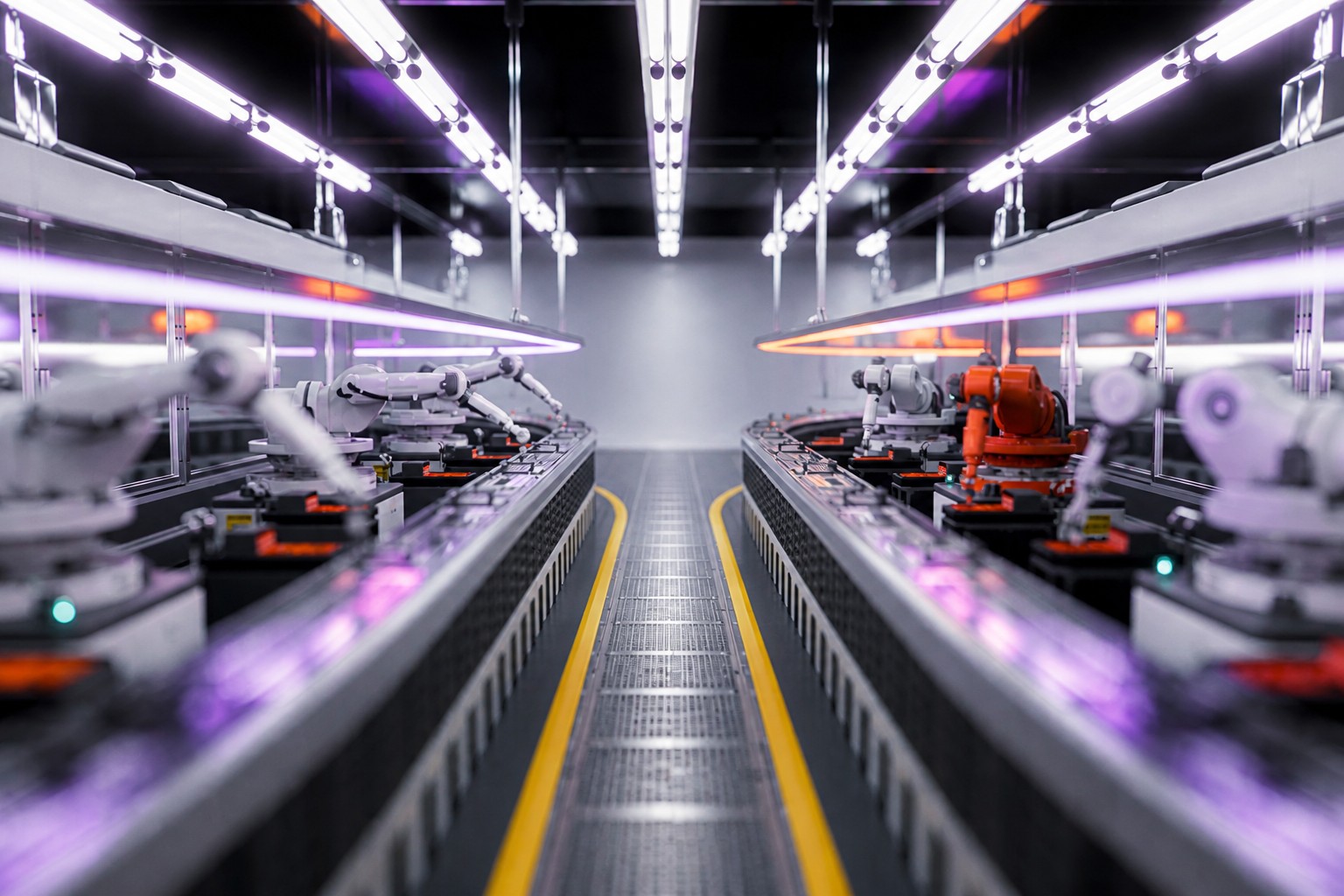
The bottleneck is the factory floor
Pankau and Pan met while working at Tesla. Pankau was a lead architect for electrical systems before moving to Waymo; Pan led factory automation projects and later became chief architect at autonomous-driving company Neolix.
They saw a gap between advances in cars and self-driving systems and the machinery used to build them. Engineers who could apply machine learning to vehicle design still struggled to program factory robots, Pankau said. Much of the equipment was decades old.
The problem, in his account, was not simply that robots were hard to program. Industrial robots are typically assigned narrow, repetitive jobs, so even a small change to a product or process can cause a failure and expensive downtime. Manufacturers often respond by simplifying what they make—and how they make it.
Training for precision
Robots can learn impressive movements with available data, Pankau said. But handling a delicate component or assembling a precise product is different: robotics lacks the internet-scale datasets that have helped train systems for other tasks.
Industrial Next says it uses detailed simulations to teach robots precise, dexterous actions. The robots build a general understanding of a manufacturing process in a virtual environment designed to approximate real-world physics. They can then perform fine operations with little visibility into the details.
The company’s stations can be reconfigured, combined and moved between production lines. New tasks are taught through simulations and demonstrations, rather than relying only on fixed scenarios.
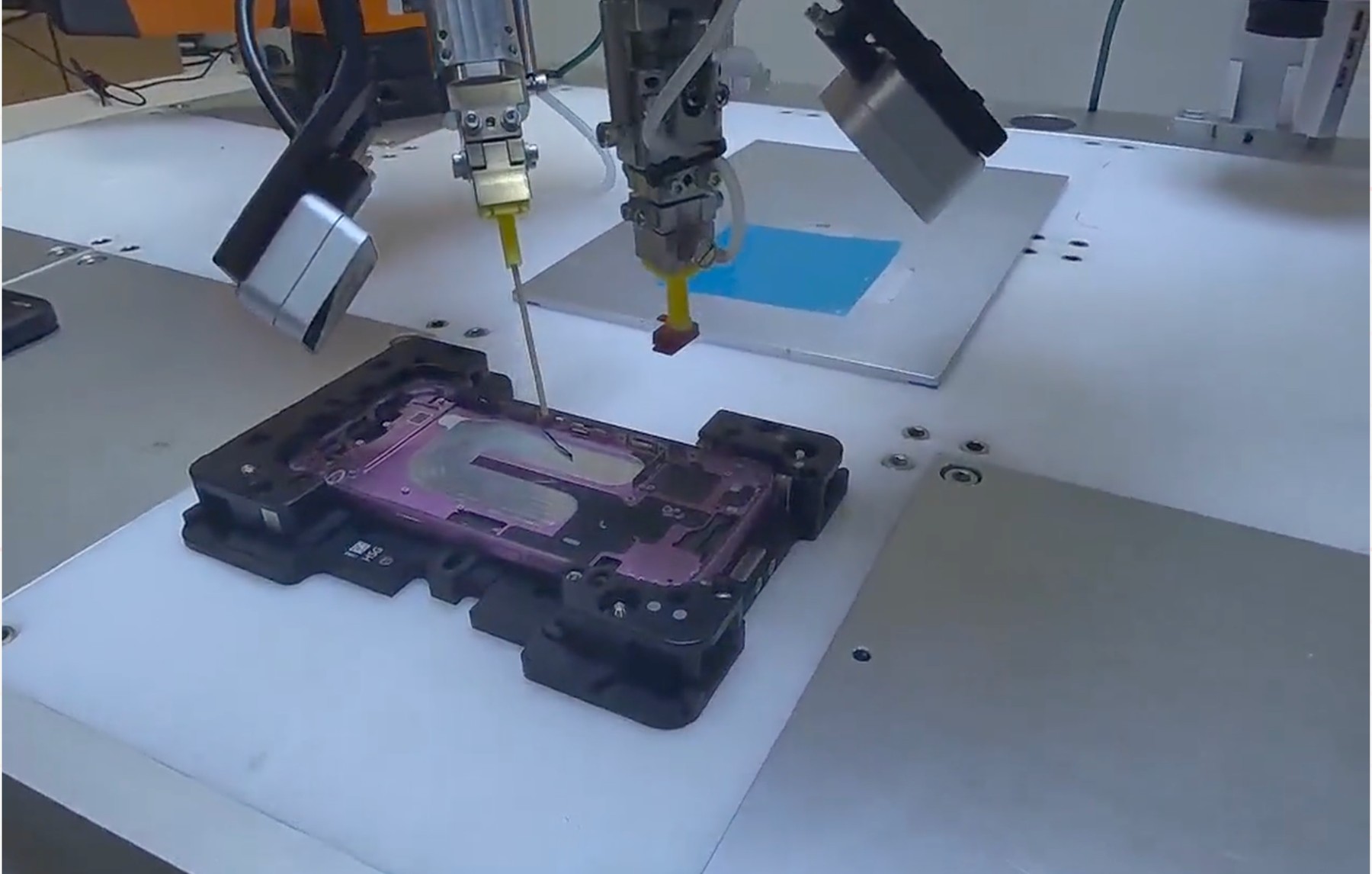
Pankau said the stations are already used to manufacture one of the world’s most popular smartphone models. They perform tasks manufacturers had tried for years to automate, such as threading a thin, flexible cable and snapping a tiny connector cover into place. He did not identify the customer.
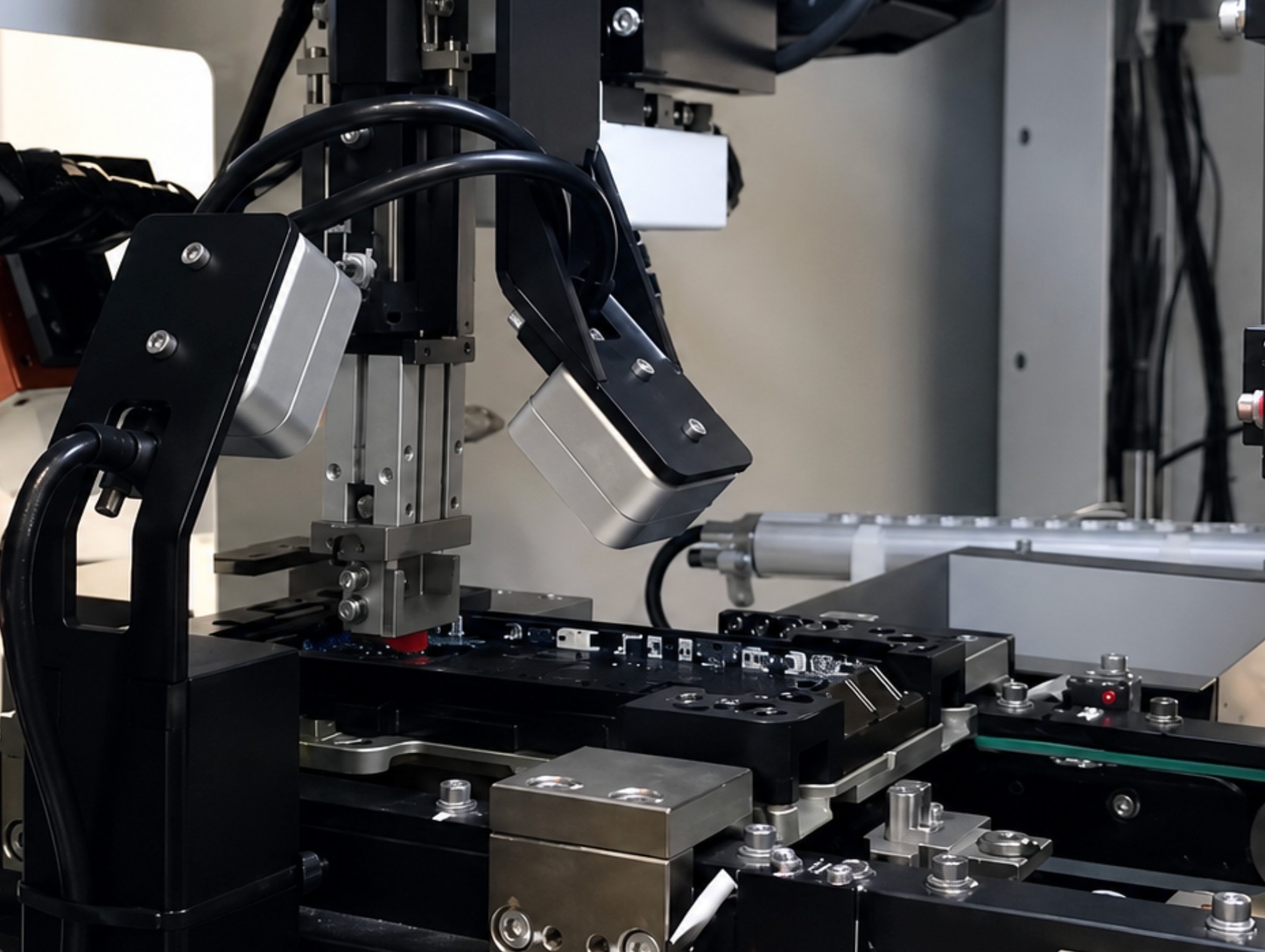
He also described a station that removes protective film from camera modules and buttons. The AI-powered robots do the work at least as fast as a person, with 100 percent accuracy, he said. They retain that performance after being moved to a phone model and production line they have not encountered before.
The leap from phone assembly to a whole car
I think the most consequential part of Industrial Next’s pitch is not that a robot can do one delicate task. It is that the company says the same station can keep working when the product or line changes. That is the difference between automating a workstation and making automation easier to redeploy.
But the announcement leaves a key measure unclear: how long does it actually take to teach a station a new task, and how much simulation or demonstration does that require? The company’s examples establish that the work is possible; they do not yet show how quickly or broadly the approach scales.
Industrial Next ultimately wants robots to build an entire car, from start to finish, without human involvement. That ambition makes the smartphone examples a useful proof point, but not proof of the destination: the harder test is whether adaptability holds across a whole production process.
Daily AI news
Every day we pick what actually matters in AI and explain it plainly — no hype, no filler. Subscribe if you want to follow where the industry is going.
Only what matters — every day
Follow on X