
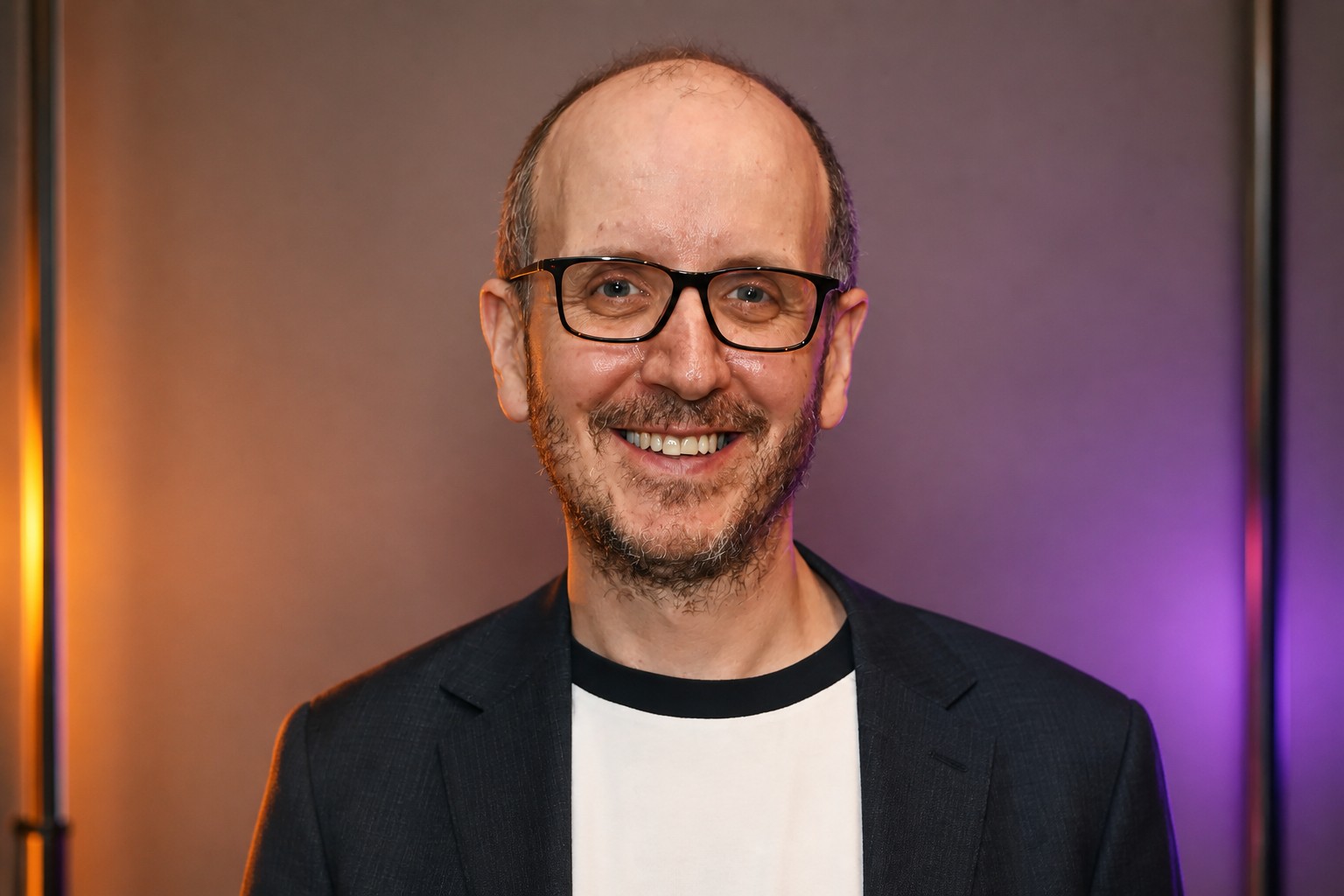
Jack Thorne has called for passing AI-generated work off as your own to be made illegal, treated as fraud, and punished by the industry as well as the courts — and asked broadcasters including the BBC and Channel 4 to sanction writers who do it. Thorne, one of Britain's most successful writers for film, television and theatre, said in a speech that he had heard from company and studio executives, and from several writers close to him, that some in the profession are using AI to cheat. He made that demand in the same speech in which he attacked Keir Starmer's government for failing to protect writers' copyright from models that, in his word, steal from the creative industries.
Thorne drew the line carefully. Using AI to talk through ideas, check spelling or help with formatting is not what he is objecting to. The problem starts when AI replaces the effort and the writing itself — when prompts stand in for words the author would have written. He called that an abandonment of the writer's job, and said a writer who does it is deceiving employers and colleagues.
The reasoning behind the demand is defensive rather than moral, and Thorne said so. If publishers, studios and streaming services can present the writer as the source of the problem, that hands them a justification for doing whatever they like with content. He is asking writers to be beyond reproach precisely because the other side of the table is looking for a reason not to be.
For the rule to bite, he argued, there have to be consequences people can feel — law, but also a reaction from the industry itself. Using AI to write a university essay can be grounds for a threat of expulsion; using it to produce professional writing should follow an author through their career. He framed the sanctions as protection for the industry's most vulnerable, on the grounds that a writer is defined by what they create, and that both the law and the profession should say so without ambiguity.
The second half of the speech pointed the other way. Thorne opposed AI being able to impersonate actors, directors and writers, and criticised the government's inaction on protecting authors' intellectual property from AI models. Ministers' decisions over the next five years, he said, will determine the next hundred years for every writer in the country. Last year Starmer's government dropped a proposal that would have required artists and rights holders to opt out of having their material used in AI systems; it was abandoned after a backlash, and ministers ran a consultation instead. Thorne said the government has plenty of measures available to it, and that watching without intervening for fear of disturbing the established order should give way to watching with intervening, because authors' interests need defending. AI used by society cannot be built on theft and copyright infringement, he said; setting clear boundaries in that dispute is the government's job. Adapting to AI is probably unavoidable, but the law should shield people from the technology's worst effects. That requires government leadership, and not only at a national level.
A government spokesperson said copyright law must both protect the UK's standing as a major creative-industries hub and open the way for AI-based innovation, and that officials are working on solutions allowing both the creative and the technology sectors to grow.
My reading is that Thorne made two demands of very different quality and put the weaker one first. Criminalising undisclosed AI use is enforceable in exactly the place where the harm is smallest — a single writer, a single script, an identifiable employer with a contract — and useless where it is largest, against firms that ingested a national literature and have so far faced a consultation. The speech acknowledges this asymmetry and then proposes to close the small gap anyway, on the theory that clean hands are leverage. I doubt they are. Studios that want cheaper scripts have not been waiting for a moral pretext.
Nothing in the proposal says how an undisclosed prompt would be proved. Fraud requires evidence, and a sanctions regime run by the BBC and Channel 4 would need a detection standard that does not currently exist for text. Absent one, the practical test becomes suspicion — and suspicion lands hardest on the writers with the least track record to point at, the same people Thorne says the rule is meant to protect. That is my objection, not his: he did not address detection at all.
The shape of the ask is what stays with me. Thorne is asking the two organisations that employ writers to police them, while ministers decline to police the companies that trained on their work. Of the parties in this argument, the writers are the only ones being asked to prove they did their own job.