
What the editing showed
Reingold is a staff writer at The Free Press, a conservative publication that, according to the source’s description, often criticizes manifestations of “wokeness” and those who oppose Israel.
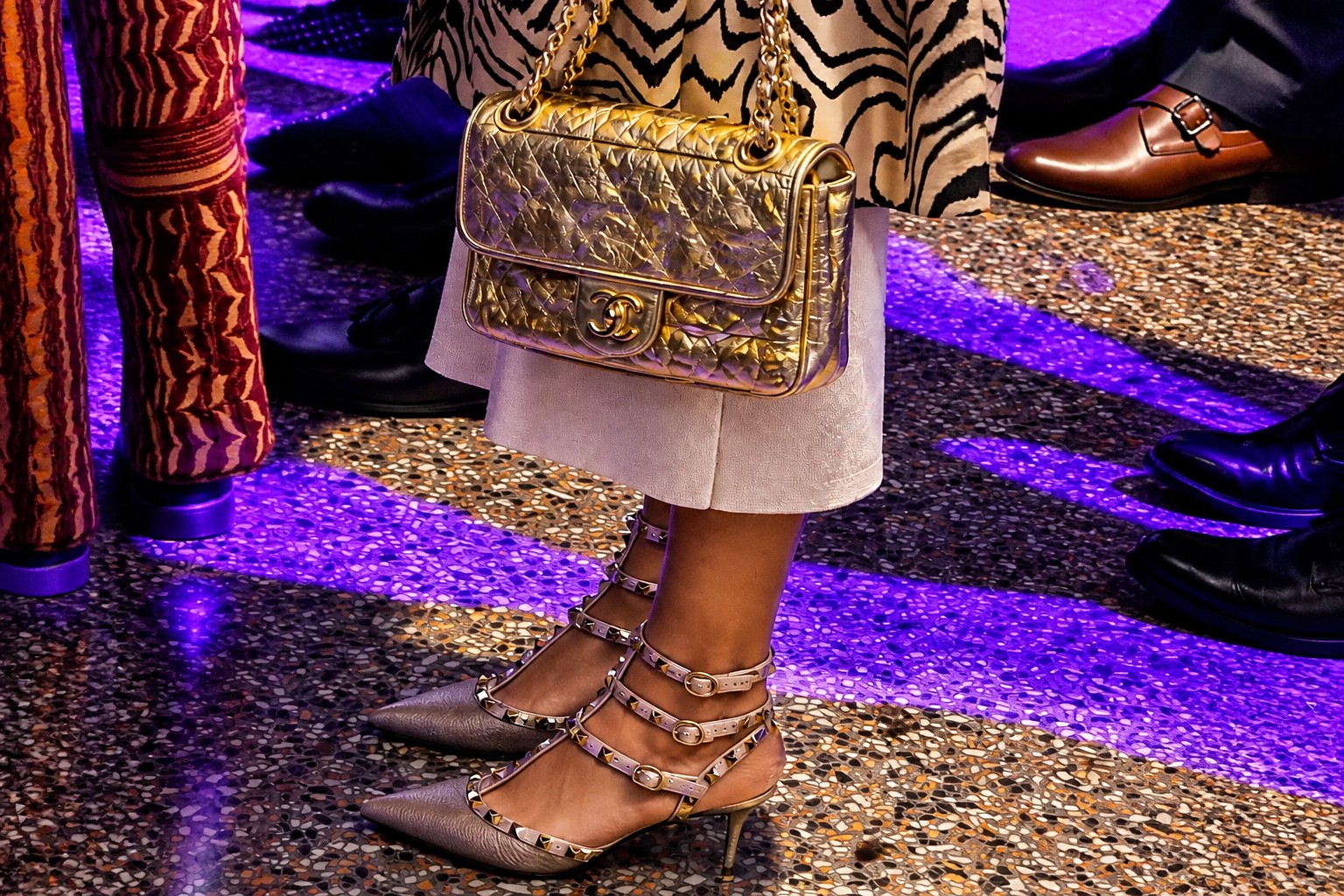
The photo was intended to support the idea that Michigan Democrats are affluent people disconnected from the working class. Reingold posted it while covering an election-night party for Democratic candidate Abdul El-Sayed, who won the race for a seat in the state Senate. She wrote that she spotted Valentino shoes, a Chanel bag, a Moncler jacket, a Rolex watch and a YSL bag at the event.
At first, the post was mocked for being superficial and for its unsuccessful attempt to criticize political opponents. Then users noticed the photo’s glossy look, which resembled an AI-generated image. Some checked it with detectors, which flagged it as AI-generated or AI-edited and found data from an OpenAI model watermark. Others pointed to inconsistencies in the clothing details.
Vanity Fair noted that the shape and construction of the Chanel Flap bag did not match other bags from the brand, while the Valentino shoes looked disproportionate: their straps had several holes that the authentic model does not have.
Reingold’s explanation
After suspicions spread, Reingold said on X that she had used ChatGPT to brighten and sharpen a photo of a woman wearing Valentino shoes and carrying a Chanel bag. She attached an image that she described as the original, unedited version.
According to Reingold, the same items remained visible in the edited photo, so her observation was accurate. But comparing the images raised new questions: the bag’s texture looks noticeably different in the edited version, and the lighting appears to have changed. In the original, the woman is in shadow and almost blends into the crowd; in the edited version, she appears bright and stands out from the people around her.
The discussion also turned to the acceptable limits of photo editing in journalism. Basic retouching and exposure correction are generally considered acceptable, but Reingold’s critics objected to sharpening the image with ChatGPT: the process can add details that were not in the original.
Max Spero, CEO of image-detection company Pangram, wrote that when AI is used to increase resolution, it is impossible to guarantee that the original will be preserved accurately. AI can invent details that do not reflect reality, he said, and publishing such an image as authentic puts a journalist’s reputation at risk.
Columnist Bruce Arthur put it more bluntly: real journalists do not do this, and should not.
Dataist’s take: Reingold’s explanation addresses her intent, but does not resolve questions about the image’s reliability. The editing changed details and lighting in a photo used to support a political judgment. The line between correcting a photo and altering evidence matters especially when an image is presented as proof.
Daily AI news
Every day we pick what actually matters in AI and explain it plainly — no hype, no filler. Subscribe if you want to follow where the industry is going.
Only what matters — every day
Follow on X