
Source: wired.com
The companies behind the payments
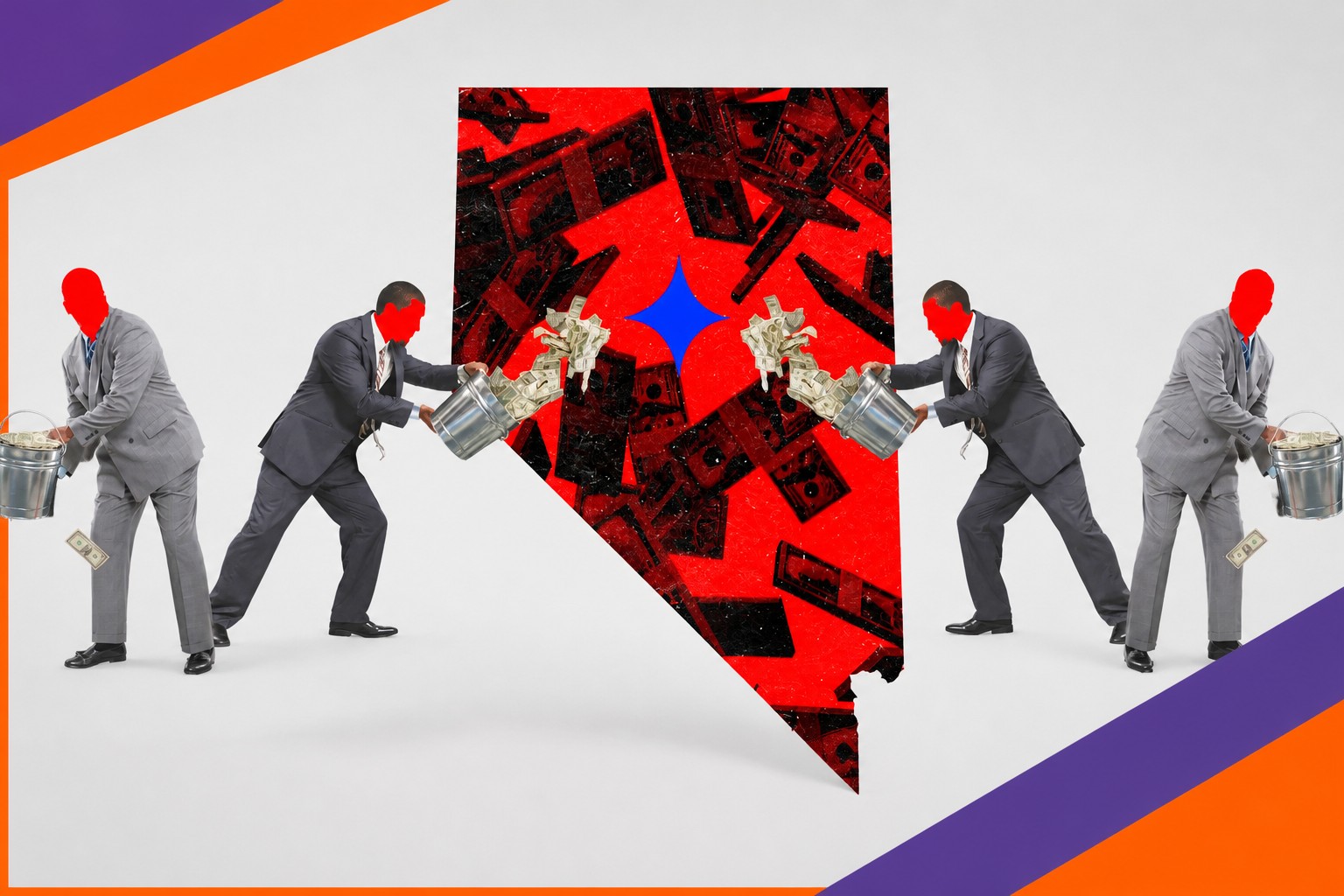
The Nevada companies received money from Think Big and American Mission, super PACs in the Leading the Future network. The network has raised more than $140 million for political campaigns aligned with the AI industry’s interests in the midterms.
The companies’ listed addresses offer few clues about their work:
Election observers say the companies may be fronts created to hide the identities of strategists, consultants and production firms working with Leading the Future. Shanna Ports, senior counsel at Campaign Legal Center, said the arrangement obscures where the money goes.
A complaint with no clear path to a decision
In May, Campaign Legal Center filed a complaint with the Federal Election Commission, alleging that Think Big and American Mission violated federal law by routing money through shell companies. The complaint says the LLCs “serve merely as an extension” of the super PACs paying them, and argues that the network failed to disclose the payments’ real recipients under the Federal Election Campaign Act.
Leading the Future spokesperson Jesse Hunt told WIRED by email that the organization complies with all applicable laws. He described the complaint as an effort to attract attention from Public First, Anthropic and related organizations, which he said see Leading the Future’s ideas gaining public and political support.
Public First is an AI-supportive super PAC that backs transparency and safeguards and receives substantial funding from Anthropic leadership. Its spokesperson, Anthony Rivera-Rodriguez, said he did not understand Leading the Future’s claim and that Public First had nothing to do with the complaint. Anthropic did not respond to WIRED’s request for comment.
The complaint may not get a decision soon. The FEC has six members, all appointed by the president, and needs four commissioners for a quorum. It has lacked one since May 2025. In the meantime, Think Big and American Mission continue sending millions to Nevada companies.
The politics of spending across party lines
Leading the Future is funded in part by billionaire Marc Andreessen, Ben Horowitz and OpenAI president Greg Brockman. Its political operation spans both parties: Think Big mainly supports Democrats, while American Mission supports Republicans.
That cross-party strategy makes the contractor question more consequential. Political strategists and consultants usually work with one party or the other. Kyle Morse, deputy executive director of the Big Tech-critical nonprofit Tech Oversight Project, said that if Republican strategists and contractors were behind a Think Big ad campaign spending half a million dollars to promote a candidate in a Democratic primary, that would itself become news.
I think the complaint’s central tension is not simply that political groups use intermediaries. They may do so for reasons ranging from ordinary to questionable; in this case, contractors may not want to be publicly associated with an AI campaign. The harder problem is that the FEC currently cannot establish which explanation fits. The network’s scale and bipartisan reach make that missing information more than a technical disclosure issue.
A wider pattern of shell-company complaints
Campaign Legal Center has also filed complaints over alleged shell-company spending elsewhere in politics. Earlier this year, it complained to the FEC about gun-rights activist and YouTuber Brandon Herrera, who is running for the US House in Texas’s 23rd District. The complaint alleged that more than 99% of his campaign spending went through Texas Strategy Group, which the complainants said was used as a shell company.
Herrera’s campaign directed WIRED to conservative commentator Matt Brainard, who runs Texas Strategy Group. Brainard rejected the allegations, calling the complaint baseless and a repetition of an old legal theory advanced by a politically biased advocacy group.
Campaign Legal Center also complained to the FEC about Lead Left PAC, a newly emerged super PAC funded by Republican politicians that presented itself as a Democratic organization. The complaint alleged that it sought to interfere in Democratic primaries and paid shell companies to hide ties to Republican strategists.
Ports called the pattern troubling: political money is already often hidden, and groups are now also obscuring how they spend it. With the commission unable to act and the payments continuing, voters are left without a clear account of either the people behind the campaigns or the destinations of their money.
Daily AI news
Every day we pick what actually matters in AI and explain it plainly — no hype, no filler. Subscribe if you want to follow where the industry is going.
Only what matters — every day
Follow on X