
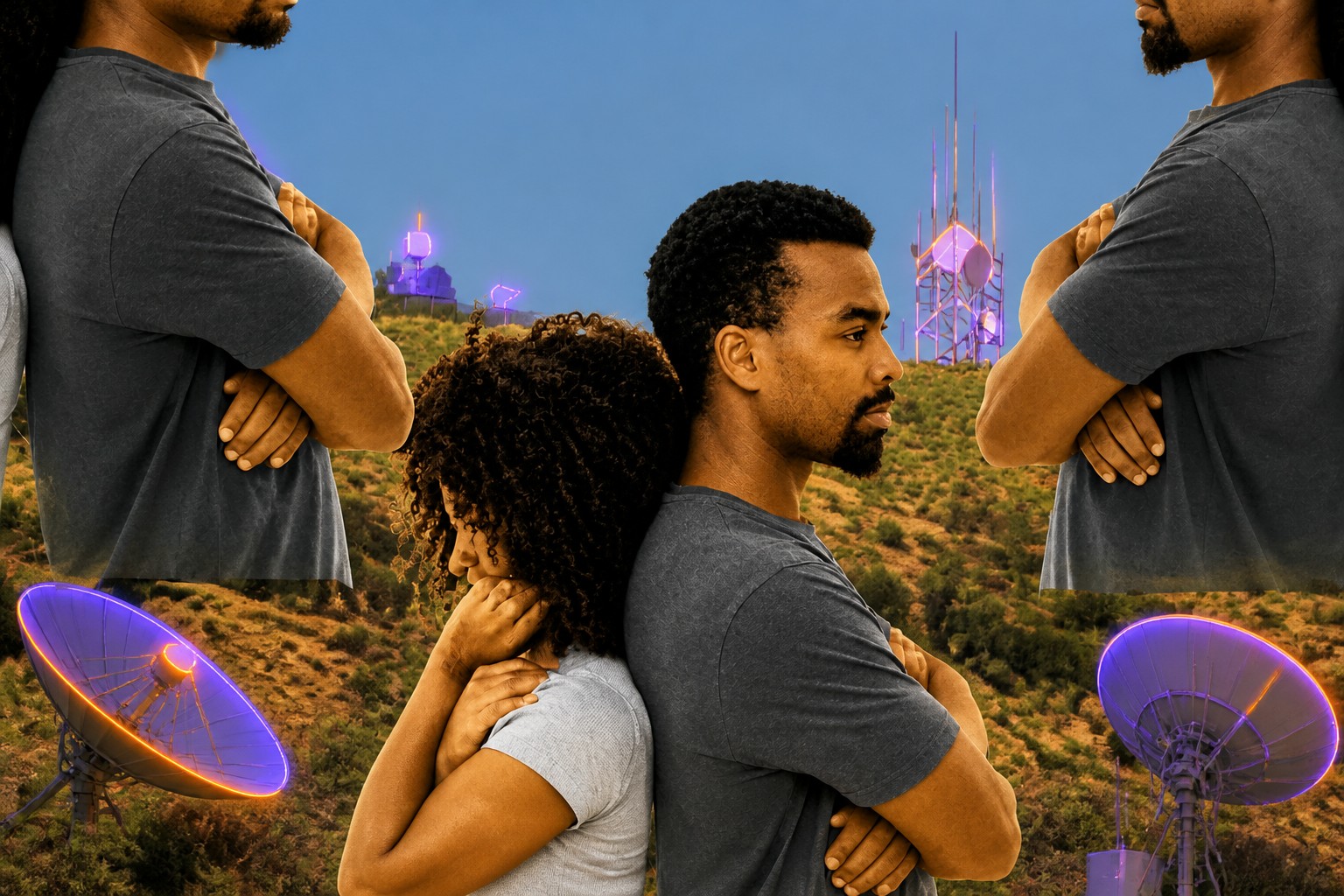
Media company Mansa has released They Left Us to Die, a 30-episode microdrama made entirely with AI. The story follows a nurse in South Los Angeles, where a zombie outbreak has begun, and is meant to show studios whether viewers will support stories about Black characters that struggle to get funding in Hollywood. But the choice to use AI has drawn criticism: users and actors accused the company, founded by David Oyelowo and Nate Parker, of pushing people out of the industry even as it promised to support Black artists.
Mansa tests demand for stories about Black characters with AI dramas
The series sparked debate before its premiere
In They Left Us to Die, authorities seal off South Los Angeles after a zombie virus spreads, leaving residents to face the disaster on their own. Imani Cross, an emergency-room nurse, tries to find a cure for her brother, DJ, who has been infected. In the story, the virus was created and released by white people.
The trailer appeared on Instagram on October 29 and drew mostly approving responses. People left fire emojis as they waited for the series to come out. But the next day, before the first episode was set to be published at midnight, users began asking why Mansa had made a show without human performers. They pointed out that the company’s founders, actors David Oyelowo and Nate Parker, had spoken about supporting artists of color, not replacing them.
One Threads user called Mansa one of the first vertical-video apps designed to develop Black talent and accused the company of having “sold out to AI.” Another questioned whether Oyelowo could expect to get work from casting directors, producers and directors after this. Actress Yvette Nicole Brown expressed her disapproval with a brief comment and a GIF of Viola Davis looking irritated.
Parker expected a negative reaction. He said that conversations about AI immediately remind people of the technology’s real-world consequences and whose lives it affects.
How Mansa wants to use AI
Hollywood wants to see more stories about Black characters, but there is no agreement on how to make them. Mansa says it uses AI as a tool for growth, not as a replacement for human-created content. The company hopes the series will help determine which stories Black audiences support.
Parker describes the strategy as a way to defend Black representation in an industry increasingly concentrated around major players. If audiences support the project, Mansa will be able to assemble teams for series that get the green light.
In today’s Hollywood, a series about a Black nurse fighting a zombie virus released into her neighborhood by white people would be unlikely to get support from a major studio without repeated proof of its commercial potential. Mansa wants to test audience interest with AI projects first, then show studios that these stories can find an audience.
Parker says studio executives have become even more cautious. Microdramas can do more than test an idea, as short films do: they can also generate revenue, track engagement and show whether audiences want the content.
Microdramas grow alongside short videos
Microdramas are shot vertically and are usually short serialized stories with episodes lasting about a minute. They cost far less to produce than a television series. The format appeals to studios as well as young audiences, whose viewing habits increasingly revolve around quick content.
ReelShort and DramaBox have become prominent players in the market. Popular storylines include romance, fantasies about billionaires, revenge and the supernatural; women viewers are a major driver of the format’s growth.
According to Omdia’s analysis of mobile usage in the fourth quarter of 2025, users spent an average of 10 more minutes a day on ReelShort than on Prime Video: 36 minutes compared with 26. The figure for Netflix was 20 minutes. Omdia forecasts that the microdrama market will reach $14 billion in 2027.
Hoorae Media, founded by Issa Rae, released two microdramas this year. One of them, Screen Time, a relationship comedy-thriller, had more than 580 million views on TikTok and its microdrama app PineDrama by October. New ventures Juccee Shorts and Urban Operas are also pushing for more diverse stories; Urban Operas plans to launch six series later this month.
According to a recent survey by analytics firm Luminate, people aged 18–24 watch short videos more often than films. Short videos account for 26 percent of young adults’ weekly media time.
Streaming services are also investing in the format and changing their apps to match Generation Z’s viewing habits. From April to August, vertical short-video feeds appeared in the mobile apps of Peacock, HBO Max, Prime Video, Paramount+, Netflix and Disney+.
Maria Rua Aguete, Omdia’s global head of media and entertainment, believes AI could change the industry’s economics. But lower production costs alone do not guarantee a larger audience. Viewers will determine whether it succeeds, she said, and the market has a significant opportunity to bring attention to groups that have previously been overlooked.
Jobs and a lack of representation
Criticism of the series reflects the concerns of people who see AI as a threat to their opportunities. Jay Christopher Hamilton, an associate professor of communications at Syracuse University and an entertainment lawyer, says Parker misread the audience: people see the technology first and foremost as taking jobs away.
The industry’s contraction compounds the problem. According to a forecast by the Los Angeles County Economic Development Corporation’s film and television office, Paramount Skydance’s $110 billion acquisition of Warner Bros. Discovery could lead to as many as 4,500 job cuts in Los Angeles film and television.
For Black artists and industry workers, the situation is especially painful: they are already underrepresented. According to UCLA’s 2026 Hollywood Diversity Report, Black, Indigenous and other people of color made up the majority of domestic box-office ticket buyers on opening weekends. Yet in 2025, Black actors received just 6.5 percent of leading film roles, while Black directors made 3.3 percent of the films released.
Parker says Mansa, as a distributor of content aimed at the diaspora, wants to prove the value of a short path from idea and script to market: it can take weeks rather than years, as it does in the Hollywood system. The company has released nine live-action microdramas and two more made entirely with AI. Mansa declined to disclose performance data for its AI series.
Parker’s past also complicates trust in the company. He was accused of sexual assault in 1999 but was later acquitted; the case was discussed again after the release of his 2016 film The Birth of a Nation, about Nat Turner’s slave rebellion. In the film, a fictional rape scene served as the motive for the uprising. After the AI series were announced, Threads users brought up the case again and wrote that Parker had long been an outcast.
Hamilton believes AI microdramas are too attractive to the industry as a business proposition to ignore. He predicts that actors and storytellers will not disappear entirely, but hiring and production rules will change, even if some people are unwilling to acknowledge it. He expects the changes to be abrupt and disorienting.
Dataist's take: Mansa is trying to prove there is demand for stories that struggle to get through the studio system, but its refusal to disclose results for the two AI series means that argument cannot yet be tested against data. The criticism also shows that, for artists, the issue is not just about new formats: they are concerned that testing audience demand could come at the expense of already limited job opportunities.
Daily AI news
Every day we pick what actually matters in AI and explain it plainly — no hype, no filler. Subscribe if you want to follow where the industry is going.
Only what matters — every day
Follow on X