
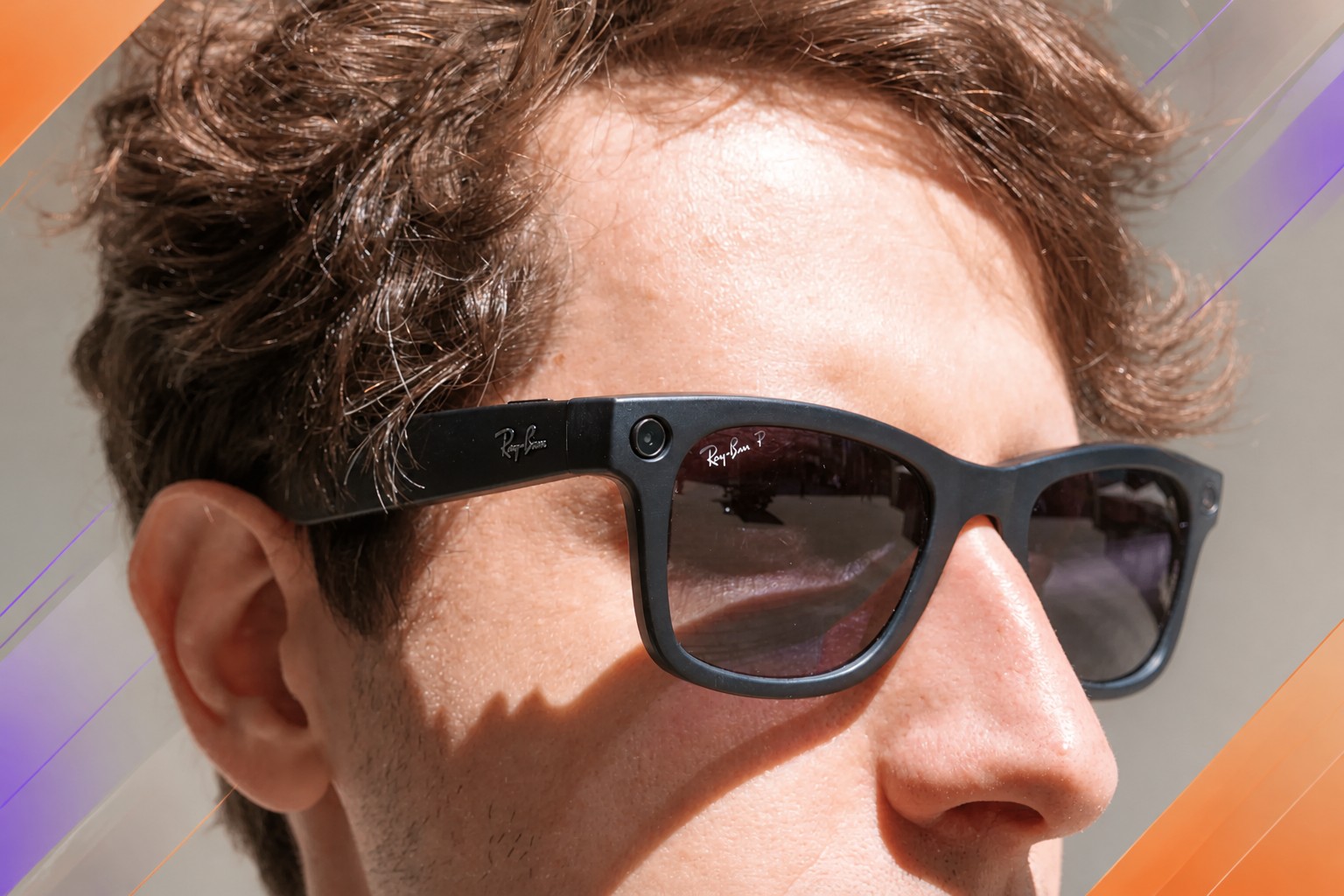
Meta has started remotely disabling smart glasses whose owners physically modified them to defeat the recording indicator — the light that tells people nearby the camera is running. Semafor reported the enforcement. Mark Zuckerberg's company announced the crackdown earlier this month, after a sharp public reaction to the glasses being used to film people without their consent, especially girls and women who are then harassed. Meta will not say how many devices it has switched off. Alex Himel told Semafor that modified units account for less than one tenth of one percent of all glasses sold, which against roughly 7 million sold in 2025 puts the ceiling somewhere around 7,000 devices.
The scope of the action is narrow by design. Meta limited itself to users who physically altered their hardware to remove the recording indicator. A few thousand bricked units therefore measure one specific kind of tampering, not the behavior that caused the outcry. Plenty of people film strangers covertly without touching the device at all, and without concealing that a recording is being made.
Instagram, which Meta owns, has moved separately against some creators who filmed themselves in the glasses while making pushy approaches to girls and women, often with sexually explicit and provocative commentary. Adam Mosseri, who runs Instagram, promised to counter harassment "by all available means."
What has followed is people deciding not to wait. Against reports that Meta plans to add face recognition to the glasses, those who are not confident the company has their interests in mind have started handling it themselves. Some venues, popular nightclubs among them, ban smart glasses outright. Some individuals approach wearers in public and confront them directly.
Himel conceded that Meta is permanently behind the people working around its safeguards. He described the dynamic as cat and mouse, and said the company will probably never get to treat the problem as finished, because new bypasses keep appearing. Meta intends to keep watching and keep revising its protections.
That admission is the most consequential sentence in the reporting, and it is worth reading literally. The indicator light is not one safety feature among several in this product. It is the entire consent mechanism — the only thing standing between a camera on a stranger's face and the person in front of it. Himel is saying, in the mildest possible register, that Meta cannot guarantee the mechanism stays functional. Disabling 0.1% of units is enforcement against the most visible failure of that mechanism, not against the mechanism's failure.
The part nobody is asking about is the other 99.9%. In the ordinary case the LED works exactly as designed, and consent still never happens, because a small light on a frame across a dim room is not notice in any sense a bystander would recognize. Meta answered a question about scale by reporting a percentage rather than a count, which conveniently keeps the conversation on the tampering rate and off the base rate.
There is a second precedent here that is getting less attention than the harassment story. Meta demonstrated that it can reach into hardware a customer owns and turn it off over the air, because of a change the customer made to their own device. In this instance the modification was indefensible. The capability does not stay attached to this instance.
Meta is now working on a consent signal it says it cannot keep reliably working, on a device it is reportedly preparing to fit with face recognition. Those two facts are on a collision course, and only one of them is being enforced.