
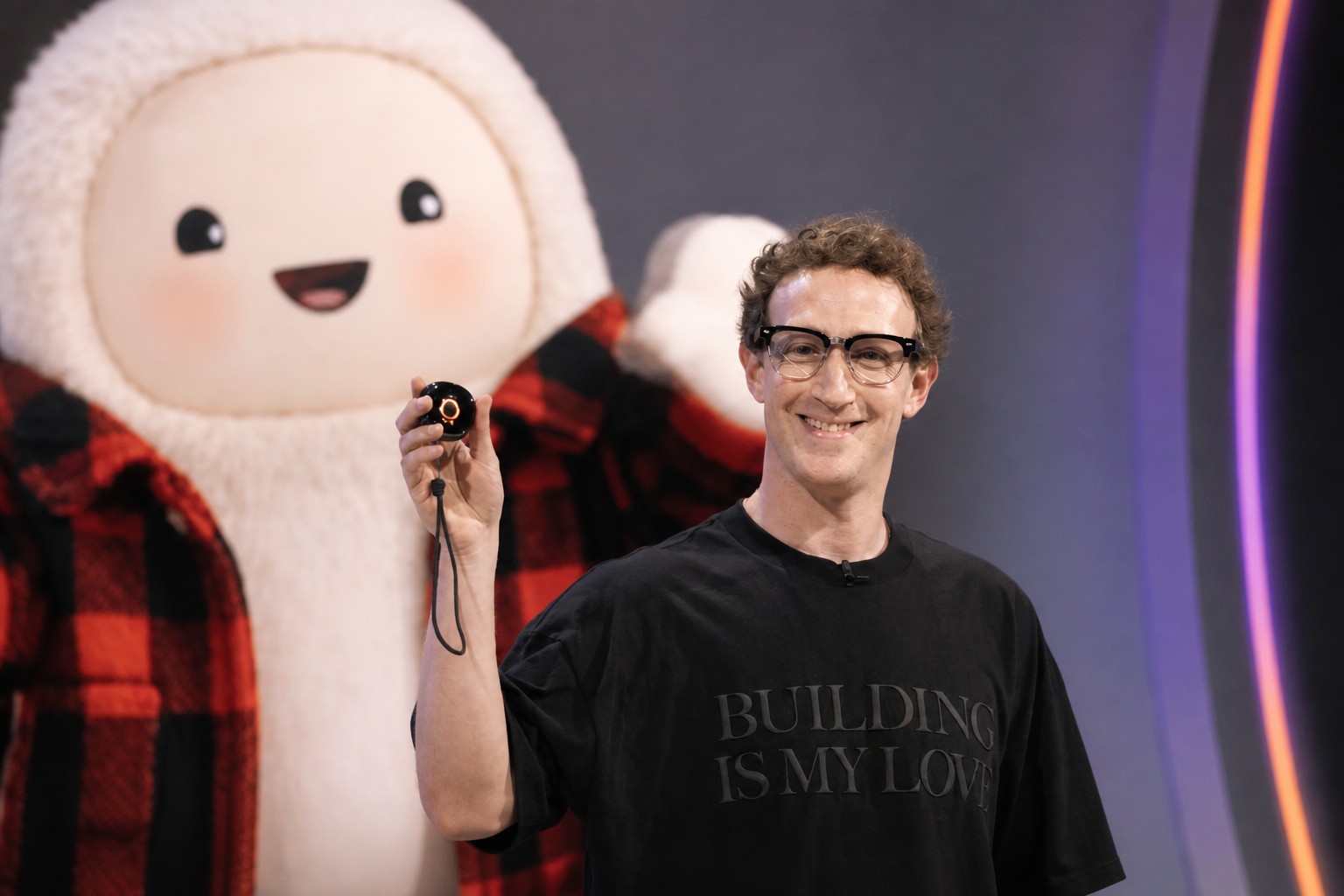
Muse has climbed app rankings by handling digital tasks, while its mascot Jolly has helped make the product part of popular culture. Meta AI director Alexandr Wang has posted memes featuring Jolly, including in suggestive situations. The design has also drawn criticism from child-safety advocates: they say its rounded, playful look could appeal to preschoolers. Meta says Muse is for adults, and blocks accounts it believes belong to people under 18. The tension is not just who the character attracts, but what a friendly face may lead users to trust.
Why give an AI a face?
Meta spokesperson Daniel Roberts called the concern over Jolly’s appearance far-fetched. Users enjoy creating avatars with personality and style, he said, and find the process joyful. Muse asks users for their date of birth, blocks account creation for people it considers under 18, and conducts additional checks to verify that users are adults.
Mona Sarantakos, vice president of product management at Meta Superintelligence Labs, described the design in a blog post published alongside Muse’s launch. The team wanted to give the character appealing details so that interacting with it would feel less awkward than talking to a corporate logo or a faceless company.
Not everyone sees the look as a bid for children. Some experts compare it with a long-running Japanese tradition of using cute characters to promote technology. Companies have used the approach in products ranging from Microsoft’s Clippy to the recent red lobster OpenClaw. AI assistants, too, are often presented as human-like characters.
A friendly face, and what it can hide
Jolly’s appeal is not limited to children. The article’s author, a 32-year-old San Francisco resident, likes the character too. Julian De Freitas, a Harvard associate professor who studies AI companions, says cuteness can make a product feel friendlier and less threatening. That may help explain the choice without settling whether the design is appropriate.
Meta still faces substantial public distrust. In August, it settled claims related to social media addiction, agreeing to add restrictions for teenagers on Instagram and Facebook and to pay up to $16.7 billion.
The more consequential concern is what users might share once an AI agent feels harmless. Meta trains its models on users’ conversations with Muse unless they turn that feature off. Jathan Sadowski, an associate professor at Monash University’s Emerging Technologies Research Lab, warns that cute, convenient design and nostalgia for devices that did not track people or intrude on their lives can make users less vigilant.
Sadowski says agents such as Muse present themselves as benign creatures in a pocket, while in practice they provide constant access to the servers of a large company that monitors users. Research also suggests that using AI agents can make people more passive.
Meta says it plans to release a “confidential” version of the virtual machine Muse runs on later in 2026. The company says cryptography will make it possible to verify that Meta cannot access user data in that mode. That promise addresses a specific concern, but it does not answer what information users will choose to hand over in the first place.
The device is the next test
Ryan Calo, a University of Washington professor and co-founder of the university’s technology policy lab, compares an AI agent to a tour guide. People trust the guide to mediate a new experience without necessarily knowing who is paying them, or why they chose a particular restaurant. The analogy gets at a risk beyond data collection: an agent can shape a user’s choices while its incentives remain unclear.
Meta is preparing to release Muse Charm, a Tamagotchi-like device, ahead of the holidays. Fairplay executive director Josh Golin, whose organization has previously opposed Meta’s focus on young audiences, compared Jolly to a Teletubby and said child-media specialists know rounded shapes appeal particularly to preschoolers. He argues that Meta’s attempt to draw young children to Muse is entirely inappropriate; he says families should reject the device and regulators should examine it closely.
My concern is less that a cute character automatically targets children than that cuteness can lower scrutiny at any age. Muse Charm will put that tension into a physical device: the more approachable the agent looks, the more important it becomes to know what it can access and whose interests guide it.
Daily AI news
Every day we pick what actually matters in AI and explain it plainly — no hype, no filler. Subscribe if you want to follow where the industry is going.
Only what matters — every day
Follow on X