
How robots learn
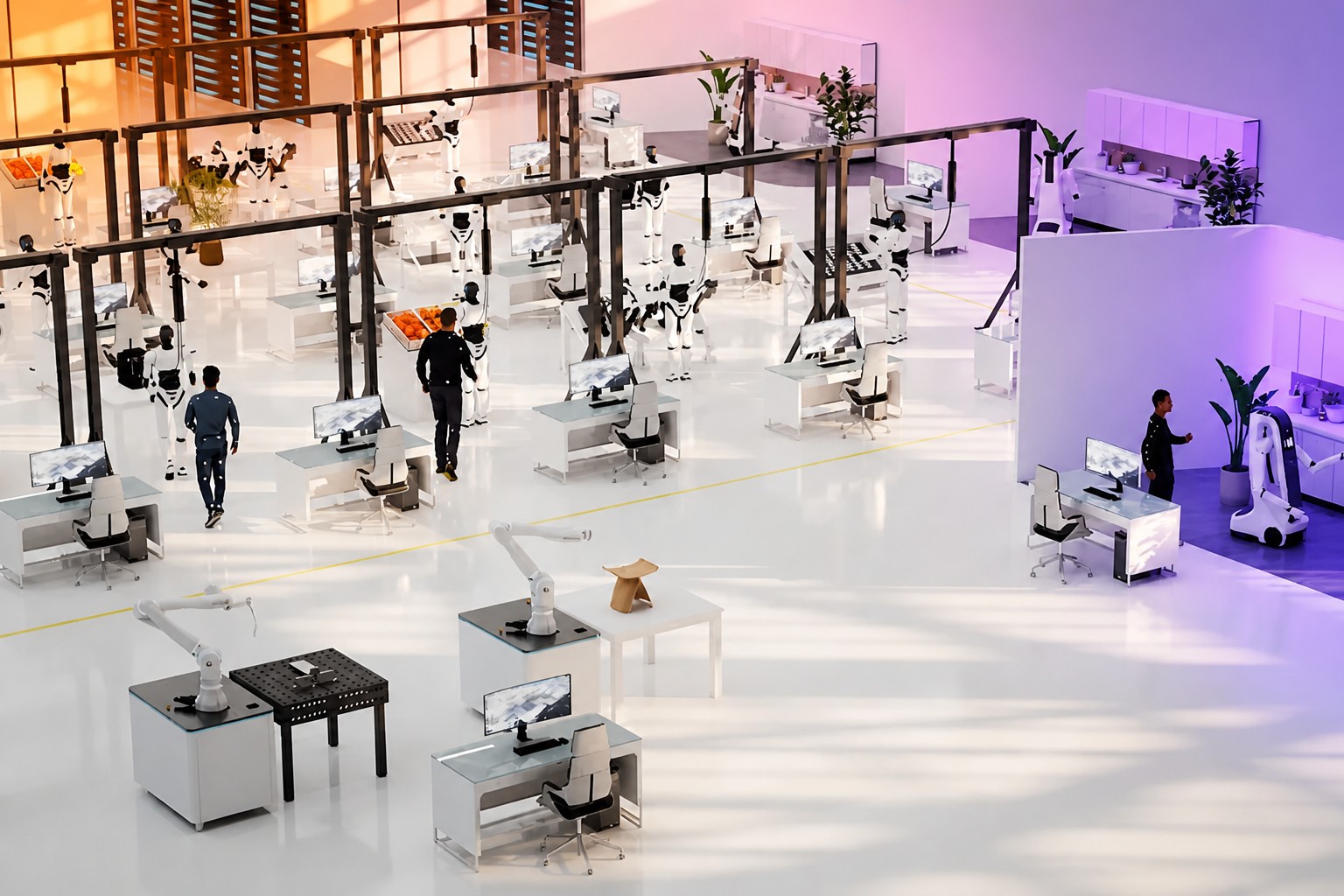
The machines pick up automotive parts and place them in containers, stack boxes and repeat other tasks. Remote trainers guide their movements. One robot practiced gripping a glass more firmly and changing its hold as water was poured into it.
That work fills a gap language models do not face in the same way. They can learn from existing material such as books and online posts; robots need data from physical actions, which has to be collected by teaching them to do the work.
Neura founder David Reger compared the process to swimming: watching videos is not enough; you have to get in the water.
A network with a regional imbalance
Neura raised up to $1.4 billion from investors including Nvidia and Amazon in June. It plans to operate at five locations around the world by the end of next year. One center is already open in Hangzhou, a major Chinese technology hub.
The gap is stark. According to consulting firm Interact Analysis, China already has more than 90 humanoid data-collection centers, compared with ten in Europe. Neura is a leading player in Western countries, but it trails Chinese competitors.
The question behind the gym
Most factory robots today are built for specific tasks. Humanoids are supposed to be more versatile, like human employees, but they are harder to build—and their practical value remains uncertain.
The idea is moving beyond training centers: BMW is preparing to test robots from Swiss company Hexagon Robotics at a factory, while Japan Airlines is experimenting with robots to handle baggage at Tokyo’s Haneda airport.
I think the more important test for Neura is not how many centers it opens, but whether practice in those centers translates into reliable work across different settings. A global network could help gather the experience humanoids need; it does not, by itself, show that the machines are ready to replace task-specific robots.
Daily AI news
Every day we pick what actually matters in AI and explain it plainly — no hype, no filler. Subscribe if you want to follow where the industry is going.
Only what matters — every day
Follow on X