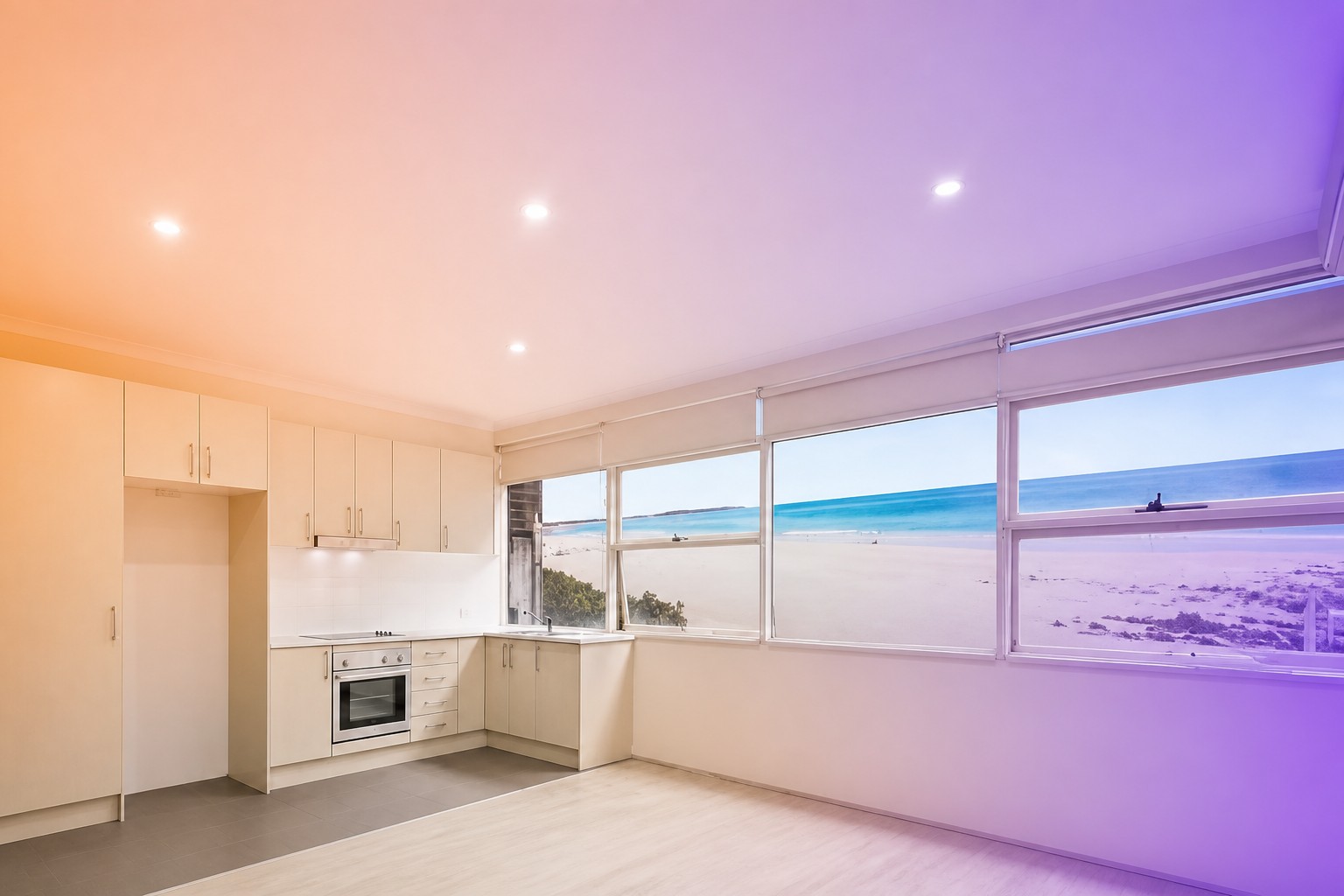
New South Wales cited a Sydney rental listing as an example of AI-altered advertising. The agency behind it says the image showed a real Bondi Beach mural in the apartment’s courtyard, not a digitally fabricated coastline. The mistake lands just as the state prepares new rules requiring real estate businesses to disclose digitally altered or AI-generated property images, with fines of up to $22,000. The rules target a genuine problem; this case shows how easily a campaign against misleading images can itself misread one.
A real mural, out of view
In a Friday press release, the state government described a Lakehart apartment listing as a “Sydney rental advertisement enhanced with AI.” IB Property said the photographs had not been edited or created with AI, Photoshop or other image-editing software. The beach scene was a mural depicting Bondi Beach, painted on a courtyard wall visible from the apartment’s windows. Lakehart is about 12 km from Bondi Beach.
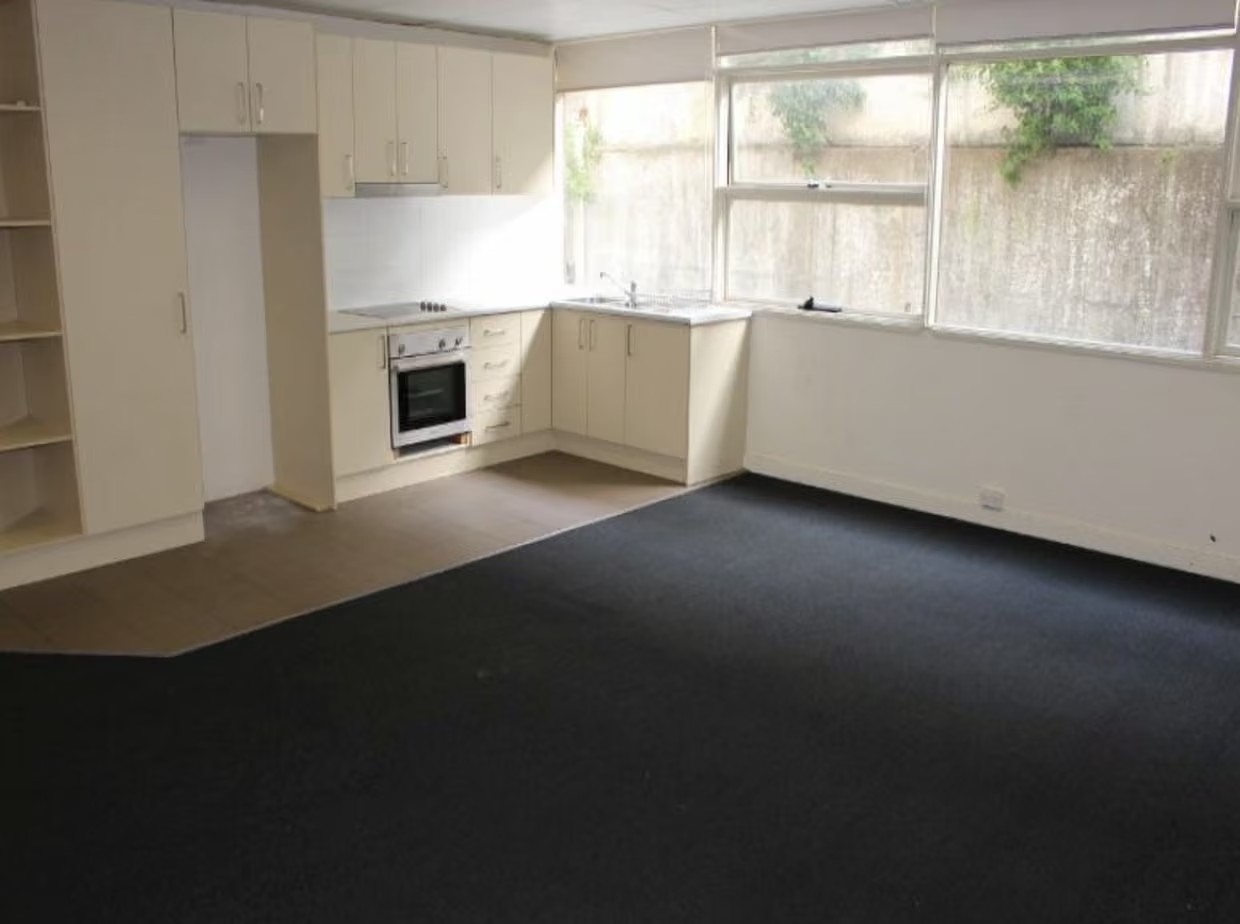
The apartment’s original view, when listed in August 2014. Photograph: realestate.com.au
Source: theguardian.com
When Guardian Australia visited 14 Norton Street, apartment 2, the mural could not be seen from the street. IB Property said it was inside the courtyard and provided photographs showing it was still there.
The agency said the owner commissioned the mural and paid about $5,000 for it. It has no plans to remove it. The apartment was rented in February 2026 and had not been advertised since.
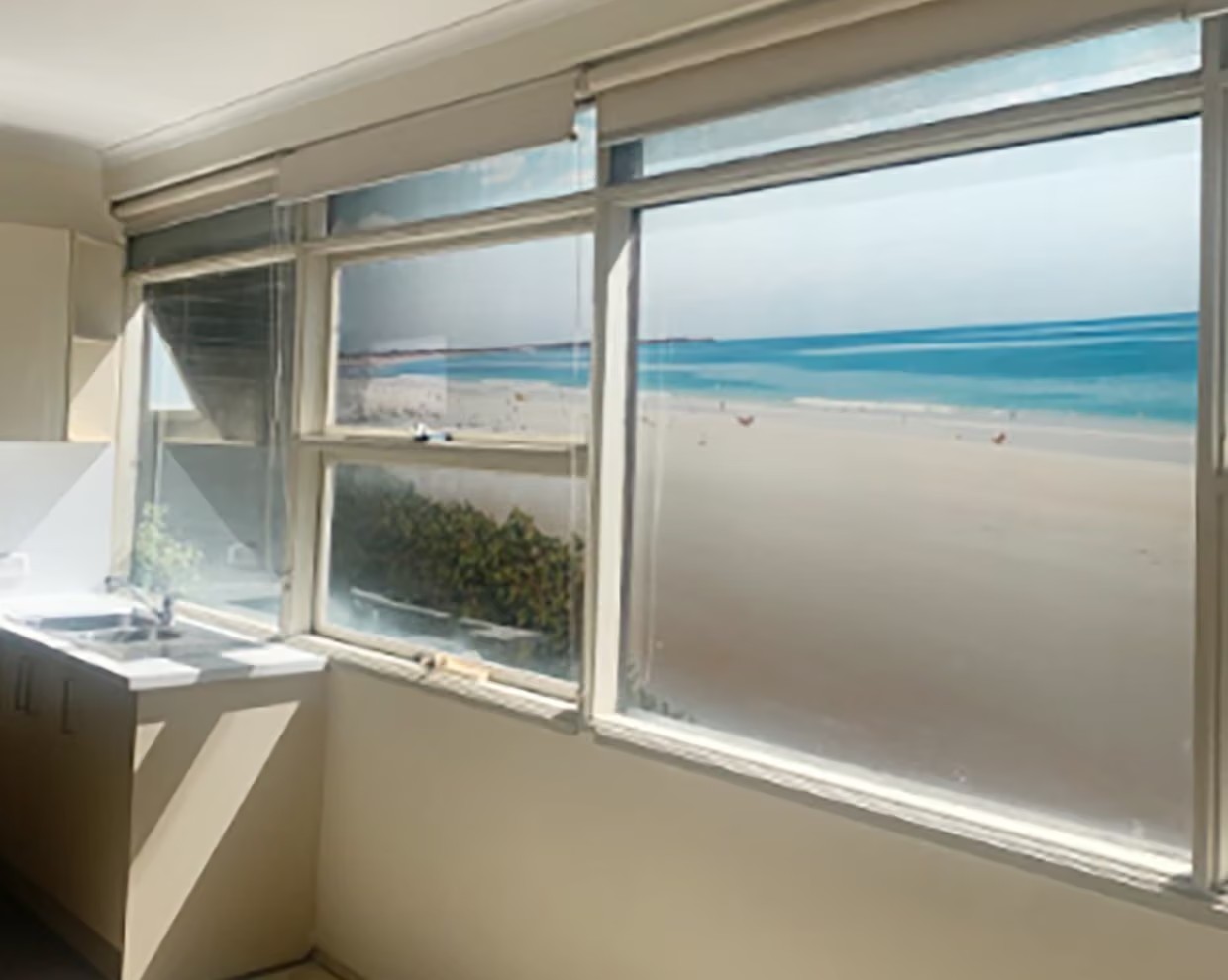
A photo from 2026 showing a different view from the kitchen windows. Photograph: IB Property
Source: theguardian.com
Anoulack Chanthivong, the minister for better regulation and fair trading whose office issued the release, did not directly answer Guardian Australia’s questions about the mural. In a separate statement on Friday afternoon, he said renters know the frustration of arriving for a viewing and finding that a home looks nothing like its online photos. The new laws, he said, are intended to stop misleading practices and ensure renters are treated fairly.
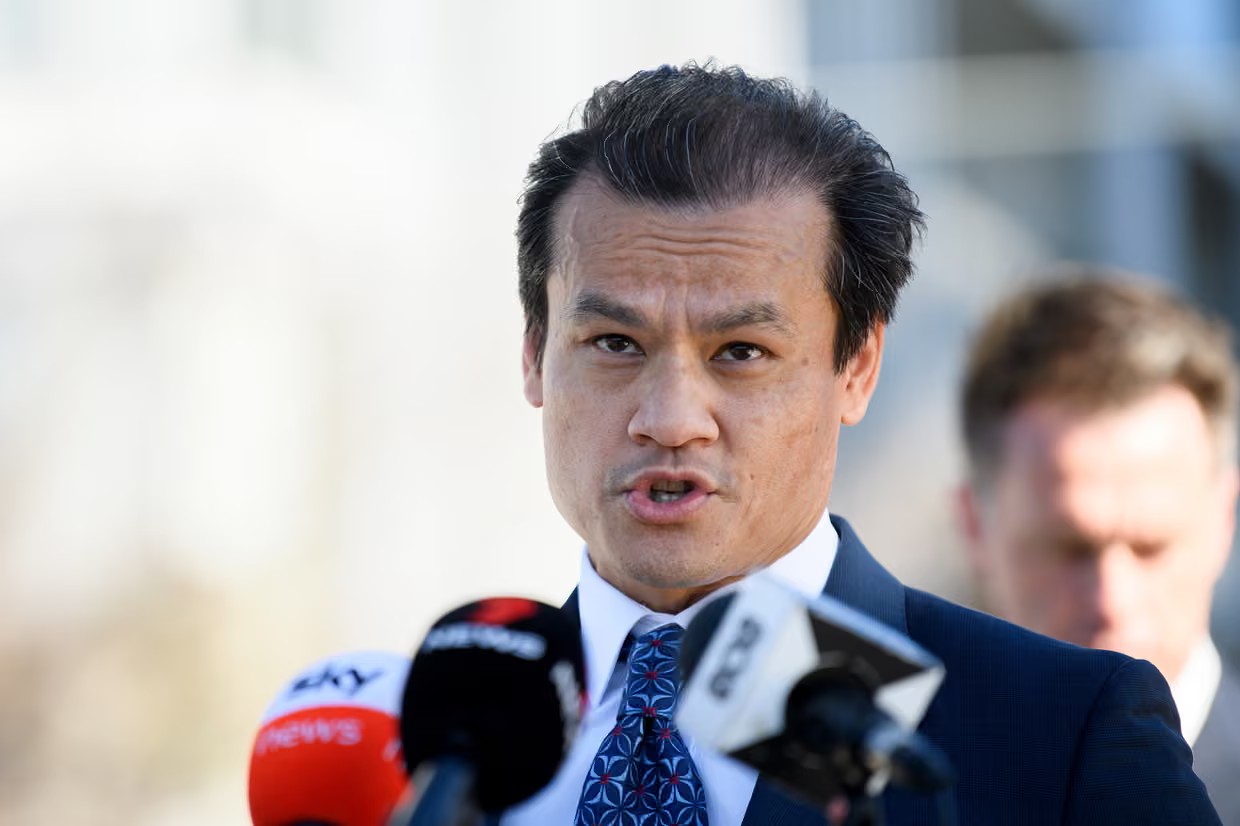
NSW fair trading minister Anoulack Chanthivong says ‘we will always stand on the side of renters’. Photograph: Bianca de Marchi/AAP
Source: theguardian.com
Disclosure is not the same as accuracy
Under the new rules, real estate businesses in New South Wales can be fined up to $22,000 if they fail to disclose digital alterations to property photos or images generated by AI. The rules are intended to curb “homefishing”: edits that misrepresent a home’s size or condition. They take effect in early 2027.
The concern is broader than generated interiors. Tim McKibbin, chief executive of the Real Estate Institute of New South Wales, said agents had been digitally editing photos for years, including removing trees and power poles in ways that could mislead prospective renters. He distinguishes virtual furniture, added to show how a home might be furnished, from false advertising.
Other examples cited by industry figures are harder to dismiss as harmless staging:
The evidence suggests that the policy question is not only whether an image was edited, but whether it gives a renter a false idea of the home. I think the mural episode exposes a weakness in treating the presence of a striking image as proof of manipulation: disclosure rules need to be paired with a reliable way to distinguish a real feature from a fabricated one.
Trust depends on more than a label
A report led by Dr Li Li at RMIT University and funded by the Australian Institute of Real Estate found that the industry lacks specific frameworks for responsible AI use. A 2026 Cotality study found that only 40% of Australians trust AI-generated results, compared with 62% in Canada, 52% in the US and 46% in the UK.
Shuai Wang, a research fellow at the University of Queensland, said generative systems prioritise visual appeal over accuracy, which can lead to “hallucinations” in property listings. Li said AI-generated images may add details that were never part of a home, changing a prospective renter’s understanding of its size, layout, condition and amenities.
Leo Patterson Ross, chief executive of the Tenants’ Union of New South Wales, said misleading images can intensify competition by making a property appear to attract more interest. Renters may feel pressured to apply quickly or offer more than the advertised rent. He argues that disclosure alone is insufficient and that images which distort a home’s appearance should be prohibited.
Li said a lasting solution would require coordinated national action, including transparency requirements, professional accountability, industry standards, regulatory oversight and consumer education. Trust, she said, comes not from using AI, but from being open about how it was used and confident that it was used responsibly.
The cost of getting the picture wrong
Renters’ accounts suggest why the issue matters even when no one is trying to fool them with a mural. Roxanne Gardiner, 26, said she repeatedly encountered AI-altered listings while searching in Brisbane’s eastern suburbs. On one occasion, she and others did not realise a home’s photos had been altered until they arrived. AI-added furniture made rooms look larger than they were; artificial greenery and soft lighting changed the impression of the property.
Gardiner called the advertising cheap, lazy and insulting. Her group stopped attending viewings for listings with AI-generated images and began asking what they might be hiding. After filtering out digitally altered listings, she found a home with unedited photos and signed a lease within three days.
Matt Stitt, 25, faced similar problems while looking in southern Brisbane. Some listings replaced floorboards to make them look new or added rugs that covered nearly an entire room. He called the viewings a waste of time and described the homes as “houses with digital paint.”
That experience points to a tension the new law cannot settle by itself: a disclosure may tell renters that an image was changed, but it does not restore the time spent travelling to a home that looks different in person. And a mistaken accusation can damage confidence in the rules before they even take effect.
Daily AI news
Every day we pick what actually matters in AI and explain it plainly — no hype, no filler. Subscribe if you want to follow where the industry is going.
Only what matters — every day
Follow on X