
What the rules cover
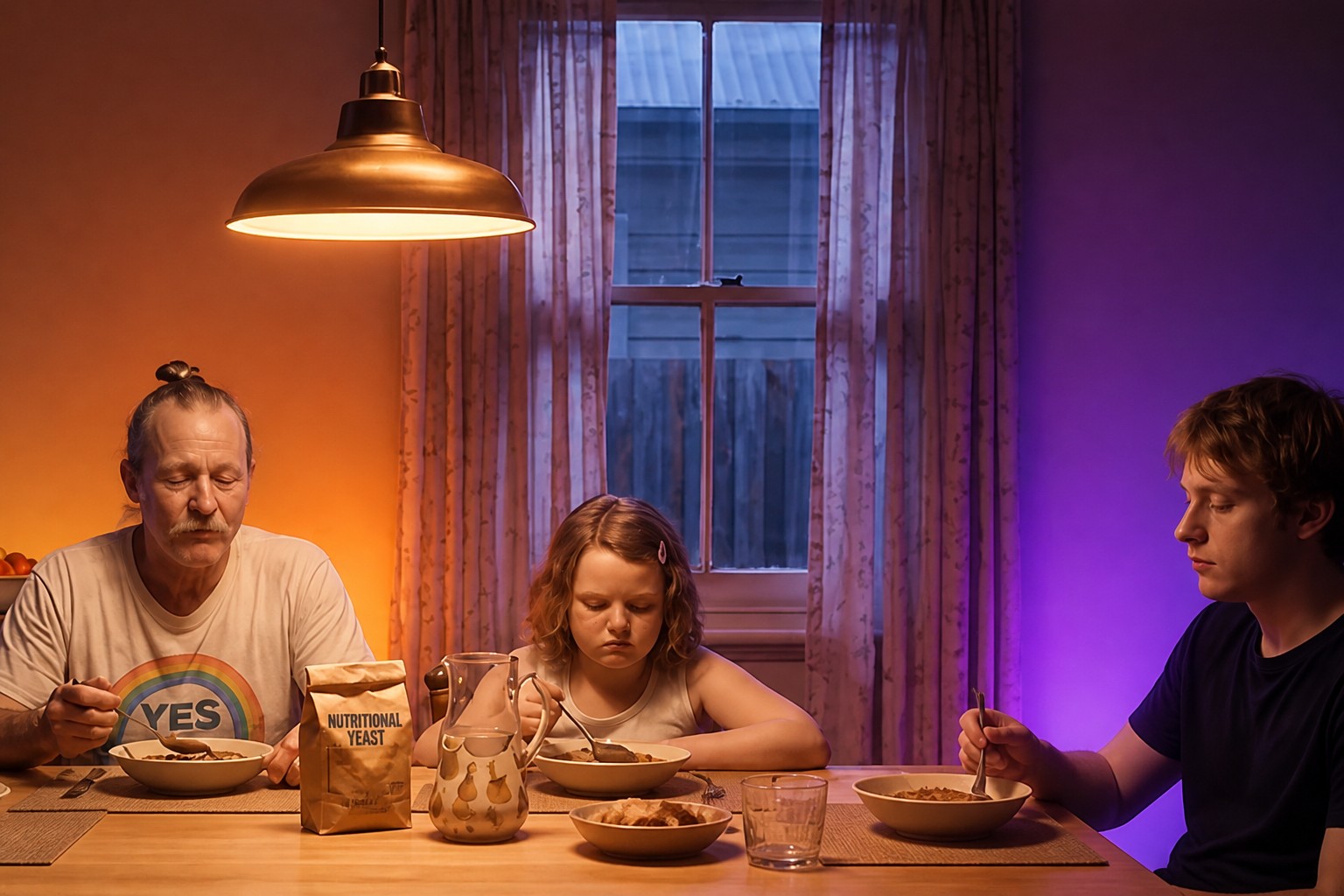
The video opens with an AI-generated young man telling his left-leaning family that he is a conservative. The scene echoes a similar clip from Benjamin Netanyahu’s election campaign, as the progressive campaign group GetUp pointed out. Its jokes—hipsters with blue hair and nose rings eating mung beans—feel just as recycled.
Ignoring the video may be the smarter response for those who do not want to give One Nation free publicity. The party may welcome outrage if it can then claim it is being “persecuted” or that it is “driving the left crazy.” The predictable backlash has already become part of the story: a Hobart café frequented by Pauline Hanson’s daughter Lee said it would donate revenue from One Nation customers to the Greens, and Lee said she was “genuinely hurt.”
But distaste is not the same as a regulatory remedy. The Australian Communications and Media Authority cannot intervene because its powers do not cover this kind of content. The video appears to have circulated only online, not through broadcast channels. Electoral commissions can regulate misinformation about how elections are conducted, but not false or offensive content in general.

A screengrab from an Israeli campaign video from Benjamin Netanyahu. Photograph: YouTube
Source: theguardian.com
News Corp reported that a One Nation representative is preparing “another version for broadcast.” That could bring the clip formally within the authority’s remit, though an industry source said its tone would be unlikely to breach current broadcasting rules.
A gap that has been flagged before
The federal Labor government has not backed growing calls, including from MPs, to ban AI-generated content during election periods. It plans to pass a series of laws on AI-related harms this year, making the lack of action on election material more conspicuous.
Senator David Pocock has urged the government for two years to address generative AI in election campaigns. His online petition calling on Labor to “legislate to ban election deepfakes before the next federal election” has received 35,000 signatures.
This week, the joint parliamentary committee on AI heard from experts who said action had been delayed. In its submission, the Australian Electoral Commission warned that AI “makes it harder to distinguish authentic from altered content, amplifies confusion around authoritative sources of information and creates challenges for electoral bodies.”
“Misleading content or deepfakes circulated, for example, during voting could undermine the actual or perceived integrity of elections.”
The warning is not new. A parliamentary report in October 2024 said AI could be used to “negatively impact or undermine electoral and democratic processes,” “deceive the public, create or reinforce bias, and disrupt public opinion and sentiment.”
One Nation’s video does not appear to be trying to fool voters into believing a left-leaning family has genuinely changed its politics. But it raises a different question: whether this kind of material belongs in an election campaign at all.
The content is spreading
AI makes it cheaper and easier to produce provocative political videos. Without it, making one would require a crew and actors willing to perform the scenes—a more difficult and expensive undertaking.
And One Nation is not the only group using the format. This week, the conservative campaign group Advance released an AI-generated video for the Victorian state election, showing a Labor victory as Daniel Andrews opening champagne and starting a conga line. Liberal MP Jason Wood posted a fabricated image of Anthony Albanese arriving at an empty airport; AAP fact-checkers reviewed the post. AAP also debunked several AI-generated videos presented as political interviews supposedly filmed outside Parliament.
The spread of low-quality AI material resembles what the Macquarie Dictionary called “enshittification” its word of the year in 2024: the gradual decline of a product or service as quality falls, especially on online platforms seeking profit. The term has become familiar to users of Facebook, X, email services, Google search and almost every other online platform.
I think Australian politics is beginning to experience a related kind of pollution: low-quality AI content spreading into public life. The One Nation clip is crude, but that may be beside the point. The harder problem is that Australia has no single agency responsible for the full range of disinformation risks.
Professor Terry Flew of the Centre of Excellence for Automated Decision-Making and Society told the parliamentary committee on Wednesday that the government should consider banning AI-generated deepfakes during election periods. He warned that AI-generated disinformation and low-quality content could further weaken trust in institutions and worsen the information environment, and that such deepfakes can cross the boundaries of acceptable public campaigning and pose a real threat to their targets.
The current rules leave a narrow distinction doing a lot of work: a clip can be offensive and politically manipulative without being false in the specific way electoral law can address. As AI lowers the cost of making more of them, that gap becomes harder to treat as an edge case.
Daily AI news
Every day we pick what actually matters in AI and explain it plainly — no hype, no filler. Subscribe if you want to follow where the industry is going.
Only what matters — every day
Follow on X