
What shipped
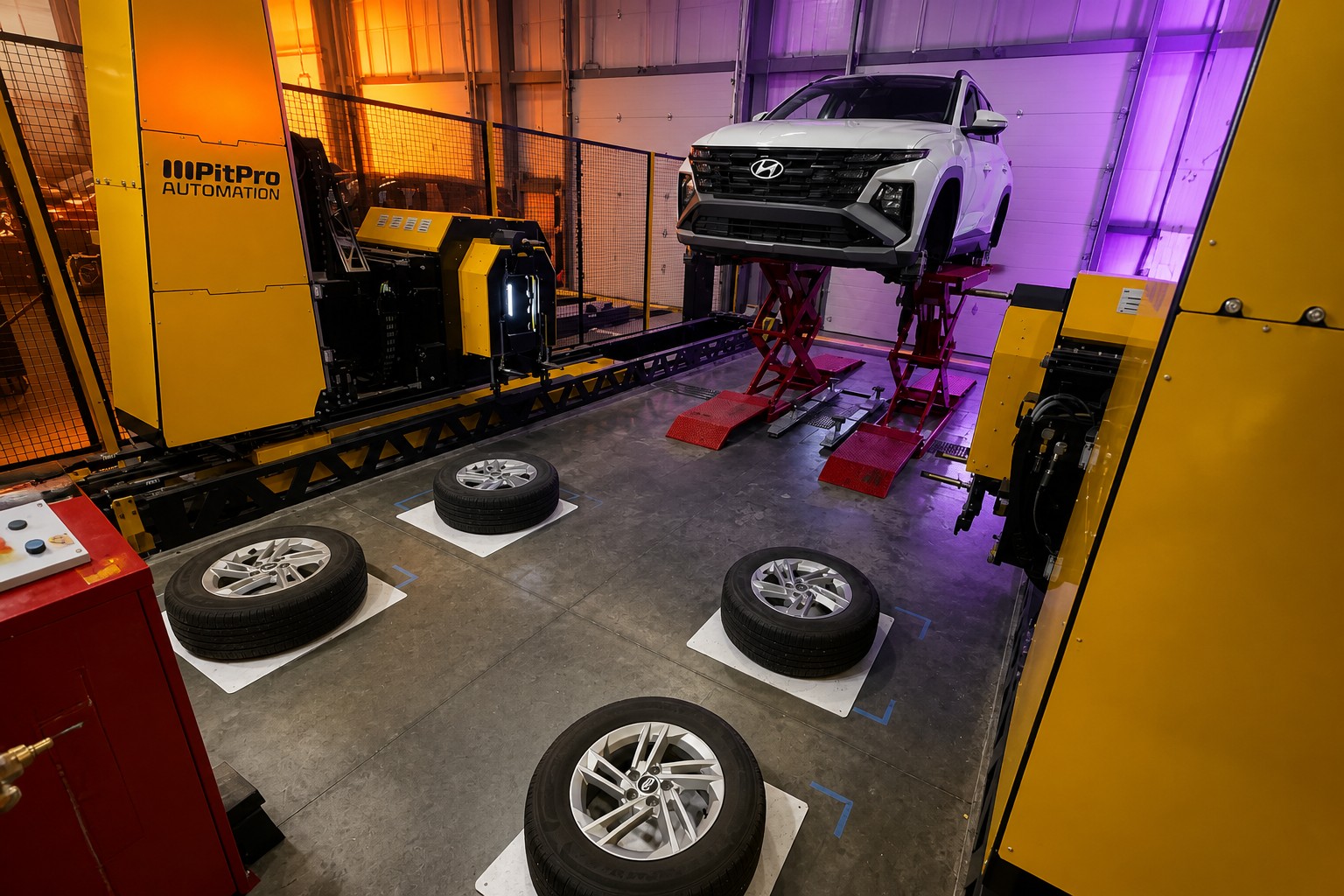
PitPro’s system is designed to fit into existing repair bays. It uses two robots with bodies roughly the size of ovens. Sensors and a robotic arm locate and loosen the wheel nuts.
The robots then:
The package includes four tires, and the stated replacement time is less than 15 minutes.
From fleets to tire-service chains
PitPro has mostly discussed deploying its robots in commercial vehicle fleets. That remains the company’s main focus, according to founder and CEO Jeremy Conrad. Ted Cannis, a former head of Ford Pro, has joined the startup as an adviser.
Conrad said Cannis has connections with nearly all major US fleets and is helping PitPro meet their representatives.
Tire-service chains are a separate opportunity. Their appeal is not only the shortage of workers but also the steady demand for seasonal tire changes. In Canada, most vehicle owners switch between summer and winter tires every year.
PitPro is targeting chains rather than small independent shops because chains usually have standardized layouts. That should make the system easier to deploy across multiple locations. A robot-occupied bay could also leave mechanics free to handle other vehicle-service work, which Conrad believes may make shops more willing to test the technology.
The real test is outside the lab
Moving from development to a working service proved difficult. Tire bays are typically left open, exposing the robots to dust, debris and weather. PitPro had to account for those conditions so the system would remain reliable and its sensors could continue to identify tires accurately.
The Calgary installation produced a less predictable test: Conrad showed TechCrunch a photograph in which the robots were almost completely covered in dandelion seeds. The company checked the effect and found no problem. Conrad said he had never previously considered the need to operate inside a cloud of dandelion seeds.
I think that detail says more about deployment than the sub-15-minute figure does. A controlled demonstration can establish that the robot moves a wheel; a Canadian service bay has to establish that it keeps seeing the wheel after months of contamination and changing weather.
What the announcement leaves quiet is just as important: the purchase price, the maintenance burden, and how often a human must step in. Those details will determine whether the labor shortage creates a real market for PitPro or merely makes the technology easy to pitch.
Daily AI news
Every day we pick what actually matters in AI and explain it plainly — no hype, no filler. Subscribe if you want to follow where the industry is going.
Only what matters — every day
Follow on X