
=== HEADLINE ===
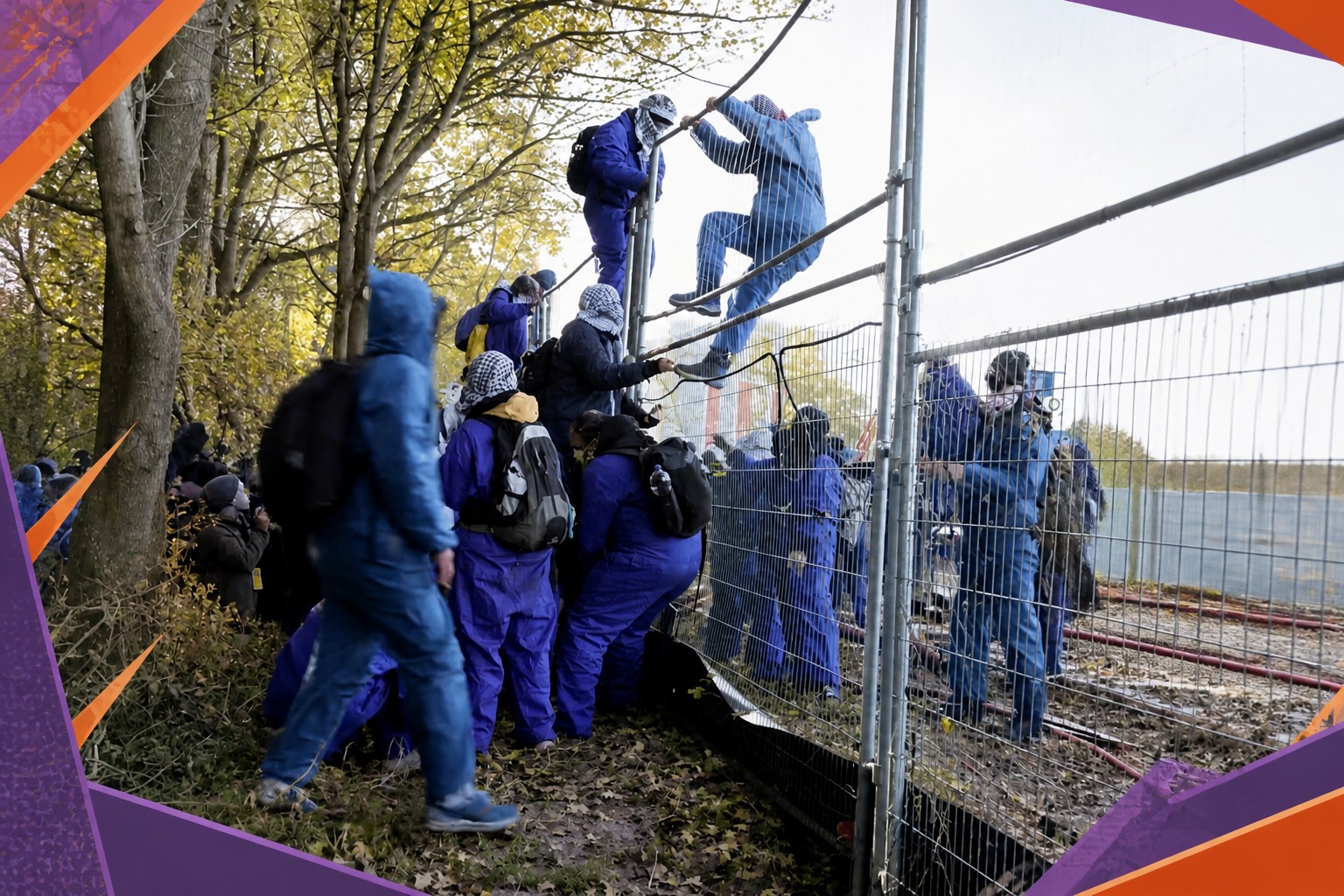
Protesters storm Microsoft data center construction site in Amsterdam
Two actions at one site
Members of Geef Tegengas hung banners opposing Microsoft’s services for the Israeli military and U.S. Immigration and Customs Enforcement (ICE). Their entry onto the site was not part of the Stop Dirty Data Centres campaign: activists who joined that campaign stayed outside the perimeter fence.
Police told Dutch broadcaster NOS that they tried to prevent protesters from occupying the construction site and to detain them, but could not stop the action and used force. One police officer sustained minor injuries. Representatives of both groups said police used force and tear gas against people trying to enter the site. Organizers and local media reported that hundreds of people gathered on each side of the fence.
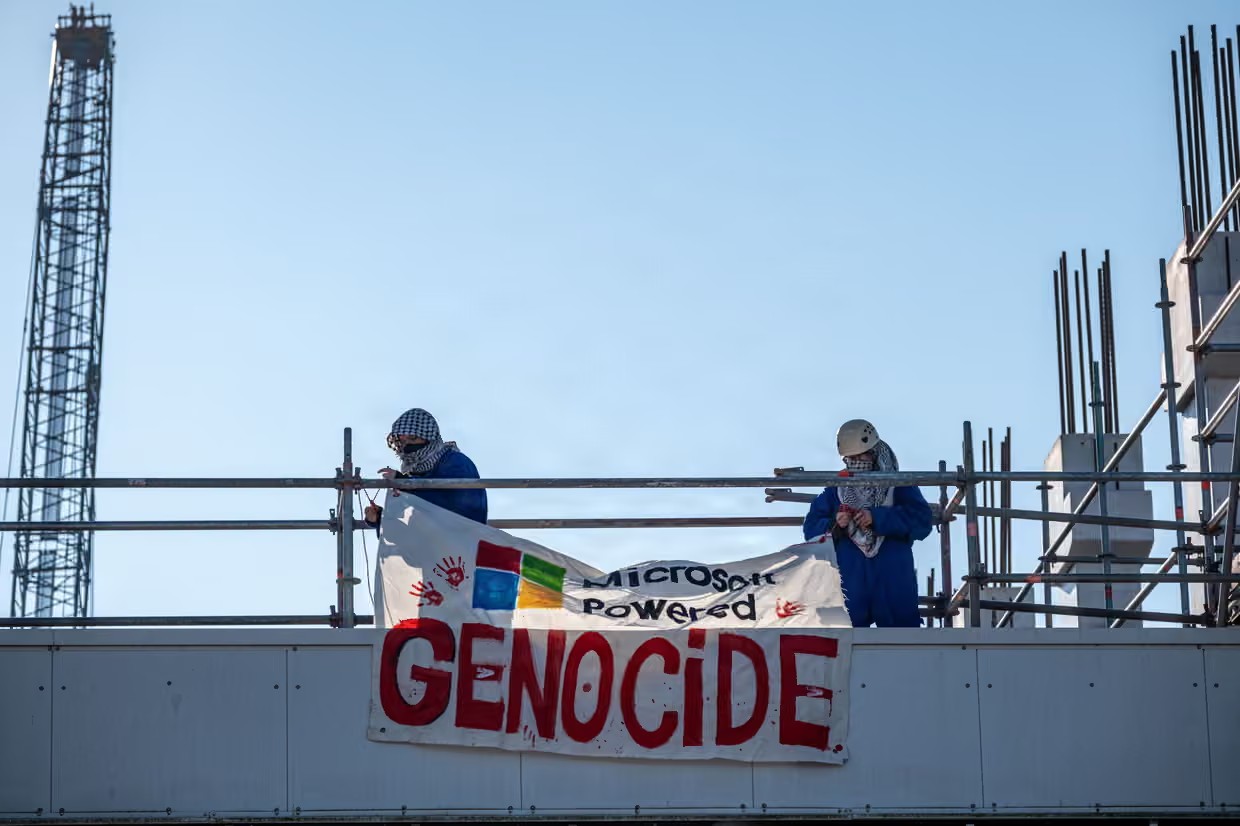
Geef Tegengas activists attach a ‘Genocide’ banner to scaffolding at the Microsoft site. Photograph: Storm Groenendijk/Zuma Press Wire/Shutterstock
Source: theguardian.com
Protests across Europe
Amid the rapid expansion of energy-intensive data centers, protests also took place in other cities. Smaller demonstrations were held in central Bristol, outside a data center in Berlin, near the Polish parliament in Warsaw and in Zagreb’s main square. Further protests were expected on Saturday.
Stop Dirty Data Centres is a coalition of independent groups that includes national chapters of Greenpeace and Friends of the Earth. The coalition said it had not organized or promoted the direct action in the Netherlands, but called it understandable that local residents might turn to different methods when they could not participate fully in decision-making.
Campaign coordinator Owen Espley said major technology companies and governments were continuing to develop data centers despite public concern about their effects on local communities, natural resources and other industries. Many projects, he said, are planned without sufficient transparency or public oversight, while people across Europe are excluded from decisions that will shape the future of their surroundings.
The growth in data centers worries some climate scientists. Rising energy bills, job losses and the role of technology companies in weakening democracy are adding to dissatisfaction with the effects of AI’s spread. In the U.S. midterm elections held this week, voters approved almost all the proposals on the ballot to impose moratoriums on data center construction.
Roos Molenaar of Geef Tegengas linked resistance to major technology companies with the fight against oppression and fascism. She said activists did not want Amsterdam used to create low-quality AI content and facilitate genocide, and that the data center was using drinking water to enrich wealthy people.
Responses from companies and authorities
A Microsoft representative said the company knew about the protest and was primarily concerned about the safety of people at and near the site. Microsoft acknowledged people’s right to express opposition to the project peacefully, but condemned illegal actions and conduct that put safety at risk.
The site’s owner, Pure Data Centres, also said it respected the right to peaceful protest. It called entering an active construction site illegal and dangerous, however. A Pure DC representative urged protesters to leave the site safely and discuss the project and their concerns with the company.
European governments support building data centers for AI, hoping to increase tax revenues and catch up with the U.S. and China as they rapidly expand computing capacity. Some governments frame the AI race as a matter of national security. At the same time, data centers are becoming a focus of public discontent over their effects on the environment, energy, human rights and democracy. Last week, an investigation by The Guardian and Investigate Europe found evidence of dangerous working conditions for some people building these facilities.
In Dataist’s view, the dispute over data centers goes beyond the pace of AI development: the protests bring together concerns about resource use, working conditions and residents’ participation in decision-making. Supporters of construction, meanwhile, justify it on economic and strategic grounds, and there is still no agreement on how to account for local effects.
Daily AI news
Every day we pick what actually matters in AI and explain it plainly — no hype, no filler. Subscribe if you want to follow where the industry is going.
Only what matters — every day
Follow on X