
A nurse in Denver photographed a Jamaican barbecue menu on which the meat looked like leather belts with small bugs crawling over them, posted it to her 26,000 followers on X, and collected more than 500 reposts from people who found the pictures as repellent as she did. The restaurant's manager later confirmed the obvious: the images came from ChatGPT, and using it meant not paying the graphic designer the business hires for its permanent location. That exchange — one designer's fee against the chance of disgusting the customer at the moment of ordering — is the trade American restaurants are now making at scale.
The scale is documented. The National Restaurant Association's 2026 report puts the share of restaurant operators using AI at 26%, across marketing, inventory management, employee scheduling, menu optimisation and order taking. Four of those five are invisible to the person eating. The fifth is the menu, and the menu is where the entire argument is happening, because it is the only place where the diner is asked to look at the output.
Jill Sennett, 37, saw the menu during a lunch break. Food, she said, is an important part of human life, and restaurants moving to images this creepy and strange strikes her as a bad cultural development. She also ordered the chicken and mac and cheese. It was one of the few lunch options available, and she had eaten there before.
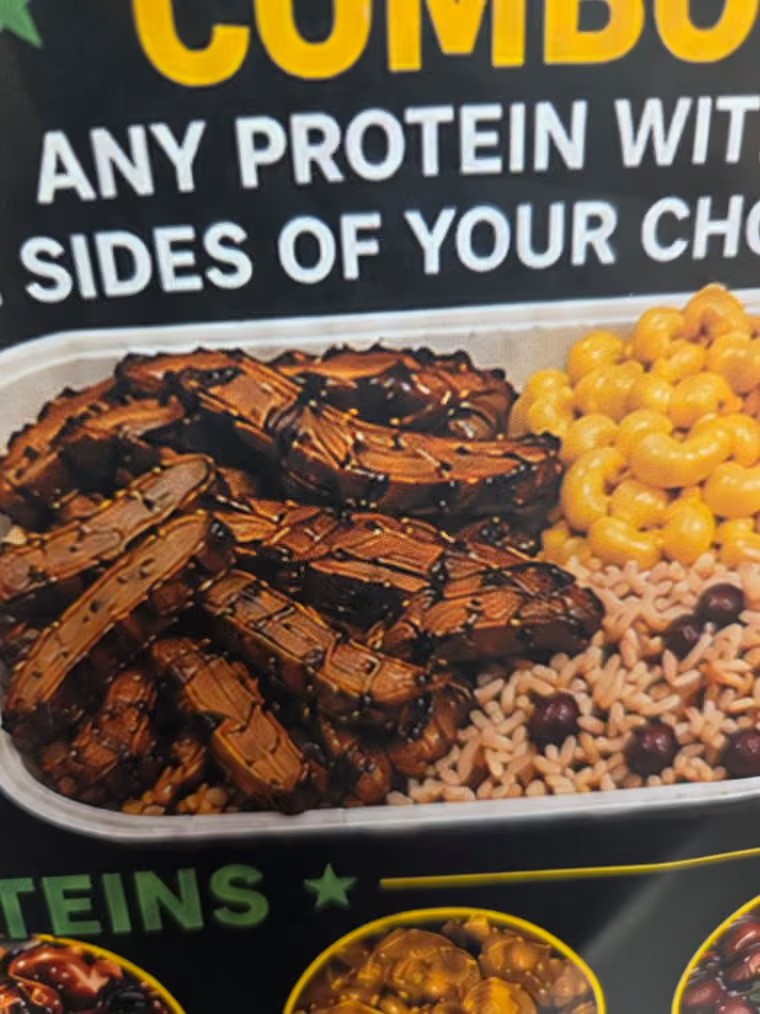
Sennett is amused by how badly the technology handles food. The same systems can produce strange videos of celebrities, she noted, and still cannot render a plausible hamburger. She hopes it stays that way, and that public pressure pushes restaurants off these images.
In parts of the San Francisco Bay Area, the pressure arrives faster and less politely. When the Grind & Unwind cafe in San Francisco put up a sign with dish images that locals identified as AI-generated, vandals painted the facade. Owner Lindsay Lozano could make out one of the words: "seriously". On Reddit, a thread titled "Delicious, slop" had users comparing the bread in the picture to reptile skin and to a loofah. Lozano told SFGate in July that the cafe had not expected the reaction and that the sign was meant to be temporary. She and her husband took the images down and spent roughly $700, by SFGate's estimate, painting over the graffiti. She did not respond to a request from The Guardian.
The counter-position has become a marketing asset of its own. Some restaurants publicly promise never to use AI and post hand-drawn hamburgers to prove it. When Chugwater Soda Fountain in Wyoming wrote that promise on a piece of cardboard, the Instagram post passed 200,000 likes. Some commenters liked the homemade look; others pointed out that the pledge was published on a platform that runs on AI.
The manager of Jamaican Jerk and Barbecue Restaurant, the Denver business that ran the fair outside Sennett's hospital, declined to give his name. He said the restaurant wanted eye-catching signage, and that people in the industry are trying to save money. That is the whole reasoning, and it is not unreasonable on its face. Rules for AI in advertising are still being written, and the industry is working out where it helps and where it costs. Hunter Lewis, editor-in-chief of Food & Wine, argues that restaurants grow by automating parts of their internal operations — but that the use should remain invisible to guests, because generated images push customers away. American diners, in his view, know what they want and can tell the real thing from the fake one.
Jamie Soja, a Bay Area professional photographer who has shot for restaurant advertising and delivery services, says the failure is usually texture. Colour, surface and ingredients sit wrong relative to each other, and the lighting often looks unnatural.
The platforms are in this too. DoorDash offers photo tools that alter the lighting, colour or background of an existing dish photograph. The company says its policies prohibit restaurants from creating or altering misleading images of food, and that submitted photos are reviewed for compliance. A quick search turns up images carrying DoorDash's "AI-enhanced" marker, which appears automatically when a restaurant runs one of those editing tools. Even Soja says it can be hard to tell whether an image was generated or simply over-processed.
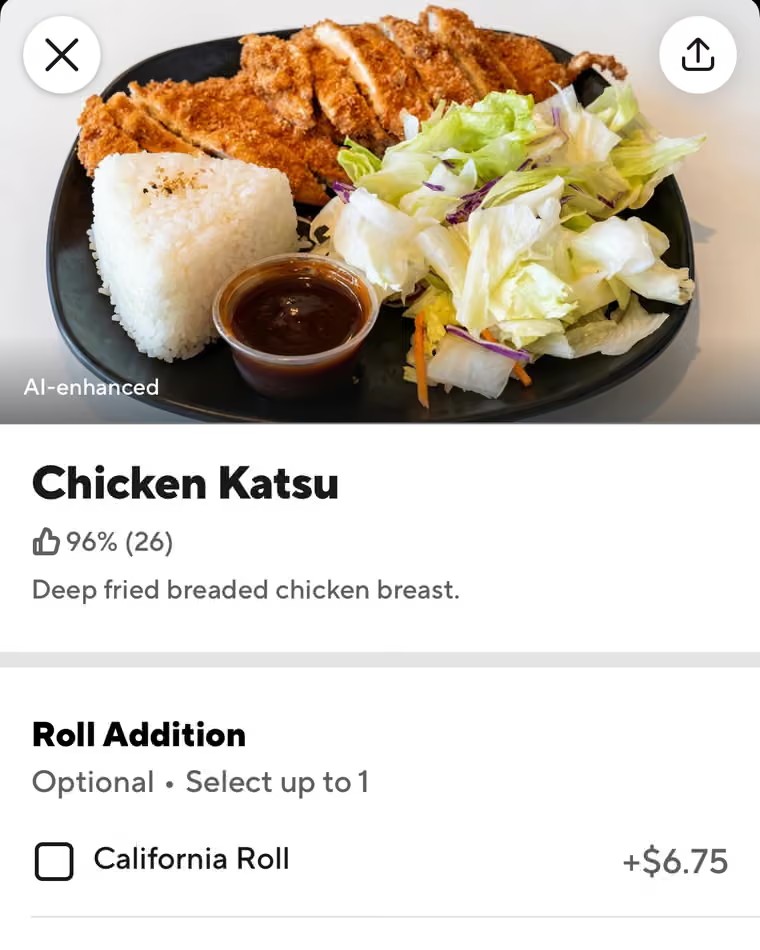
That label is the part I would look at hardest, because it marks the tool rather than the origin. It fires when a restaurant brightens a real photograph inside DoorDash's own product, which is the least misleading thing anyone in this story is doing. A picture generated from nothing somewhere else and uploaded as a finished file carries no such badge. The disclosure regime, as described, is precisely inverted: it tags the honest edit and waves through the invention. And the economics it is meant to police are thinner than they look. The saving on a single set of menu images is one freelance invoice; a week of bad public reaction erases it, and in San Francisco it ran to about $700 in paint.
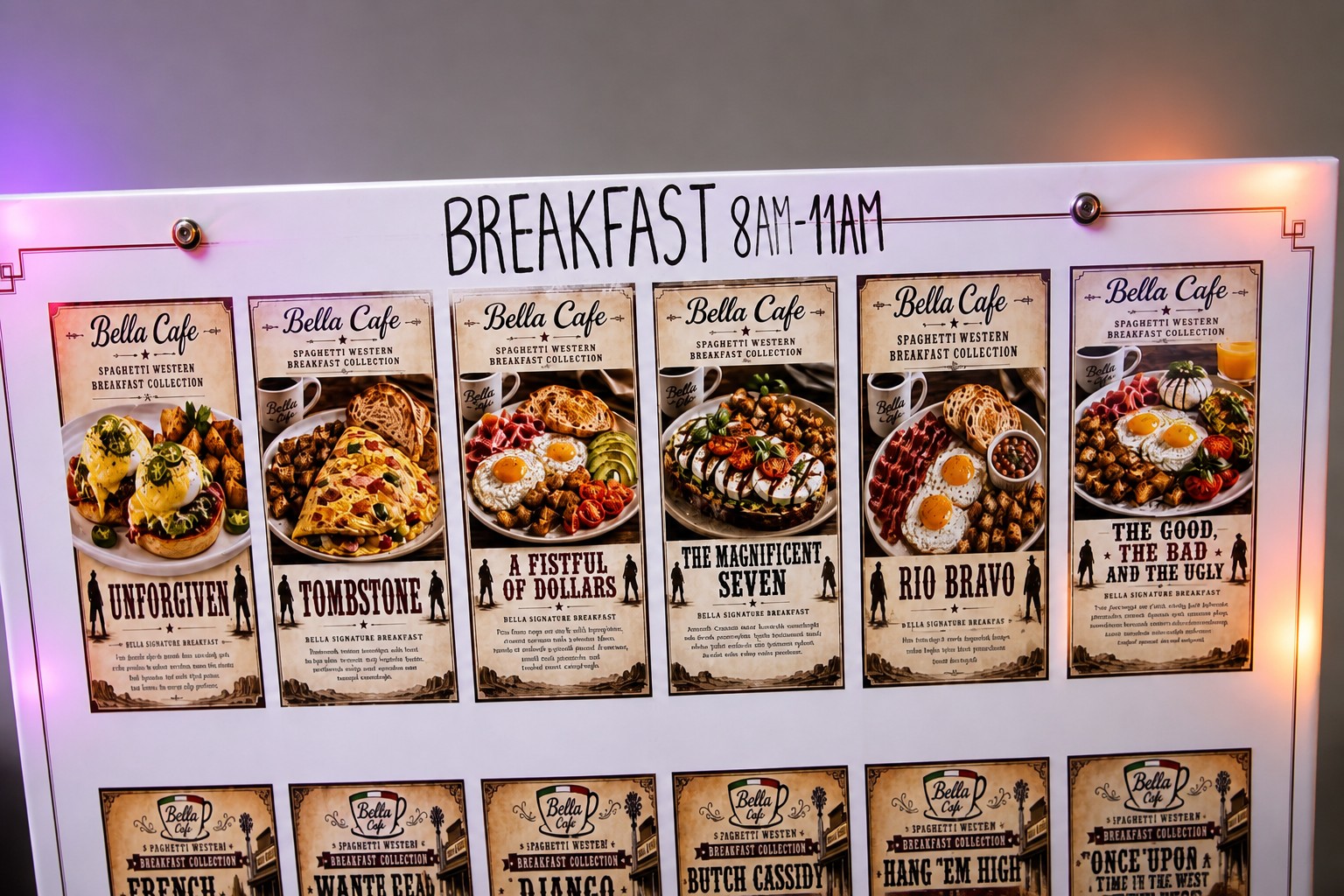
Not every owner sees a problem. Brandon Hill, chief executive of a San Francisco design and marketing agency, walked past Bella Cafe downtown, was put off enough by the generated images to photograph them, and shared the picture with his more than 86,000 followers on X with a Japanese caption. In X's English translation, the post said that even in San Francisco venues are starting to use generative AI for menu images, and that they do not look appetising. Hill added that the pictures make him doubt what the dishes will actually look like. Bella Cafe's owner, Neela Norero Salvatore, says she has personally received no complaints — not about the ChatGPT-made signs on the street, nor about the breakfast images inside. At 65, she calls herself and her husband old school, but finds the experiments interesting and new; she also uses ChatGPT to draft recommendation letters for staff and to put together an employee handbook. Beyond the saving on design, she likes how the images look, and considers them a good way to advertise dishes even if others call AI ineffective and unnatural.
The research points somewhere less obvious than taste. In a 2024 study, Charles Spence, professor of experimental psychology at Oxford, found that people generally preferred AI-generated food images — until they were told what they were looking at, at which point the same pictures became less appealing. Spence also found that the models change food in a predictable direction. Asked to make a dish more appetising, a system tends to add fat: butter onto the mashed potatoes.
That is the finding that will outlast the ugly-menu news cycle. Spence worries the images could quietly nudge diners and cooks toward larger portions with more fat in them, and the mechanism is already installed. Restaurants adopt these tools to save on a designer, the model applies its own theory of what appetising means, and the picture goes up on the wall as the target. The bugs on the barbecue get noticed and painted over. The extra butter does not.