
From architecture to an assistant
The partnership has grown since its initial announcement. Volkswagen first committed to a joint venture valued at up to $5 billion. Months later, it increased that commitment: by 2027, the company plans to invest up to $5.8 billion in Rivian. The independent company formed to manage the partnership began work in November 2024, initially focused on bringing Rivian’s electrical architecture and software to next-generation Volkswagen vehicles.
Rivian says adding its AI assistant shows that its in-house platform can support more than the systems it was originally built to deliver. The technology could appear in Volkswagen’s affordable ID EVERY1, a small four-door hatchback. If it does, that would make the model the first Volkswagen vehicle with Rivian’s software and electrical architecture, developed through the joint venture.
But the announcement leaves basic commercial questions unanswered: how much Volkswagen will pay to license the assistant, how payments will work, and which vehicles will get it. Those details matter because the assistant is not yet an established product across Rivian’s own lineup.
What the assistant does
Rivian first showed the assistant last year. After a longer-than-expected development process, it became available in the R1S flagship SUV, the R1T pickup and the new midsize R2 SUV in September 2026.
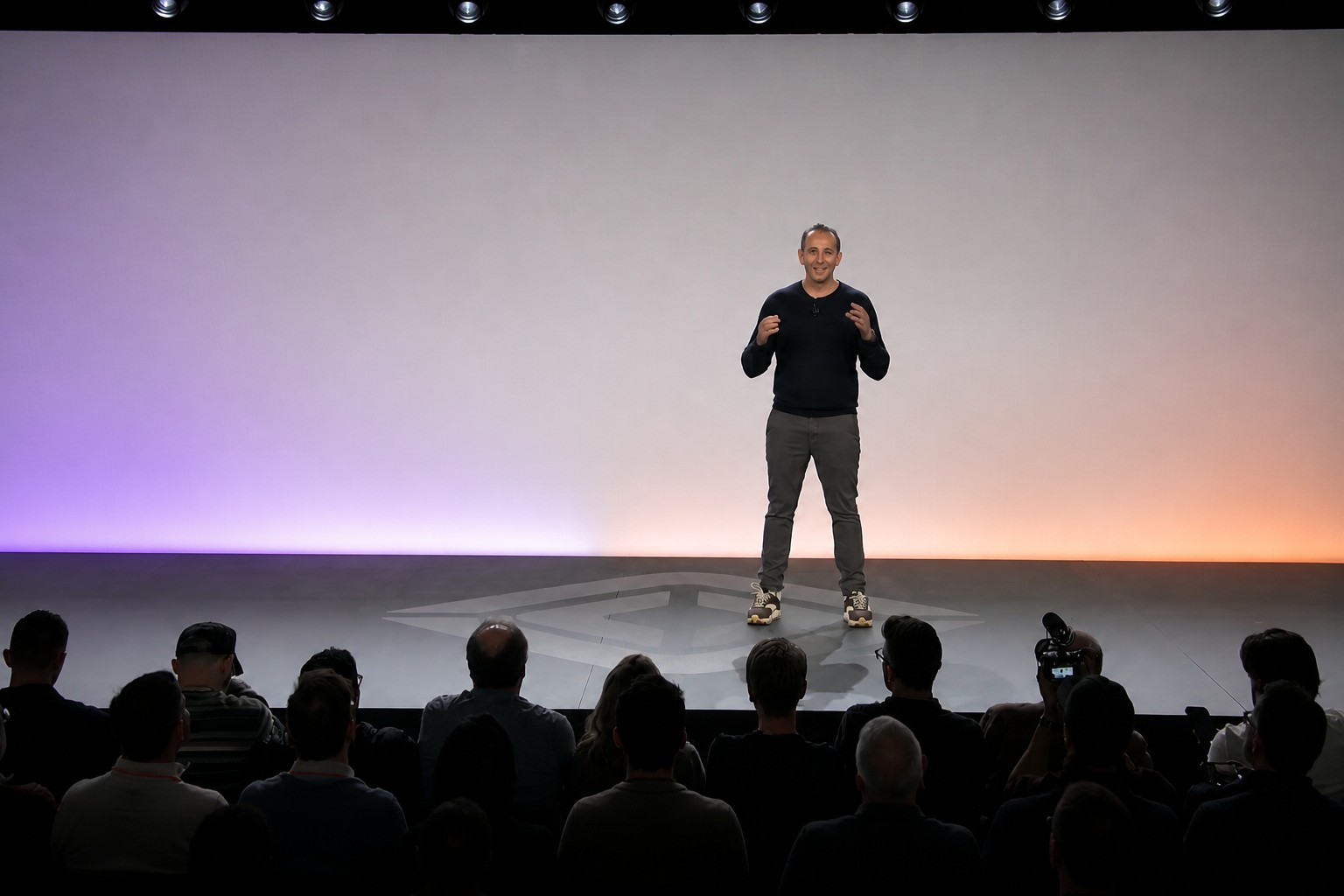
Drivers and passengers can talk to the vehicle and use voice commands to control some functions. Rivian founder and CEO RJ Scaringe told TechCrunch at Disrupt 2026 that the company built its own framework for AI agents. It interprets what a person wants to do and routes the request to the relevant part of the vehicle’s software. Scaringe said the framework could also let Rivian vehicles run agents from other companies, including Anthropic.
The assistant fits Rivian’s broader push toward vertical integration, a strategy the company also discussed in its third-quarter earnings report. Rivian has described that approach as a core competitive advantage: controlling hardware and software architectures lets it bring them together and create more value for customers.
That effort has already meant a full redesign of the R1T and R1S, from the battery pack and suspension to the electrical architecture, sensors and software interface. Rivian says its new electrical architecture and computing platform reduced wiring and cut the number of electronic control units—the car’s computers—from 17 to seven. The company believes that foundation can support the computing demands of complex software and automated driving.
Volkswagen’s interest reflects its difficulty bringing modern, software-centered vehicles to market, including models that can compete with Tesla’s. Rivian’s control of computing, sensors, displays, lighting and audio also gives it the ability to send over-the-air updates across the vehicle, rather than limiting updates to basic functions.
The platform is the real bet
I think the assistant is less important here as a feature than as a demonstration of how much Rivian can package into its platform. Volkswagen’s investment began with the underlying architecture; adding an assistant broadens the scope, but it does not yet show that Volkswagen customers will use it or that the license will be meaningful to Rivian’s finances.
The missing details are therefore more revealing than the product description. Without a price, a payment structure or a confirmed vehicle list, it is hard to tell whether this is a substantial new business for Rivian or a small addition to a much larger technology deal. The harder test is whether Rivian’s tightly integrated systems can travel to Volkswagen cars without losing the advantages that made the platform attractive in the first place.
Daily AI news
Every day we pick what actually matters in AI and explain it plainly — no hype, no filler. Subscribe if you want to follow where the industry is going.
Only what matters — every day
Follow on X