
The factory is the bet
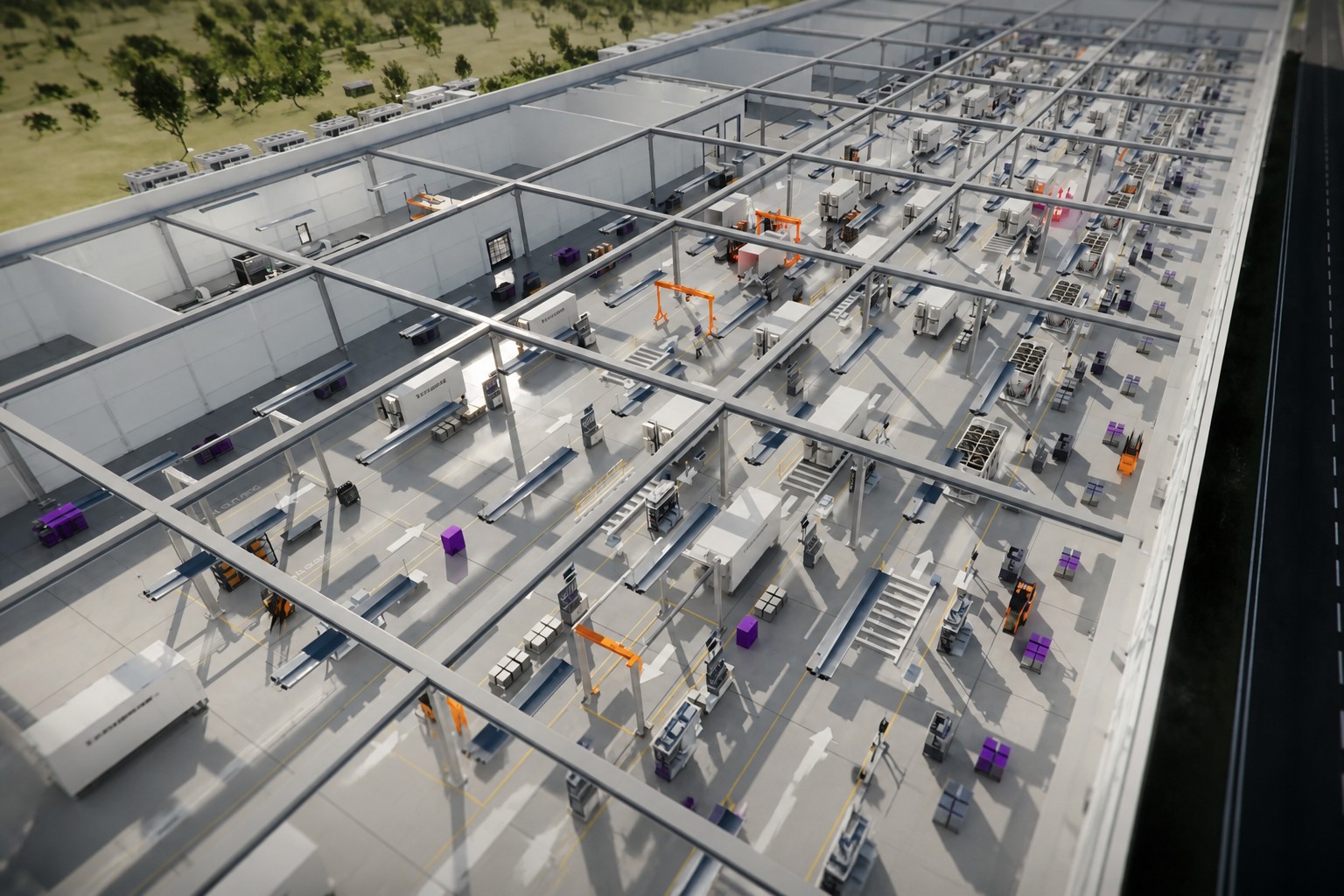
Runware says it has an advantage over infrastructure plans that still need a factory: it has already built one. The company has two factories. Production has been under way at the first for several years; construction on the second began early this year, and Runware expects to complete it in the coming months and start operating it early next year.
Co-founder and CEO Flaviu Fadulescu told TechCrunch that production will ramp gradually from next year. The company says it can install and configure a module within 48 hours, though that is not the time it takes to build one. A module currently takes three weeks to assemble; Runware wants to bring that down to one day as production expands.
The offer is designed to accommodate different customers and GPU generations:
For new GPU generations, Runware says its hardware team can design, build and test components to make changes faster.
Demand is not the same as delivery
Runware says it has received confirmed interest worth $1 billion since it began selling Sonic Pod to external customers a month ago. Fadulescu said the interest represents orders for more than 20 MW of capacity that the company is preparing to fulfill.
The company has raised more than $60 million and plans a Series B. It is finishing construction and preparing to open the new factory using the $50 million Series A round it raised in December last year.
Scaling the line will take more than floor space. Runware needs workers, materials, dependable logistics and funding. Arrival, the electric-vehicle startup once valued at more than $13 billion, showed how hard it can be to move from a manufacturing plan to mass production at costs comparable to conventional factories.
Fadulescu argues that Runware’s cost structure differs from Arrival’s: factory labor is small relative to the value of deployed AI compute, and in-house design alongside widely available standard components helps contain costs. Runware has hired an experienced automotive-industry plant manager to work with its hardware lead.
The bottlenecks beyond the factory
Runware says it designs and manufactures its cooling systems and other module components using standard parts. But some components, including pumps and fans, come from Germany, while networking equipment still depends on Nvidia. That makes the promise of a flexible factory partly dependent on suppliers outside the factory.
The company is also working with power providers on a list of sites totaling 397 MW, which Fadulescu says could expand to 1.2 GW. Runware places modules on much smaller sites than those used by hyperscalers such as Amazon, Microsoft and Google.
Fadulescu said the selected sites typically already have power, so the new data centers should not add strain to the grid or disturb local residents. The modules use closed-loop liquid cooling, with air-cooled radiators to remove heat, and do not need a water connection. They run silently at temperatures up to 86 degrees Fahrenheit. Runware says it uses renewable energy where possible and is expanding its network of power providers and sites to make renewables the main source.
I think the harder test is not whether a module can be assembled in a day, but whether a factory can keep shipping at that pace when chips, networking gear, power and sites all have their own constraints. The $1 billion in reported interest is a strong signal of demand; it is not evidence that those orders can be delivered on schedule. Runware’s next factory is supposed to open early next year, followed by expansion in the United States and other regions. The company’s claim that factory-built modules will become standard for large AI projects depends on making the whole supply chain as repeatable as the module itself.
Source: techcrunch.com
Daily AI news
Every day we pick what actually matters in AI and explain it plainly — no hype, no filler. Subscribe if you want to follow where the industry is going.
Only what matters — every day
Follow on X