

The infrastructure is the argument
The opposition is about more than large facilities filled with energy-hungry servers and their effects on nearby areas. A Marquette University Law School poll found that 73% of Americans believe data centers’ costs outweigh their benefits. The same poll found that 70% consider AI harmful to society.
Public attitudes toward technology have shifted. In 2021, 37% of Americans said they felt more concerned than interested about technology, according to Pew Research Center polls. Now 52% do. Even among young people, usually the most enthusiastic group, 55% say AI worries them. The unease crosses party lines: Democrats and Republicans are both much more likely to feel concern than enthusiasm.

Some of that anxiety reflects warnings from Silicon Valley itself. Many people have heard claims that AI poses at least a 10% chance of human extinction, alongside repeated predictions that it will eliminate familiar jobs. Against that backdrop, vague promises that AI will cure cancer or that universal basic income will replace wages have struggled to reassure people.
But the deeper issue may be who gets to decide. Political scientist Henry Farrell of Johns Hopkins University has argued that opposition to data centers reflects frustration among people who do not feel they have control over their own lives. AI ethics researcher Rumman Chowdhury has pointed to a common Silicon Valley claim: AI systems are becoming so powerful that no one, including the companies that built them, can stop them. That framing, she argues, can pre-empt responsibility for harm and leave ordinary people with fewer ways to seek protection through the law.
Resistance is unlikely to halt data-center construction. Donald Trump continues to support the industry, and the Environmental Protection Agency plans to repeal a rule requiring states to seek public input on air-emissions permit applications. The rule covers industrial facilities, including data centers and the power plants that supply them. If it is repealed, residents may not learn about a project until construction begins.
The industry also has economic and political advantages. Historian Quinn Slobodian of Boston University says technology remains the only U.S. sector that is both globally dominant and profitable. Both major parties also agree that U.S. AI capabilities should surpass China’s, making competition with China likely to keep shaping policy even as voters’ concerns are pushed aside.
A longer break with the public
The clash over AI infrastructure follows an earlier rupture over social media. Silicon Valley once cast its platforms as tools for freedom and democracy. In 1996, technology companies persuaded Congress to pass Section 230 of the Telecommunications Act, shielding social media platforms from liability for user posts. The case rested on the claim that platforms were merely providing a board for others to write on.
That confidence eroded as reports of teen suicides and online bullying raised concerns, and as it became clear that company leaders knew their products could cause harm while adding features designed to keep users on screen. During the 2016 election, social media became a channel for misinformation and political manipulation.
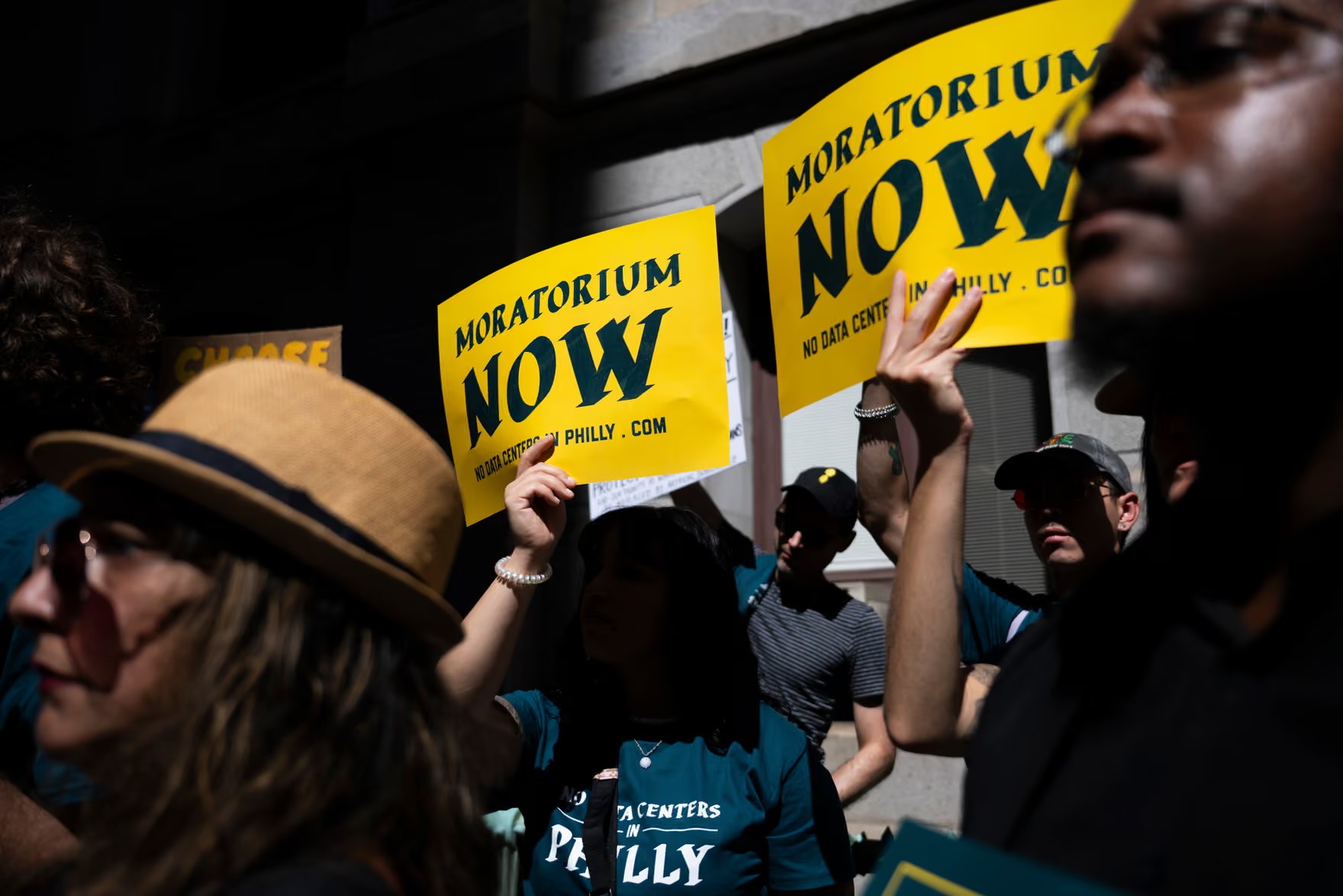
Demonstrators rally during a protest calling for a citywide datacenter moratorium outside city hall in Philadelphia, Pennsylvania, on 14 September 2026. Photograph: Bloomberg/Getty Images

Sam Altman, chief executive officer of OpenAI Inc, during a Senate commerce, science, and transportation Committee hearing in Washington DC on 8 May 2025. Photograph: Bloomberg/Getty Images
Source: theguardian.com
Source: theguardian.com
The pandemic, then efforts by Joe Biden to use antitrust law and other rules against tech empires, helped push some tech leaders toward Trump and the MAGA movement. The alliance has delivered benefits: Trump’s administration has promised to punish European countries that fine U.S. technology giants, and the president has praised power plants built for data centers.
Yet the public backlash over data centers could make that alignment costly. Trump’s falling popularity risks turning an alliance with his administration into a liability for tech billionaires.
The dispute also exposes a broader divide. Silicon Valley’s leaders have often treated democratic disorder as a problem to be engineered away. Slobodian says they think like programmers: democracy’s messiness has no purpose, only bad code. Some have gone further. Peter Thiel has argued that democracy is incompatible with freedom; Sam Altman of OpenAI has described a future in which AI could replace human presidents, talking with everyone and optimizing the public’s preferences.
I think the data-center fight matters because it turns that abstract worldview into a local decision about land, power and public input. The industry may have enough money to shape the debate, and enough political support to keep building. But its leaders still depend on institutions and voters they cannot simply program out of the system.
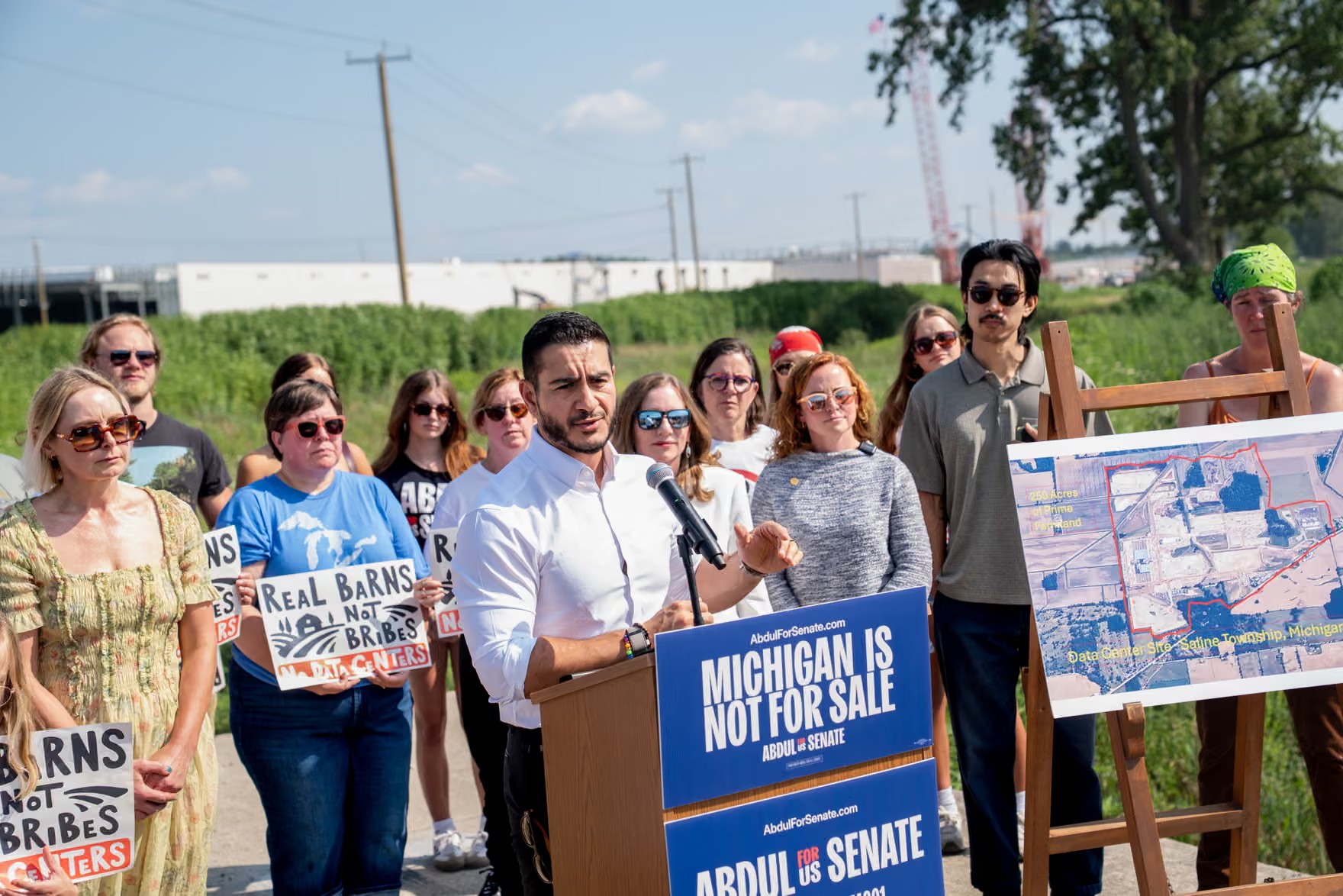
Abdul El-Sayed, a US Democratic Senate candidate from Michigan, speaks during a news conference near the construction site of ‘The Barn’ datacenter, developed by Related Digital for Oracle and OpenAI, in Saline Township, Michigan, on 30 July 2026. Photograph: Bloomberg/Getty Images
Source: theguardian.com
Daily AI news
Every day we pick what actually matters in AI and explain it plainly — no hype, no filler. Subscribe if you want to follow where the industry is going.
Only what matters — every day
Follow on X