
The brain’s body problem
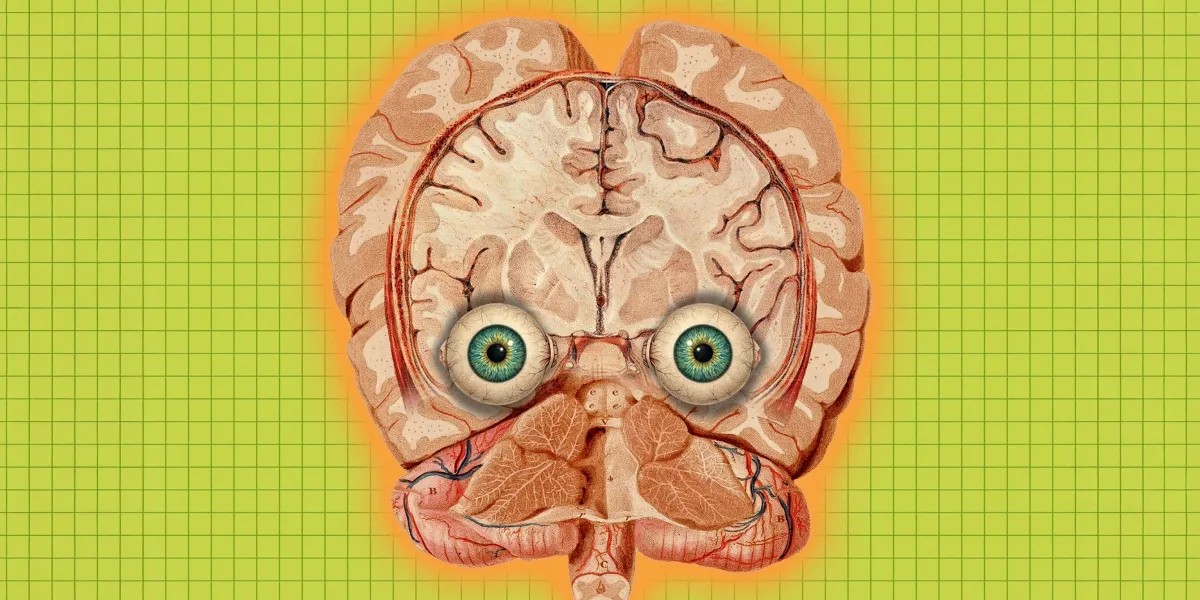
In 1970, neurosurgeon Robert White transplanted a rhesus macaque’s head onto another monkey’s body. The animal survived for several hours, able to move its eyes and mouth, but the severed spinal cord left it unable to control the new body. White, a professor at Case Western Reserve University, repeated the operation several times.
Source: technologyreview.com
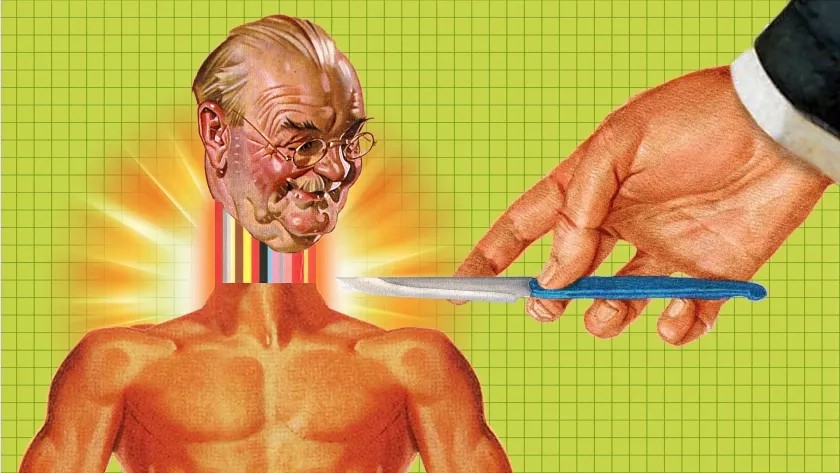
The idea still attracts attention. Italian surgeon Sergio Canavero has argued that a human head transplant could become possible if surgeons learn to reconnect a severed spinal cord. A decade ago, he said he had found a volunteer: programmer Valery Spiridonov, who had a degenerative muscle disease. Spiridonov later abandoned the plan and married. Critics warned that the operation could leave a patient paralyzed and dependent on a ventilator for life.
Canavero has pointed to a study he co-authored with surgeons from the N. V. Sklifosovsky Research Institute for Emergency Medicine in Moscow. Published in PLOS One, it described cutting the spinal cords of three pigs and applying a surgical sealant to reconnect nerve tissue. The paper reported that all three could stand again and walk unsteadily.
That result does not establish that a transplanted head could control a new body. Grégoire Courtine, a spinal cord rehabilitation specialist at the Swiss Federal Institute of Technology Lausanne, said in an email that the technology for the procedure does not exist. He follows Canavero’s claims “with little respect” and thinks they deserve “no attention.”
Source: technologyreview.com
Copies, brains and the question of identity
Martin Rothblatt proposed “mindfiles” in her 2014 book Virtually Human: The Promise—and the Peril—of Digital Immortality. People would upload diaries, recordings, social-media posts and other personal data, then use what she called “mindware” to create digital doubles. Rothblatt predicted that sufficiently convincing copies would eventually be recognized as conscious and granted human rights after psychological testing.
AI services including StoryFile, Afterlife AI and Synthesia now let people use personal data and appearance to make conversational bots or video avatars. Some bloggers assign work to AI clones on TikTok; some people create avatars of aging parents. In 2025, Rothblatt’s digital avatar, Bina48, appeared at a University of California, Los Angeles event on humanizing AI, discussing ideas alongside Rothblatt. The university said audience members were moved to tears.
The technology can reproduce a person’s manner and memories without showing that it reproduces consciousness. Neuroscientists still lack a clear definition of consciousness, let alone a diagnostic test for an avatar. A copy can be emotionally convincing without being the person it depicts.
A more literal approach is to keep the brain itself alive. Bexorg has shown journalists human brains obtained from organ donors shortly after death and restarted with oxygenated artificial blood. The company says the metabolically active brains could help test drugs more directly than animal brains or living volunteers. It also says they lack coordinated electrical activity and therefore consciousness; researchers use the anesthetic propofol as a precaution.
For now, Bexorg can maintain a brain outside the body for about 24 hours. The company hopes to extend that to two weeks. That is a research window, not a second life.
Replacing tissue, then adding to it
In 2026, the US health agency ARPA-H committed up to $175 million to FRONT, a program focused on functional restoration of neocortical tissue. Its stated aim is to develop tissue for transplant into the brains of people who have had strokes. The program’s leader, neuroscientist Jean Hébert, has also argued that gradually replacing aging brain cells with younger ones could extend life while preserving identity.
Source: technologyreview.com
The approach is far from established. Researchers do not know whether transplanted brain tissue could function normally or take on memories, and they have yet to solve how to grow the young cortical tissue the program seeks. ARPA-H has set a five-year schedule to lay the groundwork for the first human cortical-transplant trials.
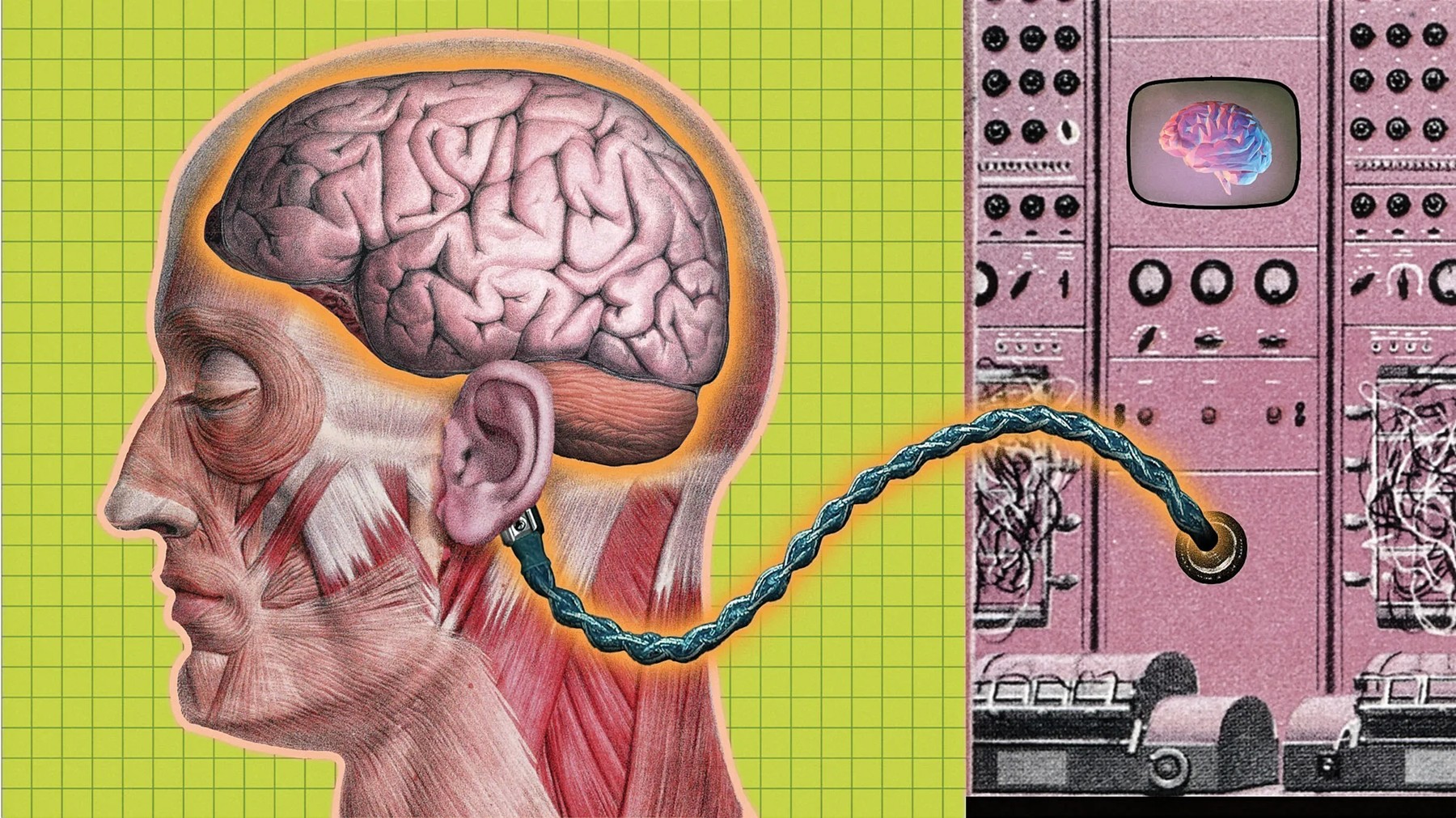
Other proposals aim to preserve or extend the brain by mapping its connections. Princeton neuroscientist Sebastian Seung’s hypothesis is that “you are your connectome”: that memory and personality reside in the brain’s network of synapses. A team that included Seung mapped 139,255 neurons and about 55 million synapses in a fly brain. Some researchers see such work as a step toward whole-brain emulation, though a 2025 survey of 312 neuroscientists in PLOS One found that full human-brain emulation was not expected before 2125.
Source: technologyreview.com
Two US companies, Nectome and Sparks Brain Preservation, offer to preserve brains or bodies using chemicals that fix tissue. They are waiting for their first customer to use medical aid in dying, a procedure permitted in 13 states and Washington, DC.
A different ambition is to connect living brain tissue directly to computing. In 2024, California-based Science Corporation presented a biohybrid brain-computer interface using nerve cells grown on a digital chip. After the cells were placed on an animal brain, they formed axons and integrated into its neural networks, creating two-way communication between computer and brain.
Company CEO Max Hodak has described the device as a potential new part of the brain, comparing it to “a large externalized cranial nerve.” The same kind of technology might eventually help direct brain cells to produce dopamine for Parkinson’s disease, or extend the brain’s computing capacity.
The part no proposal can settle
Futurist Ray Kurzweil has predicted that nanorobots could connect brain cells to a “synthetic cortex” in the cloud. Daniel Berger, founder of the stealth startup Eightsix Science, imagines combining several of these approaches: keeping a brain accessible in a tank while engineers gradually replace parts of it with biohybrid neural grafts. The goal, he says, would be to move a mind into an additional artificial brain without interrupting personal continuity—not to scan and simulate it.
I think that distinction is the most important claim in the piece, and also the least demonstrated. The proposals range from digital avatars to living tissue and hardware, but none establishes that a person’s point of view would continue through the transition. A preserved pattern, a functioning brain and a conscious self are not interchangeable. The more these projects move from keeping tissue alive toward replacing it, the harder it becomes to say what exactly is being saved.
Source: technologyreview.com
Daily AI news
Every day we pick what actually matters in AI and explain it plainly — no hype, no filler. Subscribe if you want to follow where the industry is going.
Only what matters — every day
Follow on X