
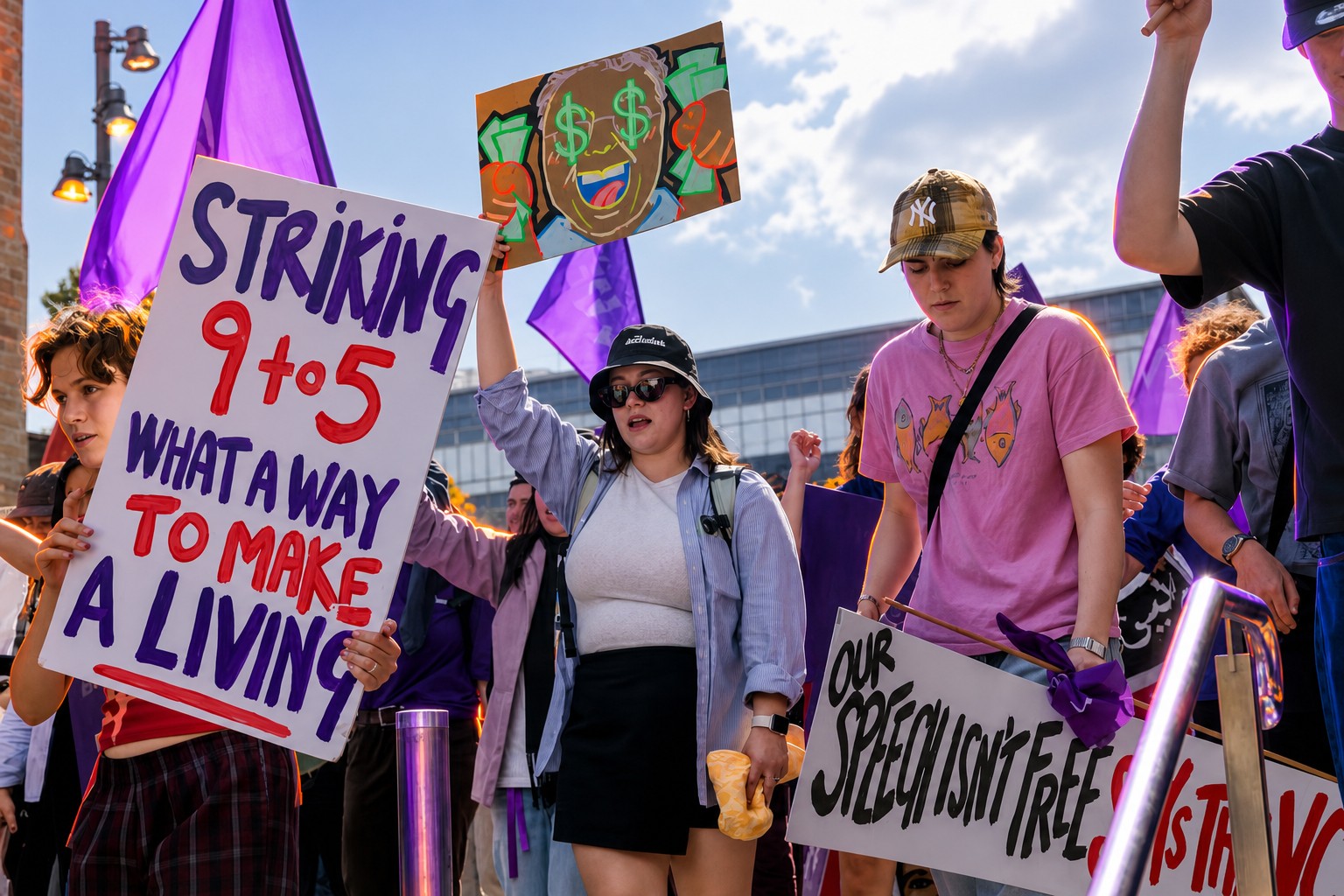
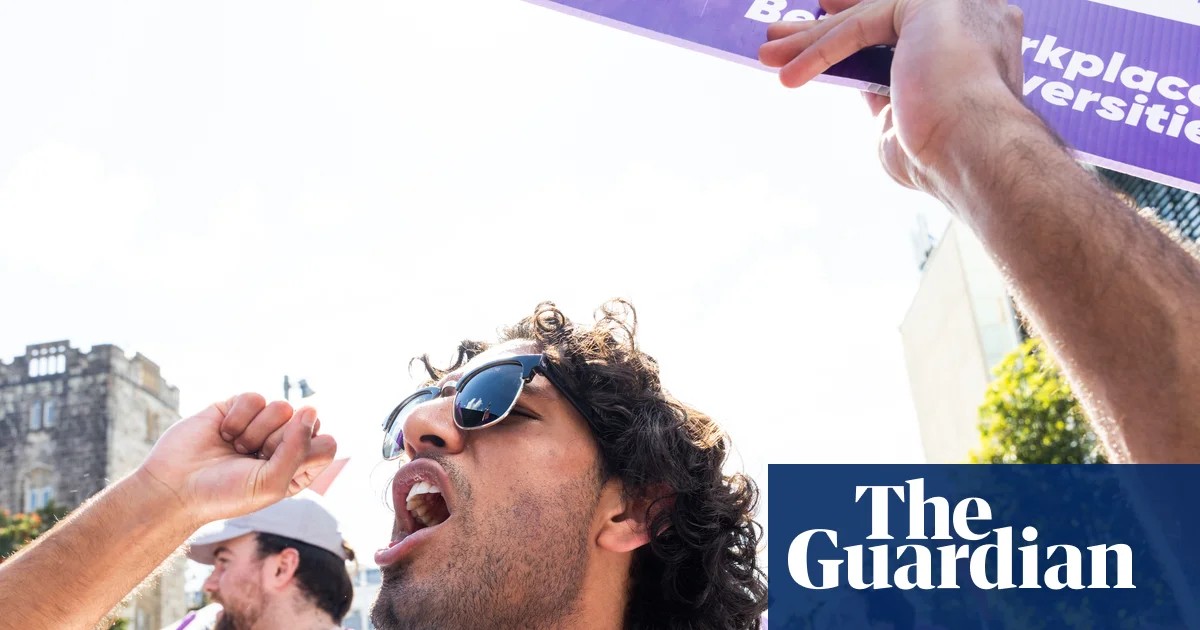
About 500 people picketed the entrances to the University of Sydney from 7am with flags, placards and megaphones, and the university told students that "almost all" scheduled classes would move online; the rest were postponed or cancelled. The strike is over artificial intelligence, workloads and job security at what is the National Tertiary Education Union's largest branch in Australia, five months into bargaining. The substantive gap is narrower than the banners suggest. Management says it supports many of the union's demands. It wants them written into internal policy documents rather than into the enterprise agreement.
Source: theguardian.com
Peter Chen, chair of the NTEU branch at the University of Sydney, said management had refused "at every step" to introduce appropriate AI-related protections. He argued that higher education is a preview of what AI does to the wider economy: the changes begin in universities and spread from there into other industries.
Vince Ko, the NTEU's branch secretary in New South Wales, pointed at the university's own strategy memo, which described AI as the most "fundamental transformation" in the history of education. He also noted that chatbots are already helping to run remote classes at other universities.
The union wants management to follow best practice and carry out proper risk assessment. Ko said staff would not accept decisions subordinated to the university's commercial goals or to the interests of venture capital.
A university spokesperson said management continues to engage with the union but considers the strike premature. The university agrees that ethical use of AI requires a human-centred approach, and said its principles and limits for the technology were developed after consultation with the university community. It supports many of the union's demands — as internal documents, not as clauses in the collective agreement.
The grievances run past AI. Class sizes are growing and student satisfaction is falling, and the sector is discussing teaching-only positions: no research work, no path to further professional advancement.
Professor Laura Shepherd of the school of social and political sciences, who sits on the union's bargaining team, said students often sacrifice a great deal to study here, including $50,000 spent on their education. They come for a quality education and for access to the people running research projects, she said, and the university should be ashamed if the collective agreement permits provisions that threaten that standard.
The policy-versus-agreement argument is not a procedural quibble, and both sides know it. A policy document can be rewritten by the body that wrote it; a clause in the agreement cannot, and it arrives with a dispute procedure attached. When the university says it supports many of the union's demands but wants them somewhere else, it is saying it supports them for as long as it chooses to. That is a defensible position — rules about a technology that changes every few months are awkward to lock into a multi-year industrial instrument — but it is not agreement. And calling the strike premature is a strange word to reach for five months into bargaining, when the previous round became the longest industrial action at an Australian university.
The more interesting thing about this dispute is what it is not about. Nothing the union's officials cite has happened to them yet. Their evidence is their employer's own memo about fundamental transformation and chatbots teaching somewhere else. This is a union trying to write protections before the displacement rather than after it, which is rational and rare, and which also means the clauses have to be drafted against a hypothetical. That is precisely the argument management will use against them.
The university has long been a centre of activist organising, and management is handling this alongside continuing protests over its position on Gaza and its restrictions on rallies. Those rules were introduced after the pro-Palestinian encampment on campus in 2024, which this year became the subject of a royal commission. Among the purple NTEU flags on the picket lines were keffiyehs and pro-Palestinian placards.
The Students' Representative Council joined in solidarity with staff and picketed during the remote classes. Dana Kafina, the council's education officer, said one reason for taking part was what she called "draconian" restrictions on protest. She tied the strike to the suppression of free speech and activism and to some of the lowest student and graduate satisfaction scores in the country, saying the people out there feel they have had enough.
Security and police were present, and the mood on the lines stayed lively anyway: music through speakers, drumming, loud chanting. Kurt Iveson, professor of geography, ran a quiz over a megaphone while students behind him sold baked goods to raise money for strikers losing pay. Iveson has worked at the university for 20 years. He said he wants meaningful guarantees that would not ban AI but would ensure the technology serves the university rather than subordinating people to it, and that staff came out because they care about the teaching and research they do.
The union hopes to settle before the end of the year and is worried that nobody from senior management, including the provost, Professor Annamarie Jagose, is at the table. Further strikes remain possible. Iveson's formulation is the one both sides could sign tomorrow: nobody here is asking to ban AI. The fight is over which document the guarantee lives in, and an employer willing to concede the principle but not the contract has already told its staff how durable it intends that concession to be.