
On January 26, 2009, the 53-foot yacht Four Winds was moored on Tasmania’s Derwent River. Bob Chappell, a physicist at the Royal Hobart Hospital, was aboard trying to repair another fault on the yacht he had bought for $200,000 less than four months earlier.
The next morning, a passerby saw that Four Winds had settled heavily in the water. The yacht was empty. Chappell was never seen again.
Police found what appeared to be blood and signs that someone had tried to disable the vessel. A dinghy used to travel between the yacht and shore was bobbing near the rocks.

The Derwent River in Tasmania’s south. Photograph: Southern Lightscapes-Australia/Getty Images
Source: theguardian.com
On August 20, 2009, detectives charged Susan Neill-Fraser, Chappell’s partner of 18 years, with his murder. She said she was innocent in the first days after his disappearance and has continued to say so through the trial, conviction and every appeal, including an application to the High Court.
The case has long been debated in Tasmania, supported by an active group of Neill-Fraser’s backers. It drew far less attention on Australia’s mainland. That changed this month, when the Tasmanian government had to explain how AI was being used in the state’s justice system.
The invented cases behind the restriction
Neill-Fraser is serving a 23-year sentence, with a minimum mandatory period of 13 years. She was released on parole in 2022.
In late 2024, she discussed her case with Robin Blewer, director of Griffith University’s Innocence Project. Neill-Fraser then asked her parole officer whether those conversations were allowed under her release conditions.
In December, the parole board added a condition prohibiting her from communicating directly or indirectly with any media outlet to claim that she was innocent or had been wrongly convicted.
She asked the board to explain the decision. After receiving no response, Neill-Fraser began legal proceedings.
In May last year, the board added a broader restriction. It barred her from using written statements, electronic messages, social media, television, radio, podcasts, streaming services, video-publishing platforms or any other public or broadcast media to:
The board said the condition was necessary to protect Chappell’s family from further trauma and distress.
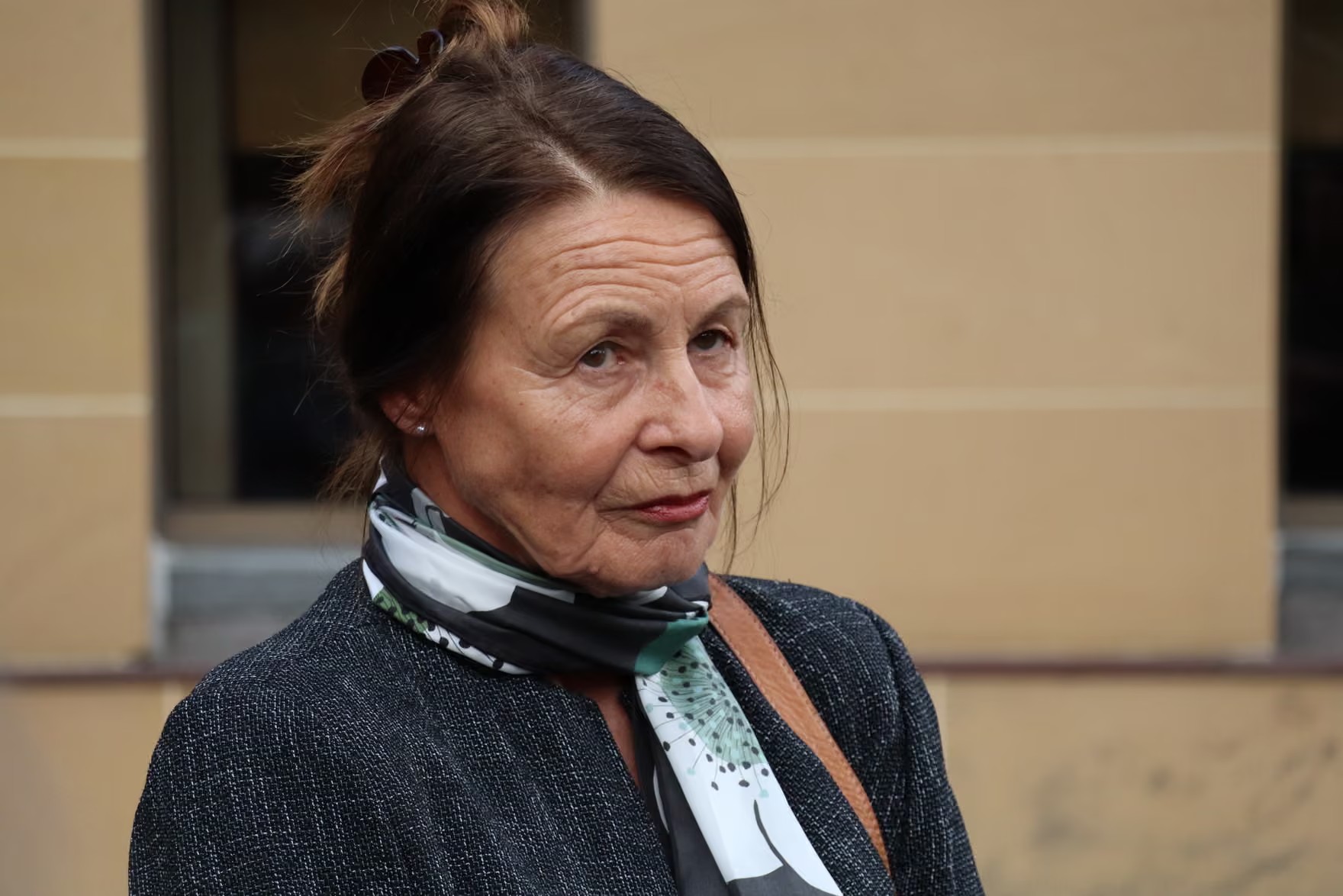
Neill-Fraser outside the supreme court of Tasmania in Hobart this year. Photograph: Ethan James/AAP
Source: theguardian.com
On September 15, Tasmania’s Supreme Court heard that the board had discovered AI had been used in a document prepared by its secretary, Ben Hancock. The document listed previous court decisions that supposedly supported restricting Neill-Fraser’s speech. None of the cited cases existed.
The media restriction was removed after the hearing.
In a statement afterward, Neill-Fraser said she was very pleased and relieved. She said she had never intended to cause anyone anxiety or suffering by challenging the parole order. She again declared her innocence, said she would continue seeking to clear her name and would keep advocating for the wider problem of wrongful convictions in Australia. She said she could not back down.
Tasmania’s Attorney-General Guy Barnett said he would ask the board’s chair to explain what happened and called the situation unacceptable.
The immediate legal error was straightforward: an AI system produced plausible-looking authorities that did not exist, and a government body relied on them in a decision affecting a person’s fundamental freedom. My concern is the institutional setting. A parole decision is less visible than a trial, is rarely challenged in court and can be difficult and expensive to review. That makes fabricated legal support especially dangerous.
Why parole decisions are a high-risk AI setting
Sarah Schwartz, legal director of the Human Rights Law Centre, called it deeply concerning that a public body had used an AI-generated document containing nonexistent legal precedents to restrict a person’s basic freedoms.
She said parole decisions were rarely accompanied by accountability, transparency and fair procedure, increasing the risk of AI being used incorrectly. In Tasmania, such decisions are almost never challenged in court. Schwartz said that combination created conditions for both improper AI use and poor decision-making.
An AI hallucination occurs when a large language model such as ChatGPT or Claude produces plausible but false text, or confidently supplies information that appears relevant but is not. These systems predict likely fragments of text from their training data. They do not have an inherent ability to distinguish true information from false information.
The error rate can be reduced with more training data, web search and other sources, but hallucinations remain a built-in feature of large language models. They are more likely when a model is asked to produce material about subjects that appear only thinly in its training data.
Here, the system’s failure was not corrected by a process that required every authority to be checked. The more important question is what review existed around the AI output before it influenced a restriction on speech. The announcement is quiet about that.
Schwartz also connected Neill-Fraser’s case with Kathleen Folbigg, who spent 20 years in prison in New South Wales after being wrongly convicted of killing her four children.
In Schwartz’s view, Folbigg’s case showed how silencing people who claim innocence can make it harder for them to obtain a review. Public statements to the media and political support helped Folbigg secure a commission of inquiry that led to her exoneration.
People must retain lawful ways to challenge wrongful convictions, Schwartz said.
Not everyone is convinced that Neill-Fraser is innocent. Police have repeatedly rejected criticism of their investigation and pointed out that several courts, including the state coroner’s court, found no misconduct by detectives.
A circumstantial case and a disputed inheritance
The prosecution case was circumstantial. Neither Chappell’s body nor the alleged murder weapon was found.
Prosecutors argued that Neill-Fraser killed Chappell on the lower deck, possibly striking him in the head with a large wrench. They said she then lifted his body onto the deck with a winch, loaded it into the dinghy, weighted it down and dropped it into the Derwent River.
She then allegedly tried to sink Four Winds.
Police could not establish exactly when the killing occurred. One theory placed the attack between 17:00 and 21:00; another placed it around midnight.
Police said Neill-Fraser was at home between 21:17 and 22:34, speaking by landline with three people. But they alleged that she returned to Four Winds by dinghy around midnight and disabled the yacht. At 3:08 the next morning, she was home again; a call was made from the landline at that time.
The prosecution also pointed to contradictions in her account of what she had been doing before the yacht was discovered.
Its proposed motive was financial and domestic. Prosecutors said Neill-Fraser knew she would receive a smaller share of Chappell’s multimillion-dollar estate after a breakup than she would after his death. Chappell had three adult children from earlier relationships; Neill-Fraser had two children of her own.
The prosecution’s key witness was a man who said that, about ten years before the murder, Neill-Fraser had asked him to help take her brother out to sea and throw him overboard, weighting the body with a toolbox. He said she also described how she would sink a yacht and reach shore by dinghy.
The witness said Neill-Fraser later told him she wanted to do the same to Chappell, but planned to wrap him in chicken wire.
Justice Alan Blow delivered the conviction. He said Neill-Fraser believed her relationship with Chappell had ended and understood that his death would leave her in a far better financial position than an ordinary separation. In his view, she killed Chappell for financial gain and tried to sink Four Winds to destroy evidence and divert suspicion.
Why the conviction remains contested
Neill-Fraser’s lawyers and supporters argue that the police theory accepted by the jury contains major gaps.
Robin Blewer has publicly confirmed for the first time that Griffith University’s Innocence Project is working on the case. She said there were serious questions about how Neill-Fraser was convicted.
Blewer is also a lawyer. She said her students had studied the case in detail and that many could not understand how the court reached a guilty verdict.
She identified a group of features that research into wrongful convictions often associates with the conviction of innocent people:
Blewer considers the handling of DNA found on Four Winds especially troubling. It matched a homeless teenage girl known to associate with older teenagers connected to crime.
The girl changed her account several times. During Neill-Fraser’s appeal in 2021, she said she had been aboard Four Winds on the night Chappell died with three other people.
The Griffith University project plans to obtain the case materials and find a team of criminal-law specialists. Its goal is to seek a new appeal if fresh evidence emerges, or to pursue a commission of inquiry.
Blewer believes the case could eventually resemble those of Folbigg and Lindy Chamberlain-Creighton. Chamberlain-Creighton was wrongly convicted in 1982 of killing her child and always said a dingo had taken the baby.
Blewer said those cases suggested Neill-Fraser may have been partly judged because she behaved after the tragedy in a way society did not expect of a woman. She added that the conviction had never been beyond dispute: Neill-Fraser had always maintained her innocence and had not abandoned that position for many years.
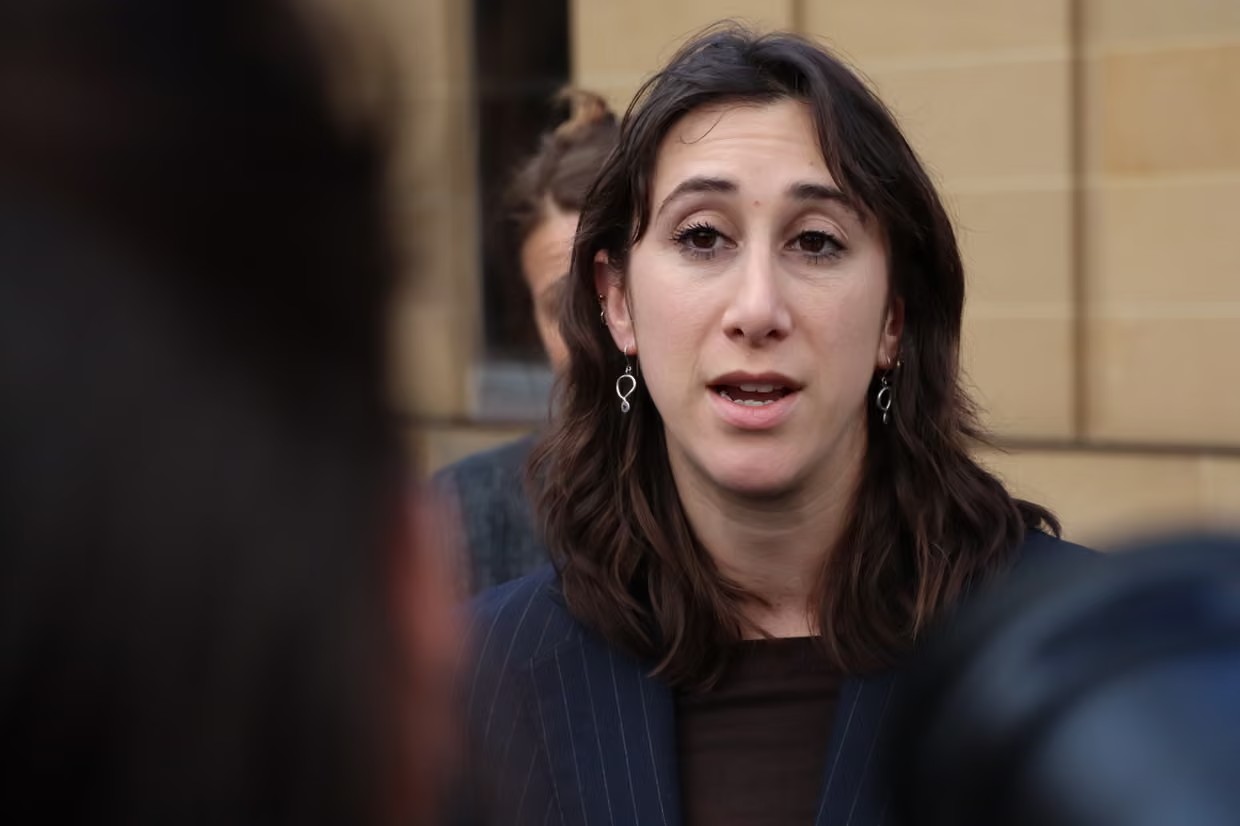
Sarah Schwartz, from the Human Rights Centre, says the case of Kathleen Folbigg – who was wrongfully jailed for 20 years – was relevant to Neill-Fraser’s parole appeal. Photograph: Ethan James/AAP
Source: theguardian.com
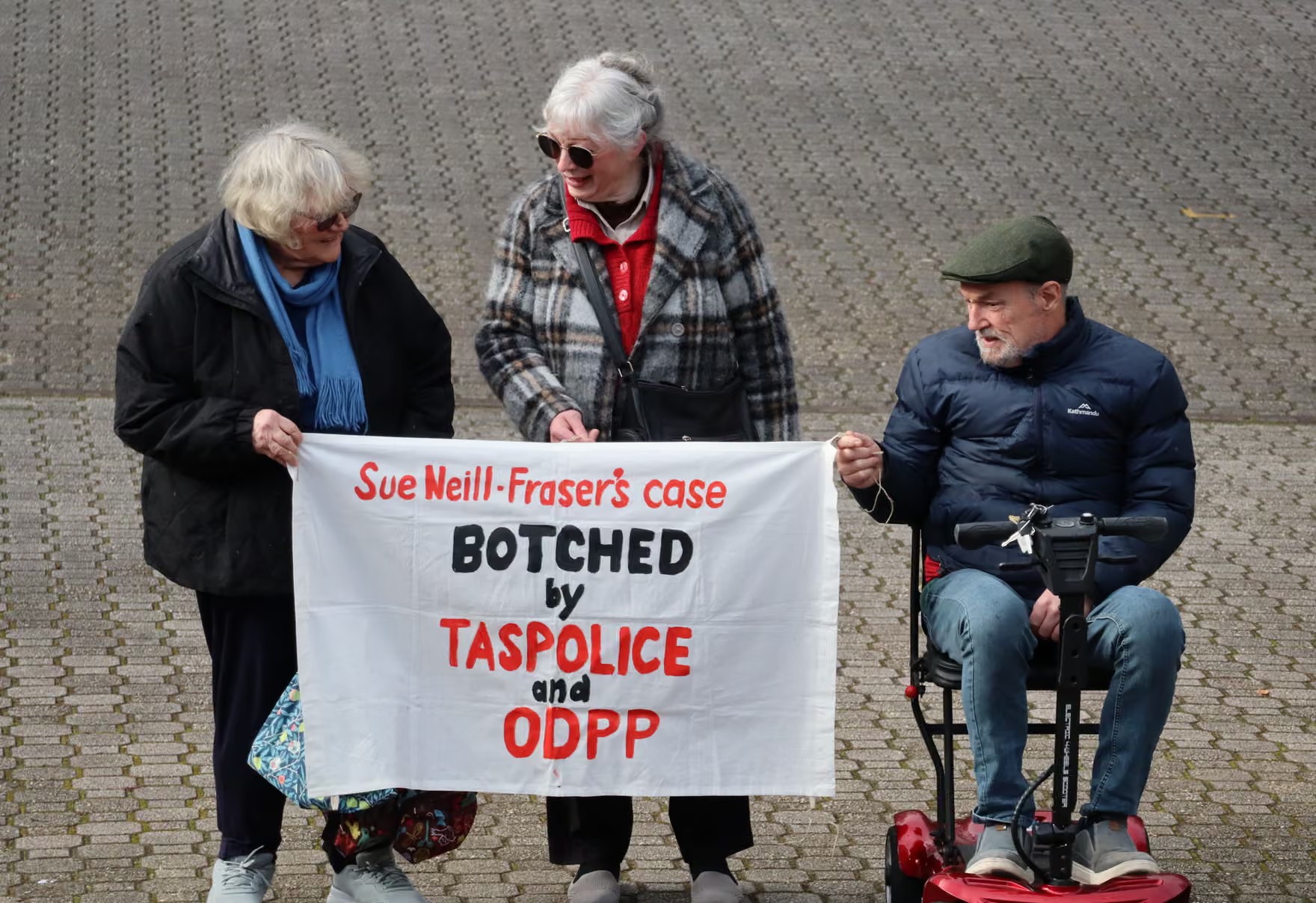
Supporters of Susan Neill-Fraser outside the Tasmanian supreme court in Hobart. Photograph: Ethan James/AAP
Source: theguardian.com
The AI-generated cases did not decide whether Neill-Fraser killed Chappell. They did something narrower and still serious: they helped a state authority restrict her ability to speak while she was pursuing that question. A system already difficult to challenge gave an unreliable machine-generated document the appearance of legal authority, and the cost was paid in a prisoner’s remaining public voice.
Daily AI news
Every day we pick what actually matters in AI and explain it plainly — no hype, no filler. Subscribe if you want to follow where the industry is going.
Only what matters — every day
Follow on X