
Adoption follows the work
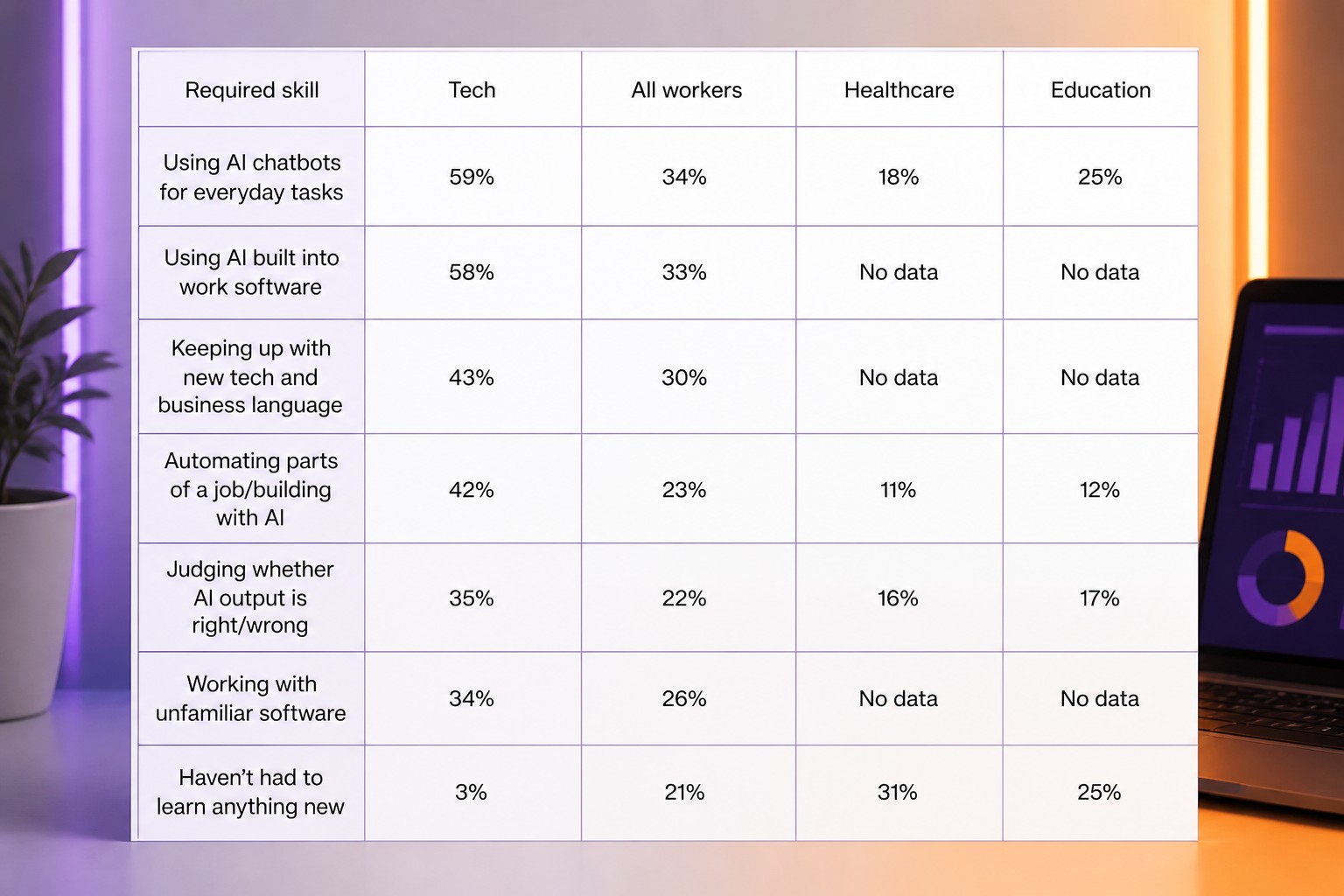
In finance, 48% of workers said they had been asked to use AI chatbots, and 32% to automate part of their workflows. In healthcare, 18% had been asked to use chatbots; in education, 25%.

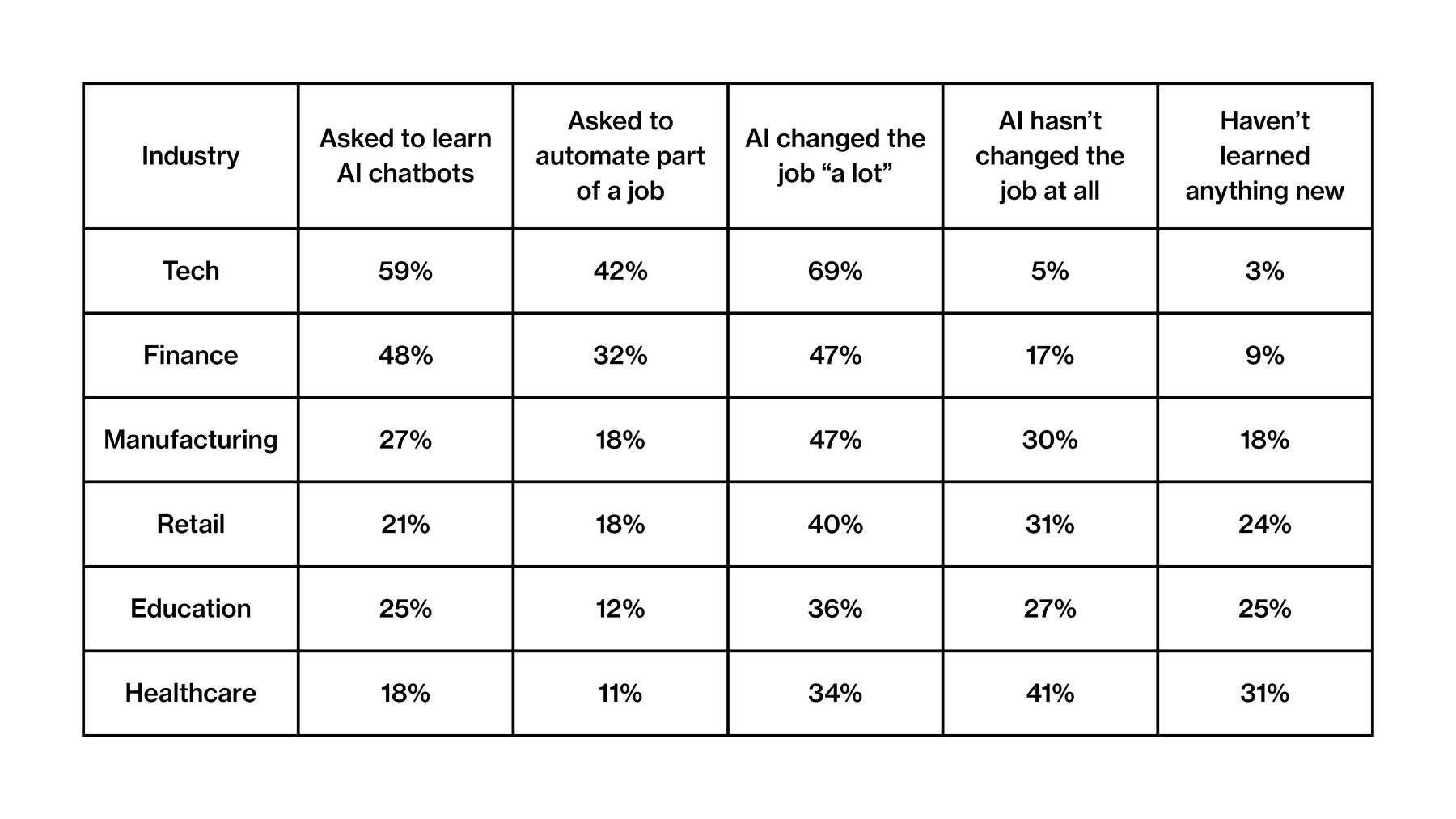
Those differences reflect more than enthusiasm. Healthcare and education encompass varied roles, from clinical and classroom work to administration. Automating tasks that involve direct contact with people or strict compliance requirements can take more care. The survey’s lower adoption figures are therefore not, on their own, evidence that these sectors are falling behind.
The skill is knowing when AI is wrong
Across the industries surveyed, 79% of workers said they had been asked to learn at least one new skill. Some skills now in demand in technology may prove useful elsewhere, including in patient logistics at hospitals and administrative reporting in school districts.
But one capability appears underweighted: checking whether an AI answer is correct. Only 30% of executives and business owners consider that skill absolutely necessary, ranking it sixth among seven skills. That is a curious gap. As AI spreads, catching a wrong answer before it causes a problem depends on knowing what a right one looks like—a reason experience may matter more, not less.
Early users can shape the standard
TripleTen reports that 88% of AI innovations proposed by employees after learning a new skill or automation method became standard company practice. Early adopters are not only using tools; they are finding repetitive administrative work and changing how their organizations handle it.
Ana Ryabova, TripleTen’s head of AI strategy and implementation, says learning AI can expand the range of tasks a person can do independently, not just save time. Workers may take on work that previously had to be handed to someone else, while keeping the same underlying professional skills.
I think the more consequential divide is not who gets access to a chatbot first, but who gets the chance to learn and test one at work. The survey points to uneven personal spending on professional development: technology workers spend an average of $1,758, compared with $990 in healthcare and $883 in education. Meanwhile, 45% of healthcare workers and 42% of education workers spent nothing of their own money on professional development last year.
Technology workers also use AI chatbots to learn at higher rates: 48%, compared with 27% of workers overall and 21% of workers outside technology. Asked whom they trust most to teach a new work skill, 31% chose someone already doing the job, 19% a certification program, 16% an AI tool and 6% a university instructor.
That preference for learning from practitioners suggests a practical route for other industries: workers need room to learn by applying tools to real tasks, and enough expertise to judge the results. But the survey leaves a consequential point unclear: who pays for that learning as AI becomes part of ordinary work? If the cost falls mainly on workers, the industries adopting AI later may also be the ones least able to prepare them for it.
Daily AI news
Every day we pick what actually matters in AI and explain it plainly — no hype, no filler. Subscribe if you want to follow where the industry is going.
Only what matters — every day
Follow on X