
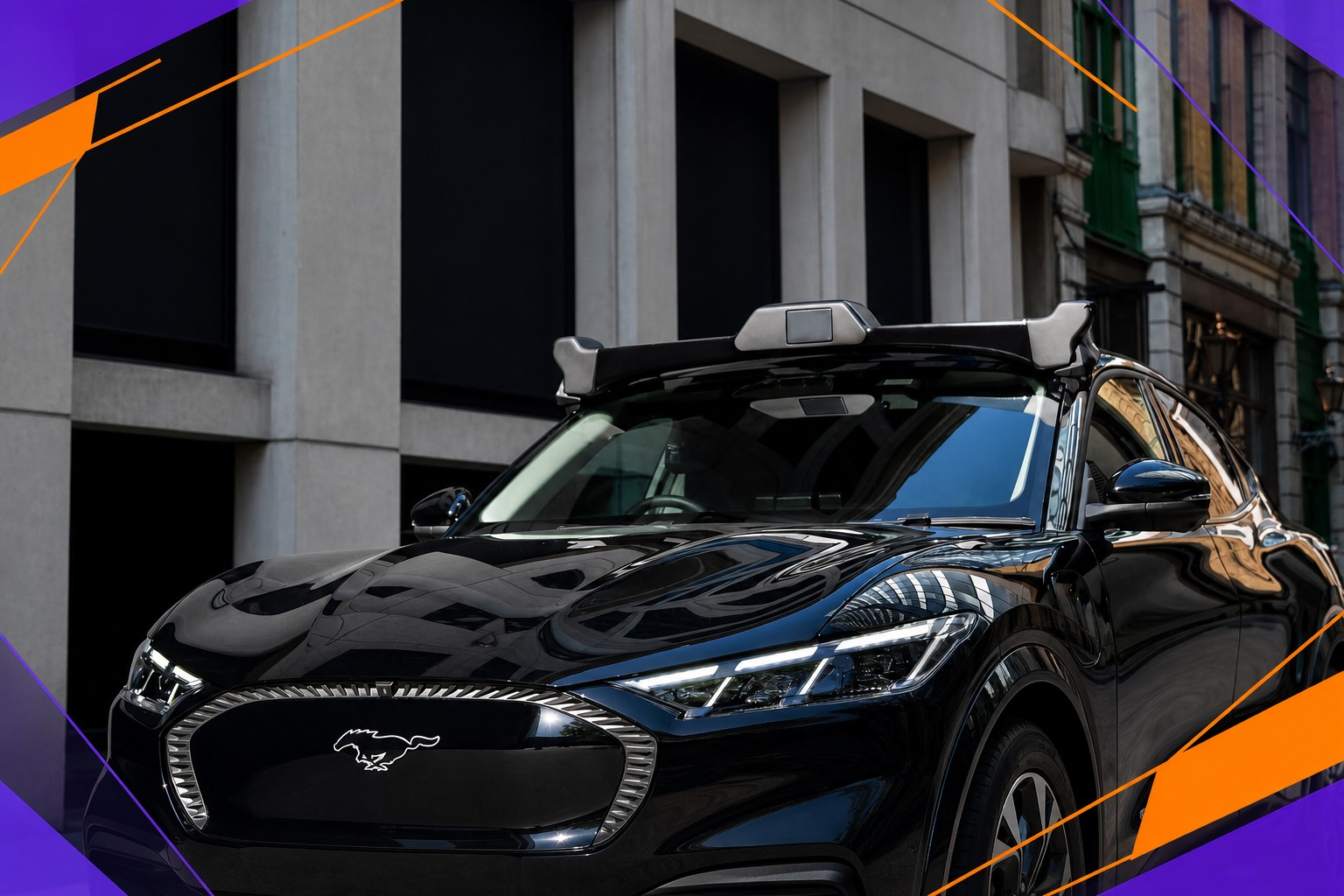
London's transport regulator has licensed 15 self-driving cars to carry paying passengers, and Uber has put them in its app. The vehicles are converted Ford Mustangs running software from Wayve, a British company, and under the terms of the licence a human driver still sits in the cabin and remains responsible for safety. It is the first city in the country where a robotaxi can be ordered as an ordinary service, and the first time Wayve has put its system in front of passengers anywhere.
Taking the safety driver out requires a separate government process through the Driver and Vehicle Standards Agency. A launch of that mode this year is considered unlikely.
That gap between what has been licensed and what was announced is the whole story. Fifteen cars with humans in them, against more than 100,000 private-hire vehicles in London and around 100,000 Uber customers, is a regulatory permission, not a transport service. What Uber has actually won is the right to be first in the queue in a city that every operator in this race wants, and that matters mainly because London is treated as the gateway to the rest of Europe. Waymo, owned by Google, and China's Baidu are both testing robotaxis in the city.
Alex Kendall, chief executive and co-founder of Wayve, said the company brought its "AI driver" to passengers in London, its home city and one of the hardest places in the world to drive.
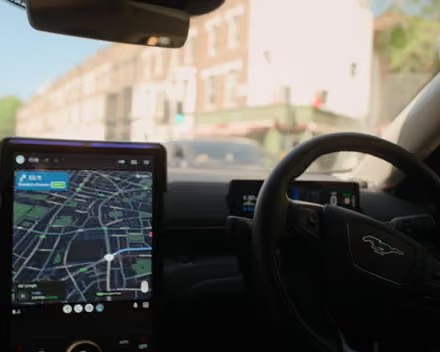
Kendall said the technology is still improving. Services without a safety driver will come, he said, but he would not name a timeline and said Wayve is trying to move as fast as it can.
The next step is production cars — new Nissan Leaf robotaxis running Wayve's technology. Before launch the company has to demonstrate safety performance on that platform and obtain regulatory approval. Wayve is working on all three problems at once: building the vehicles, proving the safety case, and clearing the paperwork. The driverless service starts when all three are done.
Wayve's system is built on a learned AI model rather than the road mapping its competitors, Waymo among them, depend on. That is a real technical bet, and it cuts both ways: no map means no city-by-city survey before launch, but it also means the safety argument rests on model behaviour rather than on a surveyed environment a regulator can inspect.
On a short Guardian ride through Westminster the car drove without visible trouble. Kendall pointed out one episode in particular, where the car stopped in front of a gate that other vehicles were trying to drive through, then decided to pull away again and park somewhere else. Wayve, he said, has put a lot of work into getting the car to choose parking spots that are appropriate and socially acceptable on the road.
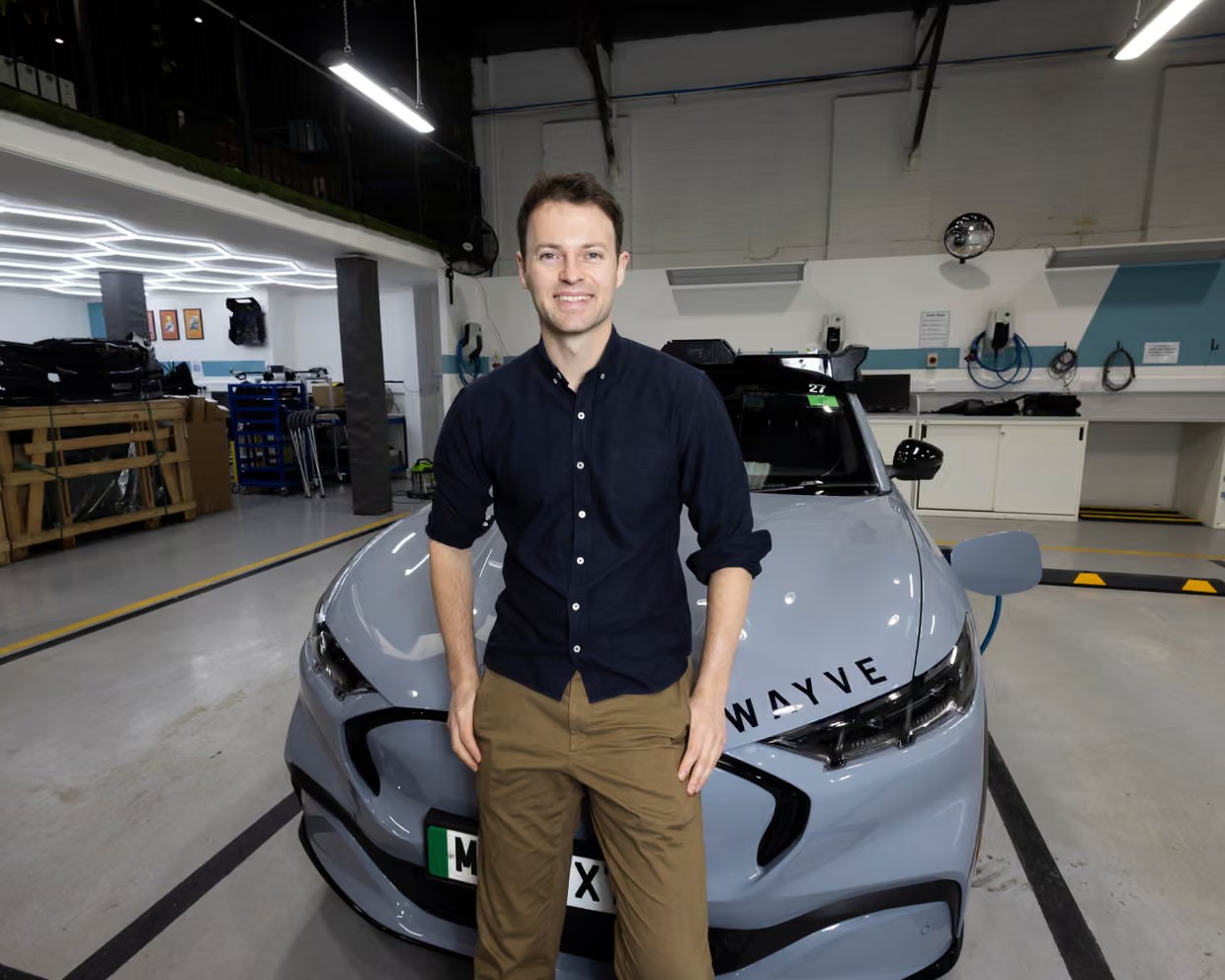
Alex Kendall, co-founder of Wayve, says the self-driving technology is "still improving"
Source: theguardian.com
Passengers book and unlock the car through the Uber app. At the start of the ride the driver introduces himself from a scripted "robotic" routine and explains that he will not speak again — though a passenger can ask him to take over.
Fully autonomous services already run in many cities, mostly in the United States, China and the United Arab Emirates. Earlier this summer Uber helped launch Europe's first commercial robotaxi service, in Zagreb, Croatia. As in London, there was a driver in the car.
Sarfraz Maredia, Uber's head of autonomous mobility, called the London launch an important step in scaling safe and affordable autonomous vehicle technology in a city with a difficult road network. Rides should get safer and cheaper over time, he said — and then said the thing worth stopping on: autonomous vehicles do not yet make it possible to operate more cheaply than a traditional taxi with a human at the wheel, and proving otherwise will take a long time.
That is the most honest sentence in the announcement, and it reframes everything around it. The economic case for robotaxis was always that removing the driver removes the dominant cost. London's fleet has a driver in every car plus the cost of building and certifying the system, which is the worst of both structures. Until the DVSA approval lands, Uber is running a more expensive taxi and calling it the future — defensibly, because the licence is what you have to win before the economics can start, but nobody should mistake this for the moment the cost curve turns.
Maredia said Uber has heard drivers' concerns but does not believe robotaxis will take their jobs. A common argument from drivers themselves, as he relayed it, is that they handle London's difficult roads every day and do not yet see a threat from the new technology. Uber wants to remain a platform where human drivers and autonomous vehicles both work, he said, and with the local market and the company's business still growing, Uber expects that model to hold for a long time.
Transport secretary Heidi Alexander called the launch a step towards the future of London's transport system, saying British developers had put the technology on the country's roads and given passengers more choice. The project, she said, strengthens Wayve's position as a significant British technology company and shows how domestic development supports investment and growth in transport.
David McMullen, a senior organiser at the GMB union, urged caution on the spread of self-driving cars. Hundreds of thousands of people work in driving, he said, so an abrupt transition could bring unprecedented social and economic consequences.
Both sides of that argument are currently reasoning about 15 cars. The number that decides it is not the size of the fleet but the DVSA sign-off, and on that Wayve's own chief executive will not give a date.