
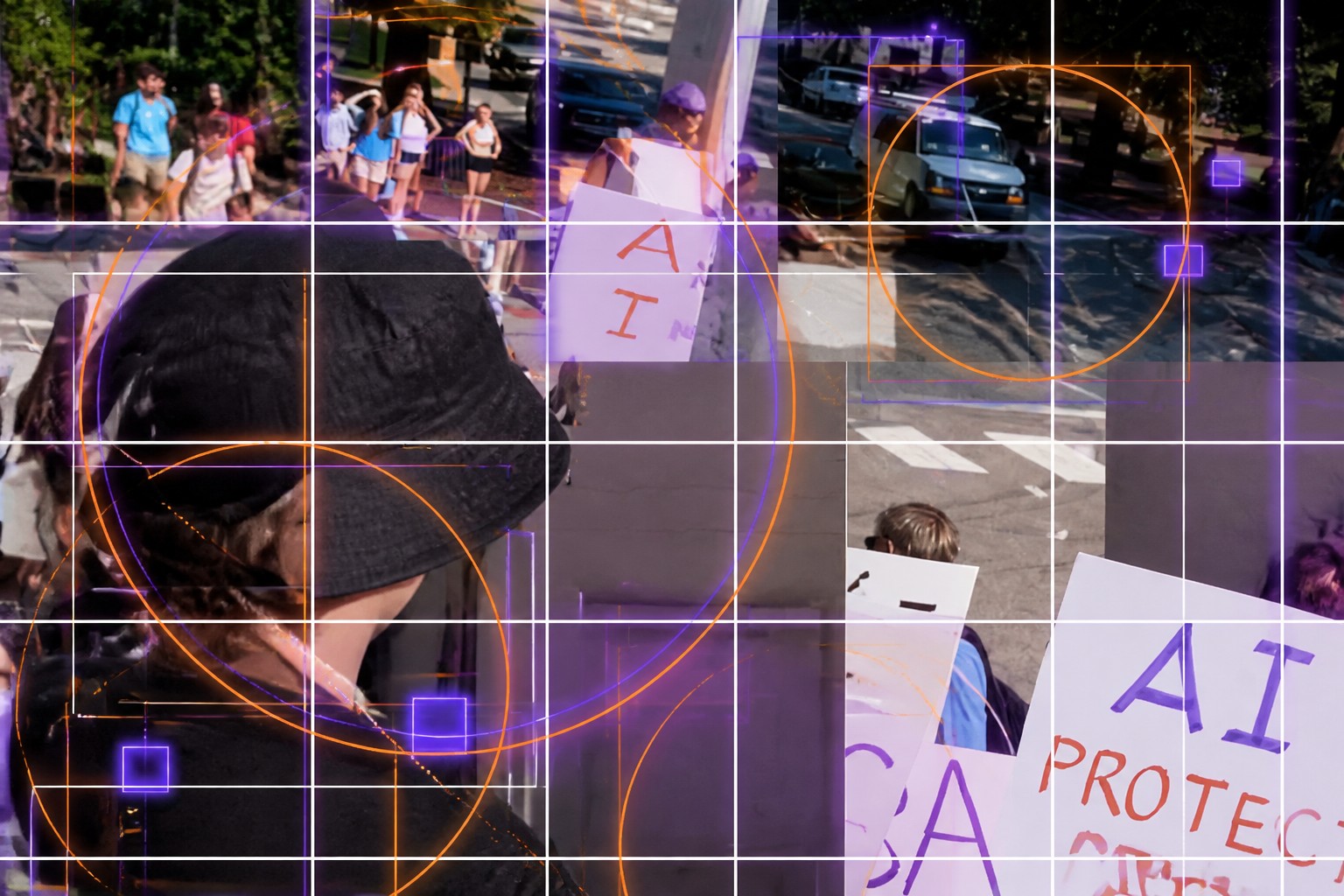
A newly disclosed collection of more than 80 law-enforcement documents shows US agencies have tracked AI both as a tool for violence and as a potential target since 2021. The records describe fears that extremists could use generative AI to plan attacks, recruit supporters and evade detection, alongside concern that they might attack data centers. They also show agencies monitoring online opposition to AI infrastructure, raising a different question: where does threat assessment end and scrutiny of lawful protest begin?
Two directions of threat
The documents, circulated from 2021 to 2026 among federal, state and local agencies including the FBI, the Department of Homeland Security and the New York Police Department, were obtained by the transparency group Property of the People and reviewed by The Guardian.
Their concerns fall into two broad categories:
The second concern predates the generative AI boom. In October 2021, a joint bulletin from DHS, the National Counterterrorism Center and the FBI described the plan of Seth Pendley, a member of a far-right militia who took part in the January 6 riots, to bomb an Amazon Web Services facility. Pendley believed an attack would disrupt 70% of internet services and trigger a revolution. He pleaded guilty to attempting to maliciously destroy a building and was sentenced to 10 years in prison in 2021.
Later documents describe agencies watching online threats to data centers and protests against them. A 2025 Philadelphia police bulletin cited a Facebook post by an account linked to a white supremacist who threatened to bring “tannerite and gasoline vibes” to AI data centers. Officials also reported discussions on far-right forums about killing AI-company executives and local officials who supported data-center construction.
That monitoring extended beyond threats of violence. A Nevada threat-assessment report in April 2026 cited public hearings on a proposed temporary ban on data-center construction as evidence of growing opposition. At a Reno city council hearing, residents raised concerns about water use, utility bills, pollution and long-term effects on the climate.
In March, three people allegedly connected to a white-supremacist group demonstrated in Michigan against a planned “Jewish data center.” The documents also describe agencies following open social-media posts and legislative opposition to data centers.
Ryan Shapiro, executive director of Property of the People, said that wanting to keep a job, protect drinking water, defend privacy or avoid an out-of-control AI system is not extremism. He argued that the extreme position is treating such concerns as threats to neutralize.
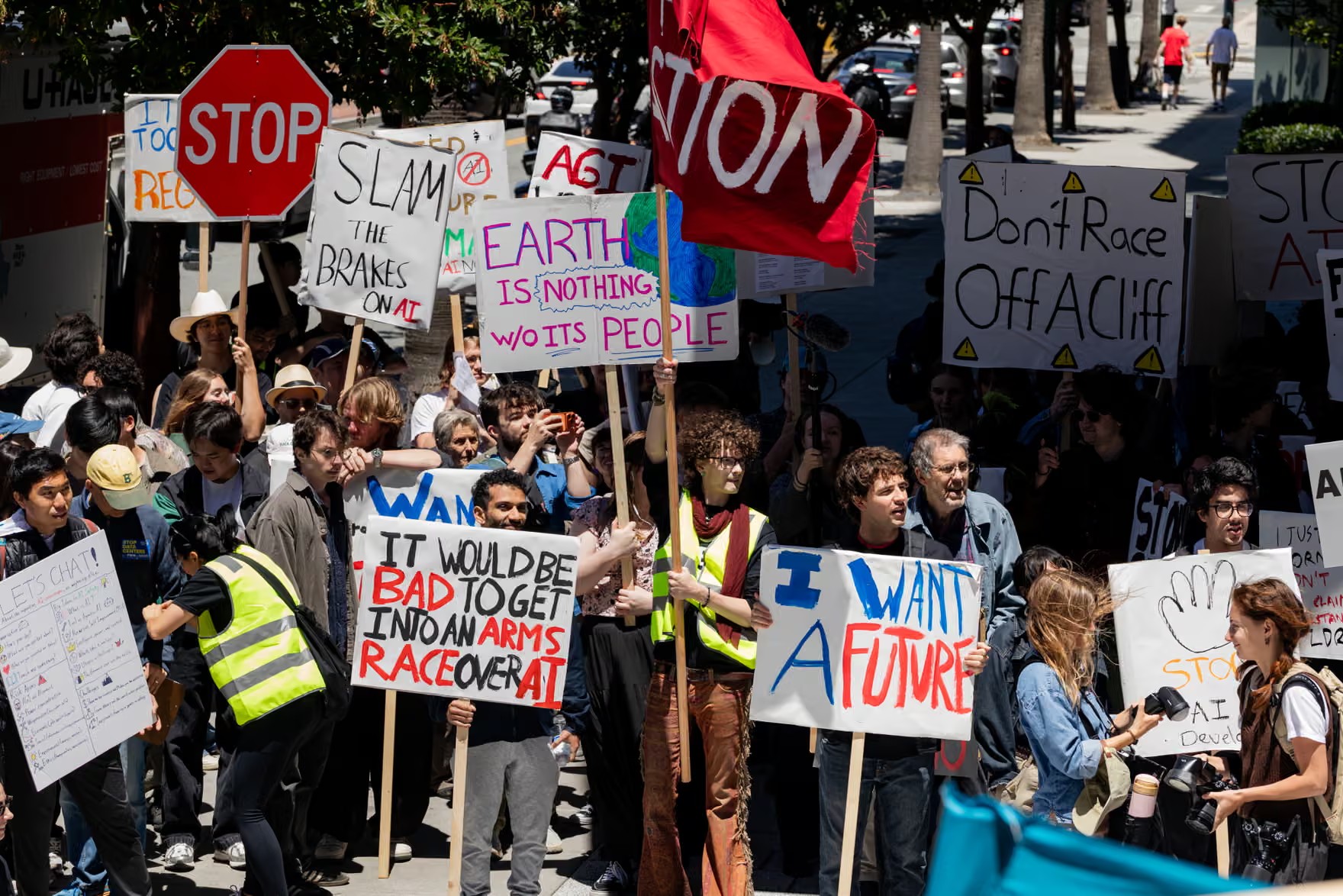
Demonstrators hold signs during a protest against artificial intelligence outside Open AI’s headquarter offices in San Francisco, California, on 11 July 2026. Photograph: Bloomberg/Getty Images
Source: theguardian.com
AI as an aid to crime
The documents trace law-enforcement concern about generative AI to the months after ChatGPT launched in 2022. A May 2023 document warned that AI could create images indistinguishable from real ones, potentially worsening problems involving child sexual abuse material, deepfakes and terrorist propaganda.
Some early assessments described risks as possibilities. By April 2024, a DHS intelligence unit claimed that foreign terrorist organizations and domestic violent extremists in the US had bypassed generative AI safeguards to obtain bomb-making instructions and general guidance on attacks. The memo offered no citations or evidence.
A 2025 Orange County intelligence assessment said people and groups across the country were using AI to spread hate speech, recruit and radicalize supporters online. It pointed to users of the far-right social network Gab who created an Adolf Hitler chatbot configured to claim that the Holocaust was exaggerated, climate change was a hoax and the 2020 election was rigged.
Other claims in the documents were less well supported. The same assessment suggested that AI-amplified extremist content likely influenced the 17-year-old who opened fire at a school in Antioch, Tennessee, in January 2025. But the source it cited did not mention AI.
In April 2025, the Joint Regional Intelligence Center in Los Angeles issued a five-part series warning about malicious uses of generative AI. It cited more than 7,000 reports of child exploitation involving generative AI received by the National Center for Missing and Exploited Children from 2023 to 2025.
The Los Angeles FBI office’s May 2026 memo returned to the risk of attack planning. It said offenders would likely use generative AI more often, and warned that jailbreaks could get around built-in safeguards. The memo followed the May 2025 bombing outside a reproductive health clinic in Palm Springs, in which a 25-year-old man died and four people were injured. According to a previously unpublished document reviewed by The Guardian, the suspect had asked an unnamed generative AI service for bomb-making instructions, and the system did not recognize the request as dangerous.
The FBI also warned that private chatbot conversations can make it harder for authorities to learn that someone is seeking information about weapons or bombs. It recommended that law-enforcement agencies build relationships with AI companies to make it easier to report threats.
AI can also complicate police work in less direct ways. In March, a man in Florida showed an officer an AI-generated video that appeared to depict someone breaking into his patrol car. That same month, a man in New York was arrested for using AI to fabricate evidence that police had damaged his car. A New York state intelligence center separately warned that AI-generated images were being used to prank police officers.
The line between watching threats and watching dissent
The records also show agencies considering AI as a risk to their own operations. An August 2025 NYPD memo warned of more sophisticated cyberattacks and malicious influence campaigns, while acknowledging that the public might question police uses of AI, including social-media monitoring. It said agencies might need to address concerns about surveillance, loss of privacy and even humanoid robots in police departments.
A Maine intelligence-center employee warned in January that AI features in Amazon Ring and other doorbell cameras could identify police activity and notify residents. The memo said these alerts might reveal when officers arrived, how they were operating and what equipment they used, potentially putting them at risk. The Guardian had previously reported that police warned Meta’s AI smart glasses could secretly record officers.
My concern is that the documents place ordinary opposition and violent threats in the same field of view. Agencies have legitimate reasons to track bomb-making searches and threats against infrastructure. But the records also treat public hearings and proposed laws against data-center construction as indicators of growing discontent. That makes the boundary between intelligence gathering and scrutiny of nonviolent movements more than a theoretical concern.
The documents show what agencies were watching, but not how they distinguished a real threat from public opposition to the industry. As protests over data centers reach beyond extremist circles, that distinction will shape whether security efforts protect infrastructure or cast a wider net over people challenging its expansion.
Daily AI news
Every day we pick what actually matters in AI and explain it plainly — no hype, no filler. Subscribe if you want to follow where the industry is going.
Only what matters — every day
Follow on X