
Rules for using AI
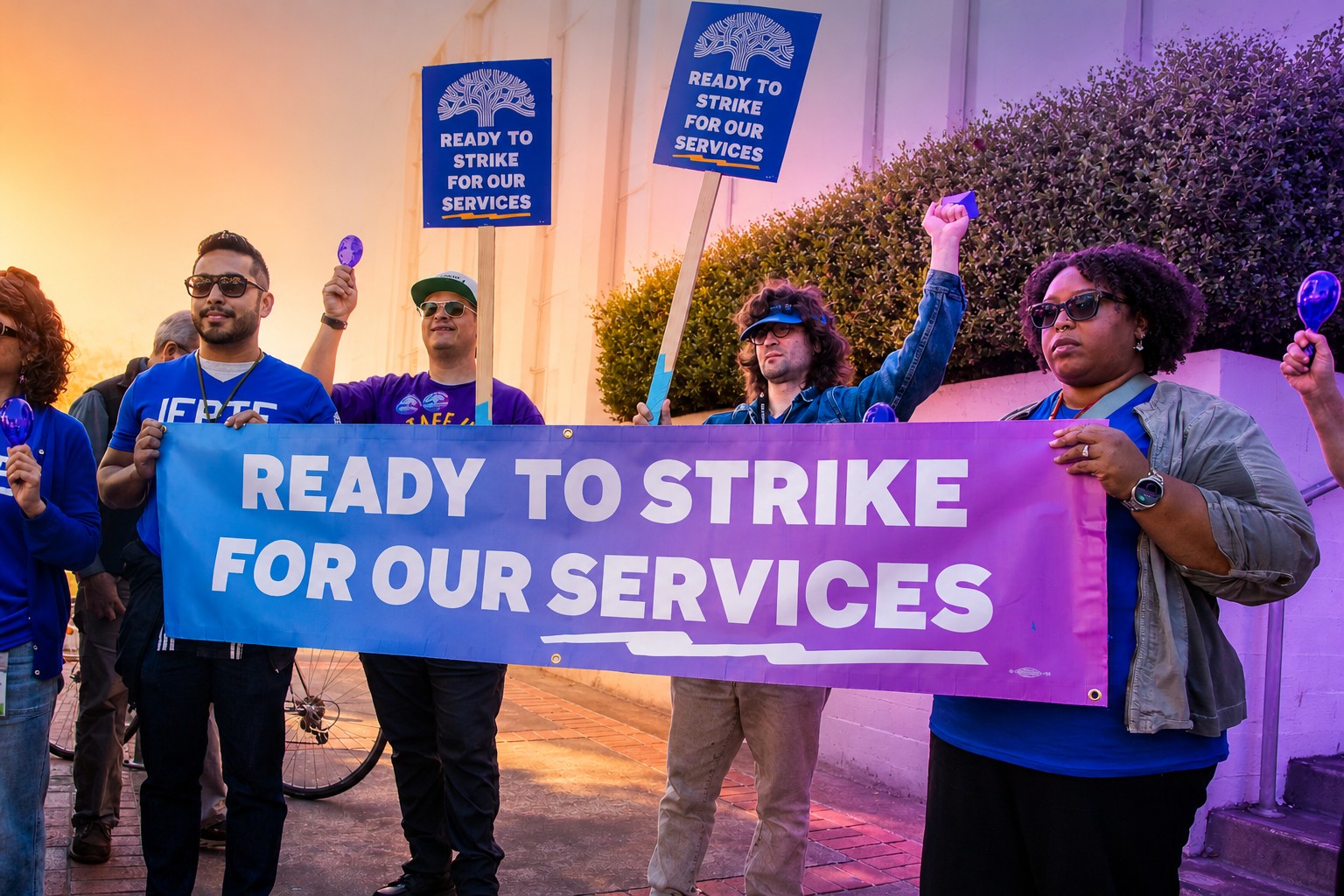
Oakland workers worry that city AI systems will increase surveillance and evaluate their work inaccurately. Their union, the International Federation of Professional and Technical Engineers, Local 21, demanded guarantees that employees would not be fired or disciplined based on AI decisions. Julian Ware, the city’s geospatial data administrator and a union member, noted that new technologies can cost more, be harder to implement, and produce worse results.
The nearly unanimous strike vote helped the union reach a tentative agreement with the city. The three-year contract provides for employees whose positions disappear because of AI to be retrained or moved to other jobs. The November 5 strike was postponed.
The Oakland union is one of many public-sector worker organizations seeking explicit protections against AI and automation. Union representatives say these technologies could worsen working conditions and put jobs at risk. Disputes are intensifying against a backdrop of decades of automation in the private sector and anxiety about AI that has grown since ChatGPT’s release in 2022.
AI and automation technologies have already spread across industries and are gradually entering government agencies. John Samuelsen, head of the Transport Workers Union and a New York City subway track inspector, says automation has become an everyday threat for transport workers.
Liz Shuler, head of the AFL-CIO and founder of the Technology Institute of the organization, says authorities are responding too slowly to AI’s potential effects on workers. Unions are therefore using contract negotiations to introduce restrictions that lawmakers have not yet put in place.
Some unions prepared for this fight by watching similar disputes in the private sector. Kung Feng, a researcher at the University of California, Berkeley Labor Center and former director of San Francisco Jobs With Justice, cited the Communications Workers of America as an example: in 2023, the organization proposed protections against AI, and in October 2026 it secured the adoption of some of them for California workers. Feng called the dispute over workplace technology part of the conflict between workers and billionaires, which has surfaced in both election campaigns and contract negotiations.
What unions are watching
Researchers call AI tools for monitoring and managing employees “bossware.” Employers in both the public and private sectors are adopting these systems more often. An October report co-authored by Feng describes several ways they are used:
Lorena Gonzalez, head of the California Federation of Labor Unions, says Amazon used algorithms that pushed warehouse workers to work at dangerous speeds, and that a similar approach is now spreading to the public sector. Gonzalez says AI should not run heavy trucks, hospitals, and schools.
Some automated systems can help public employees—for example, by improving transport safety. But, Gonzalez stresses, the final say should remain with a human. Aircraft have been able to fly under computer control for years, but each one has two pilots who can step in when human judgment is needed.
Government agencies often introduce automation on the grounds that they need to improve efficiency and cut costs with limited budgets, Feng says. Unions have been seeking rules for these technologies since the late 2010s, and disputes have grown sharper as automation has advanced and generative AI has spread. Workers’ demands include advance notice when a new technology is introduced, disclosure about how it works, and the right to negotiate over its use.
In Pennsylvania, workers opposed a pilot project launched last year: the state became the first to run such an experiment with OpenAI. Employees, including unemployment benefits specialists and social workers, were asked to use ChatGPT Enterprise to see whether it could save them time. But Steve Catanese, head of Service Employees International Union Local 668, says there were no guarantees or agreements for employees. He added that when workers use generative AI, they sometimes create conditions that could later be used against them.
The union pushed for worker protections, inspired by Hollywood screenwriters’ 2023 victory. One of the longest strikes in Hollywood history helped secure guarantees against replacing writers with AI. After that, SEIU Local 668 in Pennsylvania obtained Governor Josh Shapiro’s agreement to rules allowing employees to participate in decisions about AI use and oversee how it is used. The technology also cannot be used to punish workers. Catanese expects these issues to come up again in negotiations over a new contract in 2027.
Transport workers in Florida, New York, and other states are trying to prevent Waymo and city governments from launching autonomous cars. They consider the vehicles unsafe and fear for their jobs. The Transport Workers Union wants to repeat its 2024 success in Columbus, Ohio. There, it secured contracts giving it veto power over the Central Ohio Transit Authority’s plans to introduce autonomous cars.
The Transport Workers Union is not opposed to all new technologies, Samuelsen explained. The organization supports collision-avoidance systems and tools to improve bus and train schedules. It is concerned about technologies that industries introduce without enough attention to safety. For example, some airlines have begun testing drones to inspect aircraft remotely instead of having mechanics examine them more closely and at close range.
Samuelsen believes AI and automation have reached every kind of passenger and freight transport. Workers who cannot count on union protection are especially vulnerable.
Laws and past experience
Union representatives point out that new technologies have repeatedly worsened workers’ conditions and reshaped the labor market. Shuler compared the current situation with previous waves of mass layoffs: for example, automation of assembly lines at factories in the Midwest reduced the number of manufacturing jobs.
Some lawmakers, particularly at the state level, are already introducing new rules. The International Federation of Professional and Technical Engineers and other unions supported California’s “No Robo Bosses” bill. It prohibits employers from relying solely on automated systems to fire or discipline employees.
Unions also supported another California bill, which prohibited employers from using AI tools to monitor workers, including systems capable of tracking employees’ emotional states. Governor Gavin Newsom signed both bills on September 30.
Public-sector workers have supported legislative measures in other states as well. In New York, unions backed a law that has protected government employees from being displaced by AI since December 2025.
Keith Brown, executive secretary-treasurer of the Alameda County Labor Council, says workers are already facing the effects of AI adoption. He noted that discussion of a hypothetical threat to humanity should not obscure the harm the technology is already causing employees.
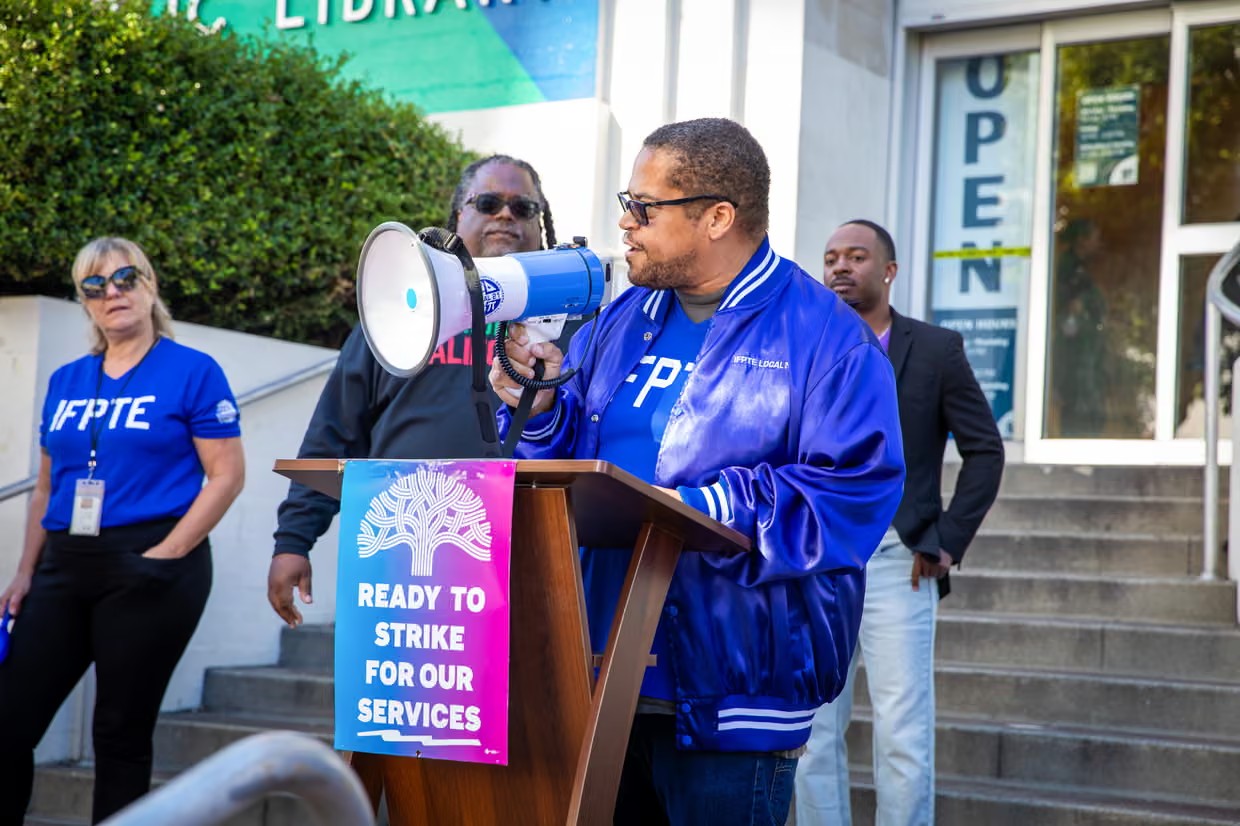
IFPTE member Julian Ware at a rally in Oakland, California, on 27 October. Photograph: Courtesy of IFPTE Local 21
Source: theguardian.com
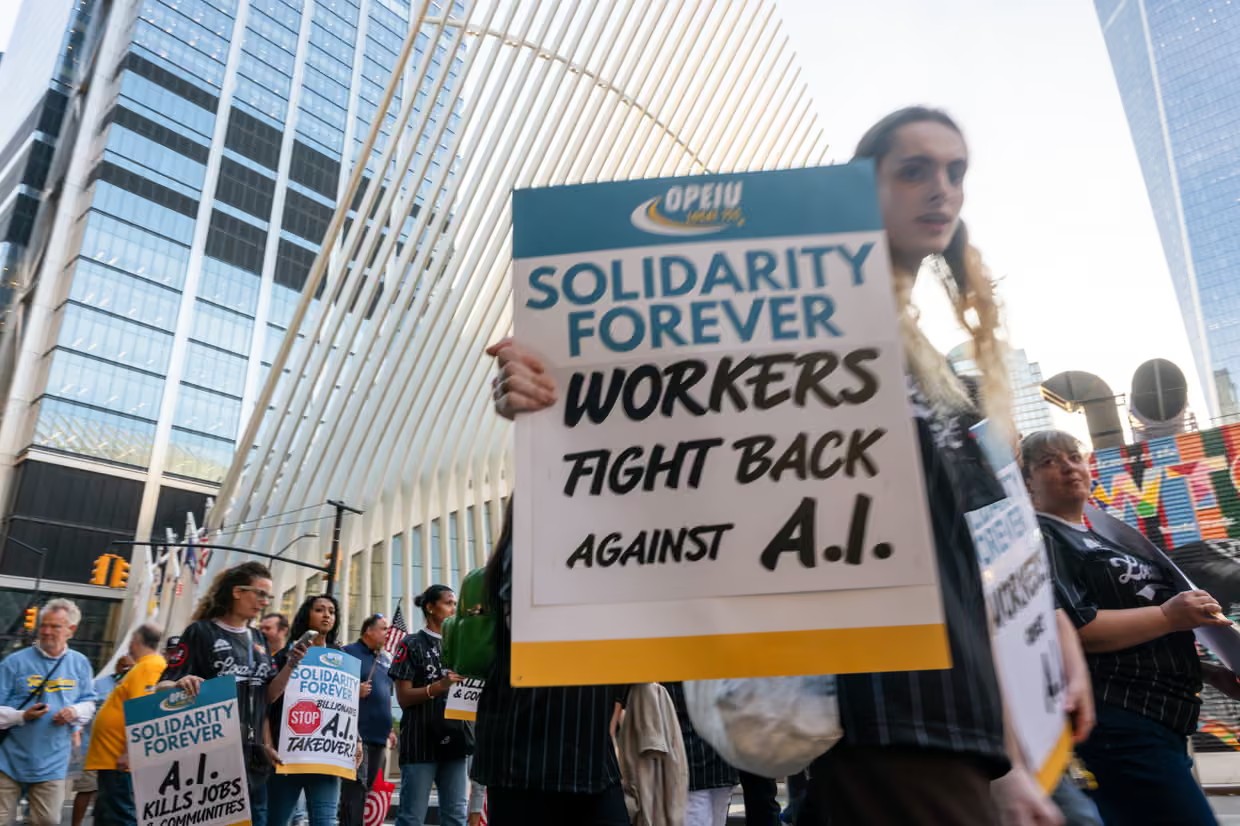
A Labor Day rally and march in Lower Manhattan in New York City on 8 September. Photograph: Spencer Platt/Getty Images
Source: theguardian.com
Dataist’s take: unions are not seeking to reject AI, but to have a say in how it is introduced and used. The outcomes of negotiations in Oakland and Pennsylvania show that such protections can be written into labor contracts, while state laws add another layer. But protection depends on the specific rules: some prohibit firing or disciplining workers based on automated decisions, while others give employees the right to participate in overseeing the technology.
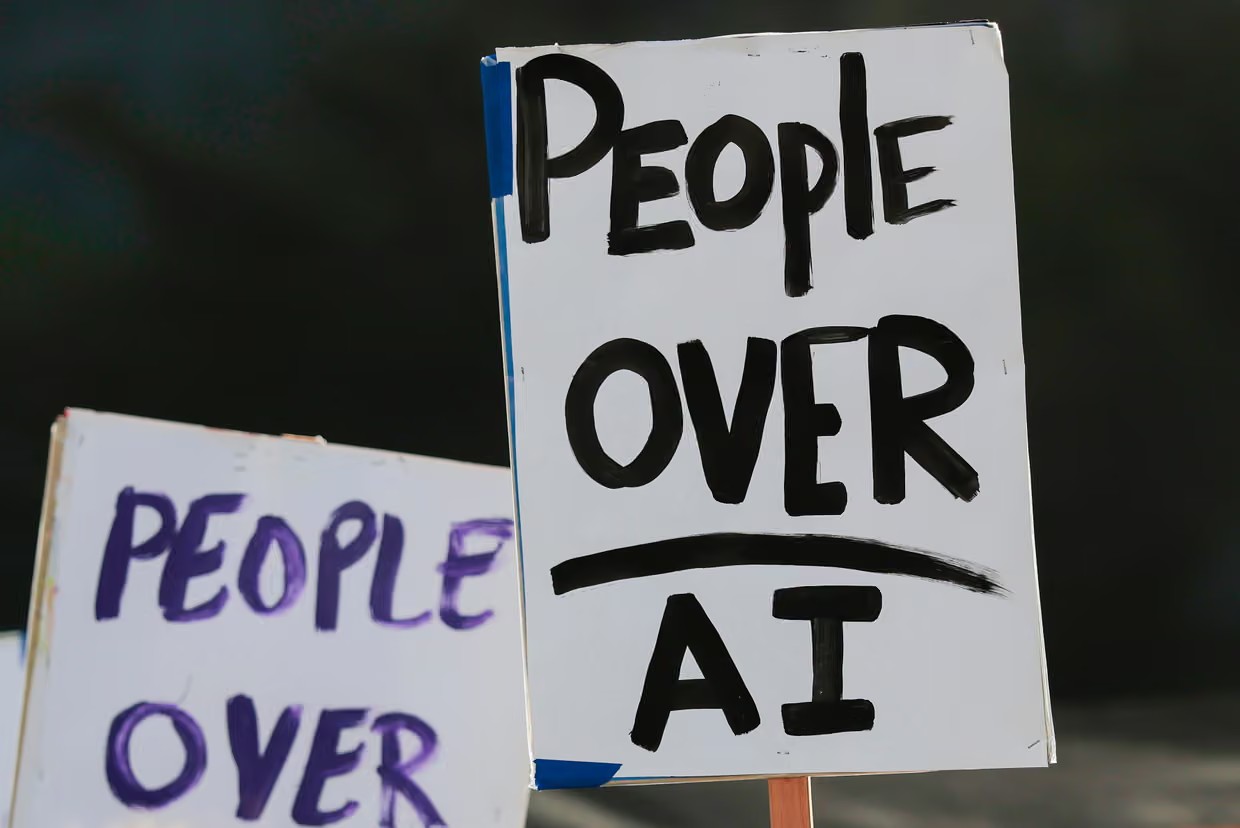
Anti-AI protesters outside an OpenAI developers conference in San Francisco, California, on 29 September. Photograph: Heather Diehl/Getty Images
Source: theguardian.com
Daily AI news
Every day we pick what actually matters in AI and explain it plainly — no hype, no filler. Subscribe if you want to follow where the industry is going.
Only what matters — every day
Follow on X