

The costs arrive before the jobs
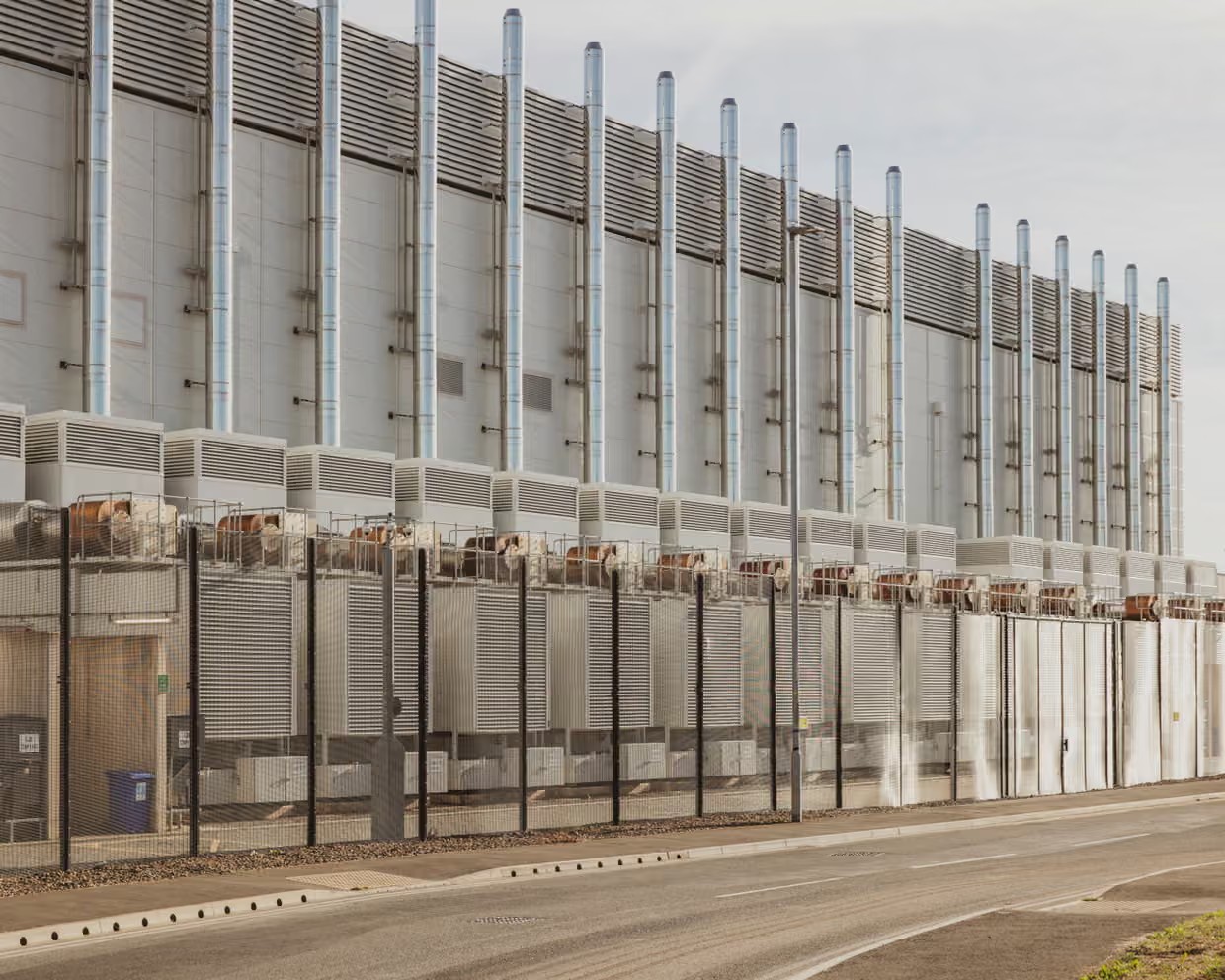
At Johnston’s home on Newport’s western edge, the view from the garden is mostly blocked by the data center. He worries about 36 sets of cooling fans, which may run constantly, and the regular testing of 60 backup diesel generators. His wife works night shifts as a nurse and already struggles to sleep because of the low hum from another facility on the expanding 46-acre campus.
Johnston invited local councillors and members of parliament who support the project to see the impact from his garden. He says they would not come.
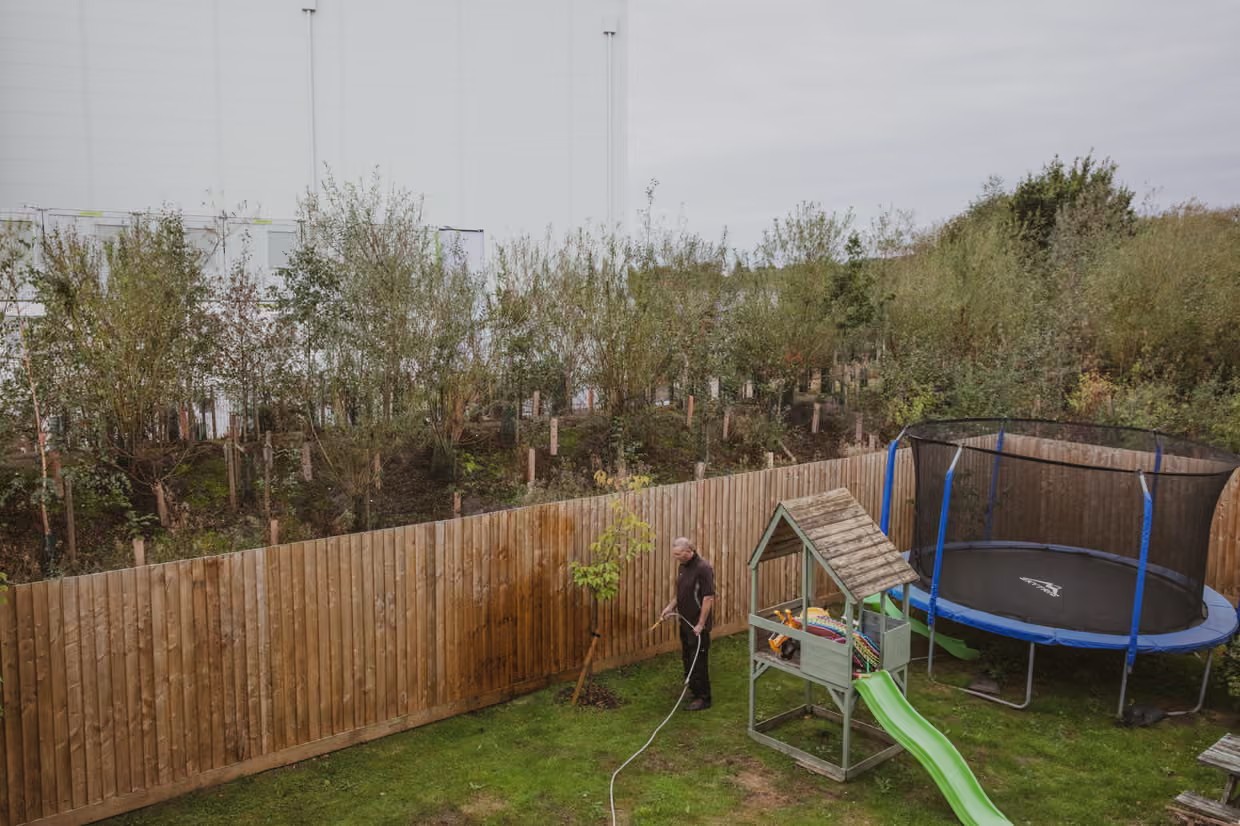
‘The MPs backing the development won’t come round here to see what they’ve done’: Dale Johnston in his garden
Source: theguardian.com
The dispute reaches far beyond Newport. Across Britain, 315 hyperscale data centers are waiting to connect to the national grid. Their combined demand is 73 GW, against typical peak electricity demand of 45 GW on a cold winter day.
Wales has more data-center capacity than any other part of the UK outside London. Developers are targeting former industrial and urban sites, while governments argue that the country must build the infrastructure or fall behind. Critics say the benefits will flow mainly to American technology companies, while communities absorb the costs.
A parking lot, seven turbines and 1,300 names
Sue Elias, a retired librarian, has spent six Wednesday mornings collecting signatures to show that people need the Cardiff parking site. She has already gathered 1,300 names from staff and patients. Midwives and other hospital workers depend on the free buses from the site to Heath Hospital, the largest in Wales.
Across the River Rhymney, a new neighborhood of 100 homes faces another concern. Nick Richards and his wife moved there in November, unaware that the council planned to sell the parking site to a data-center developer. The proposed facility would sit 300 metres from their home. Planning documents describe a temporary energy center with seven large gas turbines, intended to power the complex around the clock for five years.
Richards says he feels trapped: he could not sell the house without telling buyers about the turbines. An air-quality assessment commissioned by the developer says emissions should remain within safe limits. Curtis Hall says the project cannot proceed without full compliance with environmental and public-health requirements.
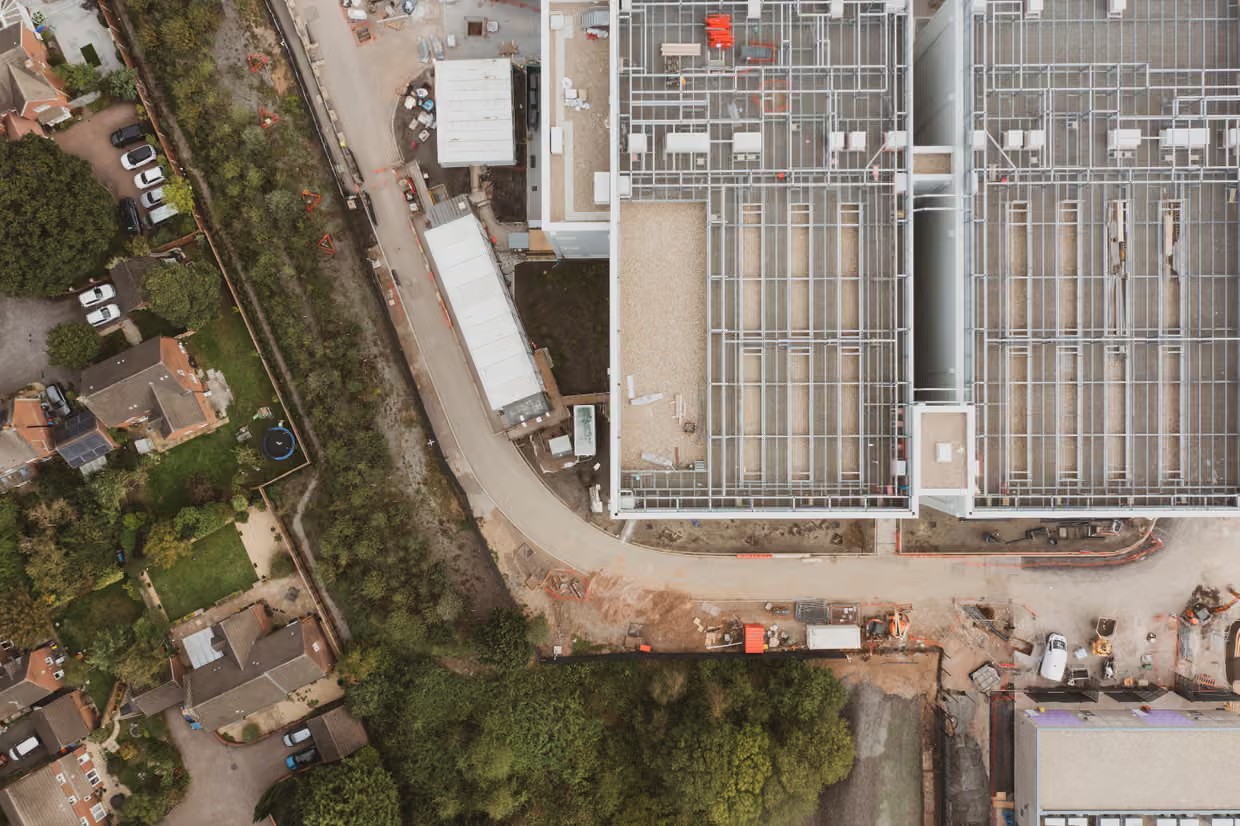
The Cardiff proposal is also a test of what local consent means in practice. Councillor Lee Bridgeman initially supported the project, arguing that some claims about rising bills and water shortages were false. At a public meeting, however, roughly three quarters of the 80–100 people present said they lived in Llanrumney, and nearly all opposed the development. Almost three weeks later, Bridgeman submitted a formal objection, saying he had heard from many residents.
The project would employ no more than 125 people directly. Bridgeman believes it could attract other large companies to eastern Cardiff and indirectly create thousands of jobs. That is a much larger promise than the on-site headcount, and one the announcement does not explain how to verify.
More than 100 other planned UK data centers are also expected to use gas turbines because grid connections take so long. My concern is not just whether one project passes an air-quality test. It is that temporary power systems could become a standard way to make data centers operational while the grid catches up.

Sue Elias rallying opposition to the building of a datacentre on the local park and ride …
Source: theguardian.com
The infrastructure question
The UK boom follows a familiar sequence: companies first stored data in their own server rooms, then shifted workloads to external facilities as demand grew. Cloud services and, later, AI chatbots added to that demand. The industry’s case is that increasingly large data centers are the only way to keep up.
The investment is speculative as well as physical. Global spending on new facilities could reach $7 trillion by 2030. In the United States, where about half of the world’s hyperscale capacity is already located, resistance has grown alongside the buildout: three quarters of Americans oppose data-center construction, and more than 500 counties and municipalities have introduced permanent or temporary bans.
Wales is now debating whether to follow the market or set conditions for it. The five largest new and planned Welsh data centers together would consume more electricity than all the country’s homes. Plaid Cymru’s Nick Carter says the party does not want facilities scattered across the country in the hope that they might eventually turn a profit. He is waiting for a national strategy and does not support a moratorium like Scotland’s.

Labour councillor Lee Bridgeman, who supported plans for a datacentre in Cardiff …
Source: theguardian.com
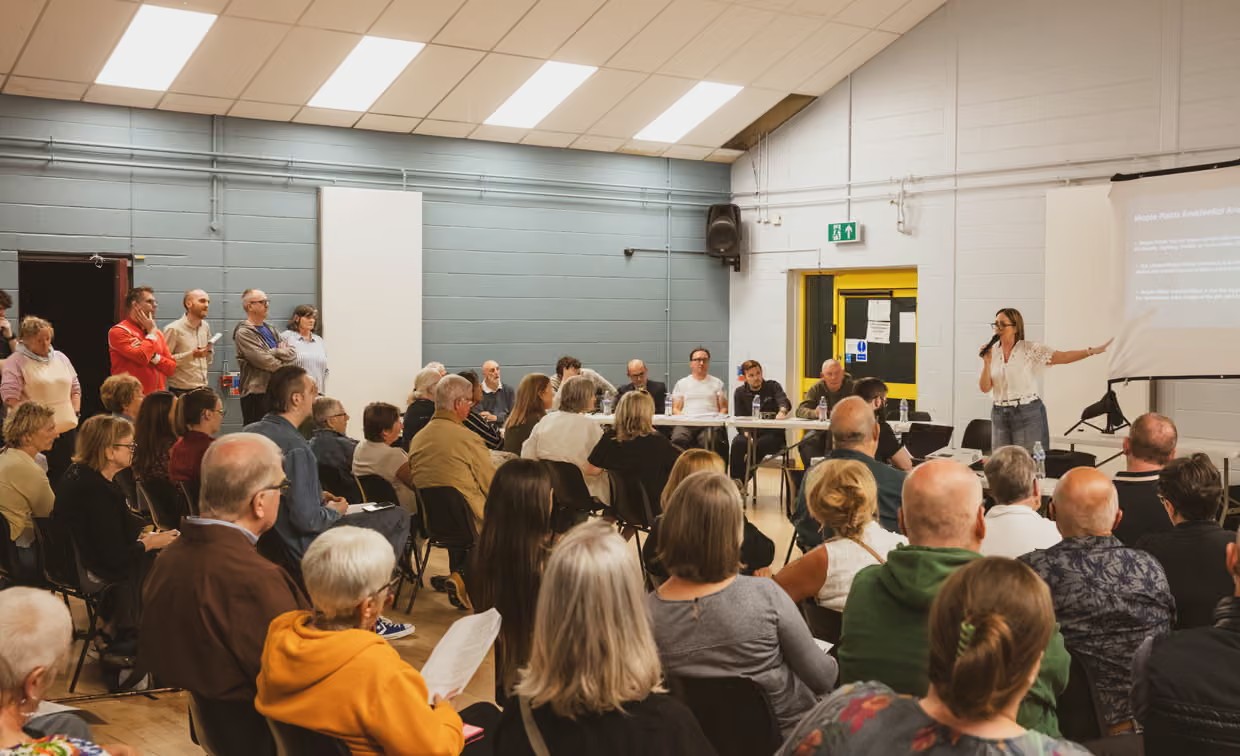
… until local residents, like those at this public meeting in a boxing club, changed his mind
Source: theguardian.com
There is another possible model: public computing infrastructure built around public priorities, including research into heart disease and dementia. Owen Espley of Global Action Plan argues for stricter standards on private data centers and a public industrial strategy that builds computing capacity of its own.
I think that is the real question beneath the local disputes: not whether data centers are useful, but who gets to decide what they are for. A project that uses power on this scale and brings limited direct employment needs a clearer public case than the promise that more companies may follow.
The buildout is still incomplete
In Newport, only one of Vantage’s three data centers is operating. Microsoft is due to open a nearby facility. Once all the centers are running, more than 500 air-processing units could operate at the same time, while backup diesel generators will need regular testing.
During planning, Newport city council’s chief scientific officer warned that the generators’ combined emissions could create unacceptable air pollution during testing. The council says it is not responsible for monitoring generator emissions, though its staff review air-quality plans and ask operators to minimize the impact of tests. Vantage says its facilities comply with noise and air-quality standards and that it will assess the effects of the new center and respond to complaints.
For residents, the distinction between a project’s approval and its full operation matters. Johnston says he challenged the Newport development throughout the planning process and was ignored. At the Cardiff site, the consequences may include a lost transport link and gas turbines beside new homes. The wider buildout is being planned faster than communities can establish what the completed system will mean for them.


Nick Richards, who moved to a new estate two months before a datacentre planning application was submitted
Source: theguardian.com

Plaid Cymru’s Nick Carter, who fears datacentres benefit only developers and US tech firms
Source: theguardian.com
Daily AI news
Every day we pick what actually matters in AI and explain it plainly — no hype, no filler. Subscribe if you want to follow where the industry is going.
Only what matters — every day
Follow on X